

Practices for managing stormwater runoff have evolved over the years. Changes to regulations, land use and weather patterns impact how transportation agencies integrate stormwater control options into road and waterway networks. Local agencies have used a stormwater maintenance guide produced by the Local Road Research Board (LRRB) in 2009. Over a decade of new research and the development of new tools for stormwater control necessitated revisions to the guidance document. The updated Stormwater BMP Inspection and Maintenance Resource Guide provides recommendations for enhancing traditional stormwater practices and presents new, innovative strategies and guidance on stormwater best management practices (BMPs).
Continue reading Revised Stormwater Maintenance Guide Updates Common Practices and Offers Innovative Options
New Project: Assessing Effectiveness of Pond Sediment Removal for Phosphorus Management in Stormwater Ponds
MnDOT manages rainwater runoff to keep pollutants like phosphorus from Minnesota’s lakes and streams. Stormwater retention ponds, an established management strategy, allow phosphorus to settle to the pond’s bottom but do require periodic cleanout.
Continue reading New Project: Assessing Effectiveness of Pond Sediment Removal for Phosphorus Management in Stormwater Ponds
In rural Minnesota, the GoMARTI self-driving shuttle demo is paving the way for autonomous transit
Originally published August 6, 2024 in Catalyst
Upcoming Webinar: Friday, December 6, 2024, from 1:30–3:00 pm.
For more information and to register, go to: Unlocking Autonomous Transportation Potential—Key Insights.

New Project: Transitioning to EV Fleets: Best Practices and a Decision Tool
Minnesota agencies are evaluating how to meet the U.S. electric vehicle (EV) target of at least 50% by 2030. Numerous technical, social and coordination considerations are inherent in a transition to electric fleets.
Continue reading New Project: Transitioning to EV Fleets: Best Practices and a Decision Tool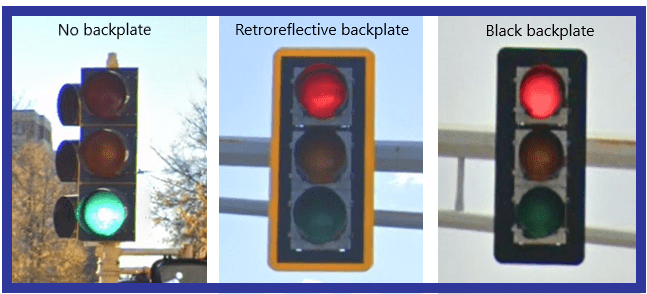
Improving Traffic Signal Visibility
Inconspicuous traffic signals are often cited as contributing to collisions at intersections. If that is true, making traffic signals more conspicuous should lead to fewer crashes. A study published at the TRB conference in 2005 suggested that yellow retroreflective backplates were most effective, reducing accidents by 15% at intersections, and the FHWA later adopted this as a Proven Safety Countermeasure.
Continue reading Improving Traffic Signal Visibility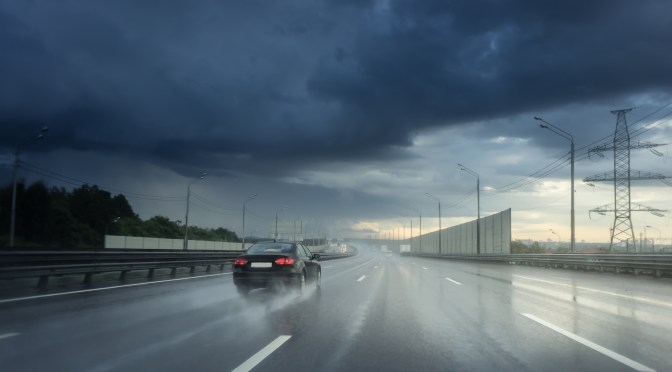
New Project: Investigating Real Storms and the Impact of Potential Climate Change Adaptations
MnDOT designs stormwater management infrastructure based on historical rainfall data and traditional design assumptions, including rainfall intensity and distribution, rainfall event duration and existing moisture conditions. Stormwater management infrastructure designed using traditional design parameters determines the risk of flooding, property damage and human safety in communities.
Continue reading New Project: Investigating Real Storms and the Impact of Potential Climate Change Adaptations
Tribal Pedestrian Safety
A new video developed by the Center for Transportation Studies highlights a multiyear study of pedestrian safety at reservations that was undertaken by U of M researchers and partners from seven Anishinaabe tribes. The work was sponsored by the Minnesota Department of Transportation (MnDOT).
Continue reading Tribal Pedestrian Safety
New Project: Roadside Feature Placement and Pedestrian Safety on Low and Intermediate Speed Roads
Guidelines for designing and placing roadside features have traditionally focused on automobile safety on higher-speed roads. Research has also shown feature placement can have safety benefits for pedestrians and bicyclists on lower-speed roads.
Continue reading New Project: Roadside Feature Placement and Pedestrian Safety on Low and Intermediate Speed Roads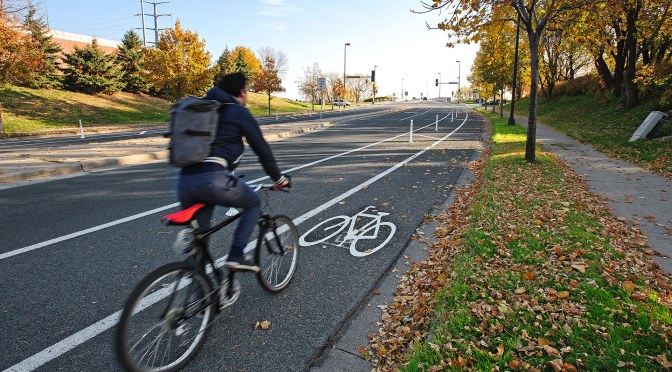
Using Mobile Device Data to Estimate Bicyclist and Pedestrian Traffic
MnDOT relies on estimates of annual average daily traffic volumes to plan and maintain safe, effective transportation network infrastructure for all travelers. Estimating traffic volumes for nonmotorized road users such as bicyclists and pedestrians has been challenging because monitors are limited compared to vehicle traffic counters. Data from mobile devices, routinely collected through a variety of platforms, offers a potential source of traveler routes. Using monitored nonmotorized traveler data to validate mobile datasets, researchers produced a data visualization tool to estimate bicyclist and pedestrian counts within the Twin Cities area.
Continue reading Using Mobile Device Data to Estimate Bicyclist and Pedestrian Traffic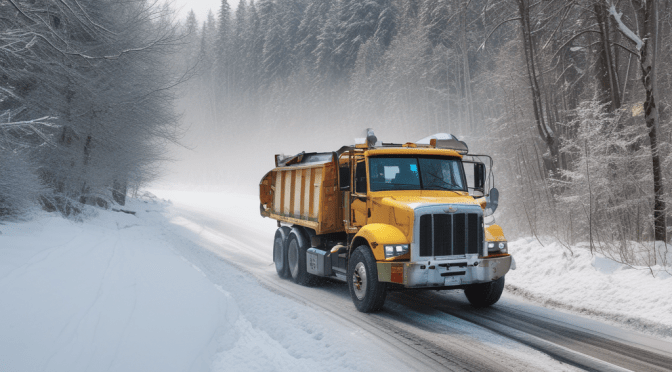
Best Practices for Protecting Equipment from Chemical Deicer Corrosion
Reprinted from Clear Roads News, October 2, 2024
In 2015, Clear Roads project 13-04 published a Manual of Best Practices to compile the various products agencies use as well as guidance for preventing corrosion on highway maintenance equipment.
Continue reading Best Practices for Protecting Equipment from Chemical Deicer Corrosion
