Category Archives: Traffic and Safety

Congestion-reduction measures on I-35W: How well do they work?

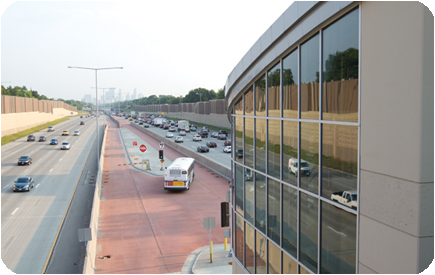
In an effort to combat congestion in our country’s urban areas, the United States Department of Transportation launched the Urban Partnership Agreement (UPA) program in 2007. The program infused nearly $900 million into transportation-related projects in four cities nationwide, including the Twin Cities metropolitan area. Minnesota’s projects—which include the installation of MnPASS dynamic toll lanes and variable message signs—focused on improving traffic flow in the I-35W corridor between Minneapolis and the city’s southern suburbs.

To understand the effectiveness of measures implemented under the UPA program, a team of University of Minnesota researchers examined three separate but related areas: the effects of a new variable speed limit (VSL) system, the impact of severe weather conditions on road safety, and the behavior and traffic impacts of bus rapid transit operations. Their work was funded by the Intelligent Transportation Systems Institute, a part of CTS.

Key findings included:

  • Drivers don’t typically comply with advisory speed limits posted on VSL signs along the I-35W corridor during congested conditions, but they may use them to help gauge and prepare for downstream congestion—resulting in a smoother and possibly safer traffic flow
  • Some parts of the corridor’s shoulder lanes—which are opened to traffic during specific times of the day as part of the UPA program—contain low areas that can flood during heavy rains
  • Buses traveling on the corridor underuse the MnPASS lane. In addition, bus lane changes (from stations located in the median to those located on the right side of the highway) can generate visible disturbances during moderate and heavy congestion, but they don’t seem to contribute to the breakdown of traffic flow

For more information, read the full article in the September issue of Catalyst.

New LRRB videos focus on work zone safety

The Minnesota Local Road Research Board is a major source of funding for transportation research in the state. Occasionally, it also produces educational videos designed to raise public awareness of important transportation topics.

Two new video offerings from the LRRB (embedded above and below) are focused on save driving in work zones. While not directly research-related, they might prove a useful resource to transportation professionals. More importantly, they serve to remind us all of the very real and dramatic consequences of work zone crashes, of which there are approximately 2,000 per year in Minnesota.

You might want to also check out some of their other recent YouTube offerings, including explanations of why we need stop signs and speed limits, as well as a fascinating look at how potholes are patched.

Testing the waters for mileage-based user fees

MBUF 2013 Workshop logoFor the fourth year in a row, the State and Local Policy Program of the University of Minnesota’s Humphrey School has partnered with the Texas Transportation Institute (TTI) in sponsoring a Symposium on Mileage-based User Fees (MBUF). This year’s symposium, held in conjunction with the ITS America Conference in Nashville, TN, focused on the technologies involved in charging drivers a fee to use roads based on mileage as well as public concerns such as privacy and implementation challenges. As an indicator of the interest in this issue, the International Bridge, Tolling and Turnpike Association (IBTTA) also held a Transportation Finance and Mileage-Based User Fee Symposium just a week before in Philadelphia, PA, in partnership with the Mileage-Based User Fee Alliance (MBUFA), the Transportation Research Board, and the Humphrey School.

So is the public clamoring for MBUF? Not really. In fact, the public still needs to be convinced that the gas tax will not support our transportation system in the long-run, and that a new user-based system will be required to replace the gas tax in the future if we are to maintain our U.S. transportation infrastructure. The Minnesota Legislature funded an MBUF technology test with 500 Minnesota drivers as well as a policy study and task force to identify issues that must be addressed before an MBUF system could be implemented. The Mileage-Based User Fee Alliance has set up a web page to address five misconceptions about MBUF.

While Minnesota is one of several states that are studying and testing MBUF options, the State of Oregon took the first step toward implementation of a Road Usage Charging system by passing legislation in July 2013. The first step in Oregon will be to recruit 5,000 volunteers for the new Road Usage Charging System. The volunteers will have several option for how to pay the new charge, ranging from simple odometer readings to more advanced technology options that may be combined with other services for drivers. Stay tuned…

Related Links

This post was written by Lee Munnich, director of the State and Local Policy Program at the University of Minnesota’s Humphrey School of Public Affairs, and originally published on the CTS Conversations blog.

‘Intelligent’ traffic drum could help prevent work-zone tragedies

2012-26 Image
A prototype of the Intelligent Drum Line system.

Work-zone safety is a serious, ongoing challenge for transportation agencies. According to MnDOT, the current three-year average for Minnesota work zones is 1,819 crashes and seven fatalities per year. And that’s not counting near-misses: just talk to anyone who has worked as a flagger, and they will likely have a story about diving into a ditch to avoid being hit by a distracted driver. Consequently, MnDOT is constantly exploring ways to make work zones safer — which brings me to the photo above.

What you’re looking at is no ordinary traffic cone. It’s a prototype of a new warning device called the Intelligent Drum Line system — basically a modified orange traffic drum packed with electronics that can detect speeding drivers and blast them with audiovisual cues to let them know they’re entering the work zone too fast.

Our new technical summary explains the details of the new system, which was developed at the University of Minnesota, with funding and in-kind assistance from MnDOT:

The prototype design uses two modified traffic drums placed 1 to 3 feet from the shoulder of the road and 300 to 400 feet apart. Sensors in the first drum detect vehicles, measure their speed and distance, and communicate this information to the second drum…

When the IDL system detects an oncoming vehicle traveling faster than a threshold speed, the system activates visual warning systems in both drums and initiates a countdown. When the speeding vehicle is approximately 1 second away from the first drum, the system activates an air horn to warn the driver.

As the vehicle passes the first drum, the audible alarm terminates and the system transmits a command to the second drum to start another countdown. When the vehicle is approximately 1 second away from the second drum, the system activates another audible alarm.

Testing of the IDL system at MnROAD has been successful; however, researchers still need to study how drivers react to the system in real-world conditions. Before they can do that, the design will have to be refined so that it can pass Federal Highway Administration crashworthiness tests. On a related note, MnDOT is currently funding a separate University of Minnesota study into which technologies are most effective at capturing drivers’ attention in work zones. The study will include visual and auditory cues similar to the ones used in the IDL prototype.

Learn more:

Best practices for trail crossings – webinar and draft report

Last week, MnDOT Research Services hosted a workshop on a forthcoming report, “Decision Tree for Identifying Alternative Trail Crossing Treatments.” It was broadcast as a webinar, the recording of which is now available online via Adobe Connect:

http://mndot.adobeconnect.com/p8hlfripuwe/

The final report is coming soon, but in the meantime you can see the draft version on our website (link), along with case studies and other related documents.

Free webinar July 9 on best practices for bicycle trail crossings

Intersections between trails and roadways can be dangerous places for bicyclists and pedestrians. Next week, MnDOT Research Services is offering a free webinar on a forthcoming manual designed to help make trail crossings safer.

On Tuesday, July 9, from 1:00 p.m. to 2:30 p.m. (CDT), University of Wisconsin—Madison Professor David Noyce will be conducting a workshop on his forthcoming handbook, “Decision Tree for Identifying Alternative Trail Crossing Treatments.” The project, funded by MnDOT and the Local Road Research Board, aims to identify current engineering state-of-the-practice for trail crossings and provide guidance as to appropriate crossing designs and vehicular and bicycle right-of-way hierarchies.

You can click on the link below at the specified date and time to watch the webinar. No registration is required.

http://mndot.adobeconnect.com/trailcrossing/

New fuel cell prototype could power rural ITS applications

Intelligent transportation systems (ITS) technologies can be used to enhance transportation safety and mobility, but the sensors and communications equipment needed for ITS applications typically require access to electricity. In rural areas, limited access to the power grid can make it challenging to implement ITS devices.

Rural intersection roadway lighting
In addition to powering ITS devices, the fuel cells could provide power for rural
intersection roadway lighting. Photo source: http://www.flickr.com/photos/36521983488@N01/175482261/

Current solutions for providing power to off-grid locations include battery packs or diesel generators, both of which require constant maintenance to recharge, refuel, or replace. Other alternatives include solar panels and wind turbines, but cost and performance concerns have limited their use.

“One of the issues with these green power alternatives, such as solar panels, is dependability… especially in the long, cold, and dark Minnesota winters,” says Victor Lund, a traffic engineer with St. Louis County Public Works. Until this technology matures, there is a need for other options that can provide confidence in generating power, Lund says.

To provide a more effective and dependable power alternative, researchers from the University of Minnesota Duluth (UMD) have developed a portable prototype system that uses hydrogen-based fuel cells to generate electricity. The UMD research team was led by chemical engineering associate professor Steven Sternberg, and the project was sponsored by the ITS Institute at the University of Minnesota.

The hydrogen-based fuel cell provides a clean, compact, high-efficiency energy source for an accompanying battery pack, which could be used to operate various ITS devices. The prototype is completely independent of the power grid, works well in cold weather, and requires maintenance only once each week for recharging. The cost of the system is about $7,500, with an additional operating cost of $2,000 per year for fuel materials.

Potential applications include powering variable message signs, dedicated short-range communication technologies, and warning blinkers on traffic signs. According to Lund, the system’s applications extend beyond powering ITS devices. For instance, the fuel cells could be used for rural intersection roadway lighting or as a back-up source for traffic signals in case of a power outage.

Reprinted from CTS Catalyst, June 2013.

About those roundabouts

One of my unofficial duties as a MnDOT employee is to respond to a near-constant barrage of opinions from my family and friends regarding the condition of our state’s roadways. (My wife, for example, half-jokingly tries to ascribe personal responsibility to me for the congestion she faces on her morning commute.) Interestingly, one of the issues that gets brought up to me most often in private conversations is roundabouts — the circular intersections that are widely praised by engineers but often vilified by a skeptical public.

From a public interest perspective, the verdict on roundabouts is overwhelmingly positive. With very few exceptions, roundabouts have been shown to dramatically reduce both the frequency and seriousness of traffic accidents when compared to other types of intersections. One oft-cited source, the National Insurance Institute for Highway Safety, reports that U.S. intersections converted to roundabouts have experienced a 35-47 percent decrease in crashes and an 72-80 percent decrease in injury crashes (source here). Moreover, because the don’t have stop signs or traffic lights, roundabouts have been found to reduce traffic delays and pollution.

Perhaps not surprisingly, research on these potential benefits has precipitated a rash of roundabout construction. In Minnesota alone, 115 have already been built, with another 39 either planned or under construction, according to the Pioneer Press. Love them or hate them, roundabouts are becoming a fact of life here.

Of course, not everyone loves them. In spite of their stellar  record, roundabouts remain something of a political lightning rod. This article in the Mankato Free Press and this news segment from KSTP provide typical examples of the kind of skepticism officials face when proposing to put in a roundabout. The problem is persistent enough that many officials see a need to develop a public relations game plan. On June 19, the Transportation Research Board is offering a free webinar entitled “Community Outreach: Successful Outcomes for Roundabout Implementation,” designed to help transportation professionals understand and respond to political opposition to roundabouts. It’s free for employees of TRB sponsor organizations (including MnDOT); a $99 registration fee is required for employees of non-sponsors.

For those who are unfamiliar with roundabouts, there are some good resources designed to help people understand their purpose and benefits. Several years ago, the Local Road Research Board produced the video above (along with an accompanying brochure). MnDOT also has a resource page devoted to explaining the use of roundabouts.

Those with more than a passing interest in the subject might also want to check out these recent MnDOT/LRRB-sponsored studies:

‘Three Ways to Cook a Pothole’

In April, we posted about an innovative pothole-filling technology being developed by the Minnesota Department of Transportation and the University of Minnesota, Duluth. The technique involves zapping pothole patches and the surrounding pavement with a special truck-mounted, 50,000-watt microwave. Researchers have found that heating the base and the patch material at the same time creates a stronger, longer-lasting bond that provides for a more permanent pothole fix.

Last week, the MnDOT/UMD microwave technology found its way into a new MnDOT video (above) that also explores two other experimental pothole-patching methods. One involves using a large “electric oven”-type heating element instead of a microwave. The other utilizes a new exothermic (i.e. heat-generating) asphalt mixture containing taconite from northern Minnesota mines. The video compares the potential benefits of all three of the new technologies, which the department hopes will someday lead to “more pothole-patching power for the taxpayer dollar.”

See also:

New publication highlights success in traffic safety

Cover of TZD Decade of Progress reportThe Minnesota Toward Zero Deaths program has published Minnesota TZD: 10 Years of Progress (PDF), a 12-page report highlighting the program’s successes in the decade since it began. Before 2001, efforts to improve traffic safety were mostly carried out by individual state agencies. In response to an increasing trend in the number of traffic-related fatalities and serious injuries in the state, the Minnesota Departments of Public Safety, Transportation, and Health in 2003 established the Toward Zero Deaths (TZD) program to integrate safety programs in Minnesota. Since then, traffic fatalities have decreased by 40.5 percent. This report describes some of these efforts in the areas of driver behavior, roadway environment, emergency response, and partner collaboration.