

MnDOT and the Minnesota Local Road Research Board have funded 26 new research projects and are seeking volunteers to serve as Technical Advisory Panel members and help guide the research.
Continue reading MnDOT & LRRB Award Funding to Innovative ResearchCategory Archives: Research
General research posts.

Team Receives NSF Grant to Study ‘Smart e-Scooters’
This article was originally published in Catalyst, November 2020.
Electric scooters let riders move quickly between the roadway and the sidewalk, but these sometimes-unpredictable travel patterns can pose risk for riders and the people around them. Making scooters smarter is the goal of a new U of M research project funded by the National Science Foundation (NSF). Under the $1.2 million Cyber-Physical Systems grant, a cross-disciplinary team will study smart tracking systems on scooters for ensuring safe and smooth interaction with other vehicles and pedestrians.
Continue reading Team Receives NSF Grant to Study ‘Smart e-Scooters’
Smartphone-Based Coaching for New Teen Drivers May Offer Long-Term Benefits
This article was originally published in Catalyst, August 2020.
More than five years ago, U of M researchers studied a group of new teen drivers to gauge the effects of real-time, in-vehicle coaching with their innovative Teen Driver Support System (TDSS) smartphone application. Now, a follow-up study offers new understanding about the system’s long-term effectiveness in reducing risky driving behavior.
Continue reading Smartphone-Based Coaching for New Teen Drivers May Offer Long-Term Benefits
Link Between Air Quality, Happiness Could Guide Infrastructure Decisions
This article was originally published in Catalyst, August 2020.
By connecting measures of happiness to transportation, researchers are developing new metrics that can help cities prioritize infrastructure investments. In a new study, a research team that included Humphrey School of Public Affairs professor Yingling Fan found that air quality appears to be linked with a variety of emotional well-being (EWB) outcomes.
Continue reading Link Between Air Quality, Happiness Could Guide Infrastructure Decisions
Promoting Snow Fence Adoption in Minnesota
A new research study has shown that few landowners know about MnDOT’s snow fence program, its benefits to community safety and mobility, and incentives to install snow fences. Following community meetings and surveys in four regions of Minnesota, researchers identified promising promotional methods for the snow fence program, the constraints landowners face in adopting snow fences, and incentives and assistance to improve snow fence adoption. Project results will guide MnDOT’s efforts to expand the use of snow fences around the state
Continue reading Promoting Snow Fence Adoption in Minnesota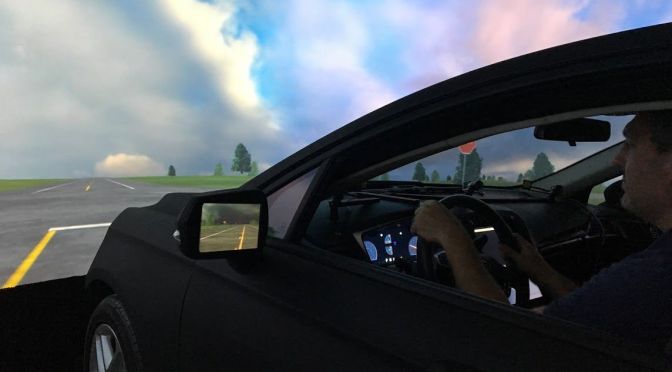
Optimal Sight Distances at Rural Intersections
A new study sponsored by the Minnesota Local Road Research Board has identified 1,000 feet as an optimal sight distance for allowing drivers to make better crossing decisions at rural intersections. Researchers used a state-of the-art driving simulator to examine drivers’ ability to judge traffic speed and gaps between cars at unsignalized intersections with varying sight distances.
Continue reading Optimal Sight Distances at Rural Intersections
New signs give highway drivers more reasons to stop at rest areas
According to recent survey results, new highway signs promoting rest area amenities are influencing motorists’ decisions to use them.
Continue reading New signs give highway drivers more reasons to stop at rest areas
Implementing CIM in Preliminary Design of Infrastructure
Using an existing county road project as context, researchers examined the digital technologies and processes associated with civil integrated management (CIM). A comparison of CIM with the traditional methods used in the proposed county project demonstrated the advantages of CIM.
Continue reading Implementing CIM in Preliminary Design of Infrastructure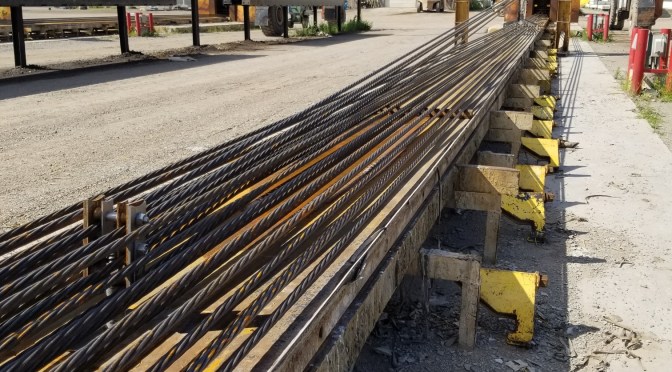
Using Debonded Strands to Reduce End Stress in Bridge Beams
A new MnDOT-funded research study has found that most agencies in states with weather similar to Minnesota’s use debonded strands in prestressed concrete bridge beams. MnDOT may begin piloting debonding as an alternative to draping, which manufacturers claim is time-consuming, challenging to worker safety and expensive.
Continue reading Using Debonded Strands to Reduce End Stress in Bridge Beams
Collaboration with Minnesota Zoo aims to conserve wildlife
Turtles and other wildlife are at risk along Minnesota roadways.
MnDOT is collaborating with the Minnesota Zoo on a new research project installing small animal exclusion fencing. The fencing is intended to redirect turtles (and other small animals) to culverts and bridges where they can cross the road safely.
Continue reading Collaboration with Minnesota Zoo aims to conserve wildlife Crossroads