Category Archives: Policy and Planning

MnPASS extension on I-35E shaped by U of M study

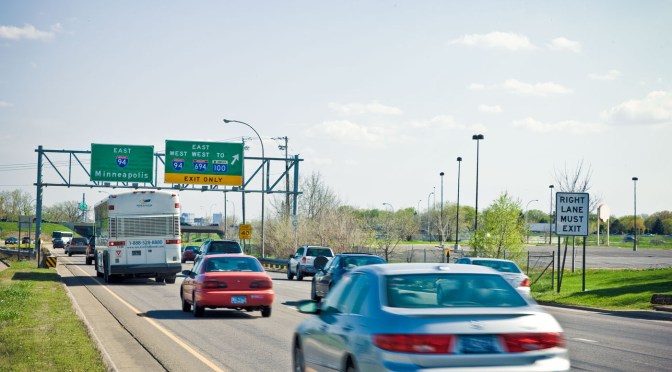
Based in part on a planning study conducted by U of M researchers at the Humphrey School of Public Affairs, MnDOT is extending MnPASS Express Lanes on Interstate 35E in the northeast Twin Cities. The extension will build on the project currently adding MnPASS lanes from Cayuga Street to Little Canada Road.

The study, funded by MnDOT and the Federal Highway Administration (FHWA), examined the feasibility of extending these MnPASS lanes from Little Canada Road north to County Road 96. During peak periods, MnPASS lanes provide a congestion-free option to transit vehicles, carpools, and motorcycles at no cost—and to single-occupant vehicles for a fee.

Led by Director Lee Munnich and Associate Director Frank Douma of the Humphrey School’s State and Local Policy Program, the U of M research team worked with Parsons Brinckerhoff to develop and evaluate several concepts for the MnPASS extension. The goal was to provide an option that reduced congestion for all users, including drivers in the general-purpose traffic lanes and transit users. The team also included Mary Vogel from the U’s Center for Changing Landscapes.

The primary challenge was how to handle MnPASS traffic through the recently reconstructed I-694/I-35E interchange. After going over several design options, the team recommended what it termed a “hybrid” option, which creates a continuous southbound MnPASS lane and a discontinuous northbound MnPASS lane through the interchange.

Researchers also engaged community stakeholders and corridor users to gather feedback about the proposed alternatives and worked to illustrate options that could facilitate greater transit, carpool, and vanpool use in communities along this section of I-35E.

Additional recommendations developed by the team—in partnership with representatives from MnDOT, the FHWA, and the Metropolitan Council—included continuing to educate community motorists about the MnPASS program as well as expanding transit options by creating more park-and-ride sites, encouraging mixed land uses, and building better walking and biking connections.

Based on these recommendations, MnDOT is moving forward with the hybrid option for the project, says Brad Larsen, director of the MnPASS Policy and Planning Program. MnPASS lanes will be added to southbound I-35E between County Road 96 and Little Canada Road; through the I-35E/I-694 commons area, the existing inside lane will be designated as a MnPASS lane during peak periods. There will be no MnPASS lane northbound through the commons area, but a lane will be added north of the interchange from County Road E to County Road J.

Construction on the extension project is expected to begin in March 2016, with the lanes slated to open in late 2016.

More information:

(Featured photo courtesy of David Gonzalez, MnDOT.)

Bike, pedestrian counting efforts engage local agencies statewide

Across Minnesota, local agencies need better information about where and how many people are biking and walking to make decisions about infrastructure investments, understand safety risks, and even plan active living initiatives.

To help provide agencies with bicycle and pedestrian traffic data, U of M researchers have been working with MnDOT on the Minnesota Bicycle and Pedestrian Counting Initiative since 2010. The initiative is a collaborative, statewide effort to support bike and pedestrian traffic monitoring by local, regional, and state organizations.

Recently, the project team completed an implementation study—the second of three MnDOT-funded projects related to the initiative—specifically designed to engage local agencies. The goal was to demonstrate the feasibility of using both permanent and portable sensors to collect bicycle and pedestrian traffic data in several Minnesota cities, suburbs, and small towns.

“If we want to institutionalize counting and monitoring across the state, local agencies need to know it’s not something that’s only important for large cities like Minneapolis,” says principal investigator Greg Lindsey, professor at the Humphrey School of Public Affairs and current MnDOT scholar-in-residence. “We have to be on the ground in these places, illustrating that it’s relevant to the decisions they’re making.”

To that end, the team installed commercially available sensors—including inductive loops, passive infrared, pneumatic tubes, and radio beams—to collect traffic counts in several Minnesota cities. Overall findings indicate that all of the sensors produced reasonably accurate measurements—and that participating agencies found value in the collected data.

Findings and case studies from the study have already been incorporated into the draft Bicycle and Pedestrian Data Collection Manual, a new MnDOT guidance document being used in statewide training workshops. Also as a result of the study, MnDOT plans to include commitments to bike and pedestrian traffic monitoring in its forthcoming statewide bicycle and pedestrian plans. In addition, MnDOT is investing in a network of permanent traffic monitoring sites around the state as well as in portable equipment that will be available to local agencies.

Read the full article in the September issue of Catalyst.

Census report looks at U.S. commuting patterns; U of M report analyzes Twin Cities’ patterns

A recent report issued by the U.S. Census Bureau looks at commuting patterns by U.S. workers in 2013 using data from the American Community Survey. It highlights differences in rates of automobile commuting by key population characteristics such as age, race, ethnicity, and the types of communities in which workers live.

One finding of note: young people in big cities were much less likely to drive to work in 2013 than they were several years earlier. For instance, urban workers aged 25 to 29 showed about a 4-percentage-point decline in automobile commuting between 2006 and 2013.

You can also find an extensive analysis of commuting behavior that was produced locally. In a recent multifaceted study sponsored by the Metropolitan Council and MnDOT, U of M researchers analyzed travel behavior over time in the Twin Cities.

The extensive five-part study report is based on the rich set of data produced by the Met Council’s Travel Behavior Inventory household travel survey. David Levinson, RP Braun/CTS Chair in the U’s Department of Civil, Environmental, and Geo- Engineering, was the study’s principal investigator.

The five components of the report examine:

  • Changes in travel duration, time use, and accessibility
  • Changes in walking and biking
  • The effect of transit quality of service on people’s activity choices and time allocation
  • Changes in travel behavior by age cohort
  • Telecommuting and its relationship with travel and residential choices

For more information:

Minnesota Bicycle and Pedestrian Counting Initiative highlighted in FHWA case study

Work on bike and pedestrian counting by University of Minnesota researchers and MnDOT has been highlighted as part of the FHWA’s Livable Communities Case Study Series.

The case study features the Minnesota Bicycle and Pedestrian Counting Initiative, led by the U of M’s Greg Lindsey and MnDOT’s Lisa Austin and Jasna Hadzic. Under the initiative, the team has developed general guidance and consistent methods for counting bikes and pedestrians. Team members have also worked with other state and local agencies to implement counting strategies across Minnesota.

The case study showcases the initiative as an example of how agencies can leverage partnerships to implement a successful counting program for nonmotorized traffic. These traffic counts can help agencies identify safety concerns, understand and communicate benefits of active transportation, prioritize investments, and analyze trends. According to the FHWA, the results can help inform decisions that make biking and walking viable transportation options in livable communities.

Read the case study on the FHWA Livability website.

Travel behavior study shows drivers are spending less time traveling

Something unprecedented has happened to Americans’ travel patterns. Even before the recent recession, total distance traveled per person had started to decline, and the rate of total vehicle travel had begun to steadily decrease as well.

In a new five-part series of research reports sponsored by MnDOT and the Metropolitan Council, University of Minnesota researchers are delving into a set of rich data encompassing more than four decades of travel behavior surveys to enable the region’s transportation planners to better understand how its residents make decisions about whether, when, where, and why to travel.

In the first study, researchers examined how changes in the accessibility of destinations—such as jobs, shopping, and leisure activities—have changed travel behavior in the past 20 years.

“We started with a detailed analysis of travel surveys conducted by the Metropolitan Council in 1990, 2000, and 2010,” says David Levinson, the study’s principal investigator and RP Braun/CTS Chair in the Department of Civil, Environmental, and Geo- Engineering. “We found that people are spending slightly less time in motion and more time at home. We also found that accessibility is a significant factor in determining not only travel behavior but overall time budgeting in general. In short, each person has to decide how they will use the time allotted to them each day, and many of those decisions are directly related to the transportation and land-use systems in place.”

A deeper look into the data sheds additional light on the relationship between accessibility and travel behavior. For example, trip durations for workers have gone up for all activities between 1990 and 2010. More noticeably, distances for trips have increased markedly: workers take jobs farther from their homes and shop farther from their homes. Travel speeds also increased for the average worker, due to more travel on faster suburban roadways that carry a larger share of all travel. In contrast, for non-workers, trip durations and overall travel time have gone down.

“Interestingly, although time, distance, and speed per trip has generally risen for workers, the number of those trips is declining,” Levinson says. “As a result, overall, fewer miles are being traveled and less time is being allocated to travel.”

Total time spent shopping also decreased for workers and for males, likely caused in part by an increase in online commerce. “The Internet has provided electronic accessibility, much as the transportation network has in the material world,” Levinson explains. “It helps to facilitate commerce, communication, education, and leisure. This may lead to a decreased need for people to travel, and account for more time spent at home.”

Jonathan Ehrlich, planning analyst with the Metropolitan Council, says the research “helps us get more value from our travel surveys and will aid in understanding how travel is changing, and what the risks are in the assumptions and models we use for planning and forecasting.”

The findings will prove useful not just for Twin Cities transportation planners but for planners and engineers worldwide. “Our models can be easily adapted to data from other cities or for other activities besides work,” Levinson says. “This creates an approach that can be used to gauge the impact of a transportation project from an accessibility standpoint and determine how that project will translate into time allocation.”

Other parts of the study will look at changes in telecommuting behavior over time, the effect of transit quality of service on people’s activity choices and time allocation, changes in travel behavior by age cohort, and analysis of bicycling and walking in light of land-use and transportation system changes.

Crossroads will feature coverage of these projects as they are completed.

Study reveals how Minnesota industries rely on transportation

Results of a newly released MnDOT research report shed new light on the role transportation plays in our state’s economic competitiveness, and highlight the unique challenges faced by some of the state’s major industry clusters.

The report, authored by Professor Lee Munnich of the University of Minnesota’s Humphrey School of Public Affairs, underscores the importance of a reliable transportation system in facilitating economic growth. Munnich examined the impact of transportation on Minnesota’s competitive industry clusters — geographically concentrated, interconnected groups of companies and institutions that share knowledge networks, supply chains and specialized labor pools.

MnDOT Research Project Engineer Bruce Holdhusen said MnDOT’s goal with the study was to discover how its investment decisions could help support job creation and economic prosperity.

“The idea is to look at the companies and industries that are already bringing money into the state, figure out what their transportation challenges are, and then use that information to see what kind of investments we could make to support their continued growth,” Holdhusen said.

MnDOT is incorporating the results of the study into its statewide freight planning. The industry clusters-approach also is being used by MnDOT in a statewide effort to talk with manufacturers, other shippers, and carriers about their transportation priorities and challenges.  MnDOT will focus on its Metro District starting this summer.  Two similar projects have been undertaken in Greater Minnesota, with a third study starting later this year. (Results from one study, in southwest Minnesota/District 8, are available online.)

The full report is available online, and examines a wide range of industries, including forest products, medical devices, robotics and processed foods. We’ve pulled out a few interesting tidbits below.

Recreational Vehicles (Northwest Minnesota)

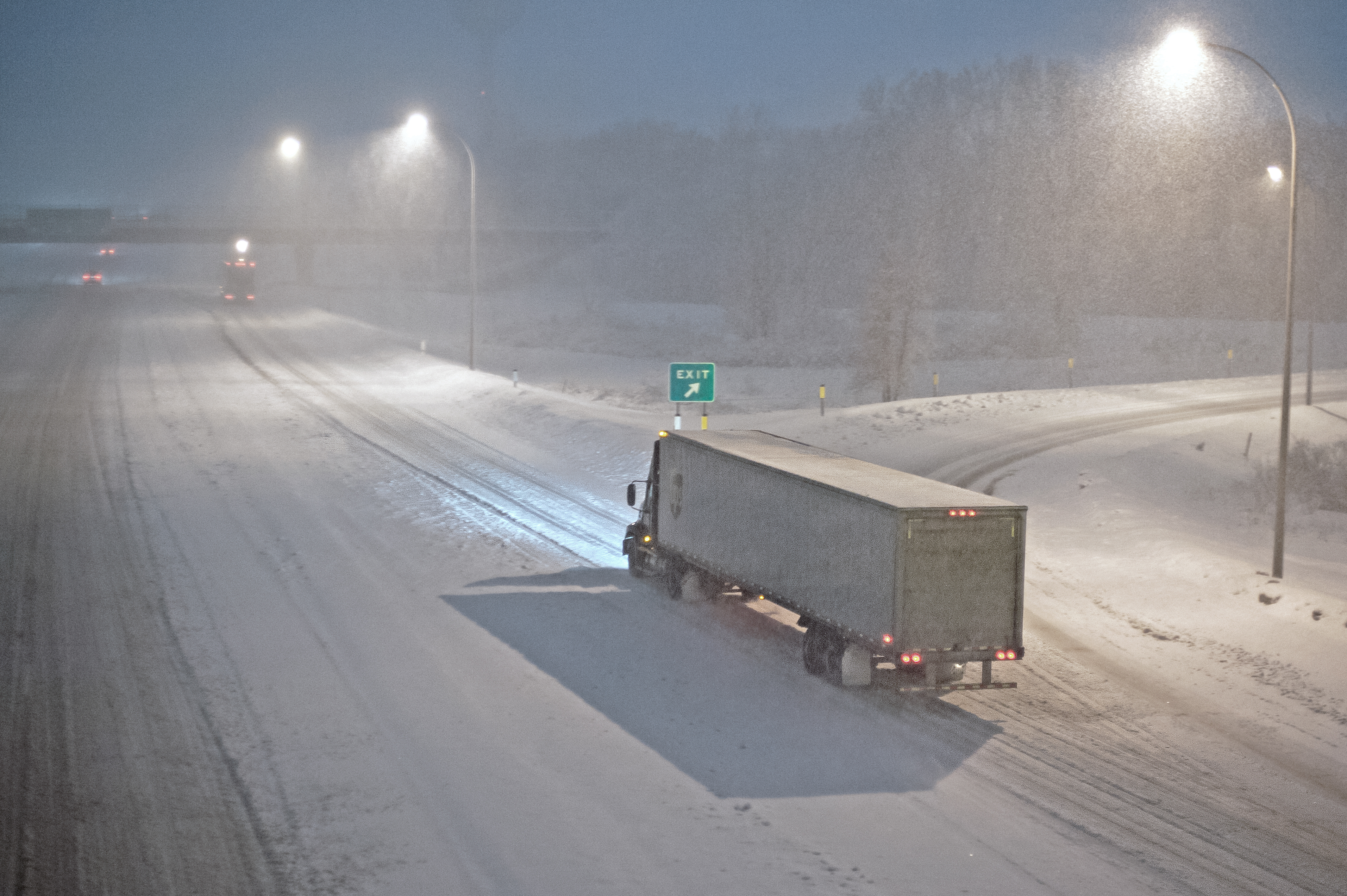
A semi truck driving on a snowy highway.
Minnesota winters are great for snowmobiling, but not always great for shipping snowmobiles. (Photo by Dave Gonzalez, MnDOT)

As noted in the report, Minnesota’s extreme winter weather poses unique challenges to its economic competitiveness. Ironically, nowhere is this more evident than in the state’s snowmobile-producing northwest corner.

Polaris and Arctic Cat (together with smaller, more specialized firms like Mattracks) employ thousands of Minnesotans, producing a wide variety of recreational vehicles and accessories that are sold and distributed all over the world. While the companies’ snowmobiles might fare well in a blizzard, the trucks that deliver them don’t. A bad snowstorm can cause delays in both supply and product shipments; it can also prevent employees from getting to work, or even shut down a plant altogether. On a larger scale, these issues make it difficult for the companies to expand at their ideal rates.

The report notes that MnDOT’s 511 system is an important source for many companies to identify and respond to potential shipping delays. It recommends continuous improvements to the system.

The Mayo Clinic (Rochester Area)

Metal FedEx containers at an airport.
Air carriers like FedEx have limited capacity for refrigerated shipments, which creates challenges for shipping medical lab samples. (Photo by Dave Gonzalez, MnDOT)

The Mayo Clinic has become synonymous with the Rochester metropolitan area, and for good reason: it employs 37,000 residents and brings in 500,000 unique patients each year from all 50 U.S. states and 150 countries. As you might imagine, generating that much activity in a community of only 110,000 people creates some unique and significant transportation challenges.

Unlike most competitor institutions (Johns Hopkins in Baltimore, for example), the Mayo clinic is located in a relatively small metropolitan area. The local airport has an older navigation system and offers less direct commercial air service. As a result, it depends on high-quality transit and freight service to help accommodate the constant flow of visitors and supplies. The shipping of highly perishable lab samples is also a challenge, as air carriers have limited capacity for refrigeration. Finally, adverse weather conditions can affect emergency services dispatchers’ ability to send fast modes of transportation such as helicopters.

Hospitality and Tourism (Brainerd Lakes Area)

Boats docked on a lake at dawn.
Lakeside resorts a great way to enjoy Minnesota’s scenic beauty — but getting there can be a challenge. (Photo by Dave Gonzalez, MnDOT)

The oil boom in North Dakota has generated a lot of wealth in a short amount of time, and resorts like the Grand View Lodge in Nisswa would love to capture some of it by enticing new vacationers from the west. The trouble is, the area is inconvenient to reach from that direction.

A four-lane highway makes it easy for visitors from St. Cloud or the Twin Cities to visit resorts in the Brainerd area, but travelers coming from the Dakotas face a more circuitous route. Air travel options help to an extent, as visitors from even farther distances can fly into Fargo and then drive in from there. St. Cloud also has daily air service from Chicago, which helps maintain a constant flow of visitors.

Related Materials

Access Across America: University of Minnesota ranks accessibility to jobs by transit

New research from the Accessibility Observatory at the University of Minnesota ranks 46 of the 50 largest (by population) metropolitan areas in the United States for accessibility to jobs by transit.

The new rankings, part of the Access Across America study begun last year, focus on accessibility, a measure that examines both land use and transportation systems. Accessibility measures how many destinations, such as jobs, can be reached in a given time.

“This project provides the most detailed evaluation to date of access to jobs by transit,” says Andrew Owen, director of the Observatory. “We directly compare the transit accessibility performance of America’s largest metropolitan areas.”

The findings have a range of uses and implications. State departments of transportation, metropolitan planning organizations, and transit agencies can apply the evaluations to performance goals related to congestion, reliability, and sustainability. In addition, detailed accessibility evaluation can help in selecting between project alternatives and prioritizing investments.

“It can help reveal how the costs and benefits of transportation investments are distributed,” Owen says.

Top 10 metro areas: job accessibility by transit (January 2014)

  1. New York
  2. San Francisco
  3. Los Angeles
  4. Washington
  5. Chicago
  6. Boston
  7. Philadelphia
  8. Seattle
  9. Denver
  10. San Jose

The report—Access Across America: Transit 2014—presents detailed accessibility values for each of the 46 metropolitan areas, as well as detailed block-level color maps that illustrate the spatial patterns of accessibility within each area. In addition, time-lapse map videos for each area are forthcoming and new analysis of the data from the accessibility to jobs by transit rankings will be published periodically. Upcoming reports in the Access Across America series will explore more detailed aspects of transit accessibility to jobs, including accessibility to jobs of different wage levels and a comparison with accessibility by car.

In the study, rankings were determined by a weighted average of accessibility, giving a higher weight to closer jobs. Jobs reachable within 10 minutes were weighted most heavily; jobs were given decreasing weight as travel time increases up to 60 minutes. Travel times were calculated using full transit schedules for the 7:00 to 9:00 a.m. period. The calculations include all components of a transit journey, including “last mile” access and egress walking segments and transfers.

“Accessibility is the single most important measure in explaining the effectiveness of the urban transportation system,” says David Levinson, University of Minnesota civil engineering professor and principal investigator on the project.

According to Owen, accessibility can be measured for various transportation modes, to different types of destinations, and at different times of day. “There are a variety of ways to define accessibility,” Owen explains, “but the number of destinations reachable within a given travel time is the most directly comparable across cities.”

The research is sponsored by the Center for Transportation Studies at the University of Minnesota. Accessibility Observatory reports, including the analysis of job accessibility by auto published last year and interactive maps, are available on the Access Across America: Transit 2014 web page.

Changing demographics and travel choices may shape a very different future

Though no one can predict the future, thinking about how today’s changes may shape the future of transportation in our country is more important now than ever before.

“It’s critical that we understand the significance of things that are taking place and prepare for what may come,” said former Utah Department of Transportation CEO John Njord in the opening session of the 25th Annual CTS Transportation Research Conference. “For us to be relevant in the transportation business, at a minimum we have to be adaptable to change, and ideally we want to be leading change in the transportation industry.”

In his current position at Tom Warne and Associates, Njord has gained an in-depth understanding of the trends affecting the future of transportation in the United States while spearheading the Transportation Research Board’s “Foresight” project—part of the organization’s forward-looking NCHRP Report 750 Series. The project addresses a wide range of topics, including: What if the oil-fueled auto era ends and revenue from gas taxes dries up? What if engineering practices must be upgraded to ensure resiliency to natural disasters as global warming continues? What if technology such as self-driving cars eliminates or reduces the need for human drivers? What if tomorrow’s economy requires radically different freight patterns?

Perhaps most significantly, the project explores the possibility that Americans are losing their appetite for driving. Vehicle-miles traveled (VMT) per capita been dropping since 2004, without any signs of recovery. “It’s impossible to know whether that number will start growing again, stay flat, or continue to drop,” Njord said.

Other trends make the future outlook equally complex. In 50 years the United States will likely be home to 100 million more people, so even if VMT per person stays flat or declines, it’s likely total VMT will be larger than it is today. The population is also aging: by 2030, 20 percent of the population will be over 65 and will likely drive less. In addition, Millenials are staying home longer and waiting until later in life to get married and have children—all of which affects their travel behavior.

To help transportation planners consider all possible futures, the Foresight project encourages the use of multiple-scenario planning. “We need to begin considering all the possible scenarios and generating plans that are independent and distinct from one another,” Njord advised. “The act of thinking about these things is fundamentally important, because the shift that is now taking place means we’re going to have to do things much differently in the next 50 years than what we’ve done in the past 50 years.”

Following Njord’s presentation, a panel of experts discussed how the the Foresight project could relate to what’s happening in the Twin Cities region. An article summarizing their comments is available in the July issue of Catalyst.

Back to gravel? As dollars shrink, counties look for solutions

A large percentage of Minnesota’s local highways were built in the 1950s, the same era that birthed the modern interstate system. But the golden age of highway construction has caught up to counties, who are struggling to maintain and rehabilitate aging road systems with fewer and fewer dollars.

“Our economic resources do not meet the financial investment needed as the bulk of our pavements surfaced in the 1950s reach the end of their useful life all about the same time,” said Freeborn County Engineer Susan Miller.

In rural Otter Tail County alone, the cost of road construction has climbed 10.5 percent per year for the past 10 years.

Meanwhile, there has been only one increase in funding — an 8.5-cent bump in the state gasoline tax “that was eaten up the moment it was enacted,” said County Engineer Rick West.

Otter Tail’s funding gap? An estimated $11 million in year 2011 alone.

With no change in sight, counties across the state are banding together in a research project through the Local Road Research Board to identify ways to reduce the size of their road systems and lower preservation costs.

Forced into a corner

The LRRB launched the study at the behest of counties who were considering turning some paved highways back to gravel just to get by — even though it would probably increase long-term maintenance costs.

In addition to providing expertise on that topic, consultants worked with a group of pilot counties to develop other strategies of stretching county road dollars further. These include: changing maintenance schedules; using different gravel road materials; transferring roads to city or township ownership; adopting different road performance measures; and raising local revenue.

“This project of how five different counties approach funding limitations and how to manage a system with constrained resources is one of the best that I have been a part of through the LRRB,” said Miller, who found the data critical to convincing her county board to pass a wheelage tax.

ottertail2

A new way of thinking

Although the ideas developed through the study aren’t entirely new, for a busy county engineer with few staff, the assistance to implement them has been very valuable.

“We’re practitioners — not researchers,” said Otter Tail’s Rick West. “It’s really forced us to look at our system in its entirety and from a long-range perspective. For us, that’s huge.”

The LRRB selected pilot counties (Dakota, Otter Tail, Freeborn, Stearns and Anoka) that reflect the diversity of the state. After researchers help them implement their chosen strategies, they will hold informational workshops for others throughout the state.

“Other counties with similar roadway preservation issues or management structures can follow these best practices,” said Michael Marti of SRF Consulting Group. “There are a lot of tools out there, there just needs to be more demonstration or training on each of these tools.”

Anoka County, for example, undertook a detailed analysis to determine which roads should become city-owned and which roads the county should assume.

The evaluation system used by Anoka, which examines travel data and other factors, could be adopted by other counties.

Public education

While some ways of changing the system of road maintenance may not be immediately popular, the community will get on board if they understand why, said Otter Tail County Board Chairman Wayne Johnson.

For instance, Otter Tail had to explain why it’s more cost-effective to sealcoat four-year-old roads than reconstruct beat-up, low-volume roads.

“That’s hard to get your arms around when it’s been the other way for 50 to 60 years,” Johnson said.

Community residents did, however, reject one possible strategy discussed at eight public outreach meetings: unpaving roads.

Otter Tail’s entire county road network is paved — a reflection of investments made back in the 1950s that have become somewhat of a community ethic for Ottertail’s 57,000 residents (a population that triples during the summer).

Tools used in the study enable counties to illustrate just how far behind they are in terms of maintenance and prioritize where to make improvements.

“Everyone wants roads to be maintained, but until the road system preservation study, nobody understood the magnitude of the funding gap between where we are and what we need to do to preserve the system,” said Johnson, who recently shared his county’s findings at the National Association of County Engineers conference.

The data is critical for the public to understand why a county might seek a local tax or different method of road maintenance.

“It’s far better to try to tell them what the problem is on the front end, rather than defend the decision on the back end,” Johnson said. “We’re after them to buy into something because it’s their roads and their money.”

Resources
  •  The project findings will be completed later this year and available on the LRRB’s website.