

Clear Roads has published the results of their ninth Annual Survey of State Winter Maintenance Data, which compiles winter resources, material and cost data from 41 states for the 2022-2023 winter season. The spreadsheet includes all submitted data, as well as calculated statistics, winter severity index data, and a United States map that displays many of these metrics. The spreadsheet also includes data from the previous seven surveys (winters 2014-2015 through 2021-2022) and displays averages and changes across winter periods.
Category Archives: Maintenance Operations

Drainage 101: Understanding and Managing Drainage Issues
Increased regulation and rising levels of precipitation have made stormwater management a more routine and time-consuming issue than in previous decades. A new resource provides guidance and best practices that will help city and county engineers, local officials and private property owners navigate the complex, often public-facing issues related to recurring drainage problems and stormwater management.
Continue reading Drainage 101: Understanding and Managing Drainage Issues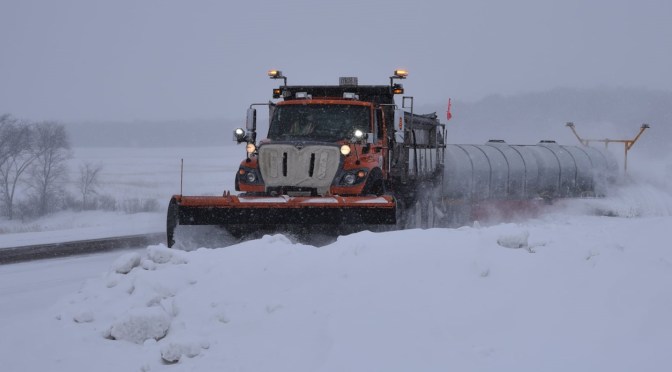
Advanced Data Analytics Inform Reduction of Snowplow Fuel Use
Snowplows use substantial amounts of fuel to keep Minnesota’s winter roads safe and accessible. Reducing the fuel consumed by MnDOT’s snowplows will help the agency meet its sustainability goals and lower operating costs. In a recent study, data collected from onboard vehicle technology showed the impacts of idling and snowfall on fuel efficiency to inform the management of the agency’s snowplow fleet.
Continue reading Advanced Data Analytics Inform Reduction of Snowplow Fuel Use
Efficacy, Cost, and Impacts of Non-Chloride Deicers

In their most recent newsletter, Clear Roads presented the results of a pooled-fund study on alternative deicing products.

Developing a Best Practices Manual for Roadway Drainage
Ineffective drainage can lead to expensive roadway damage and decrease a pavement’s service life. New guidance will help local agencies understand drainage issues unique to their areas and provide design considerations to mitigate pavement damage resulting from moisture.
Continue reading Developing a Best Practices Manual for Roadway Drainage
Future of Mobility: Infrastructure Health and Security
Reprinted from Catalyst, November 9, 2023
—Pam Snopl
What’s next in the future of mobility? Infrastructure is always critical—the challenge of how to fund, protect, and maintain it continues unabated, whether from wear and tear or malicious cyberattacks.
Continue reading Future of Mobility: Infrastructure Health and Security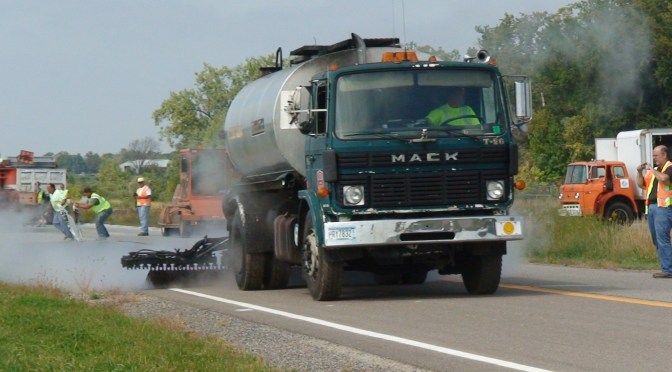
Bio-Material Maintenance Treatments
Aging pavement infrastructure and the deterioration of pavement surfaces over time remain an ongoing challenge in meeting roadway user expectations. Preventive pavement preservation treatments that are applied on sound, structured-condition pavements can extend the pavements’ functional service life and reduce future maintenance costs. Fog seals are one of these treatments. Fog seals are applied by spraying a thin layer of emulsion onto the pavement to slow or in some cases reverse the damage caused by oxidative aging. Asphalt emulsions are the most common material used in fog seals. Rejuvenators are usually added to the formulation to lower its viscosity and possibly even rejuvenate the surface of the existing aged pavement.
Continue reading Bio-Material Maintenance Treatments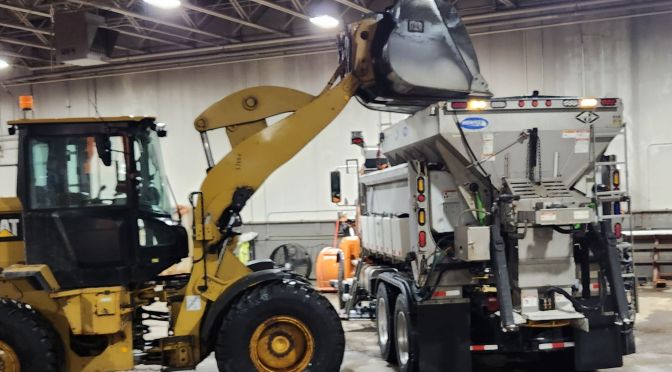
Evaluating New Slurry and Plow Equipment
MnDOT maintenance practitioners and managers are always looking for new and better ways to handle winter weather. A recent evaluation of new products revealed which of several new pieces of high-potential winter maintenance equipment were appropriate for use on Minnesota highways. Just as importantly, the agency uncovered the shortcomings of other equipment, identifying critical issues to address before acquiring additional equipment.
Continue reading Evaluating New Slurry and Plow Equipment
Sensor and Drone Technologies Help Maintain Minnesota’s Aging Bridge Infrastructure
Reprinted from Catalyst, September 9, 2023
As bridge infrastructure in Minnesota and across the country ages, maintaining and preserving the existing bridge network becomes increasingly important—and increasingly challenging. In Minnesota alone, 25 percent of bridge-deck area is more than 50 years old, and the number of bridges rated in “fair” condition has recently overtaken the number rated in “good” condition.
Continue reading Sensor and Drone Technologies Help Maintain Minnesota’s Aging Bridge Infrastructure
Refining the Lane Boundary Guidance System for Snowplow Operators
Snowplow operators work in difficult, often low-visibility conditions. A new system assists drivers in knowing their lane position and warns of approaching obstacles. After operators tested the system over two winters, researchers gathered feedback, revised the system and readied it for the next step in statewide deployment.
Continue reading Refining the Lane Boundary Guidance System for Snowplow Operators Crossroads