

MnDOT’s Office of Livability developed the Livability Framework to help guide planning, programming, and project development processes. It is being piloted in MnDOT Metro District. The outcomes should result in more people focused outcomes for the plans, programs and projects in the District. The Livability Initiative wants each of the Livability Pillars of the Livability Framework to be thoroughly considered and evaluated when planners, project managers, and others make decisions about transportation policies, programs, and/or projects.
Continue reading Measuring the Livability FrameworkAll posts by Lea Burdette

Clear Roads Annual Survey of State Winter Maintenance Data
Clear Roads has published the results of their ninth Annual Survey of State Winter Maintenance Data, which compiles winter resources, material and cost data from 41 states for the 2022-2023 winter season. The spreadsheet includes all submitted data, as well as calculated statistics, winter severity index data, and a United States map that displays many of these metrics. The spreadsheet also includes data from the previous seven surveys (winters 2014-2015 through 2021-2022) and displays averages and changes across winter periods.
Stormwater Research Sees Practical Application in Twin Cities Metro, St. Cloud
Sophie Koch, CTS News, February 22, 2024
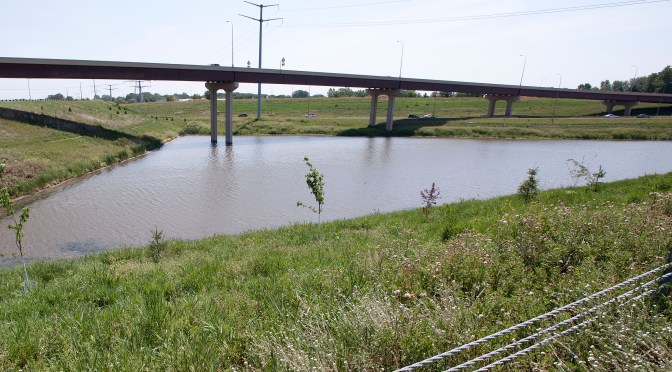
A long-running series of U of M research projects aimed at improving stormwater quality are beginning to see practical application by stormwater specialists from the Twin Cities metro area and beyond.
Continue reading Stormwater Research Sees Practical Application in Twin Cities Metro, St. Cloud
MATI Program RFP Webinar Materials, FAQ Now Available
Webinar materials and a new FAQ about the Mobility, Access, and Transportation Insecurity (MATI) Program RFP process are now available on the MATI website.
Continue reading MATI Program RFP Webinar Materials, FAQ Now Available
Efficacy, Cost, and Impacts of Non-Chloride Deicers

In their most recent newsletter, Clear Roads presented the results of a pooled-fund study on alternative deicing products.

Future of Mobility: Infrastructure Health and Security
Reprinted from Catalyst, November 9, 2023
—Pam Snopl
What’s next in the future of mobility? Infrastructure is always critical—the challenge of how to fund, protect, and maintain it continues unabated, whether from wear and tear or malicious cyberattacks.
Continue reading Future of Mobility: Infrastructure Health and Security
Continuous Moisture Measurement During Pavement Foundation Construction
Accurate and timely moisture measurement of earthwork during compaction of foundation layers is crucial to proper construction and long-term durability of the pavement structures. Since the traditional methods for measuring moisture are point specific, expensive and/or time consuming. None of the existing methods have been able to deliver real-time, continuous moisture measurements that would aid engineers in delivering more durable pavement structures.
Continue reading Continuous Moisture Measurement During Pavement Foundation Construction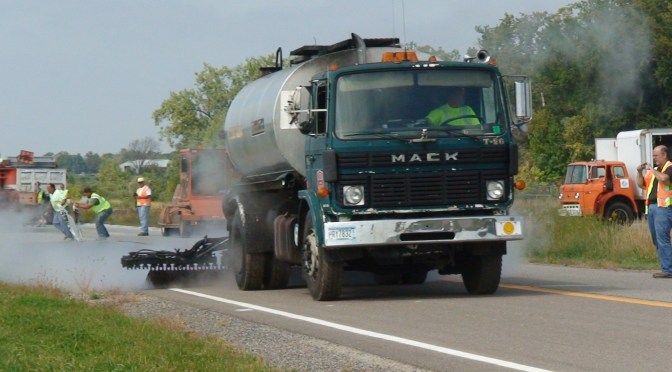
Bio-Material Maintenance Treatments
Aging pavement infrastructure and the deterioration of pavement surfaces over time remain an ongoing challenge in meeting roadway user expectations. Preventive pavement preservation treatments that are applied on sound, structured-condition pavements can extend the pavements’ functional service life and reduce future maintenance costs. Fog seals are one of these treatments. Fog seals are applied by spraying a thin layer of emulsion onto the pavement to slow or in some cases reverse the damage caused by oxidative aging. Asphalt emulsions are the most common material used in fog seals. Rejuvenators are usually added to the formulation to lower its viscosity and possibly even rejuvenate the surface of the existing aged pavement.
Continue reading Bio-Material Maintenance Treatments
Cybersecurity for Automated Vehicles
Article reprinted from the Center for Transporation Studies, July 2023
Continue reading Cybersecurity for Automated Vehicles
Sensor and Drone Technologies Help Maintain Minnesota’s Aging Bridge Infrastructure
Reprinted from Catalyst, September 9, 2023
As bridge infrastructure in Minnesota and across the country ages, maintaining and preserving the existing bridge network becomes increasingly important—and increasingly challenging. In Minnesota alone, 25 percent of bridge-deck area is more than 50 years old, and the number of bridges rated in “fair” condition has recently overtaken the number rated in “good” condition.
Continue reading Sensor and Drone Technologies Help Maintain Minnesota’s Aging Bridge Infrastructure Crossroads