All posts by Christine Anderson

Unmanned aircraft systems create buzz of activity, but challenges remain

In late 2013, Amazon.com announced that it plans to someday use unmanned aircraft systems (UASs) to deliver packages. Amazon is not alone in considering these systems—the list of potential uses for this technology is rapidly expanding. Where is this technology headed, and what does it mean for the region, and for transportation?

State and national experts discussed these issues at an April 30 forum hosted by the Airport Technical Assistance Program (AirTAP), a part of CTS.

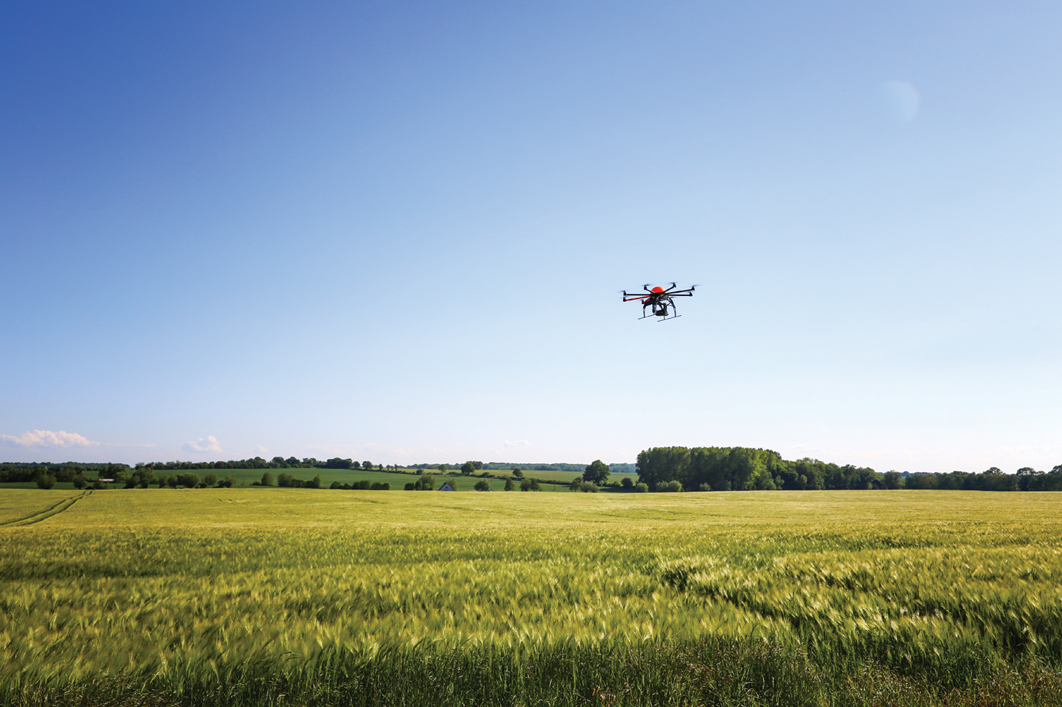
Often referred to as drones, modern UASs can be used for a broad range of activities, from aerial photography, surveying, precision agriculture, and communications to disaster response, wildlife research, and infrastructure protection.

Potential uses of UASs include precision agriculture.

A hurdle to broader use is the lack of rules and regulations. Last November the Federal Aviation Administration (FAA) released its first annual roadmap outlining policies, regulations, technologies, and procedures needed to safely integrate UASs into U.S. airspace; it plans to issue regulations by 2015.

“The greatest challenge is integrating UASs into the National Airspace System,” said Brigadier General Alan Palmer, director of the Center for UAS Research, Education, and Training at the University of North Dakota. “We want to do this safely, we want to do no harm, and we want to be sure not to violate somebody’s personal space. We do not have any regulations for standards, training, certification, or anything like them. But we will get there.”

Other concerns include privacy issues and the existing aviation/navigation infrastructure, which did not account for a future including UASs when it was built 50 years ago.

To learn more about the forum, read the full article in the June issue of Catalyst. In addition, a proceedings from the event will be available on the AirTAP website this summer.

Why do men and women travel differently? Study sheds light on gender differences

Despite their more similar roles at work and home than ever before, U.S. men and women continue to have different travel behavior. Historically, employed men have spent more time traveling to work and less time on household and family support trips than women. While this difference is well-documented, explanations for the difference vary widely: some theories say it’s due to biologically driven differences in gender, while others attribute it to socially constructed gender roles or to gendered structural contexts such as labor market segregation and economic inequality.

While much research has examined these theories, few studies have tested their validity based on evidence—which prompted U of M researchers to examine the theories more deeply. “We believe a greater understanding of the underlying reasons for these enduring travel differences is necessary to effectively address the gender equity issue in transportation policy,” says Yingling Fan, assistant professor in the U’s Humphrey School of Public Affairs.

Researchers set out to test the competing theories by analyzing publicly available data from the American Time Use Survey (ATUS) in various ways across groups of workers with different types of family structures. (ATUS is an ongoing time diary study funded by the U.S. Bureau of Labor Statistics.)

First, they tested the theory that travel behavior differences were based on biologically driven gender differences. “If this theory was true, travel differences between men and women could be applied across all population groups regardless of family structure, but this was not the case,” Fan explains. “We found that single female workers and single male workers exhibit no significant difference in travel behavior.”

Next, the team studied the impact of gendered structural contexts, such as women’s greater presence in pink-collar occupations and significantly lower earnings. The team found moderate support for this theory. “These factors are associated with shorter work travel time among some—but not all—family structures,” Fan says.Shopping

Researchers did find strong support, however, for the theory that socially constructed gender roles explain travel behavior differences. “We discovered that while marriage alone doesn’t differentiate travel behavior between men and women, parenthood does have a significant impact,” Fan says. “Interestingly, we found that even being the sole breadwinner does not insulate mothers from socially constructed gender roles—female breadwinners in married single-worker households with children have shorter work commutes and more household support travel than male breadwinners in the same family structure.”

According to the researchers, these findings have important implications. First, policies to minimize auto travel (for environmental purposes, for example) may be unfair to women who wish to reach more job possibilities through longer commutes. In addition, the findings highlight the importance of incorporating parenthood as a prime variable in understanding the gender and mobility connection.

Finally, this research provides insights on how future growth or decline in specific family structures may shape travel demand. “As childless households continue to grow in relation to households with children, it’s possible that fewer female workers will be confined by short work commutes and may choose to spend more time commuting to more desirable jobs, placing new demands on the transportation system,” Fan says.

The research was funded in part by a Minnesota Population Center Program Development Grant.

Reprinted from the May 2014 issue of CTS Catalyst.

New Roadway Safety Institute focuses on user-centered solutions for multiple modes

The new Roadway Safety Institute, a $10.4 million regional University Transportation Center (UTC) established in late 2013, will conduct a range of research, education, and technology transfer initiatives related to transportation safety. Led by the University of Minnesota, the two-year consortium will develop and implement user-centered safety solutions across multiple modes.

The Institute will be a focal point for safety-related work in the region, which includes Minnesota, Illinois, Indiana, Michigan, Ohio, and Wisconsin. Other consortium members are the University of Akron, University of Illinois at Urbana-Champaign, Southern Illinois University Edwardsville, and Western Michigan University.

Max Donath, professor of mechanical engineering at the U of M, serves as the new Institute’s director. In this month’s issue of the CTS newsletter, Catalyst, Donath shared his vision for the Institute.

According to Donath, the Institute will focus on addressing regional traffic safety priorities, educating the public, and attracting more professionals to the safety workforce by connecting with students.

Research topics will focus on two key areas, Donath said: high-risk road users and traffic safety system approaches. The goal of this work is to prevent the crashes that lead to fatalities and injuries on the region’s roads.

One unique Institute effort will involve working with American Indian communities in the region to explore and address the unusually high number of motor vehicle crash fatalities on tribal lands.  “Our research will work to better understand why this is happening and to develop more effective solutions,” Donath said.

Read the full Q&A in the April issue of Catalyst.

Funding highway projects with value capture could speed project completion

There’s broad agreement that the U.S. transportation system cannot continue to be funded with existing financing and revenue-generation methods. What’s unclear, however, is how to pay for highway projects in the future. The current transportation funding system emphasizes user fees, but there is growing interest in alternative funding strategies. One promising strategy is value capture, which aims to recover the value of benefits received by property owners and developers as a result of infrastructure improvements.

In recent years, University of Minnesota researchers have helped lead the way in value capture research with a series of reports identifying value capture strategies. In a newly published study, the research team applied their previous work to a real-world scenario, with impressive results.

The new research, sponsored by the Minnesota Department of Transportation, focused on the planned development of Trunk Highway 610 (TH 610) in Maple Grove, Minnesota—a stretch of planned state highway delayed for years by state transportation funding shortages. Researchers set out to discover how the value of the enhanced accessibility provided by the planned improvements could be predicted and captured to help fund the project’s completion.

To accomplish their goal, researchers first defined a study area of about 10 square miles surrounding the unfinished highway segment. Then, they modeled property values based on five factors using parcel-level data. This model was designed to isolate the so-called “highway premium” by controlling for other factors that affect land value including water views, open space, railroads, transit stops, and existing highway exits. Using this model, researchers found significant evidence that the completion of the highway could lead to an over $17 million increase in property value.

Researchers expect these findings to have significant benefits for the TH 610 project and beyond.

Read the full article in the March issue of Catalyst.

Photo courtesy of SRF Consulting Group, Inc.

‘Smart window’ technology opens new possibilities for transportation noise control

Nearly every time a highway or airport expansion is proposed, transportation planners face opposition from residents who fear the increased noise levels in their homes and businesses. Traffic noise is often mitigated with physical noise barriers, but the large, thick walls often draw opposition as well.

A new technology developed by University
 of Minnesota mechanical engineering professor 
Rajesh Rajamani as part of 
a research project funded
 by the National Science
 Foundation could soon
 provide a nearly invisible
 solution for transportation 
noise cancellation—and 
give transportation planners another tool for overcoming project opposition.

Noise enters homes close to airports and highways primarily through windows, and windows can transmit ten times the sound energy as walls can, says Rajamani. With this in mind, researchers set out to reduce the amount of transportation noise transmitted through windows.

To accomplish this goal, researchers created a method of active noise control for windows. Active noise control works by using speakers to generate a sound wave that is a mirror image of the undesirable sound wave. Superimposing an “anti-noise” wave of the same amplitude as the undesirable noise wave results in a reduced decibel level of noise in the environment.

The research team began by designing thin, transparent speaker panels to fit in the empty space between the two panes of a double-pane window. Then, the researchers tested the effectiveness of the new speakers, using them to cancel out undesirable transportation noise from outside the home while preserving the desirable noise from inside the home.

In addition to mitigating traffic noise, this new technology offers other surprising benefits. Researchers have found that the “smart window” speakers can actually be used as home audio speakers without losing any of their noise-control benefits.

Read the full article in the February issue of Catalyst.

Demonstration project helps truck drivers find safe places to park

With freight traffic increasing on U.S. roadways, commercial truck drivers often struggle to find safe and legal places to park. If parking spaces are not available at a nearby rest area or truck stop, drivers may be forced to pull over in unsafe locations or continue driving and become dangerously fatigued. Drivers may also risk violating federal hours-of-service rules, which require them to rest after 11 hours of driving.

In response to this issue, a team from MnDOT, the University of Minnesota, and the American Transportation Research Institute
 is developing a system that can identify available truck parking spaces and communicate the information to drivers—helping them determine when and where to stop. System benefits include improved safety, reduced driver fatigue, and better trip management.

The system uses a network of digital cameras suspended above a parking area to monitor space availability. Image processing software developed by researchers at the U of M’s computer science and engineering department analyzes the video frames and determines the number of available spaces.

As part of a demonstration project funded by MnDOT and the Federal Highway Administration, the project team is installing the system at three MnDOT rest areas and one private truck stop on I-94 west and northwest of the Twin Cities.

The U of M research team first installed the system in late 2012 at the the Elm Creek Rest Area, two miles north of Interstate 494 on I-94. As of early 2014, the system has been installed at an additional rest area, and a third site is in progress.

Next steps for the project include implementing several mechanisms that will communicate parking information to truck drivers. First, the team plans to install variable message signs along I-94 this spring. Also in the works are an in-cab messaging system and a website.

Overall results of the demonstration project will help the team determine whether this technology holds promise for use in other corridors throughout the nation.

Read the full article in the February issue of Catalyst.

Do streetcars support commercial development? New Orleans results say yes

New streetcar lines are in the planning stages in Minneapolis and St. Paul. Proponents cite not only the lines’ ability to strengthen the transit system, but also their potential as catalysts for development. Estimating the impacts of streetcars is challenging, however, as most U.S. lines operate in downtown areas with many interrelated factors at play. A recent U of M research project examined the issue through the prism of one city’s experience: post-Katrina New Orleans.

The team—research fellow Andrew Guthrie and Assistant Professor Yingling Fan of the Humphrey School of Public Affairs—analyzed building permits near streetcar stops in the downtown business district and in several urban neighborhoods.

“Hurricane Katrina allowed—or required—more redevelopment to occur at a faster pace than 
normal, potentially allowing existing streetcar lines’ latent development impacts to appear,” Guthrie says. “This created an unfortunate yet rare opportunity for study.”

streetcars

The researchers estimated how the frequency of commercial and residential permits changed with distance from streetcar stops, controlling for hurricane damage, proximity to existing commercial areas, and pre-Katrina demographics.

They found that throughout the system, building permits strongly reflect the distance to stops—and that commercial and residential permits move
 in opposite directions within the first 750 feet.

Commercial permits declined the further away the location was from a stop. In residential areas, commercial permits show variation depending on neighborhood characteristics. The number of neighborhood residential permits rose about 24 percent with every 100 feet from a stop.

Based on their results, Guthrie and Fan conclude that traditional streetcar lines can help increase commercial development not just in downtown business districts, but in other urban areas as well. The findings also indicate that streetcars
 shape development in urban neighborhoods in
 a fundamentally different fashion than light rail.

Read the full article in the January issue of Catalyst.

Exploring Nice Ride job accessibility and station choice

Although bike share systems are becoming more popular across the United States, little is known about how people make decisions when integrating these systems into their daily travel.

In a study funded by CTS, researchers from the U of M’s civil engineering department investigated how people use the Nice Ride bike share system in Minneapolis and St. Paul. The researchers examined how Nice Ride affects accessibility to jobs and developed a model to predict station choice.

In the first part of the study, the researchers created maps showing accessibility to jobs by census block for both Nice Ride and walking—as well as the difference between the two—at time thresholds ranging from 5 to 55 minutes.

Overall, in blocks with both Nice Ride and walking job accessibility, Nice Ride provides access to 0.5 to 3.21 times as many jobs as walking.

By comparing Nice Ride to walking, the study demonstrated that walking can successfully be used as a baseline to show how a bike share system improves job accessibility. The results also pinpointed when and where Nice Ride had the strongest accessibility advantage over walking.

“This type of information can be used by bike share system planners to identify where new stations could be built to maximize their impact on job accessibility,” says grad student Jessica Schoner, a member of the research team.

In addition, the team developed a theoretical model for bike share station choice. The model considers users’ choice of a station based on their preference 
for the amount of time spent walking, deviation from the shortest path (the closest station may not be in the direct path of the person’s destination), and station amenities and neighborhood characteristics.

Findings show that people generally prefer to use stations that don’t require long detours to reach, but a station’s surroundings also play an important role. Results also indicate that commuters value shorter trips and tend to choose stations that minimize overall travel time.

According to Schoner, understanding people’s station preference can help provide guidance to planners that want to expand or optimize a bike share system.

Read the full article in the January issue of Catalyst.

Uncovering manufacturers’ perspectives on the transportation system

It’s no secret that manufacturing plays a key role in driving economic growth, or that transportation is essential for the success of any manufacturing operation.

While the relationships among manufacturing, transportation, and economic growth have been studied on a large scale, there is often little dialogue between transportation organizations and the manufacturers themselves. A recently completed pilot study conducted jointly by the Minnesota Department of Transportation (MnDOT), the University of Minnesota Humphrey School of Public Affairs, and University of Minnesota Extension aims to address this communication gap.

The pilot project focused on 12 counties in southwest Minnesota, where more than 172 regional businesses were contacted for participation and 75 in-person interviews were completed with manufacturers, shippers, and carriers. During the interviews, participants were encouraged to focus their comments on high-value, low-cost improvements that MnDOT can address in the short term without over-promising projects that currently cannot be funded.

Participants identified the need for smooth pavements and wide shoulders, the value of advance warning lights at intersections with traffic signals, the importance of highway safety, and the challenges of maneuvering oversized vehicles through roundabouts, among others.

The research team is compiling the pilot study’s findings into a final report. In the meantime, MnDOT is working to address a number of the challenges and suggestions uncovered through the pilot program.

Read the full article in the December issue of Catalyst.

Transitways spurring economic growth and development, improving mobility, and supporting equity

Landmark regional investments such as the transit expansion underway in the greater Minneapolis-Saint Paul metropolitan area have the potential to significantly change long-term land-use patterns and travel behavior. They also raise important questions for policymakers and elected officials regarding the potential return on investment.

ImageA new synthesis report from the Transitway Impacts Research Program (TIRP) pulls together seven years of research conducted by University of Minnesota researchers to help answer these questions. The report summarizes the actual and projected impacts of transitways on the Twin Cities region, offering lessons learned to help guide the build-out of the rest of the network most effectively. It concludes with a set of implications for policymakers.

The Twin Cities metro region is in the midst of a transit build-out. The Metro Blue Line (formerly known as Hiawatha), Red Line (Cedar Avenue Bus Rapid Transit), and Northstar Commuter Rail are in operation, and the Green Line (Central Corridor) opens next year. All are part of an expanding regional transit network.

Under the TIRP program, which was launched in 2006, University of Minnesota researchers provide an objective analysis of data, public perceptions, and complex impacts resulting from transitway investments. Their research is unique in its breadth, scope, and ability to provide real-time analysis of the changes experienced when a region introduces high-quality transit service.

“This body of research and objective analysis confirm the many positive ways that expanding our transit network supports economic competitiveness, greater accessibility to jobs, opportunities for populations with low incomes, and enhanced livability for our whole region,” says Kate Wolford, president of The McKnight Foundation, the synthesis sponsor. “This report undergirds why the accelerated build-out of our transit system is so important for the future prosperity of our region and its residents.”

More information about the synthesis and key findings