Originally published in Catalyst, January 16, 2024
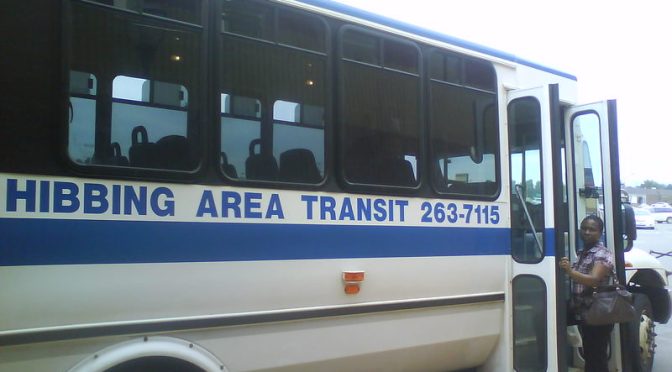
The COVID-19 pandemic took a major toll on public transit and shared transportation services in Minnesota, causing ridership and revenues to plummet. And it wasn’t just an urban problem: Smaller rural agencies and services saw sharp declines, too.
Currently, federal bridge performance measures in the United States and measures most commonly used by state transportation agencies for bridge management are based on National Bridge Inventory (NBI) General Condition Ratings that reflect bridge component conditions (deck, superstructure and substructure).
MnDOT also collects bridge element data that provides a more granular, objective and quantitative assessment of condition, and would like to have performance measures and targets based on the bridge element data that guides a data-driven methodology to select cost-effective treatments.
MnDOT has approved products for blanket and hydromulches. There are many versions of each type of temporary erosion prevention materials, that vary in thickness, composition, and cost.
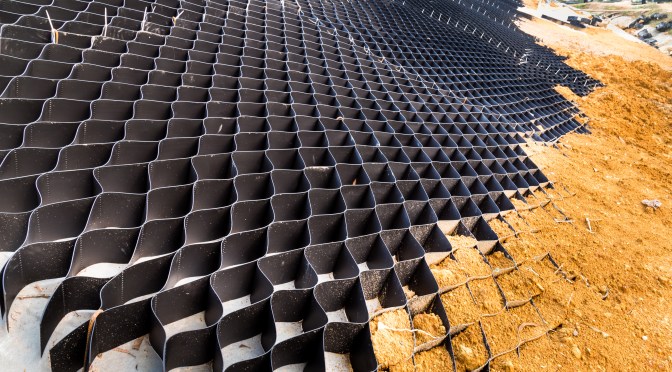
The two most common stabilization methods to control erosion and establish vegetation used by MnDOT are Hydraulic Erosion Control Products (HECP) and Rolled Erosion Prevention Products (REPP). Specifying the best fitting product for the situation keeps MnDOT in compliance with stormwater permits and is more cost effective.
MnDOT and the Minnesota Local Road Research Board have funded 21 new research projects and are seeking Technical Advisory Panel members to help guide the research. This year’s RFP received over 83 proposals from qualified universities across the country. To receive updates on any of the funded projects, select “subscribe” on the project webpage.
Assessing the return on investment in transportation research is crucial to ensuring program goals are met, knowledge and technology are shared broadly, and future investigations are prioritized. A recent effort leveraged existing MnDOT and LRRB tools and processes to evaluate and communicate the value of innovation and research. A new benefit monitoring and communication framework, which can be tailored to individual projects, allows agencies to reassess a project and its benefits throughout the research life cycle.
Accurate and timely moisture measurement of earthwork during compaction of foundation layers is crucial to proper construction and long-term durability of the pavement structures. Since the traditional methods for measuring moisture are point specific, expensive and/or time consuming. None of the existing methods have been able to deliver real-time, continuous moisture measurements that would aid engineers in delivering more durable pavement structures.
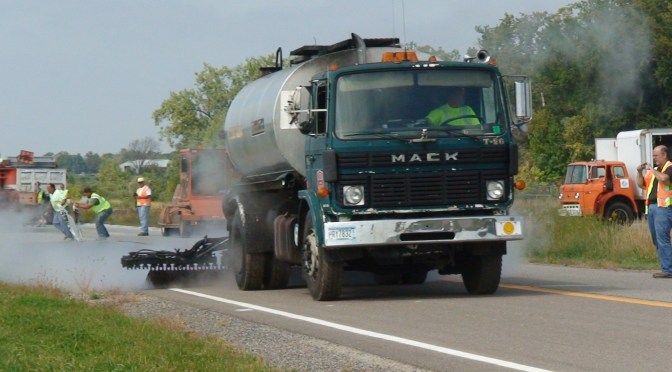
Aging pavement infrastructure and the deterioration of pavement surfaces over time remain an ongoing challenge in meeting roadway user expectations. Preventive pavement preservation treatments that are applied on sound, structured-condition pavements can extend the pavements’ functional service life and reduce future maintenance costs. Fog seals are one of these treatments. Fog seals are applied by spraying a thin layer of emulsion onto the pavement to slow or in some cases reverse the damage caused by oxidative aging. Asphalt emulsions are the most common material used in fog seals. Rejuvenators are usually added to the formulation to lower its viscosity and possibly even rejuvenate the surface of the existing aged pavement.
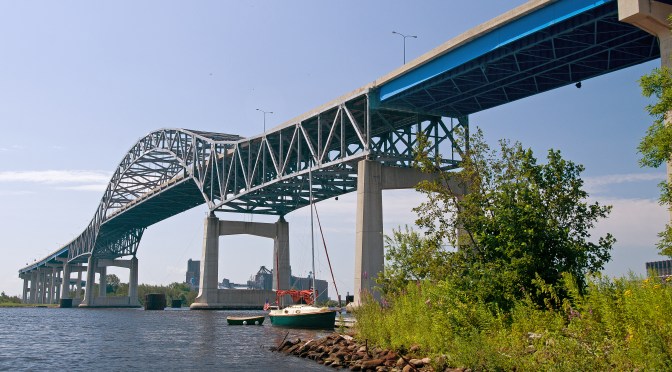
As bridge infrastructure in Minnesota and across the country ages, maintaining and preserving the existing bridge network becomes increasingly important—and increasingly challenging. In Minnesota alone, 25 percent of bridge-deck area is more than 50 years old, and the number of bridges rated in “fair” condition has recently overtaken the number rated in “good” condition.
Green means go and yellow means go faster—so goes a wry take on driver behavior at traffic signals. But it’s not just travel time that increases when you brake for a red: Fuel consumption does, too. Could transmitting signal data to connected vehicles (CVs) reduce stop-and-go cycles and fuel use? U of M researchers say yes.





 Crossroads