
Tag Archives: Local Road Research Board


Video: How to Navigate a Multi-Lane Roundabout

New technology aimed at making rural intersections safer
This video above showcases a new kind of intersection conflict warning system being developed for use primarily by local agencies at rural, two-way stop intersections. Called the ALERT System, it uses a simple but ingenious combination of radar, wireless communication and flashing LEDs to alert drivers to the presence of approaching vehicles, thereby helping them identify safe gaps in the cross traffic and avoid potentially deadly collisions.
These types of systems are nothing new; MnDOT and other state DOTs have been developing them for more than a decade under the ENTERPRISE pooled fund program. MnDOT also recently kicked off a three-year project to deploy 20–50 of its Rural Intersection Conflict Warning Systems at selected at-risk intersections across the state. The main difference with the ALERT System is that it’s designed to be cheaper and easier to deploy than existing ICWS technologies. While that might sound like an incremental improvement, the difference for cash-strapped local agencies could be huge.
Since the ALERT System uses solar power, it doesn’t have to be hooked up to the power grid — which means that, in theory, county public works crews could install it themselves. The system also uses a simplified controller that doesn’t require a traffic signal technician to install and maintain, and detects vehicles using radar rather than in-pavement sensors. These factors might encourage greater adoption of ICWS technologies, which studies have shown to reduce both the frequency and severity of crashes.
The project is now in its second phase. It still faces a number of hurdles before could be ready to deploy, but Vic Lund, the traffic engineer for St. Louis County and the project’s main champion, says the results so far have been encouraging. In the video below, Lund shares his thoughts on the project, its challenges and the future of Intelligent Transportation Systems in Minnesota.
Learn more:
- Warning system aims to alert drivers to potential crashes (Catalyst article)
- Advanced LED Warning Signs for Rural Intersections Powered by Renewable Energy (Technical Summary)
- Advanced LED Warning Signs for Rural Intersections Powered by Renewable Energy (Research Report – Phase 1)
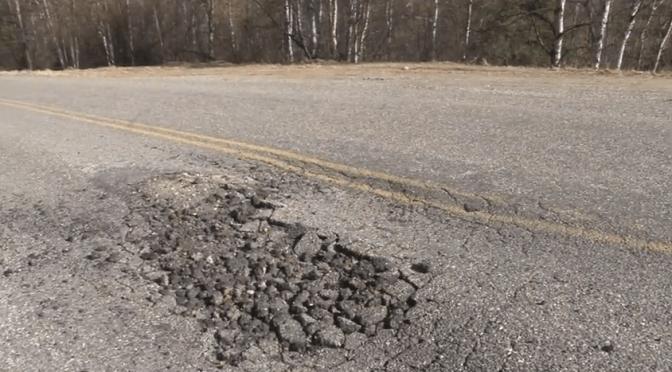
New videos show how frost heave ravages roads
Regardless of whether you’re familiar with the term “frost heave,” if you live in Minnesota and drive on the roads, you’re already familiar with its destructive capacity. Many of the dips, bumps, potholes and cracks that appear on our roads every spring are a direct result of frost heave, which occurs when water accumulates in the soil beneath the pavement and begins freezing and then thawing along with the changing seasons. The resulting expansion and contraction weakens the road base and leaves it susceptible to damage from traffic loading.
These new videos produced by the Local Road Research Board explain how frost heave works, and describe some of the strategies public works departments use to combat it. The top video is is the shortened, executive-summary version, while the bottom video is the full, 13-minute version meant for transportation professionals.

Previewing MnDOT’s next round of research projects
MnDOT Research Services recently released its 2013 request for proposals. If you have any kind of direct interest in transportation research in Minnesota, chances are you might have known that already. But those with more of a general curiosity might be interested to see the list of research need statements from the RFP, as they provide a nice preview of the next round of potential MnDOT research projects.
As you can see, some are of a highly technical nature. (It’s safe to say that a study on “PCC Pavement Thickness Variation Versus Observed Pavement Distress” would be of interest mainly to engineers.) Others, however, like “The Economic Impact of Bicycling in Minnesota,” might have a broader appeal. In any case, it’s a fascinating glimpse at the myriad of issues that MnDOT is attempting to address through research and innovation.
Here’s the list of research need statements from the 2013 RFP, broken down by category:
Environment
- Weights and Measurements for Verification of High Organic Soils
- Automated flocculation dosing rates based on real-time turbidity and flow monitoring
Maintenance
Materials and Construction
- PCC Pavement Thickness Variation Versus Observed Pavement Distress
- Evaluation of Recycled Aggregates Test Section Performance
- Design Guideline for Stabilization of Unpaved Shoulder—Phase I (Synthesis study)
- Optimal RAP Content for Minnesota Gravel Roads
- Modernizing Road Construction Plans and Documentation
- Alternate Design Methods to Renew Lightly Traveled Paved Roads
- Full Depth Reclamation (FDR) for Urban and Suburban Street Application
- Prevention of Stripping Under Chip Seals
- Bio-Fog Seal Evaluation
Multimodal
- Understanding and Communicating the Tradeoffs Associated with Urban Roadway Design
- Traffic Impacts of Bike Lanes
- The Economic Impact of Bicycling in Minnesota
- Coordination of Inter-City Multimodal Investments
Policy and Planning
- Methods for Evaluating the Economic Development Potential of Transportation Projects
- Barriers to Right-of-Way Acquisition and Recommendations for Change
Traffic and Safety
- Evaluation of Intersection Conflict Warning Systems
- Dynamic Traffic Assignment (DTA) Mesoscopic Travel Model
- Driver Performance with Future Warning Sign Delivery
- Evaluation of Safety and Mobility of Two-Lane Roundabouts
- Safety study of 35W improvements done under UPA project
- Development of a Queue Warning System Utilizing ATM Infrastructure

Best practices for trail crossings – webinar and draft report
Last week, MnDOT Research Services hosted a workshop on a forthcoming report, “Decision Tree for Identifying Alternative Trail Crossing Treatments.” It was broadcast as a webinar, the recording of which is now available online via Adobe Connect:
http://mndot.adobeconnect.com/p8hlfripuwe/
The final report is coming soon, but in the meantime you can see the draft version on our website (link), along with case studies and other related documents.
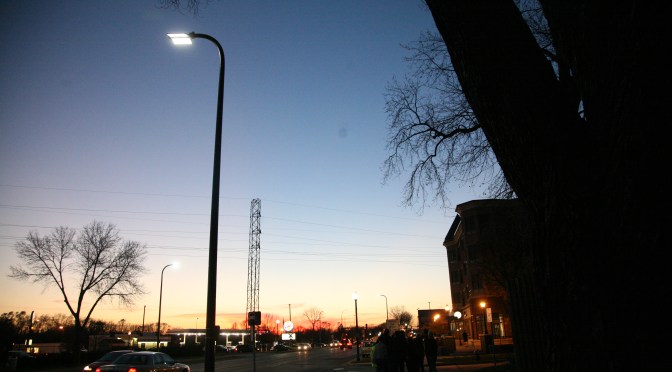
Are energy-efficient streetlights cost-effective?
In 2010, the City of Minneapolis installed 55 energy-efficient streetlights from nine different manufacturers along 46th Street between 34th and 46th avenues. The project, part of Hennepin County’s Minnehaha-Hiawatha Community Works program, was designed to field test various models of light-emitting diode (LED) and induction lights. Over the course of two years, researchers observed, evaluated and compared the performance of various lighting products, detailing the results in a recently published report available on the MnDOT Research Services website.
In a broad sense, the results of the study would appear to confirm what has become common knowledge regarding energy-efficient technologies: while they cost more up front, in the long run they have the potential to save money in the form of reduced energy and maintenance costs. The study also demonstrates that energy-efficient streetlights are capable of producing adequate light output and are well-received by residents.
However, if the big question is whether energy-efficient streetlights can save local governments money, the answer is somewhat complicated. The study found that both the levels of light ouput and the amount of time it takes to recoup costs varies significantly by product. Page 16 of the report (page 25 of the PDF) features a table comparing various products’ light output and estimated payback time. With one notable exception, the results show that products with the highest light output (i.e. the highest performers and therefore the most desirable) tend to also have the longest payback time. The amount of time it takes to generate a cost savings from energy-efficient streetlights can be as short as 2.6 years or as long as 24 years, depending on the product.
Some other interesting tidbits from the study:
- Researchers observed operational cost savings of 50-75 percent, depending on the product.
- Eighty percent of the savings came from reduced maintenance costs, while only 20 percent came from reduced energy costs.
- In a survey of area residents, 76 percent responded positively to the new, energy-efficient lights.
The study demonstrated that energy-efficient streetlighting is a feasible option for local governments, with the caveat that agencies need to research lighting products thoroughly before making a choice as to which one to use. Ultimately, considering the ever-decreasing cost of LEDs, the use of energy-efficient streetlighting technologies is likely to grow.
Read more:

Free webinar July 9 on best practices for bicycle trail crossings
Intersections between trails and roadways can be dangerous places for bicyclists and pedestrians. Next week, MnDOT Research Services is offering a free webinar on a forthcoming manual designed to help make trail crossings safer.
On Tuesday, July 9, from 1:00 p.m. to 2:30 p.m. (CDT), University of Wisconsin—Madison Professor David Noyce will be conducting a workshop on his forthcoming handbook, “Decision Tree for Identifying Alternative Trail Crossing Treatments.” The project, funded by MnDOT and the Local Road Research Board, aims to identify current engineering state-of-the-practice for trail crossings and provide guidance as to appropriate crossing designs and vehicular and bicycle right-of-way hierarchies.
You can click on the link below at the specified date and time to watch the webinar. No registration is required.
 Crossroads