

The Complete Streets approach to roadway design uses site characteristics to create a safer, more accessible environment for all road users. New research demonstrates that roadway design features have a measurable impact on driving speeds. The development of speed reduction factors (SRFs) that estimate the impact of road features on speed reduction provides a data-driven approach to highway design.
Continue reading Measuring the Effects of Road Features on Driving SpeedsTag Archives: complete streets
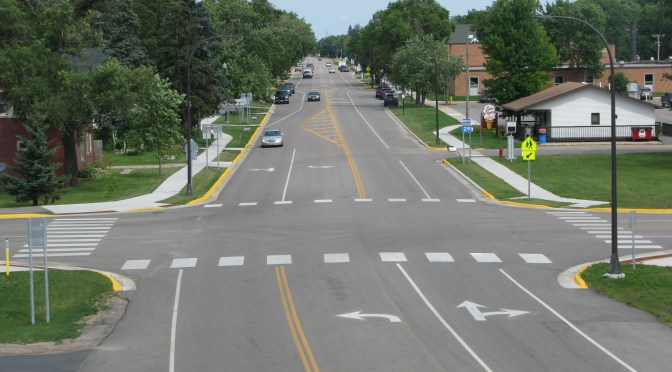
New Project: Complete Streets Speed Impacts
Minnesota Statutes §174.75 requires the MnDOT to follow a complete streets approach in all phases of planning, project development, operation, and maintenance activities. The purpose of the MnDOT complete streets policy “is to address the safety and accessibility needs of users of all ages and abilities. MnDOT assesses user needs at several stages of planning, project scoping and designing, construction, operation, and maintenance.”
Continue reading New Project: Complete Streets Speed Impacts
Economic Effects of Complete Streets Projects on Minnesota’s Main Streets
Complete Streets is a national initiative to encourage the design of safe, convenient transportation systems with access to users of all types, ages and abilities. MnDOT’s Complete Streets policy aims to provide a safe and functional transportation system for all users. Perceived and actual economic impacts of these road projects on small cities vary, but MnDOT has new strategies to work with local partners and evaluate economic benefits for smaller communities.
Continue reading Economic Effects of Complete Streets Projects on Minnesota’s Main Streets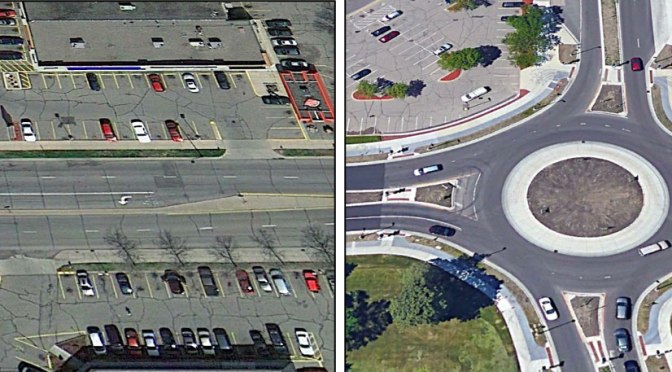
Richfield “Sweet Streets” Improve Quality of Life, Traffic Times Citywide
Complete streets is an approach to road planning and design that considers and balances the needs of all transportation users.
Richfield, Minnesota, located south of Minneapolis, began a Complete Streets redesign in 2013. So how did it turn out? A retrospective study has found that while construction impacts remain on the minds of business owners and residents, Richfield’s program has improved community life and traffic times citywide. Safety and multimodal use are expected to improve.
Continue reading Richfield “Sweet Streets” Improve Quality of Life, Traffic Times Citywide
New Project: Assessing the Economic Effects of Context Sensitive Main Street Highways in Small Cities
Complete Streets is a transportation policy and design approach that requires streets to be planned, designed, operated, and maintained to enable safe, convenient, and comfortable travel and access for users of all ages and abilities regardless of their mode of transportation.
Continue reading New Project: Assessing the Economic Effects of Context Sensitive Main Street Highways in Small Cities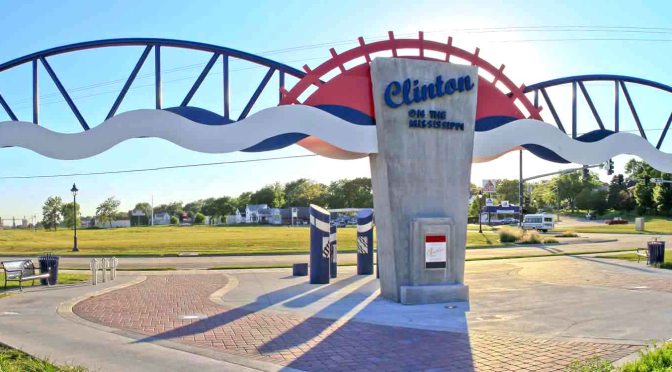
Six Ways to do Multimodal in Greater Minnesota
Can rural Minnesota do multimodal?
You betcha, says a new study by University of Minnesota researcher Carol Becker, who compiled 65 examples of innovative multimodal rural and small urban transportation projects from around the United States.
The study, funded by the Minnesota Department of Transportation, looks at alternatives for promoting and strengthening multimodal transportation in rural and small urban areas. Becker developed these six case studies to showcase different modes and strategies:
Retrofitting Sidewalks
The city of Olympia, Washington, was mostly built during the automobile era. As a result, most of the city developed without sidewalks. In 2004, Olympia passed a voter referendum that linked enhanced parks with adding sidewalks throughout the city. The referendum was supported by parents who wanted safe routes to school for their children and by environmentalists who wanted alternatives to driving. But the key to voter approval was linking recreation at parks with recreation walking to and from the parks. The Parks and Pathways program is now retrofitting miles of sidewalks into neighborhoods.

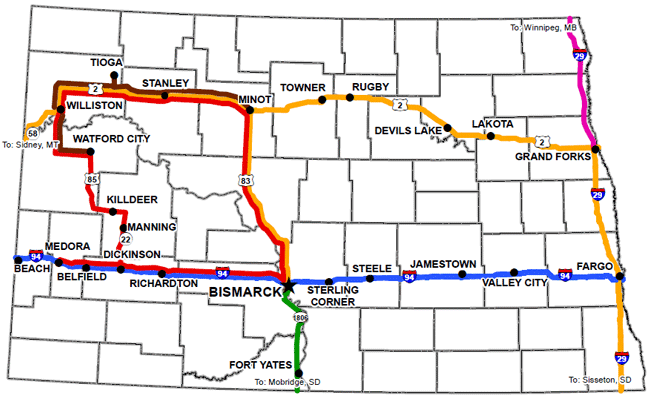
Intercity Bus Service
North Dakota has the third-lowest population density in the United States. Despite this, it has a network of buses that connect small towns to larger regional centers. Such alternatives to driving allow residents — particularly elderly and disabled persons — to stay in their communities rather than move to large cities to access needed services.
Senior Transportation
A nonprofit in Mesa, Arizona, implemented a program to reimburse eligible seniors for car trips provided by other individuals. The program was moved to the regional transit provider for expansion. It did not scale up well, however, and was recently replaced with the East Valley RideChoice Program, which provides seniors and disabled adults with discounted cards for taxi service. RideChoice participants can receive up to $100 of taxi service per month for either $25 or $30, depending on their city of residence.

Integrating Highways into Small Town Fabric
One challenge to making smaller communities more walkable and pedestrian-friendly is that most small towns are built around 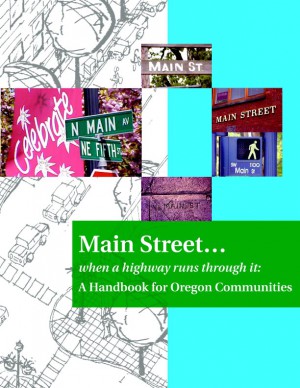 highways. In fact, unless a bypass has been built, the main street of a small town is also typically a highway. This creates a conflict between groups who want to move vehicles efficiently and groups who want pedestrian-friendly downtowns.
Oregon took two steps to help mediate this:
- Added a functional classification to the Oregon Highway Manual for the portion of roadway that runs through small towns. This functional classification has very different design standards that can accommodate walking, biking, commercial activity along the roadway, parking along the roadway and many other small-town needs.
- “Main Street: When A Highway Runs Through It” was written to help local governments understand their options for creating a multimodal environment and better advocate for their interests with the Oregon Department of Transportation. The document explains ODOT funding processes and shows examples of design options. Local governments can then adopt these elements and standards into their local plans, which ODOT must work with when doing highway improvements.
Complete Streets
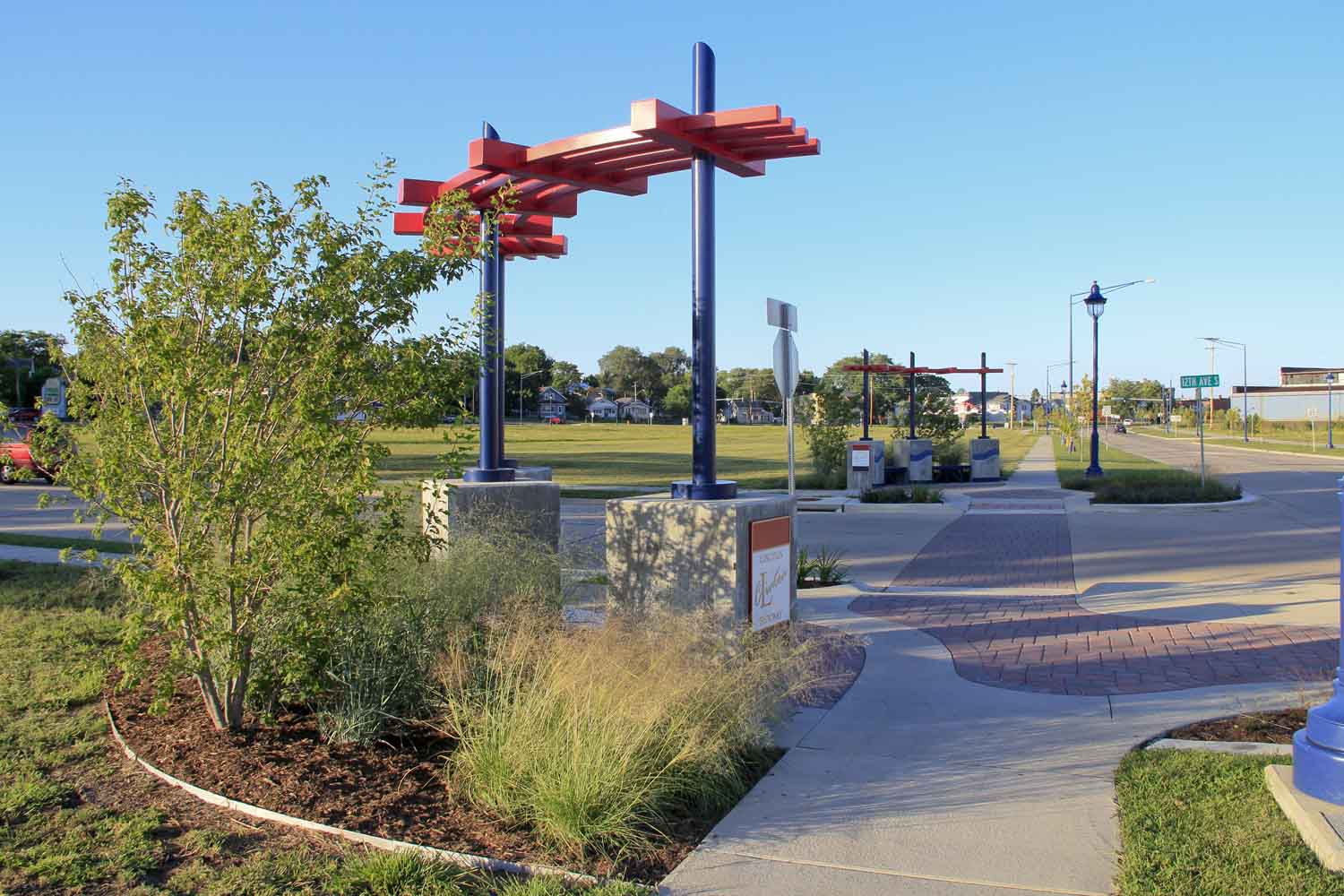
Clinton, Iowa, is a city with a population of 27,000 on the Mississippi River in eastern Iowa. In 1995, the rail yard closed, which provided an opportunity to redevelop land. The city created a comprehensive long-range plan that included remediating soil contamination, purchasing land for redevelopment, realigning two streets and increasing transportation choices with a “complete streets” design. The reclaimed land will support a multi-use path, sidewalks and connections to cross streets.
Approximately $50 million has been secured for the project. A $2.7 million Transportation Investment Generating Economic Recovery (TIGER) grant was also received from the U.S. Department of Transportation in 2012 to pay for a multi-use trail with a direct connection to the Mississippi River Trail, decorative lighting and plantings. In the future, land will be sold for higher density, walkable development.
Impact Fees for Funding Infrastructure
As resistance increases to broad-based taxes, there has been a shift toward funding transportation with fees linked to specific projects. Examples include:
- Concurrency laws, which require capacity in governmental systems (either planned or existing) before development can occur. If capacity does not exist, development cannot occur. In the state of Washington, a number of cities use concurrency to set transportation fees paid by new development. Bellingham, Washington, uses this kind of system to raise funds for transportation projects.
- Development impact fees. Contra Costa County, California, has a capital plan for transportation improvements and sets a fee that is paid by new development to fund that infrastructure. Fees vary from under $1,000 to over $15,000 depending on where new development is occurring. The county expects to raise more than $845 million in transportation dollars from 2014 to 2030 using such a mechanism.
- Allowing local units of government to create special districts to fund transportation projects.
Related Resources
Rural and Small Urban Multi-Modal Alternatives for Minnesota – Final Report

Minnesota Bike Lanes: Learning to Share the Road

Three common questions about bike lanes, answered
If you’ve ever driven near a bike lane and not known what to do, you’re not alone.
A forthcoming video from the Local Road Research Board seeks to answer common questions about on-street bike lanes and help bicyclists and motorists better understand the rules. The video is due to be released this spring; in the meantime, we thought we’d give you a sneak preview by addressing three common misconceptions about bike lane rules and safety.
1) Are bicyclists required to use a bike lane, when present?
No. Although bike lanes usually provide the smoothest, safest and most efficient method of transportation — for everybody — they are not required to use them. They are allowed to ride outside bike lanes to make turns or avoid debris, and they still have the option of using an adjacent trail where available.
2) Are vehicles allowed to enter bike lanes?
Yes, but only to park or turn onto a driveway or street. Motorists should treat bike lanes like any other lane of traffic and yield to approaching bicyclists, but they do have the right to enter bike lanes when turning.
3) Do bicyclists have to follow the same rules as motorists?
Yes. Bicycles are considered vehicles under Minnesota state law and have the same rights and responsibilities. Cyclists are required to obey stop signs and signal their turns, just like motorists.

Watch for the LRRB’s new bike safety video on Crossroads this spring. In the meantime, check out MnDOT’s tips on bicycle safety.
 Crossroads