
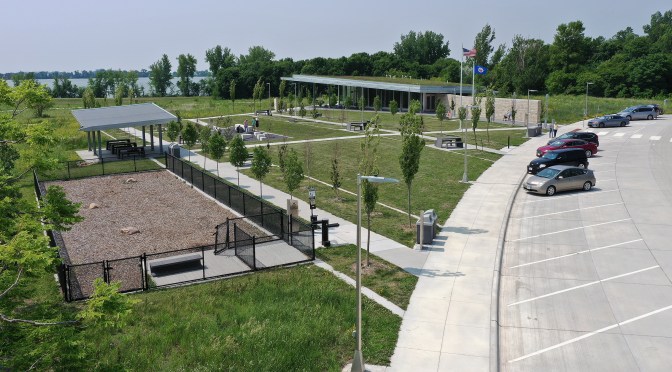
MnDOT and the Minnesota Local Road Research Board have funded 21 new research projects and are seeking Technical Advisory Panel members to help guide the research. This year’s RFP received over 83 proposals from qualified universities across the country. To receive updates on any of the funded projects, select “subscribe” on the project webpage.
Continue reading MnDOT and the Local Road Research Board Award Funding to New ResearchCategory Archives: research
General research posts.
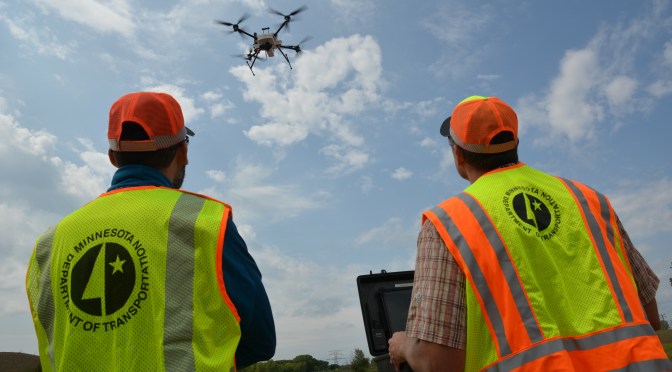
Evaluating and Communicating the Benefits of Transportation Research
Assessing the return on investment in transportation research is crucial to ensuring program goals are met, knowledge and technology are shared broadly, and future investigations are prioritized. A recent effort leveraged existing MnDOT and LRRB tools and processes to evaluate and communicate the value of innovation and research. A new benefit monitoring and communication framework, which can be tailored to individual projects, allows agencies to reassess a project and its benefits throughout the research life cycle.
Continue reading Evaluating and Communicating the Benefits of Transportation Research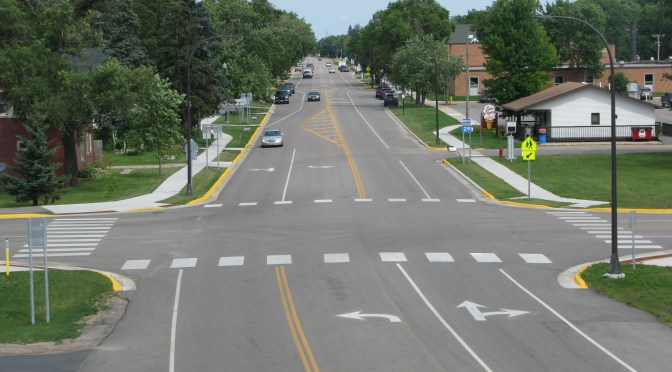
New Project: Complete Streets Speed Impacts
Minnesota Statutes §174.75 requires the MnDOT to follow a complete streets approach in all phases of planning, project development, operation, and maintenance activities. The purpose of the MnDOT complete streets policy “is to address the safety and accessibility needs of users of all ages and abilities. MnDOT assesses user needs at several stages of planning, project scoping and designing, construction, operation, and maintenance.”
Continue reading New Project: Complete Streets Speed Impacts
Efficacy, Cost, and Impacts of Non-Chloride Deicers

In their most recent newsletter, Clear Roads presented the results of a pooled-fund study on alternative deicing products.
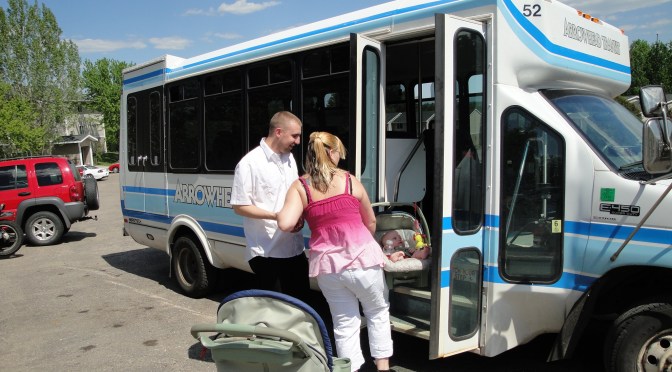
‘Transportation Insecurity’: A New Metric to Evaluate Programs and Guide Decision Making
Reprinted from CTS News, December 7, 2023
—Sophie Koch, contributing writer
Reliable transportation has a huge impact on quality of life. Many Americans, however, are unable to travel where and when they need to go, and policymakers lack tools to measure the extent of the problem.
Continue reading ‘Transportation Insecurity’: A New Metric to Evaluate Programs and Guide Decision Making
Continuous Moisture Measurement During Pavement Foundation Construction
Accurate and timely moisture measurement of earthwork during compaction of foundation layers is crucial to proper construction and long-term durability of the pavement structures. Since the traditional methods for measuring moisture are point specific, expensive and/or time consuming. None of the existing methods have been able to deliver real-time, continuous moisture measurements that would aid engineers in delivering more durable pavement structures.
Continue reading Continuous Moisture Measurement During Pavement Foundation Construction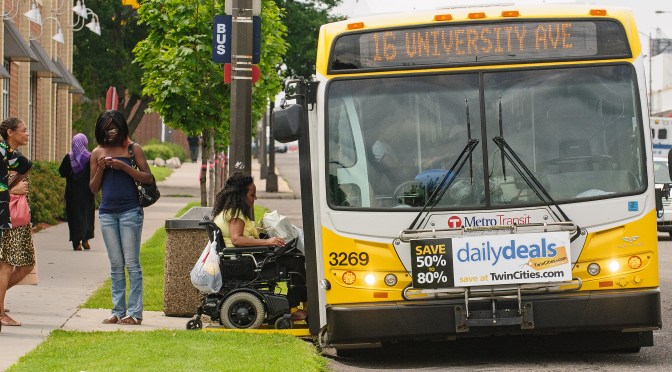
COVID-19 pandemic substantially changed commuting patterns, job access
Reprinted from CTS News, October 9, 2023
Patterns of movement in cities, especially office job commutes, were substantially altered in 2021 by telework, economic change, and other responses to COVID-19, according to new research from the Accessibility Observatory at the University of Minnesota. While the immediate effects of these behavioral changes, such as reduced congestion and lower transit ridership, have been well documented, new data reveals deeper impacts that differ by the three modes studied: auto, transit, and biking.
Continue reading COVID-19 pandemic substantially changed commuting patterns, job access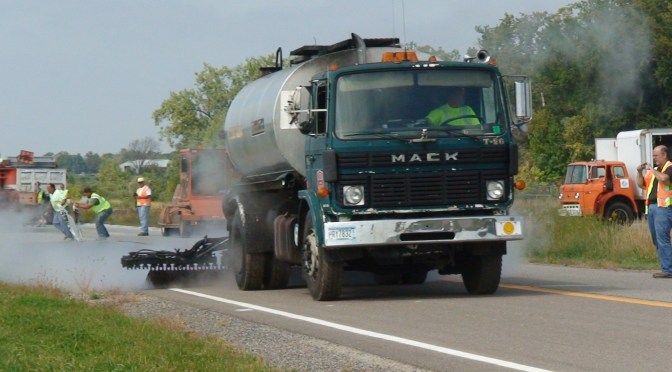
Bio-Material Maintenance Treatments
Aging pavement infrastructure and the deterioration of pavement surfaces over time remain an ongoing challenge in meeting roadway user expectations. Preventive pavement preservation treatments that are applied on sound, structured-condition pavements can extend the pavements’ functional service life and reduce future maintenance costs. Fog seals are one of these treatments. Fog seals are applied by spraying a thin layer of emulsion onto the pavement to slow or in some cases reverse the damage caused by oxidative aging. Asphalt emulsions are the most common material used in fog seals. Rejuvenators are usually added to the formulation to lower its viscosity and possibly even rejuvenate the surface of the existing aged pavement.
Continue reading Bio-Material Maintenance Treatments
Cybersecurity for Automated Vehicles
Article reprinted from the Center for Transporation Studies, July 2023
Continue reading Cybersecurity for Automated Vehicles
Sensor and Drone Technologies Help Maintain Minnesota’s Aging Bridge Infrastructure
Reprinted from Catalyst, September 9, 2023
As bridge infrastructure in Minnesota and across the country ages, maintaining and preserving the existing bridge network becomes increasingly important—and increasingly challenging. In Minnesota alone, 25 percent of bridge-deck area is more than 50 years old, and the number of bridges rated in “fair” condition has recently overtaken the number rated in “good” condition.
Continue reading Sensor and Drone Technologies Help Maintain Minnesota’s Aging Bridge Infrastructure
