

Roundabouts are effective at reducing driver speeds and lowering serious crash rates compared to other intersection types. Speeds vary in roundabouts, however, depending on geometric factors such as the number of lanes, entry and exit widths, and diameter. The use of supplementary control devices such as sign types, sign placement and pavement markings may also impact entry and exit speeds.
Continue reading New Project: Speed Impacts from Roundabouts and Other Traffic Control DevicesCategory Archives: Research
General research posts.

New Project: Effect of Centerlines on Prevailing Traffic Speeds of Low-Speed, Two-Lane, Two-Way Roads in Urban Contexts
Vehicle speed has a substantial influence on both the likelihood and severity of crashes involving nonmotorized road users. Reducing speeds on urban streets, in particular, enhances safety for the greatest number of vulnerable road users.
Continue reading New Project: Effect of Centerlines on Prevailing Traffic Speeds of Low-Speed, Two-Lane, Two-Way Roads in Urban Contexts
New Project: Analyzing Truck Size and Weight Impacts on Vehicle Miles Traveled
Trucks account for over one-third of transportation sector greenhouse gas (GHG) emissions. MnDOT strives to identify guidance for the freight community to reduce its vehicle miles traveled (VMT). Allowing larger or heavier trucks could allow more freight to be moved per vehicle, thus reducing VMT.
Continue reading New Project: Analyzing Truck Size and Weight Impacts on Vehicle Miles Traveled
Updated stormwater guide reflects new research, experience
Reprinted from Catalyst, December 16, 2024
Effective stormwater management is essential for maintaining healthy urban environments, but it requires consistent monitoring and maintenance to prevent costly failures—something that municipalities across the state have struggled with for years.
At a recent CTS webinar, Andy Erickson, research manager at the University of Minnesota’s St. Anthony Falls Laboratory and CTS scholar, guided more than 160 attendees through recent changes made to the Minnesota Stormwater Inspection and Maintenance Resource Guide. The original guide, published in 2009, has been revised to incorporate more than a decade’s worth of field applications, research, and practical experience. The updated resource aims to improve the inspection, operation, and maintenance of stormwater management practices across the state, providing practitioners with essential tools to optimize stormwater management and increase cost-effectiveness.
Stormwater management is crucial for controlling urban runoff, and systems such as green infrastructure and low-impact development reduce pollution before stormwater is sent to lakes, rivers, and streams. However, these systems require regular upkeep to remain effective, and maintenance challenges arise from their passive nature and logistical issues in large urban areas. One key problem is the lack of on-site staff for monitoring and making the proactive inspections vital for preventing failures. Regular maintenance can reduce costs by avoiding the need for major repairs, but municipalities may still struggle to stay within their maintenance budgets, as funding for upkeep is often inadequate compared to the cost of new infrastructure.
“Since there are no operating staff on-site to see when these things fail or see what’s causing them to fail, we have to be proactive in our inspections,” Erickson said. That means inspectors must travel multiple times to locations spread out across the metro region—which significantly increases costs. “Depending on the size of the practice, your total maintenance cost might become more than your original construction cost within five years of the life of that practice,” he said.
The 2024 update to the Minnesota Stormwater BMP Maintenance Resource Guide aims to address this issue by offering detailed instructions for inspecting and maintaining various stormwater systems. The updated guide includes inspection checklists in the form of fillable PDF documents. These checklists should streamline the inspection and documentation process and help inspectors assess site conditions, including vegetation health, erosion, and drainage performance. And the forms can be easily updated and reused, providing a practical tool for ongoing stormwater management. “The forms are not static, but rather are intended to serve as a resource that can be used and adapted to fit a jurisdiction’s particular needs,” Erickson explained.
Following items from the checklist, the guide provides specific maintenance recommendations based on inspection findings, including how to address issues such as erosion, vegetation dieback, and structural failures.
“You can go through these to really home in on what maintenance is needed and when the maintenance is needed,” Erickson said.
The updated Minnesota Stormwater BMP Maintenance Resource Guide is now available online for download.
—Emma McIntyre, CTS communications intern
Related Resources
Remote driving of autonomous vehicles: Are we there yet?
Reprinted from Catalyst, December 6, 2024
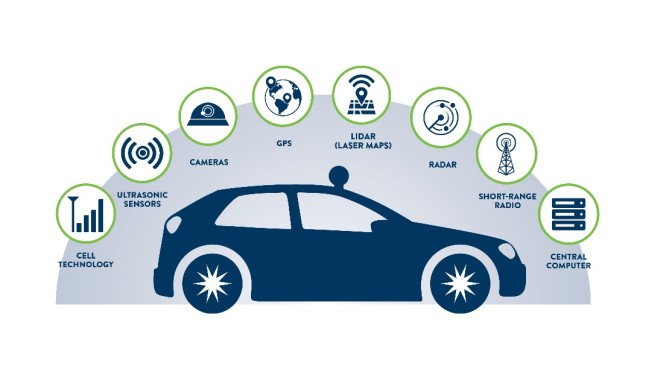
Since the 2004 DARPA Grand Challenge, connected and autonomous vehicles (CAVs) have been highly anticipated and widely discussed. Today, Teslas with “autopilot” and General Motors vehicles with Super Cruise driver-assistance technology are already on roads, and pilot “robotaxi” services operate in several major US cities.
However, most CAVs are currently classified, at best, as Level 4 by the Society of Automotive Engineers. This means they are designed and operated with specific, predefined conditions—known as their operational design domain (ODD)—and must stop safely when those conditions are no longer met. Despite advancements in artificial intelligence and machine learning, there is still a long way to go before fully autonomous, or Level 5, vehicles become a reality.
Partial remote driving, or teleoperated driving (ToD), has emerged as a potential interim solution. With ToD, a remote operator can take control if a CAV encounters conditions beyond its ODD. Enabled by 5G cellular networks, ToD has shown promise in controlled settings, but the question remains whether current 5G networks can reliably support remote driving on a large scale.
In a recent project, University of Minnesota researchers investigated the feasibility of and critical networking requirements for remote CAV operation. The project was led by Zhi-Li Zhang, a professor in the Department of Computer Science and Engineering, and Rajesh Rajamani, a professor in the Department of Mechanical Engineering. Their work was supported by CTS seed funding, which aims to help CTS scholars develop expertise in emerging areas and foster strategic relationships that position them for future funding opportunities.
According to Zhang, 5G was designed to enable low-latency applications—those that process high volumes of data with minimal delay. In reality, today’s commercial 5G networks mainly support conventional mobile broadband access, especially to improve download speeds. But when it comes to teleoperation, higher uplink speeds and low latency in both directions are essential, Zhang says.
To test 5G’s potential, the research team used the MnCAV Ecosystem’s research vehicle—which is outfitted with cameras and lidar sensors—to conduct repeated driving experiments on commercial 5G networks in downtown Minneapolis. The study focused on end-to-end uplink performance of sensor data from the vehicle to a remote teleoperation station, analyzing how well these networks could support responsive, safe control.

Results showed that while transmitting a single video stream from a CAV is feasible, adding additional streams, especially from lidar—essential for depth perception—can strain the network. The researchers also found that, even in the case of a single video stream, latency increased when the vehicle was traveling at higher speeds and at handover points between 5G base stations, posing risks for safe and reliable remote driving.
These findings highlight fundamental challenges for remote driving on commercial 5G. However, thanks in part to this CTS-funded project, Zhang, Rajamani, and other researchers from the University of Minnesota and the University of Michigan were awarded an NSF grant to study further solutions.
One approach the researchers are exploring in this project is a new “predictive display” mechanism that leverages generative artificial intelligence to overcome the latency challenge of 5G networks. The mechanism uses recent but slightly delayed (e.g., by 0.5 seconds) data to predict the CAV’s current surroundings. Early tests suggest that this method could improve remote driving performance by masking the 5G network delay, helping teleoperators drive more effectively. However, the researchers say further work is needed to refine the technology and make remote CAV operation reliable and robust at scale.
—Krysta Rzeszutek, CTS digital editor
Related research by MnDOT

Clear Roads: Winter Maintenance Research Roundup
New from clearroads.org on December 11, 2024
- Performance of Ultra-Thin Bonded Wearing Course (UTBWC) During Winter Snow Ice Events in Maryland, Maryland DOT, August 2024. Research Summary.
- ODOT‘s Snow and Ice Performance Evaluation Tools, Ohio DOT, August 2024.
- Development of the Nebraska Department of Transportation Winter Severity Index – Phase II, Nebraska DOT, May 2024. Final Report.
- Evaluation of Methods for UDOT Brine Tank Condition Assessment, Utah DOT, January 2024. Final Report.

Guidelines for Implementing Mini-Roundabouts
Increasingly, roundabouts are the solution of choice for many intersections because they improve safety and traffic flow and reduce pollution due to less vehicle delays. Traditional roundabout design typically requires a larger footprint than a conventional four-way intersection.
Continue reading Guidelines for Implementing Mini-Roundabouts
Clear Roads: Training Module Development for Evaluation of Storm Severity Index and Winter Severity Index Variables
Reprinted from Clear Roads News November 27, 2024
Clear Roads project 18-03, Evaluation of SSI and WSI Variables, produced a step-by-step guide and flowchart tool to help agencies identify or develop severity index methods to fit their needs and available data sources.
As estimating the impact of weather on roadway maintenance resources is becoming an increasingly important issue for agencies across the country, a recently completed Clear Roads project, 21-04, Training Module Development for Evaluation of Storm Severity Index and Winter Severity Index Variables, produced additional training modules geared toward three key audiences: division directors, snow and ice managers, and supervisors.
Incorporating audiovisual materials, discussion topics, and interactive exercises, the training modules will help practitioners design and develop indexes to suit their agency’s particular needs.
Download the final report and two-page brief: CR 21-04 – Training Module Development for Evaluation of Storm Severity Index and Winter Severity Index Variables, July 2024.
Resources
- Training modules (CR 21-04)
- Final Report (CR 21-04)
- Spreadsheet Tool (CR 18-03)
- Final Report (CR 18-03)

New Project: Rural Intersection Enhancement and Driver Behavior Study
The risk of severe crashes increases when minor roads intersect with higher-speed roads in rural areas. MnDOT and county traffic engineers strive to find creative solutions that will prompt drivers to make safe decisions when navigating through intersections.
Continue reading New Project: Rural Intersection Enhancement and Driver Behavior Study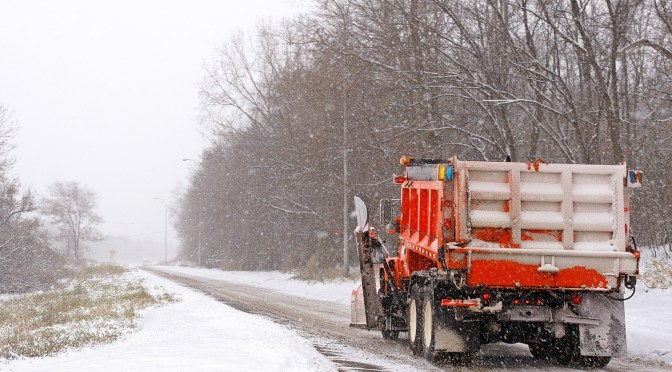
New Project: Alternative Deicer Performance Characterization: Know Before the Snow
MnDOT uses alternative deicer brines containing potassium chloride, magnesium chloride and calcium chloride for winter road maintenance. The alternatives are more effective in melting roadway ice than sodium chloride alone when temperatures are below 15 degrees Fahrenheit.
Continue reading New Project: Alternative Deicer Performance Characterization: Know Before the Snow Crossroads