

The COVID-19 pandemic resulted in fewer drivers on Minnesota’s roads in 2020 than in the previous year. Emptier roadways seem like they should be safer, but many states measured increases in speeding. For example, California issued twice as many speeding tickets, Iowa reported a 65% increase in driving 25 mph or more over the speed limit, and Ohio experienced the highest number of traffic fatalities since 2007. Clearly, some drivers were taking advantage of empty streets to speed. The pandemic also strained police forces, resulting in less enforcement.
Continue reading How Did COVID-19 Affect Driver Safety?Tag Archives: safety

New Project: Tool to Estimate the Safety Impact of Vehicle Levels of Automation on Minnesota Roads
While commercially available self-driving vehicles may still be decades away, an increasing number of vehicles on the market offer advance driver assistance systems (ADAS). For example, ADAS features include adaptive cruise control, steering automation, and hands-free steering.
Continue reading New Project: Tool to Estimate the Safety Impact of Vehicle Levels of Automation on Minnesota Roads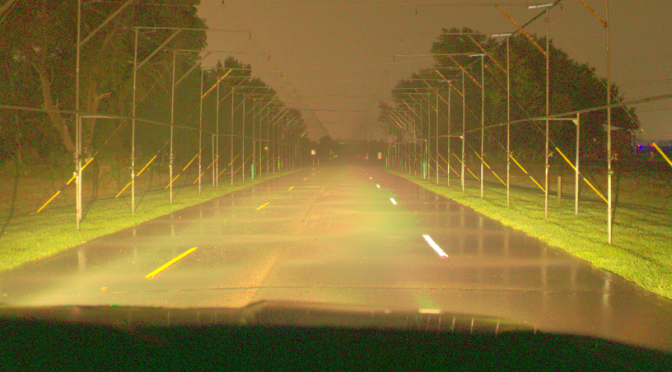
Pavement Marking Standard Project Earns National Recognition
It’s often more difficult for motorists to see road edge-lines and centerlines on rainy nights, especially in rural areas with limited lighting.
Continue reading Pavement Marking Standard Project Earns National Recognition
Separated Bike Lanes: Filling the Gaps in Design Guidance
In recent years, many U.S. cities have been installing separated bicycle lanes (SBLs) as part of their nonmotorized transportation networks. SBLs are bicycle pathways that employ paint and a vertical element as a buffer to separate motor vehicle traffic from bicycle traffic. They reduce crash risk, increase safety and comfort, and encourage more people to use bicycles as transportation.
Continue reading Separated Bike Lanes: Filling the Gaps in Design Guidance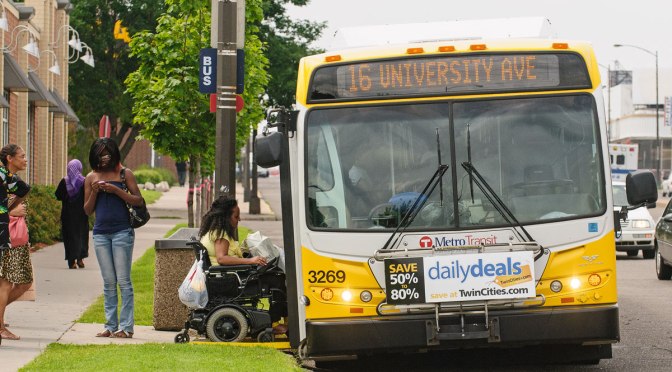
New Project: Understanding Post-COVID Safety Concerns, Perceptions and Preferences of Transit and Shared Mobility Users in Minnesota
Transit ridership dropped significantly last year in Minneapolis, Duluth and other cities during the COVID-19 pandemic.
Continue reading New Project: Understanding Post-COVID Safety Concerns, Perceptions and Preferences of Transit and Shared Mobility Users in Minnesota
Assessing Bridge Barriers for Today’s Vehicle Needs
In a recent study of inspection reports, design documents and other data to evaluate the safety performance of bridge barriers, investigators found that the most commonly used barrier designs meet newer safety requirements and keep Minnesota drivers safe.
Continue reading Assessing Bridge Barriers for Today’s Vehicle Needs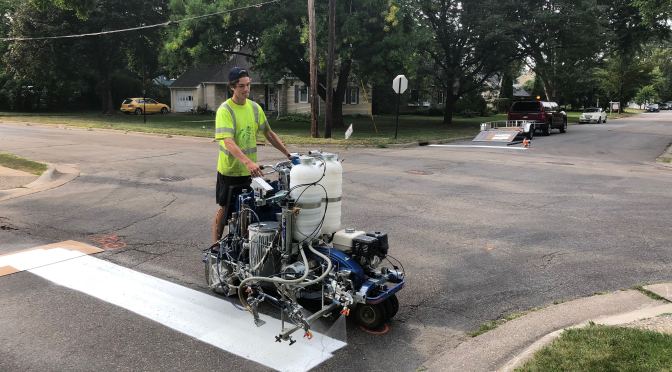
How Well Do Stop Lines Work as a Safety Feature?
How well do the stop lines at stop-controlled intersections actually work as a safety feature? Through an extensive safety study and a before-after field observation, a recent Minnesota Local Road Research Board study showed that the assumed safety effects of stop lines as a means of influencing driver behavior are not well supported by the evidence.
Continue reading How Well Do Stop Lines Work as a Safety Feature?
Selecting Uncontrolled Pedestrian Crosswalk Treatments
A new guidebook published by the Minnesota Local Road Research Board offers a uniform approach and practical methods for selecting locations and the right treatment for uncontrolled pedestrian crosswalks in Minnesota.
Continue reading Selecting Uncontrolled Pedestrian Crosswalk Treatments

Asphalt Delivery Tracking Goes Digital with Some 2020 Construction Projects
MnDOT construction projects require tons of hot mix asphalt each year, with over 188 road and bridge projects in the 2020 construction season alone.
Historically, plant mixed asphalt has been weighed, tracked and paid for with computer-generated paper tickets. Paper ticketing isn’t an ideal process for a variety of reasons—on-site ticket collection poses safety risks, tickets can be easily lost, and data must be tabulated manually, just to name a few.
Continue reading Asphalt Delivery Tracking Goes Digital with Some 2020 Construction Projects
Promoting Snow Fence Adoption in Minnesota
A new research study has shown that few landowners know about MnDOT’s snow fence program, its benefits to community safety and mobility, and incentives to install snow fences. Following community meetings and surveys in four regions of Minnesota, researchers identified promising promotional methods for the snow fence program, the constraints landowners face in adopting snow fences, and incentives and assistance to improve snow fence adoption. Project results will guide MnDOT’s efforts to expand the use of snow fences around the state
Continue reading Promoting Snow Fence Adoption in Minnesota Crossroads