
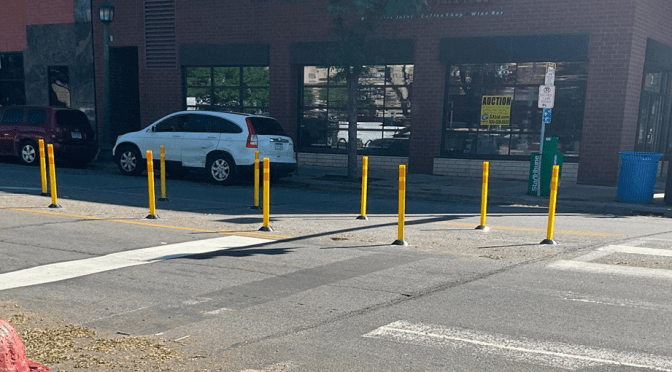
To enhance pedestrian safety at intersections, transportation agencies may install temporary or permanent infrastructure such as curb extensions or pedestrian refuge islands. While more permanent infrastructure with concrete is generally considered effective, specific details about temporary infrastructure with flexible delineators (or bollards), such as installation, use and safety impact, would be valuable to optimize cost-effectiveness. This project evaluated both temporary and permanent pedestrian infrastructure at crossing sites to measure the effects on pedestrian safety and driver behavior.
Continue reading Evaluating the Safety Impacts of Select Pedestrian InfrastructureTag Archives: MnDOT
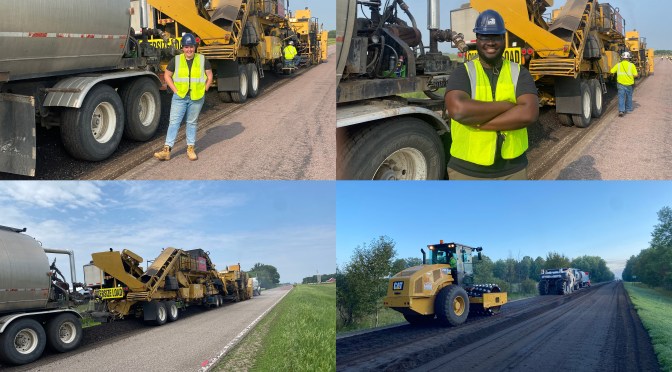
Assessing Recycled Pavement for Use in Road Design
Cold recycling road pavement materials into new road construction is a cost-effective and sustainable practice. However, the properties of these materials must be characterized to adequately design pavement structures. This project developed a framework and tool for transportation agencies to estimate the key material properties of cold recycled materials incorporated into road designs.
Continue reading Assessing Recycled Pavement for Use in Road Design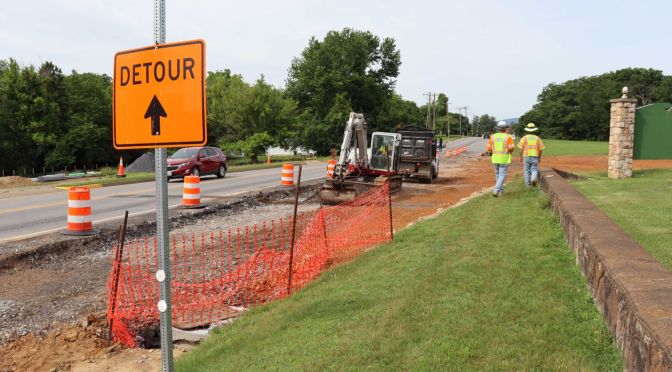
Limiting Pavement Damage from Detours
Detours for highway construction projects direct heavy freight vehicles onto local roads that were not designed to accommodate the frequency of heavy loads. Detours to these local roads often accelerate pavement deterioration that shortens their service life and requires additional repair. This project examined the structural and economic impacts of detours on local roads to develop a framework for optimizing detour routes that limit pavement damage while maintaining traffic mobility.
Continue reading Limiting Pavement Damage from Detours
TRB Webinar: Improving Mobility in Rural and Tribal Communities
February 25, 2025, 10-11 AM CST
TRB is offering a free webinar tomorrow on rural mobility, which has been a focus of a number of MnDOT studies in the last few years. For a review of research on rural mobility in Minnesota, see the following lists of completed and active projects. To register for the webinar, follow the link above.
Continue reading TRB Webinar: Improving Mobility in Rural and Tribal Communities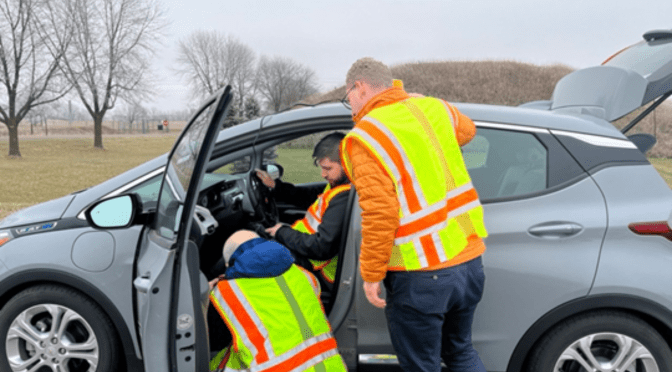
Using Onboard Vehicle Data to Assess Pavement Quality
Many modern vehicles continuously track location and performance data such as speed and acceleration. Collecting large amounts of this data to use in machine learning models has many potential applications, including aggregating and evaluating road pavement conditions. This project investigated the feasibility of using large amounts of onboard data from electric vehicles to monitor and assess pavement conditions comprehensively and cost-effectively across a large network.
Continue reading Using Onboard Vehicle Data to Assess Pavement Quality
New Project: Engineering Post-Construction Soil Composition to Support Resilient Stormwater Management
Post-construction soils can produce much higher stormwater runoff rates than pre-construction or typical vegetated soils. Poor soil conditions can hinder the establishment of vegetation and carry large volumes of runoff, sediment, and nutrient loads to local waters. Organic soil amendments (composts) may support post-construction vegetative growth by boosting soil structure, nutrient availability, and water holding capacity.
This research aims to define targeted pre-construction soil health baselines, determine optimized design and field implementation inputs that return soils to baseline health indices using organic amendments, and identify how these inputs can benefit transportation requirements and resilient stormwater treatment.
The results may facilitate the quantification of benefits provided through soil health restoration and the development of implementable guidance for roadside soil health restoration techniques.
“This research project will help us understand how implementing soil health practices can improve the performance of roadside vegetation establishment resulting in MnDOT being able to close out construction contracts and stormwater permits sooner,” said Warren Tuel, Natural Resources Program Coordinator with MnDOT’s Office of Environmental Stewardship. “There are also significant potential stormwater benefits of soil health practices including increased infiltration, improved treatment of pollutants present in highway stormwater runoff. The improved management of stormwater will result in improved water quality of runoff from MnDOT highway systems resulting in greater protection of the many water resources here in Minnesota.”
The objectives are:
- Evaluate resilience to water availability through organic amendment (e.g., compost) addition through greenhouse stormwater experiments
- Optimize amendment loadings based on resilience
- Develop a “recipe” for improving the health of poor soils based on soil health measurements, by amending the soil with compost or other organics
Project Details
- Start Date: 05/16/2025
- Estimated Completion Date: 06/30/2027
- Funding: MnDOT
- Principal Investigator: Bora Cetin
- Co-Principal Investigators: Angela Farina
- Technical Liaison: Warren Tuel
Details of the research study work plan and timeline are subject to change.
To receive email updates about this project, visit MnDOT’s Office of Research & Innovation to subscribe.

Pedestrian Safety Impacts of Dedicated Right-Turn Lanes
While research has found that right-turn-only, or dedicated right-turn lanes, at intersections reduce traffic delays and vehicle crashes, their impact on pedestrian safety has been unclear. To better understand these impacts for future intersection design and countermeasure considerations, this project investigated driver response to pedestrians in or near crosswalks at dedicated right-turn lanes.
Continue reading Pedestrian Safety Impacts of Dedicated Right-Turn Lanes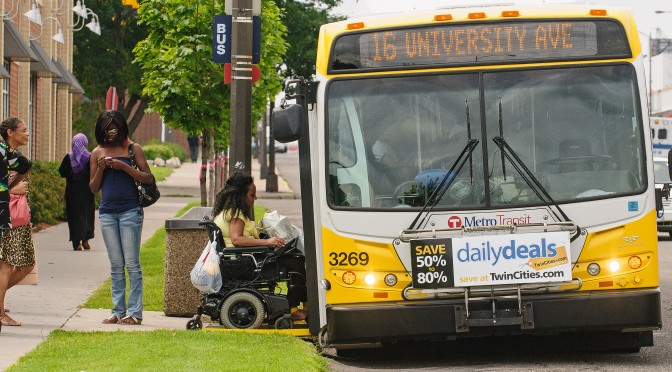
Increasing Equity in Transportation Investments
Historically, equity has not been a primary objective in the transportation infrastructure investment planning process. By effectively incorporating equity into the process, underserved communities and Native nations can realize increased benefits from transportation improvements. This research explored effective strategies for incorporating equity in transportation capital investment planning and provides guidance to transportation agencies, planning organizations and Native nations.
Continue reading Increasing Equity in Transportation Investments
The winding road to an electric fleet
Reprinted from CTS News, November 24, 2025
Even for cities, counties, and organizations with zero-carbon emissions goals, most fleet managers are skeptical about going fully electric. Calculating the return on investment for a single vehicle is straightforward—but for a fleet, it’s complex.
Continue reading The winding road to an electric fleet
CTS Webinar: Preparing Transportation Professionals for AI Integration
Monday, December 15, 2025, 12:00–1:30 pm (Virtual)
About the Event
Artificial intelligence (AI) is rapidly reshaping how we design, plan, and manage infrastructure systems. In this webinar, CTS scholars Qizhi He and Seongjin Choi from the University of Minnesota’s Department of Civil, Environmental, and Geo- Engineering will discuss how AI tools are beginning to influence teaching, research, and professional practice in civil engineering. Their conversation will consider how the field can adapt curriculum and training to prepare future engineers for an AI-integrated profession. They will also explore questions around quality management, professional ethics, and community-centered design in an AI-driven context.
Offering a practitioner’s perspective, Melissa Barnes will share insights from MnDOT’s ongoing AI pilot identification project. She will discuss how state agencies are evaluating opportunities and risks associated with AI implementation—and engaging and educating their staff about AI.
This webinar will highlight opportunities for collaboration between academia and practice as the transportation industry navigates the evolving impacts of AI on engineering education, quality assurance, and workforce development.
Speakers
Qizhi He is an assistant professor in the Department of Civil, Environmental, and Geo- Engineering at the University of Minnesota (UMN) and a CTS scholar. Before joining the UMN, he was a postdoctoral researcher in the Scientific Machine Learning Group at Pacific Northwest National Laboratory. His research focuses on developing hybrid physics–AI/ML computational methods for predictive modeling and the simulation of complex mechanical behavior in civil and geomaterials under extreme and multiphysics conditions. His work aims to advance next-generation, high-performance computing and digital-twin technologies that enhance infrastructure resilience and support natural hazard mitigation.
Seongjin Choi is an assistant professor in the Department of Civil, Environmental, and Geo- Engineering at the University of Minnesota and a CTS scholar. Choi was previously a postdoctoral researcher at McGill University in Canada and Korea Advanced Institute of Science and Technology in South Korea. His research focuses on developing machine learning and (generative) artificial intelligence models for transportation and mobility data, with the goal of enhancing both individual-level travel experiences and system-level performance.
Melissa Barnes is the Operations Division artificial intelligence program manager (mobility) at MnDOT and a licensed civil engineer with more than 21 years of experience in transportation. She has worked at MnDOT for more than 12 years, including positions in Central Office and the Metro District. Her expertise spans program delivery, traffic engineering, planning, safety, operations, project management, policy, and cross-functional leadership, and she is known for her commitment to equity and collaboration.
Registration
This webinar is free, but registration is required. Once you have registered, you will receive an email confirmation with a Zoom link. The link should not be shared with others; it is unique to you.
More information
Visit the CTS website or contact Samantha Hahn-Douville at snhahn@umn.edu.
If you’re unable to join us for the live broadcast, a recording will be available here after the event.
 Crossroads