Tag Archives: featured

New Project: Guidance for Separated/Buffered Bike Lanes With Delineators

New research has started that will provide needed guidance for the design of separated bike lanes, which are rapidly growing in popularity. The two-year Minnesota Local Research Board-funded study, which is being performed by the University of Minnesota, will identify the safety, cost and accessibility attributes of different lane designs and produce a technical memorandum with design guidance for transportation planners.

Background

Separated bicycle lanes (SBLs) are a bicycle facility that employs both a paint and vertical element as a buffer between vehicle traffic and bicycle traffic.

In 2016, the City of Minneapolis increased the total mileage of separated bike lanes in the city from 5.4 to 9.4 miles with plans to increase that to 30 miles by 2020. While many other cities around the U.S. are in the process of installing separated bike lanes as part of their non-motorized transportation networks, research about them has not kept pace.

The Federal Highway Administration’s Separated Bike Lane Planning and Design Guide  identified several gaps in existing research, including the effects of SBLs on vehicle traffic, the preferred speed and volume thresholds to recommend SBLs, and the differences in safety between one- and two-way SBLs.

Despite safety being a major concern with SBLs, the guide states that “there are no existing studies that have satisfied best practices for analyzing the safety of SBLs.” The guide goes on to caution that even in cases where research on the safety or operational effects of SBLs does exist, “much of the highest quality research comes from outside the U.S.” The FHWA guide also lists cost as a gap in knowledge about SBLs, saying “few benchmarks exist for separated bike lane costs, which vary extensively due to the wide variety of treatments and materials used.”

This research project will provide a thorough synthesis of current research and guidelines and a comprehensive analysis of the impacts of different midblock bike lane designs to help Minnesota-based agencies make data-driven design and planning decisions. Design variables include delineator type and spacing, land and buffer widths, and one- vs two-way bike lanes. Impacts that would be evaluated include installation, maintenance, and user costs as well as safety and facility usage.

Two lane road with bicycle lanes on both sides of the road with cars on the road and cyclists in the bike lanes.

Objective

When considering installing SBLs, many aspects including impacts on both bicycle traffic and other types of traffic (pedestrians, passenger cars, delivery trucks, etc.) must all be considered. However, much of this information is unavailable. By providing a comprehensive repository for the relevant data on the numerous SBL design options, this project will allow engineers and policy-makers to make more informed decisions regarding bicycle infrastructure installations and improvements. Access to this sort of hard data will aid in the process of performing will aid in the prioritization of options for bike facilities thereby reducing the waste of funds on unneeded or unaffordable projects.

Scope

The tasks of the research project include:

  • Conduct a thorough literature review to identify any gaps in the current research.  Examples of this might include the effects of SBLs on all road users, frequency of bicycle and vehicle violations for various SBL designs, recommended speed and volume thresholds for installation, the costs associated with SBLs, or the differences in safety between one- and two-way SBLs.
  • Conduct research such as observational field studies, crash record analysis, synthesis of the results of other studies, road user surveys, review of previous project budgets, bicycle facility repair record analysis, municipal records of complaints and violations, or some combination thereof.
  • Develop a list of options for the design of multi-modal facilities and the respective impacts of those options based on findings from the field studies. This could include maintenance costs, user costs and safety impacts.

By providing transportation planners, engineers, and other practitioners new information on the impacts likely to be associated with different designs, the practitioners will be in a better position to both choose among designs and mitigate potential adverse effects of those designs. The list of design options and associated impacts will be summarized in a technical memorandum with a more thorough presentation in the project final report.

Watch for new developments on this project.  Other Minnesota transportation research can be found at MnDOT.gov/research.
New Project: Development of Pavement Condition Forecasting for Web-based Asset Management for County Governments

Many counties have incomplete roadway inventories, but lack asset management programs, which are often cost-prohibitive and require advanced technical training and staff to maintain. The Upper Great Plains Transportation Institute at North Dakota State University (NDSU), has developed a low-cost asset inventory program called the Geographic Roadway Inventory Tool (GRIT). The program, which is currently available to North Dakota counties, will be offered to all Minnesota counties following further development and testing by the Minnesota Local Road Research Board.

Background

NDSU created the asset inventory program as the first step for asset management to allow local roadway managers to document and understand their existing infrastructure using the latest mobile technology and Geographic Information System technology.

The goal of the research study is to expand the program to include roadway forecasting based on the American Association of State and Highway Transportation Officials(AASHTO) 93 model with inventory, pavement condition and traffic forecasting data.

Existing input data from GRIT, such as pavement thickness, roadway structural information and construction planning information, will be spatially combined with current Pathway pavement condition and traffic data from MnDOT to automatically forecast the future condition and age of roadways using the AASHTO 93 model. This forecasting model will then allow roadway managers to use this information with comprehensive GIS web maps to prioritize roadways in construction schedule or multi-year plans.

Geographic Roadway Inventory Tool

Objective

The additional information contained in the pavement forecast system will allow county roadway managers to prioritize projects that can benefit from lower cost pavement preservation activities and understand how long roadways can last before a high cost reconstruction must take place. The online GIS output maps will also enable the public to see what projects will be conducted on a year-to-year basis.

Project scope

The research team will work with Beltrami, Pope, Faribault, Pennington, and Becker counties and the city of Moorhead in Minnesota to research, develop, test and implement an additional forecasting function of the existing asset management program. This will be done using the AASHTO 93 empirical model to calculate a future pavement serviceability rating (PSR) based on the existing pavement structure and age, forecasted traffic and the latest pavement condition. While existing pavement structure and age information will come from data entered into the GRIT program by counties, processes and procedures will be researched and developed to automatically access pavement condition and traffic data from MnDOT and geospatially combine it with inventory data.

With pavement forecast information, county roadway managers will be able to better understand which roadways will deteriorate first and which will benefit from more effective, low-cost maintenance programs rather than full-depth reconstructions. The model will not forecast suggested future projects or project costs, but rather just output the future condition of the roadways on a yearly basis. The AASHTO model can be applied for both flexible and rigid pavement sections.

Watch for new developments on this project.  Other Minnesota research can be found at MnDOT.gov/research.

New Project: Re-Using Water at Safety Rest Areas and Truck Stations

Water is being drawn out of the state’s aquifers faster than it is being replenished, so public agencies like MnDOT are increasingly interested in figuring out how to reduce water usage.

A two-year research project underway at MnDOT is investigating how the agency can re-use wastewater at its safety rest areas and truck-washing stations. In addition to preserving groundwater, MnDOT hopes to reduce utility and septic system costs.

MnDOT owns and operates over 1,000 buildings, including 68 safety rest areas, 137 truck stations, 18 regional/headquarters maintenance sites and 15 weigh stations and truck scales.

These facilities either discharge their wastewater to a subsurface sewage treatment system or a wastewater treatment plant.

Truck station with vehicles in parking lot
Maplewood Bridge Truck Station

Researchers from the University Of Minnesota’s Onsite Sewage Treatment Program have been hired to investigate the potential avenues for wastewater re-use at MnDOT. They will consider when re-use makes sense from a regulatory, environmental, economic and management perspective; recommend the most appropriate applications for reuse and identify any challenges with implementation.

Potential benefits include:

  • Preserve ground and drinking water for potable drinking.
  • Reduced life-cycle costs in areas where low-producing wells could meet drinking water needs while reused wastewater could be used for toilet flushing and equipment wash-down.
  • In areas with municipal water, lower water utility costs.
  • Increased longevity of septic systems due to decreased loads.

As the state, counties, or cities construct new facilities or upgrade existing ones, this research will provide insight into what options are readily available to reduce water consumption and improve water efficiency. If these types of reuse systems are demonstrated by MnDOT, then they could lead to usage by other properties across Minnesota.

Watch for new developments on this project.  Other Minnesota research can be found at MnDOT.gov/research.

Pervious Concrete Pavement Reduces Runoff into Shoreview Lake

The city of Shoreview, Minnesota was on the right track when it took the unusual step of paving a residential neighborhood with pervious concrete to help control stormwater and pollutant runoff into a nearby lake, according to a recently released seven-year performance study.

Typically used for parking lots and sidewalks, porous paving material allows stormwater to filter through the pavement and an aggregate base into the soil rather than run off the pavement and drain into storm sewers.

Shoreview bucked convention by using pervious concrete in a traffic application — low-volume, low-speed roads in the Woodbridge neighborhood near Lake Owasso. The city thought pervious pavement could help meet community sustainability goals and federal clean water regulations by reducing pollutants in waterways and groundwater while keeping water safely off driving surfaces.

Traditionally, pervious concrete hadn’t been used for roadways because engineers didn’t consider it strong enough for traffic (this and other projects have now demonstrated its application for low-volume roads like neighborhood streets). The impact on ride quality, tire-pavement noise and filtration was also not well understood, particularly in cold climates with freeze-thaw cycles like those in Minnesota.

Pervious concrete also presented a maintenance challenge: Organic debris, sand and other grit can clog the pavement’s pores. Periodic vacuuming is required to maintain the intended flow of water through the pavement. Concerned about how best to maintain the pavement and interested in tire-pavement noise levels and filtering performance, Shoreview, MnDOT and the Local Road Research Board monitored the Woodbridge roadways for seven years.

Installation and Evaluation

Shoreview replaced 9,000-square -feet of asphalt roads with 7 inches of pervious concrete over 18 inches of coarse aggregate base; near the lake, highly drainable sand served as the base. About twice each year for five years, researchers tested sound absorption, water infiltration and ride quality one day after the pavement had been vacuumed. In 2015, they repeated these tests without vacuuming the day before.

The pervious pavement performed well in filtering stormwater. By 2012, at least 1.3 acre-feet of water had filtered through the pavement and ground, and by 2015, nearly 2 acre-feet of water had filtered through the surface—all of which would otherwise have run directly into Lake Owasso.

Water infiltration and sound absorption rates were higher than traditional concrete, although rates declined over time because organic material continued to clog pavement pores despite vacuuming twice a year.

Conclusions

Initial construction of the pervious concrete streets and stormwater filtration system was slightly more costly than construction of comparable asphalt pavement with culverts. Life-cycle costs, including projections of maintenance costs over 15 years, however, showed somewhat lower costs for pervious pavement. While the pervious concrete pavement may require diamond grinding after 10 years, monthly vacuuming could make this unnecessary. Asphalt pavement would typically require a mill-and-overlay at year 15, and culverts would require periodic cleaning.

Additional benefits of the pervious pavement system that were not included in cost calculations—but were clearly significant—included complying with the federal Clean Water Act, recharging groundwater and avoiding direct pollution of Lake Owasso. Shoreview’s investment in pervious concrete has paid off economically and environmentally.

For additional information about this line of research, see these resources:


Alternative designs identified for rural intersection warning signs

In an effort to reduce dangerous right-angle crashes at rural intersections, the Minnesota Department of Transportation (MnDOT) has deployed dynamic warning signs at approximately 52 sites throughout the state. Using sensor technologies, these signs provide real-time traffic information to motorists at non-signalized intersections where cross traffic does not stop, warning drivers on the minor road when it is unsafe to enter the intersection. However, a number of sign-related complaints have been received from local road users.

To address this issue, a team of University of Minnesota human factors researchers studied the current dynamic warning sign to identify what features or layouts may be problematic and propose safe and efficient alternatives. “We directed special emphasis to the most vulnerable driver populations, such as older drivers and novice teenage drivers,” says Nichole Morris, director of the HumanFIRST Laboratory and the study’s principal investigator. The study was sponsored by MnDOT.

The research team first surveyed Minnesota county engineers regarding their experiences, perceptions, and complaints or comments from local road users. “In addition to the largely negative feedback from drivers, we learned that many county engineers incorrectly interpreted how the system functions—a number of them were not sure how the fail-safe/inoperable mode works,” Morris says.

intersections2
Compared to the original sign (left column), the proposed alternative (right column) might offer comparable safety benefits but fewer potential risks. The sign consists of three different sign states: “Don’t cross/turn” state (top row); “Sign is on/operating and no traffic is detected” state (middle row); and “Sign is off/inoperable” state (bottom row).

Through iterative usability studies, researchers then examined alternative designs to produce three sets of sign options for a driving simulation study. The simulation study, with 120 participants, evaluated the safety effectiveness and efficiency of the sign options among teen drivers, middle-aged drivers, and older drivers.

The results indicate an overall safety benefit of sign deployment. “All the sign options except for one enhanced drivers’ gap-acceptance performance,” Morris says. “At intersections with inadequate sight distance, gap acceptance tended to be significantly better.”

The warning system’s benefits varied among the three age groups: middle-aged drivers demonstrated the most potential for safer gap acceptance; teenage drivers did not appear to be significantly assisted by the warning system, despite their self-reporting that the sign assisted them; older drivers tended to have a significantly reduced risk of accepting an unsafe gap but were also less efficient in using the system (they waited longer and rejected safe gaps more frequently).

The signs might simultaneously incur potential risks for drivers. “For example, the risk of stop-sign violations was found to be the greatest when the system was turned off due to a malfunction,” Morris says. Drivers also tended to check traffic much less often with the presence of the warning system.

After reviewing the study results, researchers identified an alternative sign design for future field tests that may demonstrate comparable safety benefits to the original sign with fewer potential risks. Specifically, certain design elements—an action word or icon—were recommended for consideration in follow-up field evaluations and future implementations.

“Intersection warning systems are an important tool for MnDOT as we push toward having zero deaths due to traffic crashes,” says Ray Starr, acting state traffic engineer with the Office of Traffic Engineering. “This study provides valuable information that is helping MnDOT consider any design changes for future versions of the warning system.”

The findings may also have a broader implication for the design, development, and implementation of effective intersection countermeasures on rural, urban, and suburban roadways, Morris adds.

This article originally appeared in the Center for Transportation Studies’ Catalyst Newsletter, August 2018. The full report, published May 2018, can be accessed at “Rural Intersection Conflict Warning System Evaluation and Design Investigation.”

New Project-Quantifying the Impacts of Complete Streets: The Case of Richfield

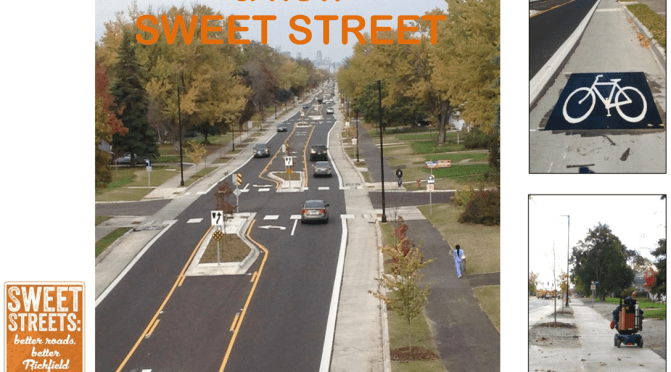
Complete Streets is a transportation policy and design approach that requires streets to be planned, designed, operated, and maintained to enable safe, convenient and comfortable travel and access for users of all ages and abilities, regardless of their mode of transportation. A newly funded research project aims to demonstrate the economic and non-economic benefits of Complete Streets in the city of Richfield, which has been active in reconstructing several previously vehicle-oriented roads to allow for safe travel by those walking, cycling, driving automobiles, riding public transportation, or delivering goods.

By measuring the impacts of pedestrian- and bike-related improvements in Richfield, this Minnesota Local Road Research Board-funded study hopes to help guide future transportation investments for building sustainable and safe urban environments.

This analysis will include four closely related steps:

  • First, University of Minnesota researchers will select suitable improvement sites in Richfield to study and collect project information, including project maps, description of complete street features and GIS files at the parcel level before and after the project.
  • Identify economic and measurable non-economic benefits. The university will work with the City of Richfield to identify possible economic benefits (such as increased property value) and other measurable benefits (such as public health benefits associated with pedestrian or cycling activities) of the Complete Streets projects.
  • Estimate economic benefits, such as increased housing value or as additional business activities.
  • Lastly, researchers will quantify and monetize non-economic benefits, such as public health or environmental benefits related to pedestrian or cycling activities. Data about benefit indicators will be collected through survey or interview. These benefits will then be monetized using common value parameters identified from the literature.

Reporting Driver Intrusions in Work Zones

Data from a new system for tracking work zone intrusions may be used to change work zone design and policies, reducing the risk of injury and death from intrusion crashes.

MnDOT and the Local Road Research Board engaged researchers to develop a user-friendly system that allows highway crews to quickly record instances of motorists’ intrusion into work zones, using a laptop, tablet or paper.

“This collaboration resulted in a fast, efficient and easy-to-use system because crews and supervisors let us know throughout the process exactly what they needed to consistently report work zone intrusions,” said Nichole Morris, Director, University of Minnesota HumanFIRST Laboratory.

What Was Our Goal?

The goal of this research project was to develop and test an efficient, comprehensive and user-friendly reporting system for intrusions into work zones. It was essential for the system to be accepted by highway workers. The information collected from the system, which was modeled after the existing MNCrash report, would then be used to examine risk factors to reduce intrusions and danger to workers. Safety data would be relayed back to workers and to MnDOT managers, providing an empirical basis for design changes to work zones, as well as future policy recommendations to the state government.

“To reduce work zone intrusions and make work zones safer, we need to track and analyze the intrusions. This reporting system will generate the data we need to make smart changes and possibly to influence legislative policy,” said Todd Haglin, Emergency Management and Safety Manager, MnDOT Office of Administration.

What Did We Do?

To design a usable system for reporting work zone intrusions, research designers had to:

  • Understand the characteristics of the typical system user (in this case, the work zone supervisors and crew).
  • Develop common or typical intrusion scenarios to realistically test the system.
  • Conduct iterative testing with typical users (supervisors and crew members) and incorporate revisions based on test results.

The research team interviewed work zone supervisors from rural and urban truck station locations across the state: in Baxter, St. Cloud and Duluth and at Cedar Avenue near Minneapolis-St. Paul. Researchers sought to learn what crews and supervisors considered an intrusion and what they thought should be reportable elements of the intrusion, such as the work zone layout, weather, location, time, visibility, road conditions and maneuvers of the intruding vehicle.

2018-09-p1-image
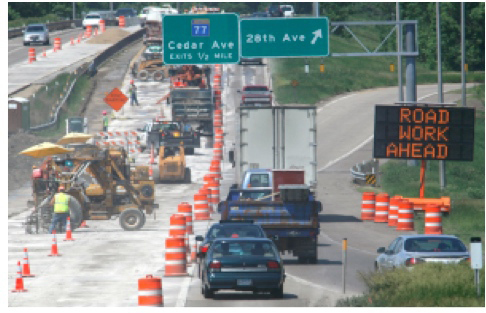
In a common type of close call, the dark car shown here fails to merge until it is too close to the work zone, forcing the silver car out of its lane.

Researchers used information gathered from the interviews to develop four typical intrusion scenarios—which were reviewed and revised by MnDOT supervisors—and used these scenarios to test the prototype reporting interface. Then they conducted usability tests with these scenarios and with actual intrusions that crews had experienced. Users suggested changes to the report format throughout the process.

Crews and supervisors collaborated with researchers during three rounds of testing, revising the reporting interface after each round. An online beta version had been supplemented with a paper version. Both versions were revised through this iterative design process.

What Did We Learn?

This design approach allowed the research team to produce a report interface incorporating the very specific needs of the work zone crews and supervisors:

  • The third major revision split the report decision flow into two options—a shorter report and a comprehensive report—based on whether the intrusion presented a risk to the crew. Without this revision, intrusions that workers considered minor were not likely to be reported.
  • Researchers surveyed users of the system with each revision. Supervisors liked the drop-down menus, the comprehensiveness of the system and its ease of use. They rated the final revision as good in terms of usability, ease of use and time to completion (five to six minutes on average).
  • The final design version was tested using a laptop, tablet and paper. Multiple reporting options made it more likely that workers and supervisors would quickly report data about a work zone intrusion before details were forgotten.

What’s Next?

Supervisors and workers involved in the design process gave high marks to the final version of the reporting system. The design is considered complete. Researchers had created the interface as a free-standing program, using the University of Minnesota’s digital resources to build and evaluate their design. For this reporting system to be made  vailable for use by MnDOT and other agency workers, MnDOT must engage MNIT, the state’s information technology professionals, to determine where the system will reside and to integrate it into the state’s existing computer platform.

This post pertains to Report 2018-09, “Work Zone Intrusion Report Interface Design,” published in February 2018. 

MnDOT is developing other initiatives to improve work zone safety,  including a personal warning sensor for construction workers. Search for “work zone” research projects here.

Ultrasonic Testing Method Improves Corrosion Detection on Steel Bridges

A research implementation project completed by MnDOT’s Bridge Office shows that phased array ultrasonic 3-D scanning more accurately detects and measures corrosion on steel bridges than traditional methods. More accurate data will allow engineers to correctly evaluate bridge conditions, calculate safe load capacity and make better maintenance recommendations.

“The Phased Array Ultrasonic Testing System (PAUT) can acquire thousands more data points than can traditional methods in the same amount of time, which makes PAUT technology very useful,” said William Lee Nelson, a MnDOT bridge engineering specialist.

What Was the Need?

Corrosion on steel bridges results from exposure to environmental elements and deicing chemicals, and can lead to loss of steel thickness, with subsequent functional and structural issues. Regular inspection to detect and monitor fatigue cracking and other structural damage is critical to extending bridge performance and ensuring traveler safety on the approximately 13,000 bridges in Minnesota. While MnDOT is committed to improving its infrastructure, increasing costs of bridge inspections and maintenance have prompted the agency to seek innovative methods for performing inspections.

Bridge inspectors have been using conventional ultrasonic devices and hand measuring techniques to evaluate corrosion for many years. However, it is not always possible to obtain complete and accurate data using those methods. Accurate steel thickness and corrosion mapping data is critical for bridge engineers to correctly evaluate bridge conditions, calculate safe load capacity and make better maintenance decisions. Without quality data, bridge engineers may make recommendations that can lead to unnecessary and expensive repairs.

Newer versions of ultrasonic devices—such as the phased array ultrasonic testing (PAUT) system—use 3-D scanning technology to produce enhanced images and data. One of the advantages of PAUT devices over conventional ultrasonic models is that they provide thousands more data points, allowing engineers to more accurately measure steel thickness and predict maintenance issues and costs. Another benefit of PAUT devices is that they collect corrosion mapping data much more quickly than conventional ultrasonic devices, which improves safety and efficiency by reducing the time bridge inspectors spend on the bridge.

What Was Our Goal?

The goal of this project was to provide bridge inspectors with training and equipment to collect high-quality data by using the 3-D scanning technology of a PAUT system. The enhanced data would enable bridge engineers to make more accurate assessments of bridge condition and more cost-effective maintenance recommendations.

What Did We Implement?

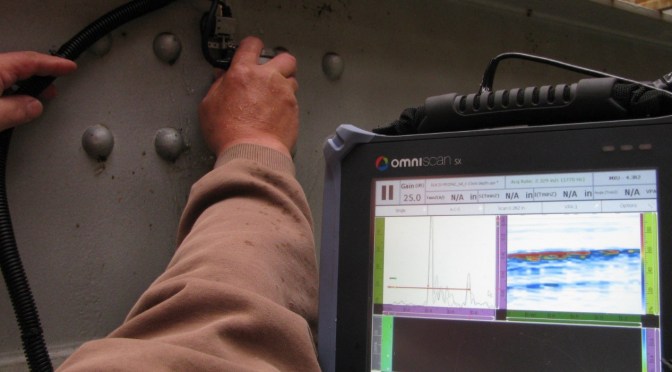
Investigators reviewed the literature on projects evaluating PAUT systems and identified several studies that assessed these devices favorably. They selected an Olympus OmniScan SX PAUT system for use in this project and used the collected information from the literature review as a point of reference for their field observation testing.

How Did We Do It?

After MnDOT bridge inspectors were trained in the OmniScan PAUT system, they used it to obtain corrosion mapping data for four steel structures in Minnesota: the Sorlie Bridge (Polk County), the Baudette Bridge (Baudette), a high mast light (Duluth) and a test specimen from the Silverdale Bridge (Grant). The project team then compared the PAUT system data with data obtained from traditional (single-beam) ultrasonic methods and traditional field measuring methods.

What Was the Impact?

The comparison showed that the PAUT equipment provided more complete and more accurate corrosion mapping data than did the single-beam ultrasonic and traditional field measuring methods. Based on the findings of the literature review, field observations and the data collected, the project team noted other benefits of using PAUT technology for bridge inspection, including:

  • Accurately determines the thickness and section of structural steel members, allowing engineers to make better recommendations on load capacity.
  • Establishes baseline measurements to better predict maintenance costs.
  • Provides high-quality data that allows engineers to make better repair and maintenance recommendations to avoid unnecessary and costly repairs.
  • Collects inspection data quickly, resulting in time and cost savings for bridge inspectors in the field.

What’s Next?

MnDOT will begin deploying the PAUT system to conduct corrosion inspection of steel bridges and ancillary structures throughout Minnesota. MnDOT will also update the nondestructive testing content in MnDOT’s Bridge and Structure Inspection Program Manual.

Additionally, MnDOT plans to develop and write inspection procedures for the PAUT system and to distribute information about PAUT deployment, targeting MnDOT bridge inspection units, bridge engineers and bridge owners.

This post pertains to Report 2017-33, “Phased Array Ultrasonic Steel Corrosion Mapping for Bridges and Ancillary Structures.”

New Project: Real-Time Winter Weather Alerts Planned for Highway Message Signs

The longest winter in recent memory might have ended, but MnDOT’s traffic and maintenance staff are already planning how to make future winters easier on Minnesota drivers.

Recently, the Regional Transportation Management Center was awarded funding to deliver real-time winter weather warnings via its roadside and overhead highway message signs. The RTMC displayed blizzard warnings for the first time during six storms last winter, but the alerts had to be manually entered.

“This is similar information that you receive on your cell phone or the evening news,” said Brian Kary, RTMC Traffic Operations director. “But for somebody who’s traveling down I-90 and just passing through, they might not realize that they’re entering an area with a blizzard.”

Another initiative aims to expand the road condition data that’s available during winter storms by piloting the use of mobile sensors on maintenance supervisor trucks and above-ground sensors at select Road and Weather Information System sites.

Both projects are among eight research implementation projects recently selected for funding by the governing board for MnDOT’s transportation research program.

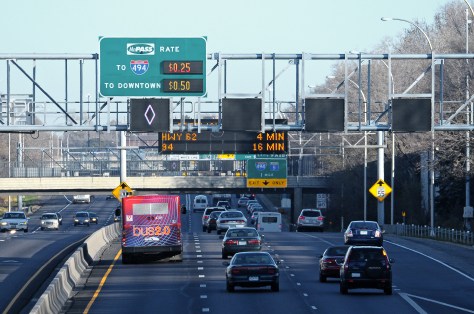
Multi-lane highway with real-time message boards

Weather Alerts

Minnesota has nearly 300 Dynamic Message Signs, which currently issue real-time warnings about traffic incidents, road work and congestion. Around 200 are in the Twin Cities metro; the rest are in Greater Minnesota.

Kary’s two-year project will develop a system that can automatically relay critical weather alerts, which change frequently, are labor-intensive and error-prone when physically entered. Only blizzard warnings from the National Weather Service are initially planned, but the system will be capable of broadcasting all types of weather alerts.

A number of other states already issue weather alerts via their Dynamic Message Signs, so MnDOT has case studies to look at.

It’s possible that the signs could also someday relay information from MnDOT’s Maintenance Decision Support System and roadside weather sensors. A current pilot project uses weather sensors and flashings on a rural stretch of highway near Dassel Cokato High School to warn motorists and notify maintenance staff of unexpected blow ice.

warning sign indicating ice on road when flashing

Improving Road Condition Information

Over the next two years, the Maintenance Office will test the use of mobile and above-ground sensors to expand the geographic coverage of RWIS sites, which feed valuable weather and road surface information to highway operations managers and advanced traveler information systems. This might lead to the elimination of in-road sensors, which require lane closures to maintain and must be replaced during road construction projects.

The mobile sensors will collect road condition information, such as temperature, humidity, due point, and friction, from five maintenance supervisor trucks. The other non-invasive sensors will be attached to an RWIS tower or a pole near the roadway and use laser technology to read road surface temperature and condition (water ice, slush and snow).

See this related news story from KSTP-TV.

Managing Stormwater Runoff with Recycled Peat and Taconite Tailings

Researchers have found that peat has high potential to replace commercial compost in MnDOT’s standard bioslope and bioswale design for roadside ditches, and that taconite tailings performed comparably to the sand currently specified in MnDOT designs, with the additional benefit of removing phosphates.

Finding alternatives to commercial compost and sand for use in bioswales will help MnDOT meet regulatory requirements for stormwater runoff, while reducing the costs and environmental effects of transporting and storing these materials.

“The results of this project will very much facilitate the development of green infrastructure by reducing its cost to MnDOT and Minnesota local agencies, helping them to do more with less,” said Dwayne Stenlund, Erosion Control Specialist, MnDOT Erosion Control and Stormwater Management.

What Was Our Goal?

The objective of this project was to evaluate peat and muck excavated from construction activities, taconite tailings from area mining operations, and other stormwater quality filter media for use in bioswales and bioslopes along Minnesota highways. Laboratory and field tests of these products would examine their capacity to absorb water, retain pollutants and support plant growth to determine if they are beneficial and practicable in these designs.

What Did We Do?

2017-46-p1-image
For field tests, researchers created small plots using either peat or  compost mixed with native soil.

Researchers began by conducting a comprehensive literature review on the use of bioslopes and bioswales as stormwater treatment best management practices. Then they collected peat and muck near a highway construction project, as well as locally sourced sand, compost, taconite tailings and commercial peat.

These materials, as well as various combinations of materials, were used in laboratory experiments to determine how well they:

  • Absorbed water, using a falling head test to measure saturated hydraulic conductivity, which indicates the rate at which water infiltrates a material.
  • Retained pollutants, using leaching experiments to quantify how well they removed copper, lead, zinc, nitrate and phosphate.
  • Sustained plant growth, using bioassays and greenhouse studies.

Finally, researchers conducted pilot field tests on three plots containing a 50/50 percent peat and sand mixture, and another three plots with a 50/50 percent compost and sand mixture. Between April and August of 2017, they monitored water infiltration, discharge water quality and vegetation establishment for these sites.

What Did We Learn?

“Ultimately, a combination of peat and taconite tailings will compare favorably with current MnDOT specifications for bioslope and bioswale design,” said Kurt Johnson, Research Fellow, University of Minnesota Duluth Natural Resources Research Institute.

Researchers found that peat has a strong potential for replacing commercial compost in MnDOT’s standard bioslope and bioswale designs, and that taconite tailings also performed comparably to the sand currently specified in these designs. However, muck has little potential to replace commercial compost or peat due to its low permeability, poor infiltration and filtration properties, and lack of support for plant growth.
Results for the three properties of interest follow:

  • Infiltration rate: While muck had an unacceptably low hydraulic conductivity, peat performed at least as well as compost, and taconite tailings as well as sand. Pilot tests showed that a 50/50 mix of peat and taconite tailings had a similar water storage capacity to a 50/50 mix of compost and sand.
  • Pollution retention: Muck absorbed only 50 percent of metals; salvaged peat, commercial peat and compost performed well, absorbing more than 80 percent. However, only taconite tailings showed the potential to remove phosphate. None of  the materials removed nitrate.
  • Plant growth: Mixtures of compost or peat with sand or taconite tailings all performed well in providing a viable substrate for plant growth. Mixes containing compost performed the best in plant growth trials. Muck was difficult to mix with any other material, and its value for plant growth was minimal. Greenhouse study results showed no difference between sand and taconite tailings in their effect on plant growth response.

What’s Next?

In a second phase of this project, “Development and Regionalization of In Situ Bioslopes and Bioswales,” MnDOT will conduct further laboratory tests on alternative materials for bioslopes and bioswales, and expand field tests to several sites in Minnesota that have been constructed using these materials. Researchers also recommend the development of specifications and detail drawings for the use of these materials.

This blog pertains to Report 2017-46, “Comparing Properties of Water Absorbing/Filtering Media for Bioslope/Bioswale Design,” published November 2017.