

Two county roads provided a testing ground for three combinations of aggregate bases and asphalt binders. Results from more than two decades of research and monitoring of pavement test sections validated previous conclusions. A larger gradation aggregate base showed superior performance over the pavement life cycle when compared with the standard aggregate base. Additionally, sections constructed without transverse joints to allow natural thermal cracking outperformed sections with sawn and sealed joints.
Continue reading Finding High-Performing Aggregate Bases for Long-Lasting PavementTag Archives: featured

Effectively Alerting the Public About Local Road Closures
Navigation apps can be valuable timesavers for drivers in Minnesota. To maximize their use, these apps need traffic information that is timely and accurate. While state highway closures are reported effectively, reporting road closures on local roads and highways is inconsistent. This project aimed to improve local road closure reporting by exploring the development of a streamlined reporting system and creating guidance for reporting local road closures to third-party navigation apps.
Continue reading Effectively Alerting the Public About Local Road Closures
Will Hydrogen Be a Carbon-Neutral Fuel Alternative for Freight?
Reprinted from CTS News, March 19, 2024
—Sophie Koch, contributing writer
Hydrogen is getting a lot of attention in recent years as a potential fuel source in the transportation sector. However, it is important to consider the pros, cons, and limitations of this molecule when deciding how to use it.
Continue reading Will Hydrogen Be a Carbon-Neutral Fuel Alternative for Freight?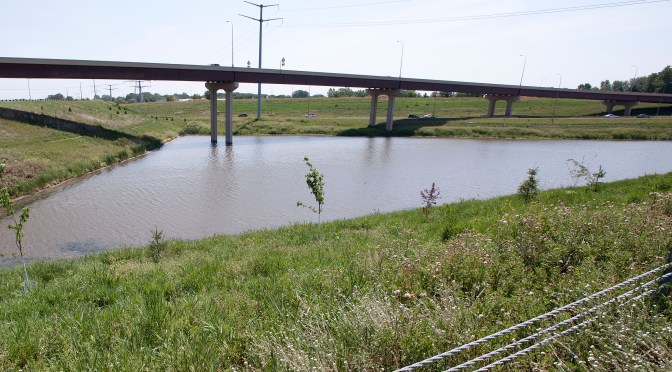
Managing Stormwater in a Changing Climate Will Require Updates to Minnesota’s Infrastructure
Reprinted from CTS News, March 21, 2024
—Sophie Koch, contributing writer
Changing precipitation patterns caused by the onset of climate change mean that Minnesota’s stormwater management systems—the ponds, pipes, and other structures meant to control runoff in the event of a heavy rainstorm—are going to need an upgrade.
Continue reading Managing Stormwater in a Changing Climate Will Require Updates to Minnesota’s Infrastructure
New Project: Utilizing Arts & Culture to Mitigate Construction Impacts
Can placemaking, temporary art, community or cultural events support quality of life and help offset the negative impacts of road construction?
Continue reading New Project: Utilizing Arts & Culture to Mitigate Construction Impacts
New Project: Improving and Developing Pavement Design Inputs and Performance Functions for Cold Recycled Pavement Layers
Local agencies in Minnesota use cold recycling technologies for flexible pavement rehabilitation because of their economic and environmental benefits. The three main methods are cold in-place recycling (CIR), cold central plant recycling (CCPR), and stabilized full-depth reclamation (SFDR).
Continue reading New Project: Improving and Developing Pavement Design Inputs and Performance Functions for Cold Recycled Pavement Layers
Rural Needs, Statewide Answers: Demographics, Health Care Access, and Community Engagement
Monday, May 13, 2024, 9:00–11:30 am, In Person
Join CTS for their annual all councils meeting to explore topics related to CTS’s 2024 theme of Rural Needs, Statewide Answers: Improving Transportation for All Communities.
The event is free to attend, but registration is required. Please register by Friday, April 26.
Continue reading Rural Needs, Statewide Answers: Demographics, Health Care Access, and Community Engagement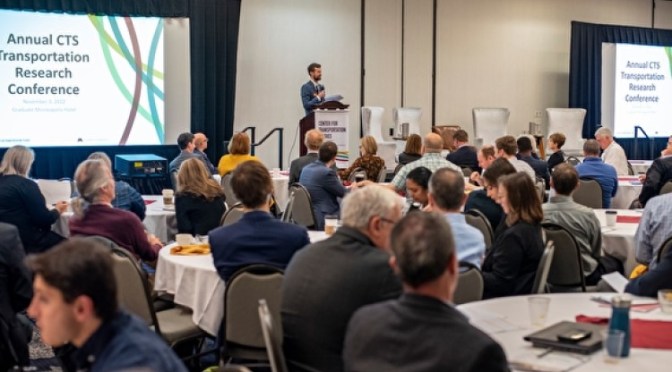
2024 CTS Transportation Research Conference
Mark your calendar for our annual conference! The event convenes researchers and practitioners from Minnesota and the Upper Midwest to highlight new learning, emerging ideas, and the latest innovations in transportation. Attendees learn about research findings, implementation efforts, and engagement activities related to a variety of transportation topics.
Continue reading 2024 CTS Transportation Research Conference
States Explore Fee Alternatives to Fund Roadway Infrastructure
Reprinted from CTS News; March 5, 2024
—Pam Snopl, CTS senior editor
The fuel tax is the backbone of our roadway funding system, but its ability to generate revenue is under pressure: more vehicles are using less fuel—or no fuel at all. In response, many states are turning to alternative revenue mechanisms to help bridge the funding gap.
Continue reading States Explore Fee Alternatives to Fund Roadway Infrastructure
Measuring the Livability Framework
MnDOT’s Office of Livability developed the Livability Framework to help guide planning, programming, and project development processes. It is being piloted in MnDOT Metro District. The outcomes should result in more people focused outcomes for the plans, programs and projects in the District. The Livability Initiative wants each of the Livability Pillars of the Livability Framework to be thoroughly considered and evaluated when planners, project managers, and others make decisions about transportation policies, programs, and/or projects.
Continue reading Measuring the Livability Framework Crossroads