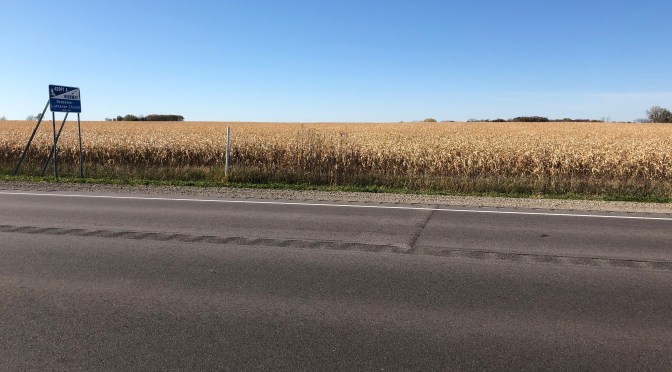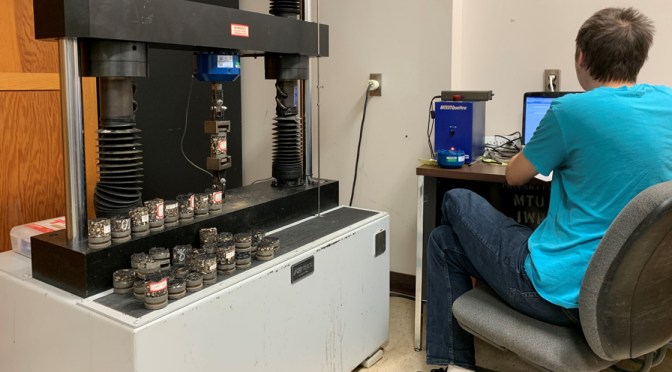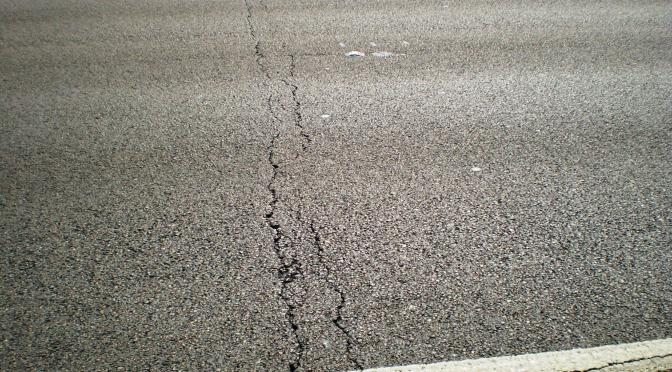
A recent Local Road Research Board (LRRB) study confirmed that increased freeze-thaw activity during Minnesota winters leads to delamination of seal coats from underlying pavements. Researchers identified optimal seal coat mix combinations and site conditions that may ensure effective seal coating of asphalt pavements in cities and counties around Minnesota.
Continue reading Investigating Asphalt Pavement Stripping Under Seal CoatsTag Archives: asphalt
Asphalt Delivery Tracking Goes Digital with Some 2020 Construction Projects
MnDOT construction projects require tons of hot mix asphalt each year, with over 188 road and bridge projects in the 2020 construction season alone.
Historically, plant mixed asphalt has been weighed, tracked and paid for with computer-generated paper tickets. Paper ticketing isn’t an ideal process for a variety of reasons—on-site ticket collection poses safety risks, tickets can be easily lost, and data must be tabulated manually, just to name a few.
Continue reading Asphalt Delivery Tracking Goes Digital with Some 2020 Construction ProjectsEvaluating the Performance of CIR Mixtures With Reduced Binder Content
Researchers examined the practice of reducing the binder content of cold in-place asphalt recycling mixtures in the field on especially hot days to improve workability. Laboratory testing of mixtures at various temperatures and binder levels found the practice keeps mixtures workable, improves compaction and does not significantly diminish performance.
Continue reading Evaluating the Performance of CIR Mixtures With Reduced Binder ContentHigh-Density Asphalt Pavement Mixtures Viable with local Aggregates
Researchers developed sophisticated models for high-density asphalt pavement mixtures. After calibrating the model to experimental data available from 5 percent air void asphalt mixtures, the research team conducted tests on three Minnesota mixtures to further refine the model. A Phase II study will develop multiple high-density mix designs for Minnesota applications.
Continue reading High-Density Asphalt Pavement Mixtures Viable with local AggregatesLow-Temperature Cracking Test Produces Repeatable, Reliable Results
Researchers ran a sophisticated low-temperature asphalt cracking performance test at multiple labs to study the test, its variability and repeatability, and its additional promise in studying reflective cracking susceptibility of overlays. Results put MnDOT closer to implementing test specifications for low-temperature cracking test for pavement mixes.
Continue reading Low-Temperature Cracking Test Produces Repeatable, Reliable ResultsTesting Methods for Crack Resistance in Asphalt Materials
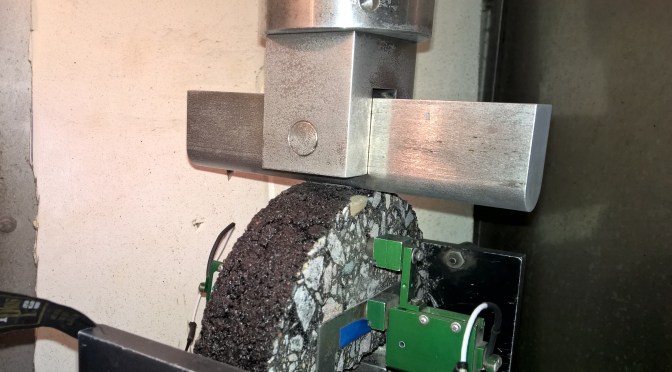
The Minnesota Department of Transportation is working with other state agencies in a pooled fund study to improve methods for testing crack resistance of asphalt mixtures. To expand options further, MnDOT asked researchers to evaluate alternative tests with standard lab equipment. The new tests produced repeatable results. Methods include the semicircular bend (SCB) test in a nontypical configuration, a dynamic modulus test of smaller asphalt mixture samples, a bending beam rheometer (BBR) test of mixtures, and a BBR of asphalt material for binder selection.
Continue reading Testing Methods for Crack Resistance in Asphalt MaterialsStudy Suggests 70 Percent RAP for Minnesota Gravel Road Surfaces
Researchers examined mixtures of recycled asphalt pavement (RAP) and aggregate for new gravel road surface layers in the lab and in the field. Although test results did not align perfectly, and field results were somewhat uneven, findings suggest that mixtures with 70 percent RAP content can reduce dust generation. After a year of service these roadways can match all-aggregate gravel road performance in terms of strength, but with a smoother ride.
Continue reading Study Suggests 70 Percent RAP for Minnesota Gravel Road SurfacesRout-and-Seal Offers Slight Cost–Benefit Over Clean-and-Seal Repairs
In a recently completed study, Minnesota researchers compare the performance and cost-benefit of the clean-and-seal versus rout-and-seal techniques for repairing asphalt pavement cracks.
Continue reading Rout-and-Seal Offers Slight Cost–Benefit Over Clean-and-Seal RepairsNanotechnology Reduces Cold-Weather Cracking in Asphalt Pavements
Adding graphite nanoplatelets (GNP) to asphalt binders and applying the methodology developed in a new MnDOT study could provide a cost-effective approach to reducing cold-weather cracking and increasing the durability of Minnesota pavements.
“This project gives MnDOT a low-cost way to incorporate the latest nanotechnologies into our asphalt mixtures, reducing cold-weather cracking and increasing the durability of Minnesota pavements,” said Shongtao Dai, Research Operations Engineer, MnDOT Office of Materials and Road Research.
What Was Our Goal?
The objective of this project was to develop a cost-effective method to determine the optimum mix design of GNP-reinforced asphalt binders and mixtures. This method would predict the fracture behavior of these materials using a combination of simple laboratory testing and computer modeling.
What Did We Do?
Researchers developed a method for determining the quantity of GNP to add to an asphalt binder to achieve optimal asphalt mixture performance. The method used a computer model to predict the low-temperature fracture behavior of mixtures based on bending beam rheometer (BBR) tests on fine aggregate mixtures. This test applies a load to the center of a thin, rectangular specimen that has been cooled to a low temperature while its edges rest on two elevated supports, and then measures how the specimen bends over time. The results of this test determine the stiffness of materials and their ability to relax the stresses of contraction.
The BBR test is simpler, less expensive and less labor-intensive than the more accurate semicircular bend (SCB) test, which measures fracture resistance—the way cracks in a material form—by loading a semicircular sample from its apex. However, the SCB test can determine the properties of all the particles within a mixture; the BBR test can only evaluate the mechanical properties of coarse aggregates. To obtain the accuracy of the SCB test without the labor and expense, the computer model developed by researchers in this study uses BBR results as inputs to simulate SCB tests and infer the properties of fine aggregates.

What Did We Learn?
Researchers validated their computer model by comparing its results with those of actual SCB tests. They found that the model was able to predict the results of SCB tests for both conventional and GNP-modified mixtures. By performing only a BBR test on the fine aggregates mixture and inputting the results into the computer model, researchers obtained a reasonable prediction of the fracture response of the final asphalt mixtures.
In turn, the model showed that using GNP in asphalt binders can significantly improve the strength and fracture resistance of a mixture compared to mixtures with unmodified asphalt binders. The model can be used as a design tool to determine what percentage of GNP is needed to achieve the necessary tensile strength for a target value of fracture energy.
What’s Next?
Using GNP in asphalt binders, in combination with the methodology developed in this project, could potentially provide MnDOT with a cost-effective approach to improving the cold-weather performance of Minnesota pavements, preventing cracking and increasing pavement durability. MnDOT will continue to evaluate the use of GNP in its asphalt mixes.
This post pertains to Report 2018-02, “A Mechanistic Design Approach for Graphite Nanoplatelet (GNP) Reinforced Asphalt Mixtures for Low-Temperature Applications.” Further GNP research is underway. Find related projects at MnDOT.gov/research.
New Procedures Offer Guidance for Using Bonded Whitetopping on Asphalt Pavements
Researchers developed procedures for selecting asphalt pavements for thin whitetopping based on site examination and lab testing. Test results do not offer definitive indications of how overlaid asphalts will perform, but procedures offer recommendations on pre-overlay pavement treatment, testing protocols and design considerations for bonded concrete overlay of asphalt.
“This research established a procedure for testing pavement cores. However, more performance data on whitetopping is needed to correlate pavement performance and asphalt properties,” said Tim Andersen, Pavement Design Engineer, MnDOT Office of Materials and Road Research.
“These procedures address collecting field data and testing pavement core samples in the lab. They also provide useful guidance for pavement repair and design considerations for overlays,” said Dale Harrington, Principal Engineer, Snyder and Associates, Inc.

What Was the Need?
Many counties throughout Minnesota have used bonded concrete overlays to rehabilitate asphalt pavement. Though not widely used by MnDOT, a bonded concrete overlay, or whitetopping, normally involves milling a few inches of asphalt off the damaged surface and placing 4 to 6 inches of concrete over the asphalt pavement. A well-bonded overlay can add 20 years to a pavement’s service life.
Bonded whitetopping performance has not been care-fully tracked, and correlation of its performance with the underlying pavement condition is not well understood. Be-fore MnDOT can expand its use of bonded whitetopping, materials engineers wanted to better understand what asphalt pavement conditions are best suited to this type of overlay, how asphalt behavior influences the concrete top layer and what underlying pavement characteristics affect the expected lifetime and performance of bonded white-topping.
What Was Our Goal?
This project sought to develop an integrated selection procedure for analyzing existing, distressed asphalt pavement to identify good candidates for bonded whitetopping and establish design considerations for a site-specific, effective concrete overlay. By testing pavement core samples in the lab, investigators wanted to identify asphalt pavement properties that correlate with distresses in concrete overlays that are 6 inches or less. They also sought specific recommendations for managing trans-verse cracking in asphalt to avoid reflective cracking into concrete overlays.
What Did We Do?
Researchers began with a literature review of approaches to selecting pavements for bonded whitetopping. The results of this review were used to develop testing procedures to identify the volumetric properties of existing asphalt pavements. Researchers applied these procedures to 22 pavement cores from six concrete overlay sites in Iowa, Michigan, Minnesota and Missouri. Selected projects entailed 4-inch to 6-inch overlays in fair to good condition that were built from 1994 through 2009. Data about mix design, asphalt condition, pavement thickness, overlay thickness, site conditions and other details were available for each site.
The research team compared roadway data with falling weight deflectometer measurements from pavement cores to evaluate field performance and design recommendations suggested by the selection procedure. To refine the procedures, investigators evaluated volumetric asphalt characteristics for their potential influence on premature overlay cracking due to stripping, slab migration and reflective cracking. Finally, the team developed a detailed selection process that includes steps to identify and test asphalt pavements with potential for bonded whitetopping, repair asphalt before overlays and establish design considerations for overlays based on the test results from the selected asphalt pavement.
What Did We Learn?
The selection procedure, which is based on recommended practices from the National Concrete Pavement Technology Center, has six steps:
- Perform a desk review of available site data, including design, repair and environmental conditions.
- Obtain pavement core samples.
- Conduct site visits to examine existing conditions.
- Obtain additional core samples for testing, when necessary.
- Prepare preliminary cost and materials estimates, if practical.
- Provide design recommendations.
Investigators tested pavement cores for air voids, density, stiffness, fatigue, aging, strip-ping potential and other distress parameters. Results were inconclusive in terms of identifying asphalt properties that lead to specific bonded concrete overlay failures or to long-term performance of bonded whitetopping projects. The pavement cores showed wide variation in material properties, but few of these distresses. Researchers framed the recommendations for testing volumetric properties in the format of MnDOT’s Pavement Design Manual, giving the agency an easily adoptable core testing protocol.
The selection procedures include information about the impact of transverse cracking, rutting, longitudinal cracking and other distresses on concrete overlays, and provide recommendations for treating various distresses before whitetopping. Design considerations for whitetopping are also provided based on site conditions and the results of core, ground penetrating radar and falling weight deflectometer testing.
What’s Next?
Tested overlay sections should be evaluated over time to determine if life expectancy is met or if asphalt stripping, slab migration or reflective cracking has decreased overlay life. Because volumetric tests failed to provide conclusive relationships between asphalt properties and overlay distress, further research is needed to identify mechanistic or field tests that could correlate asphalt properties with concrete overlay performance. Once this additional research is completed, the selection procedures identified could be refined and placed in the design guide. A life-cycle cost analysis of overlays would also be useful for decision-makers considering bonded concrete overlays of asphalt.
This Technical Summary pertains to Report 2017-24, “MnDOT Thin Whitetopping Selection Procedures,” published June 2017.