

Approximately 62,000 miles of Minnesota’s roads are bituminous, or asphalt, surfaces. Bituminous roads are cost-effective and offer improved ride quality and safety.
Continue reading New Project: Amount of Bituminous Surface Lost Each YearTag Archives: asphalt
Adapting Asphalt Mixtures for Tougher Rural Roads
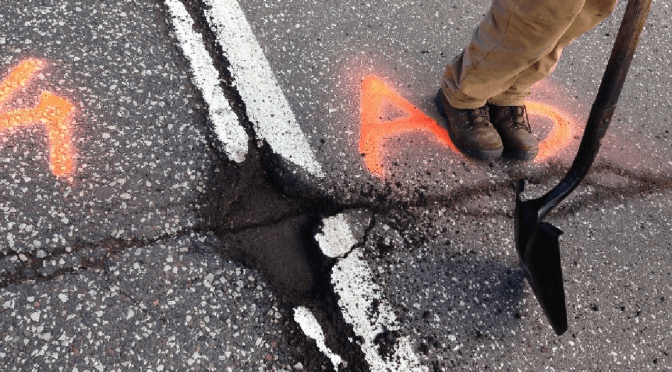
Seasonal and daily temperature variations, freeze-thaw cycles and other environmental factors lead to pavement distress on low-volume rural roads. Modifying asphalt mixtures could improve pavement resistance to these environmentally driven distresses. A comparison of the mechanical properties and performances of selected asphalt mixtures identified a mixture and method that hold considerable promise for improving performance and longevity on low-volume roads.
Continue reading Adapting Asphalt Mixtures for Tougher Rural Roads
Improving Asphalt Performance and Durability With Superpave 5
Minnesota’s harsh climate requires dense, durable asphalt to avoid frequent maintenance and replacement. Asphalt mixes as designed in the laboratory, however, don’t always perform consistently in the field. A new Superpave mix shows promise for providing cost-effective, high-performing pavements for state roadways.
Continue reading Improving Asphalt Performance and Durability With Superpave 5
Increasing Cold In-Place Recycling Efficiency for Pavement Rehabilitation
New tools will help local road engineers reliably estimate the curing time of a cold in-place recycling (CIR) layer. Researchers identified factors that affect asphalt curing when a CIR method is used to know when pavement is sufficiently hardened, which will minimize delays in road construction and reopening.
Continue reading Increasing Cold In-Place Recycling Efficiency for Pavement Rehabilitation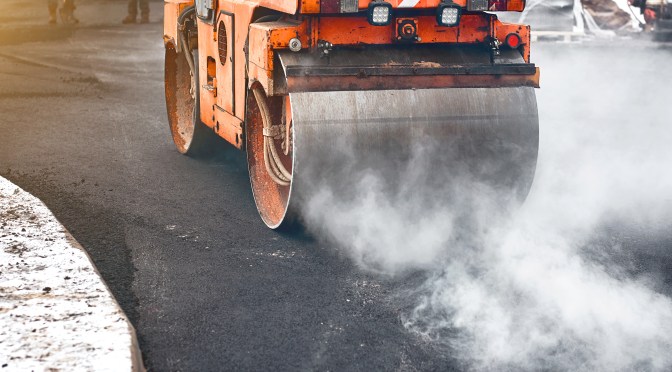
Quantifying the Benefits of Improved Compaction
Compaction is the final and most critical step in asphalt pavement construction. National research conducted several years ago indicated that a slightly more compact pavement than typical could help roads last longer. To understand the relationship between pavement density and long-term performance, MnDOT has built a database with performance data from samples collected soon after they were constructed more than a decade ago. The agency hopes to eventually have enough data to determine the right amount of compaction.
Continue reading Quantifying the Benefits of Improved Compaction
Innovative Additions Could Help Asphalt Pavements Sense Damage—and Repair Themselves
This article was originally published in Catalyst, January 2022.
University researchers are investigating ways to extend the life of asphalt pavements and generate cost savings by adding innovative materials to asphalt mixes. In a recent study, they found that improving asphalt mixes with graphite nanoplatelets and taconite concentrates offers new possibilities for enhancing damage-detection techniques and restoring subsurface cracking using microwave energy.
Continue reading Innovative Additions Could Help Asphalt Pavements Sense Damage—and Repair Themselves
Quantifying the Effect of Geogrids in Asphalt Pavement Foundation Layers
Geogrid inserted between the layers of asphalt pavement during construction can increase the strength and durability of the finished road. To help engineers decide whether to use geogrids in road construction projects, researchers calculated just how much strength and durability geogrid material can add to an asphalt pavement and integrated the findings into MnDOT’s design software.
Continue reading Quantifying the Effect of Geogrids in Asphalt Pavement Foundation Layers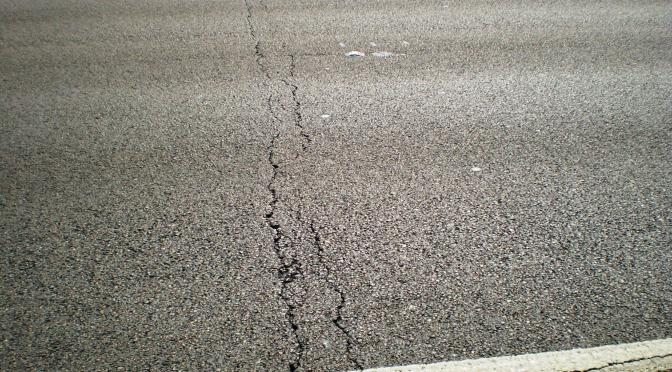
Evaluating Cracking Resistance Test Methods for Asphalt Pavements
A new method of testing low-temperature cracking in asphalt pavement shows promise for design, quality control and quality assurance. Test results produced by the new method, which is faster and less expensive than the previous method, match well with results from the older method.
Continue reading Evaluating Cracking Resistance Test Methods for Asphalt Pavements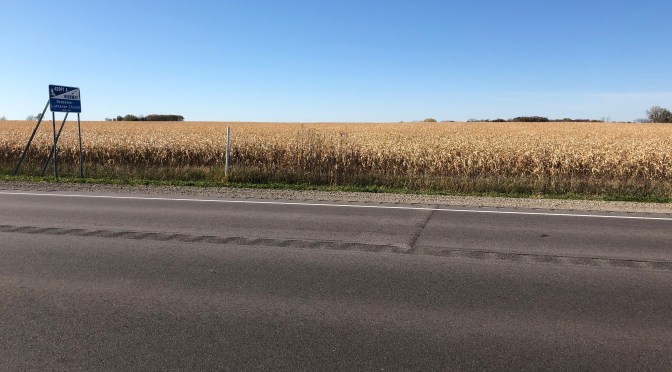
Evaluating the Impact of J-Band on Pavement Service Life and Crack Resistance
Potholes and other pavement failures in asphalt typically occur at the seams between lanes, where the mixture loses density during compaction because the edges are not confined like they would be with cement concrete forms. Researchers found that spraying J-Band, a void-reducing asphalt membrane (VRAM), in a band along longitudinal joints before asphalt layers are applied increased bond strength, lowered permeability and air void levels, and improved crack resistance.
Continue reading Evaluating the Impact of J-Band on Pavement Service Life and Crack Resistance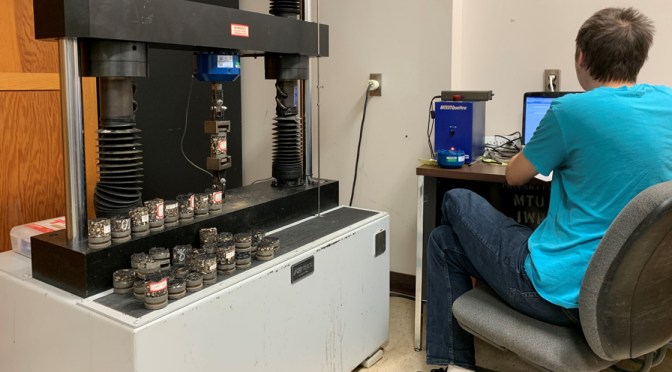
Investigating Asphalt Pavement Stripping Under Seal Coats
A recent Local Road Research Board (LRRB) study confirmed that increased freeze-thaw activity during Minnesota winters leads to delamination of seal coats from underlying pavements. Researchers identified optimal seal coat mix combinations and site conditions that may ensure effective seal coating of asphalt pavements in cities and counties around Minnesota.
Continue reading Investigating Asphalt Pavement Stripping Under Seal Coats Crossroads