This article was originally posted on Catalyst, November 2022.
Snow fences are a useful tool for controlling snow and ice on Minnesota’s roads. However, installing them relies on the cooperation of landowners. An ongoing collaboration between U of M researchers and the Minnesota Department of Transportation (MnDOT) aims to develop outreach tools that can be used to attract more landowners to the MnDOT snow fence program.
This post was originally posted on Catalyst, November 2022.
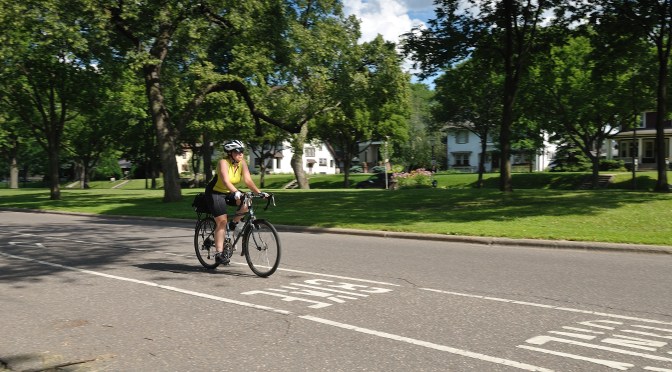
Zippy electric scooters—often called e-scooters—have quickly become a common sight on sidewalks, bike paths, and roads in most US urban areas. Americans took 38.5 million e-scooter rides in 2018 and 88.5 million rides in 2019—a 130 percent increase in a single year. However, the rapid rise of the e-scooter has come at a cost, and e-scooter injuries and crashes have become a serious public health concern.
This post was originally posted on Catalyst, November 2022.
It’s no secret that the transportation system is an uneven playing field. Understanding disparities related to race, income, and other factors is critical, and much more work is needed. Gender in particular is an under-researched yet important aspect of the design of vehicles, infrastructure, and amenities.
One of the best ways to connect with communities about projects and events that affect them is to reach them where they already are – on social media. But whether you’re a social media newbie or a communications professional, there are always new trends, technology, and platforms to learn, and it can be overwhelming.
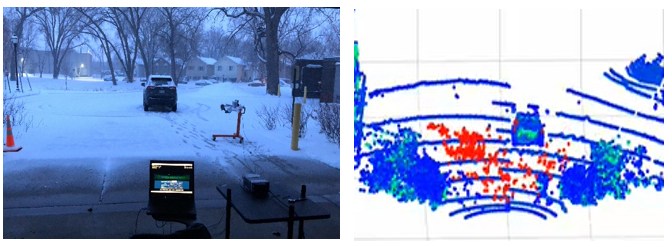
Fully automated vehicles may not be market-ready yet, but one day, they expect to provide a variety of benefits like reduced emissions and greater safety and transportation equity. These vehicles and the complex combination of underlying technologies that power them are continually being tested and improved to ensure the vehicles will meet the highest standards of safety and performance.
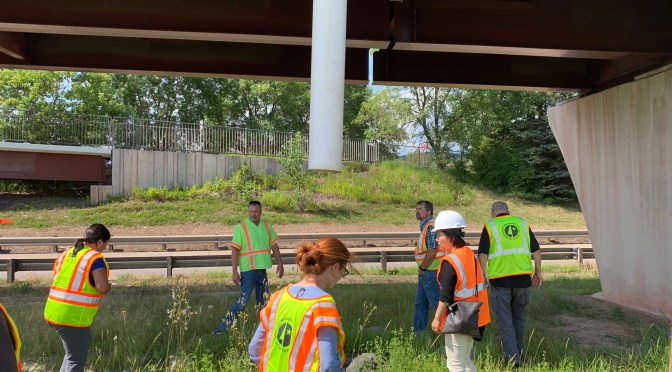
A new testing method will allow MnDOT to determine the underground foundation pile depths of high-mast light towers (HMLTs) without digging or dismantling. HMLTs need to meet design standards to ensure load-bearing stability. By using the new method to evaluate pile depth, MnDOT could avoid costly retrofits or replacements, and prioritize light towers in need of redesign.
Minnesota’s winters have been warming significantly faster than summers over the last several decades. In fact, the state’s winters are among the fastest warming in the U.S. This warming trend is likely increasing the time in which winter temperatures are near freezing, which could increase the number of freeze-thaw events. An increase in freeze-thaw events could have detrimental effects on Minnesota’s pavement systems.
New research explored the environmental impacts of an alternative to road salt—potassium acetate, which is effective on ice at lower temperatures. Minnesota’s winter roads have been effectively treated for decades with chloride-based mixtures for anti-icing and deicing. Salt, however, corrodes steel in vehicles and infrastructure. Additionally, chloride runoff harms the aquatic environment. For example, up to 70% of road salt applied on Minneapolis-St. Paul metropolitan area roads ends up in groundwater aquifers and nearby lakes, many of which exceed regulatory limits for chloride concentrations.
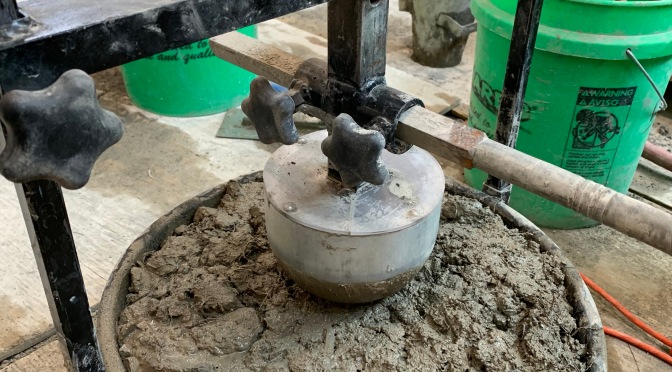
Reinforcing concrete pavement with structural fibers improves its durability and helps protect against potential faulting and cracking. MnDOT has used fiber-reinforced concrete (FRC) on some concrete bridge decks and pavements. Winter weather, freeze-thaw cycles and road salt, however, still hasten concrete deterioration. In a recent study, researchers evaluated FRC in the context of performance engineered mix design methods, giving MnDOT confidence in the parameters that FRC needs to meet to help withstand Minnesota’s harsh weather.
This article was originally published in Catalyst, August 2022.
Ongoing research is looking into the possibility of using local industrial waste for roadside stormwater construction projects. This would help reduce material and transportation costs and put otherwise wasted materials to use.






 Crossroads