Strategies improve pollinator roadside habitat, reduce costs

First published in Catalyst, May 22, 2023.

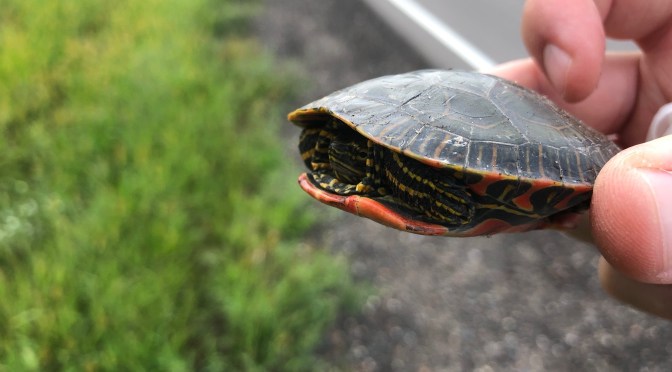
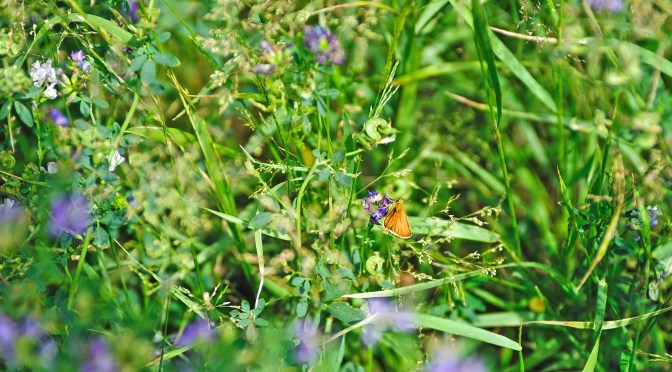
Transportation agencies revegetate roadsides after construction projects to provide road stability, stormwater filtration, and visual appeal. Revegetation is also a good opportunity to create pollinator-friendly habitat. However, planting and maintaining ditches can be expensive, funds for such projects are usually limited, and there isn’t much data on which methods actually work.

Continue reading Strategies improve pollinator roadside habitat, reduce costs

Multimodal trip planner to make travel easier in Greater Minnesota, rural areas

Reprinted from Catalyst, May 9, 2023

When a person wants to take a trip across the country, they can choose from a variety of travel planning apps to help make that happen. But what if the trip they want to take is from Mankato to New Ulm, or within their own community, using non-personal transportation?

The Minnesota Department of Transportation has launched a pilot project to bring trip planning and payment technology for daily trips to areas less dense than urban settings.

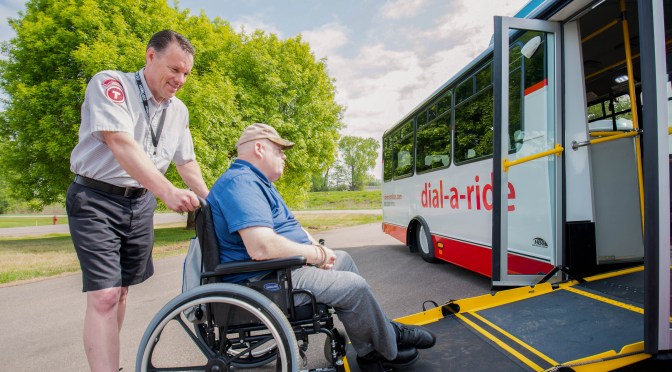
Residents and visitors in southern and western Minnesota now have the ability to plan for and, in some cases, pay for public transit and intercity bus trips using the Transit app. Travel and route information for these agencies went live within Transit on March 1.

Transit, a free app available for download in Google Play or the Apple App Store, is used in more than 300 cities around the world. It allows users to see route and travel options for public transit and connecting services. Select agencies also have in-app ticketing, allowing riders to pay for fares electronically and then show their device to transit drivers to ride.

“This pilot with the Transit app focuses on rural areas because this technology has not yet been made available outside of Minnesota’s big cities,” says Elliott McFadden, MnDOT’s Greater Minnesota Shared Mobility Program coordinator. “The project will be the first to bring the latest technology to make it easier to plan and take trips in many communities in Greater Minnesota.”

The pilot will run through April 2024 and is funded by two innovation grants from the Federal Transit Administration at a cost of $1.9 million.

U of M researchers led by Alireza Khani will evaluate the project to help determine whether this technology should be scaled to the rest of the state. Focusing on southern Minnesota, the research team will work closely with MnDOT’s project management team and the platform development team to study these questions:

  • How do residents of the region benefit from having access to a variety of mobility options through an integrated platform?
  • To what extent does the platform help increase transit ridership and reduce personal vehicle use?
  • How can the features of the platform—such as route planning or pricing—be optimized for greater system efficiency and benefits for all residents?

“Our goal is to provide the data and analysis policymakers need to make the most effective transit investments,” says Khani, an associate professor in the Department of Civil, Environmental, and Geo- Engineering.

(Adapted from a MnDOT press release, March 1, 2023.)

More Information

New Project: Mitigating Tenting of Transverse Cracks and Joints in Asphalt Pavement

More than 60% of Minnesota’s roadways consists of asphalt pavement. When transverse cracks occur in asphalt, our frigid winters can cause a secondary distress known as pavement tenting, crack heaving, or lipping. As ice accumulates in the base materials underneath, it causes pavement on both sides of the transverse cracks and joints to heave.

Continue reading New Project: Mitigating Tenting of Transverse Cracks and Joints in Asphalt Pavement

Monitoring Bumble Bee Populations in the Twin Cities Metro – Lessons Learned

In a project funded by MNDOT, entomologists developed an innovative method for surveying bumble bee populations alongside roadways. The researchers have recently published an article in Biological Conversations, Vol 283 focusing on the lessons learned about sampling when surveying these quick-moving bees.

Continue reading Monitoring Bumble Bee Populations in the Twin Cities Metro – Lessons Learned

Understanding Transit and Shared Mobility Preferences in Greater Minnesota Post-COVID

Public transit and shared mobility use sharply decreased during the pandemic. To remain viable, transit agencies and other transportation services in Greater Minnesota need to recover customers. A recent project identified rider preferences, safety measures and service improvements to increase interest in and use of alternative transportation.

Continue reading Understanding Transit and Shared Mobility Preferences in Greater Minnesota Post-COVID

The Role of Gender and Identity in Travel Behavior

Ensuring the transportation system is accessible and welcoming to all demographics requires understanding how different genders interact with the transportation system. Insight gained from a new project into the impacts of gender and other identities on travel needs, challenges and experiences will aid MnDOT in advancing transportation equity.

Continue reading The Role of Gender and Identity in Travel Behavior

Assessment of GFRP-Reinforced Bridge Deck Performance

A nonmetallic alternative to the steel rebars that reinforce concrete bridge decks has the potential to be longer lasting and more cost-effective in keeping bridges maintained in Minnesota’s harsh climate. Initial studies show that the performance of bridge decks built with glass fiber-reinforced polymer (GFRP) is comparable to—if not better than—conventionally built decks.

Continue reading Assessment of GFRP-Reinforced Bridge Deck Performance

New Project: Using Apps to Notify the Public of Local Road and Bridge Closures

The traveling public increasingly relies on navigation systems to get to their destinations. Currently, there is not a system, tool, or process being used by cities and counties in Minnesota to report road or bridge closures for use by transportation agencies to display to the traveling public or for use by third-party mapping/navigation companies (e.g., Waze, TomTom, HERE Technologies, Google Maps) to provide to the public.

This project will document up to three best practices for manual local road closure reporting, describe an approach that the Local Road Research Board could use to develop or implement an existing user-friendly road closure reporting system, and provide guidance on how to report closures to third-party mapping/navigation companies.

Objectives

MnDOT already operates and maintains a statewide traveler information reporting system known as CARS. This project will review and summarize the options and approach for adapting it for local road entry. As part of the study, researchers will:

  • Develop best practices for reporting systems by documenting four examples used in other states for establishing and operating tools to report local road closures.
  • Define three options for how to make a user-friendly system for local Minnesota agencies using the outcomes of the best practices summary.
  • Prepare users guide for entering information into existing mapping tools that will assist in understanding the process to submit road closures and mapping updates to established mapping/navigation providers.

Project Details

  • Estimated Start Date: 12/19/2022
  • Estimated Completion Date: 03/31/2024
  • Funding: Local Road Research Board
  • Principal Investigator: Dean Deeter
  • Technical Liaison:  Perry Clark

Details of the research study work plan and timeline are subject to change.

To receive email updates about this project, visit the Local Road Research Board to subscribe.

Exploring a State-Tribal Partnership to Advance Energy Goals

MnDOT has a unique opportunity to make progress toward its renewable energy goals and enhance the government-to-government relationship with the Red Lake Nation. Initial analyses of an innovative energy partnership indicate potential mutual and multiple benefits for MnDOT and the tribe.

Continue reading Exploring a State-Tribal Partnership to Advance Energy Goals

Minnesota's transportation research blog