
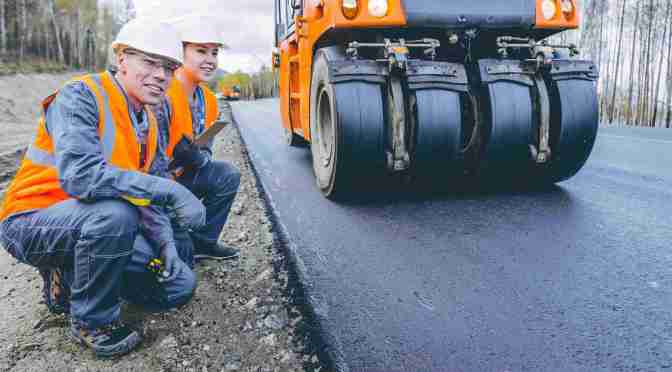
Local transportation agencies in Minnesota continue to face worker shortages as many struggle to hire and retain employees. Recognizing this challenge, the Minnesota Local Road Research Board partnered with Minnesota LTAP to develop marketing resources for local transportation agencies to use to recruit and retain roadway maintenance workers.
Continue reading Staffing up: Resources to Grow Your Roadway Maintenance Workforce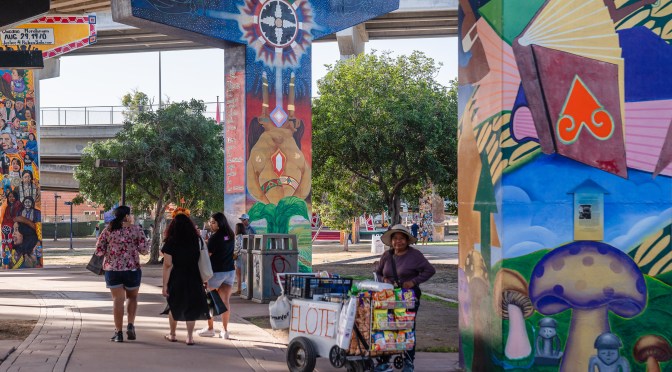
Social Outcomes Improve by Incorporating Arts and Culture into Transportation Planning
Historically, transportation projects have had a disproportionately negative effect on BIPOC (Black, Indigenous and people of color) and low-income communities. Today, state departments of transportation (DOTs) may be able to mitigate these negative effects by reaching out to these communities and incorporating their ideas and feedback into transportation planning. Local artists and culture bearers could serve as ambassadors for these communities by participating in the transportation planning process based on their creative placemaking ideas and connection to the community.
Continue reading Social Outcomes Improve by Incorporating Arts and Culture into Transportation Planning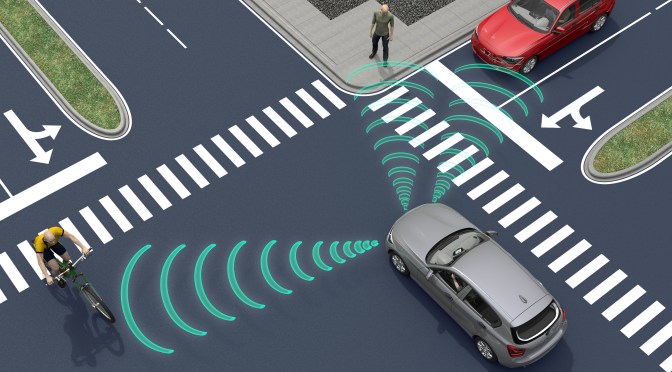
New Project: Use of MNCORS to Support AV Operations in Rural Minnesota
Autonomous vehicles (AVs) have infrastructure requirements such as lane lines, centerlines and intersection signs to guide camera-enabled steering control functions. But many rural roads do not have lane markings or are unpaved, and intersections might be missing components to guide AVs.
Continue reading New Project: Use of MNCORS to Support AV Operations in Rural Minnesota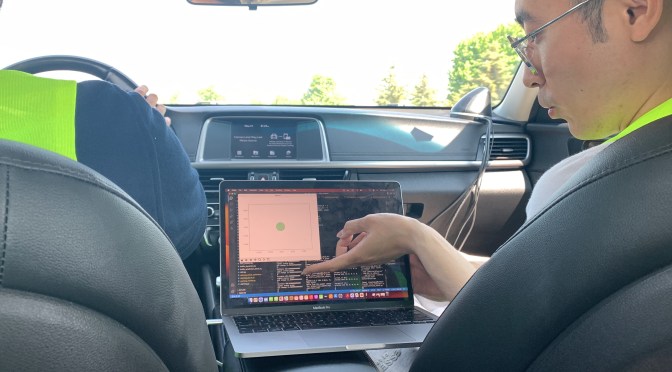
Introducing a New Red-Light Running Warning System that Can Potentially Reduce Human Errors at Intersections
Red light violations remain a prominent issue and high contributor to serious crashes and casualties at signalized intersections. An ongoing research project, funded by the Local Road Research Board, and Federal Highway Administration (FHWA) State Transportation Innovation Council (STIC) Incentive program, is developing and testing a warning system that signals drivers as they approach a red light and prompts them to decelerate.
Continue reading Introducing a New Red-Light Running Warning System that Can Potentially Reduce Human Errors at Intersections
Clear Roads Selects 2024 Research Projects
At its 2024 spring meeting, the Clear Roads Technical Advisory Committee reviewed new research proposals and selected projects to fund.
Continue reading Clear Roads Selects 2024 Research Projects
Using Alternative Technologies to Detect Vehicles at Signalized Intersections
In Minnesota and across the country, the most common traffic signals are those that are actuated by a device embedded in the road that detects the presence of a vehicle at the intersection. While these embedded devices can last for decades, they don’t always detect modern vehicles, such as electric cars, or vulnerable road users, such as bicycles or motorcycles. New research evaluated the performance of video- and radar-based detection systems, which are becoming more readily available, under a variety of Minnesota weather conditions.
Continue reading Using Alternative Technologies to Detect Vehicles at Signalized Intersections
NCITE Webinar: LRRB Mini-Roundabout Guidance
Tuesday, August 6, 10-11 a.m., free to attend
Increasingly, local agencies are opting for mini-roundabouts for some locations instead of traditional roundabouts, which typically require a larger footprint than a standard four-way intersection. Mini-roundabouts are characterized by a small diameter and fully traversable islands (central island and splitter islands).
Join the Apex Engineering Group for a presentation on the Local Road Research Board project, Mini-Roundabout FAQs. Project team members Michael Marti and Zach Heimer with SRF Consulting Group and Jon Pratt with the City of Detroit Lakes will discuss this new guidance.
The guidebook defines mini and compact roundabouts and provides selection criteria on when to use them as well as details regarding the center treatment. The FAQ format provides easy navigation to technical information.
If you have difficulty accessing the meeting, use the meeting ID and passcode:
- Meeting ID: 251 050 866 163
- Passcode: tGP6ix

New Project: Comparative Analysis of Grade-Separated Pedestrian Infrastructure and At-grade Treatments
Grade-separated intersection crossings allow pedestrians to cross over or under traffic lanes. Several factors determine whether a specific location is appropriate for a grade-separated crossing, such as volumes of vehicle and pedestrian traffic, number of lanes to cross, and vehicle speed and visibility.
Continue reading New Project: Comparative Analysis of Grade-Separated Pedestrian Infrastructure and At-grade Treatments
Crowdsourcing meets transportation planning with bike and pedestrian data counts
Increasing active transportation is an ongoing effort for transportation planners. Biking and walking can help decrease auto dependence, air pollution, and climate change and improve public health. Plus, it can help transportation agencies meet their strategic goals. The challenge? Making good decisions requires good data, and data for walking and biking trips can be hard to find.
Continue reading Crowdsourcing meets transportation planning with bike and pedestrian data counts
Applying for Grants: Use Data to Tell Your Community’s Story to USDOT
Research done here at Minnesota and elsewhere has done much to define the problems of local communities with missing or declining infrastructure. USDOT offers federal assistance to build and improve that infrastructure, but the grants have to be won.
Continue reading Applying for Grants: Use Data to Tell Your Community’s Story to USDOT
