

MnDOT’s Office of Livability developed the Livability Framework to help guide planning, programming, and project development processes. It is being piloted in MnDOT Metro District. The outcomes should result in more people focused outcomes for the plans, programs and projects in the District. The Livability Initiative wants each of the Livability Pillars of the Livability Framework to be thoroughly considered and evaluated when planners, project managers, and others make decisions about transportation policies, programs, and/or projects.
Continue reading Measuring the Livability Framework
Clear Roads Annual Survey of State Winter Maintenance Data
Clear Roads has published the results of their ninth Annual Survey of State Winter Maintenance Data, which compiles winter resources, material and cost data from 41 states for the 2022-2023 winter season. The spreadsheet includes all submitted data, as well as calculated statistics, winter severity index data, and a United States map that displays many of these metrics. The spreadsheet also includes data from the previous seven surveys (winters 2014-2015 through 2021-2022) and displays averages and changes across winter periods.
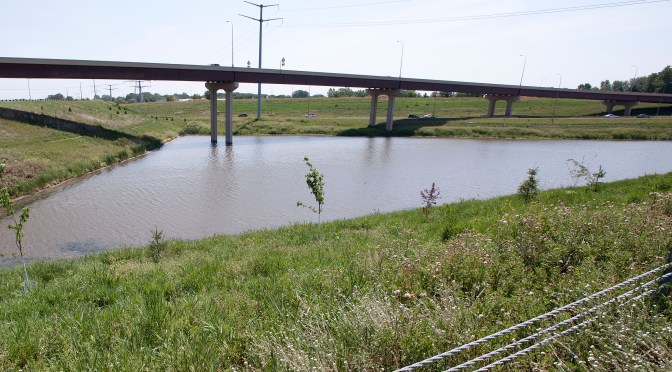
Stormwater Research Sees Practical Application in Twin Cities Metro, St. Cloud
Sophie Koch, CTS News, February 22, 2024
A long-running series of U of M research projects aimed at improving stormwater quality are beginning to see practical application by stormwater specialists from the Twin Cities metro area and beyond.
Continue reading Stormwater Research Sees Practical Application in Twin Cities Metro, St. Cloud
MATI Program RFP Webinar Materials, FAQ Now Available
Webinar materials and a new FAQ about the Mobility, Access, and Transportation Insecurity (MATI) Program RFP process are now available on the MATI website.
Continue reading MATI Program RFP Webinar Materials, FAQ Now Available
New Project: Development of a System to Report School Bus Stop Arm Violations
When a motorist ignores an extended school bus stop arm, it creates a direct and serious risk to children boarding and exiting a school bus. Capturing information about such incidents is a critical step in better understanding why they occur and how they can be prevented.
Continue reading New Project: Development of a System to Report School Bus Stop Arm Violations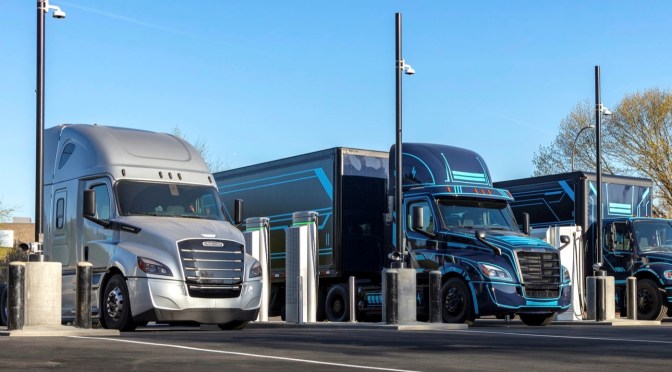
Researchers identify Minnesota’s best charging locations for e-trucks, aiming to boost adoption
By Megan Tsai, reprinted from CTS News, February 8, 2024
Aiming to eliminate barriers to electric truck adoption in Minnesota, U researchers have identified the state’s most suitable e-truck charging locations.
Currently, the adoption of electric medium- and heavy-duty trucks is lagging compared with the rising popularity of personal and transit electric vehicles. There are several reasons behind the delay, but one key factor is the lack of an adequate charging station network for e-trucks. The Minnesota Department of Transportation (MnDOT) called on U of M researchers for insight and guidance.
“Our goal was to understand the needs and opportunities for e-truck charging stations and to optimize the location of charging stations in Minnesota, ” says Alireza Khani, associate professor with the Department of Civil, Environmental and Geo-Engineering and the project’s principal investigator.
The project was conducted in two stages. In the first stage, researchers identified the most important criteria to consider when planning e-truck charging stations; this was done with a survey of experts and stakeholders, including staff from MnDOT, the Freight Mobility Research Institute, and the American Trucking Associations.
Based on this survey, researchers ranked the relative importance of the criteria and assigned each a weighted value. The top three criteria were ease of access for e-truck drivers, proximity to power substations, and proximity to existing truck stops. Other criteria included environmental conditions (land cover, water resources, and flood risk), land prices, and the potential to generate onsite solar energy.
During the second stage, researchers developed geographic information system layers for each criterion and pared down candidate locations using optimization modeling. The model was designed to consider truck demand in Minnesota, the routing and charging activities of e-trucks, and the market penetration rate of e-trucks, with a goal of minimizing total travel costs to promote greater adoption of e-trucks.

“This optimization model is a novel decision-making tool that will help MnDOT maximize its return on investment in the charging station network,” Khani says. “The model can be expanded to incorporate other contributing factors and inform policy decisions.”
To gain additional insight into Minnesota e-truck adoption, researchers tested the model with several assumptions based on the reduced per-mile operating costs of e-trucks over diesel trucks. They found that the adoption of e-trucks would grow sharply as the charging station network is developed; the growth rate would be highest when the first 30 to 40 stations are added. The modeling also found that solar generation was not a viable option to fully power truck charging stations.
MnDOT is focused on meeting the state’s greenhouse gas reduction goals, and increasing the adoption of e-trucks would help MnDOT proactively address this significant subsector of transportation greenhouse gas emissions.
“This project helped us understand considerations for e-truck charging stations, such as electric power substation location and capacity,” says Andrew Andrusko, freight planning director with MnDOT’s Office of Freight and Commercial Vehicle Operations. “It also identified optimal locations for truck charging stations to support intrastate freight movement.”

New Project: Evaluation of Static and Dynamic No Right Turn on Red Signs at Traffic Signals
Making signalized intersections safer for pedestrians can be achieved by reducing points of conflict between pedestrians and vehicles. One source of conflict occurs when a vehicle makes a right turn on red (RTOR) onto a street in which pedestrians are crossing. During this turn, the driver must cross the path of pedestrians while at the same time searching for gaps in conflicting vehicle flow.
Continue reading New Project: Evaluation of Static and Dynamic No Right Turn on Red Signs at Traffic Signals
A Mobile App to Report Driver Intrusions Into Work Zones
Transportation workers face critical safety risks when drivers fail to comply with traffic control instructions in work zones. These intrusions threaten not only the flaggers who are directing traffic, but all workers on the job site and the drivers themselves. Knowing the nature and frequency of intrusions is necessary to develop effective prevention strategies. A new mobile phone app enables workers to quickly and easily report incidents, allowing MnDOT to analyze risks and improve worker safety.
Continue reading A Mobile App to Report Driver Intrusions Into Work Zones
Skid-resistant pavement markings could help stop slips
Reprinted from Catalyst, January 23, 2024
Retroreflective pavement markings such as bike lane indicators, crosswalks, and lane lines are designed to increase safety. However, the same retroreflective properties that add nighttime visibility can also make them slippery for vulnerable road users such as pedestrians, bicyclists, and motorcyclists—especially in wet or icy conditions.
Continue reading Skid-resistant pavement markings could help stop slips
Drivers Correctly Interpret Flashing Yellow Arrows for Left Turns
Permissive left turns, where a driver does not have a green arrow and must wait for a gap in oncoming traffic before turning, can be indicated by different traffic signal configurations. Flashing yellow arrows are becoming a preferred signal type in Minnesota and across the nation. New research provides traffic engineers with confidence that drivers understand the meaning of the signal, even without an accompanying Left Turn Yield sign.
Continue reading Drivers Correctly Interpret Flashing Yellow Arrows for Left Turns Crossroads