

To increase the number of students who walk or bike to school, policymakers first need to understand the primary factors that prevent students, parents and caregivers from choosing these travel modes. A look at the factors that influence this decision provided information to address barriers to walking and biking for children and families in Minnesota communities.
Continue reading Impact of Start Time on Students Walking and Biking to SchoolCategory Archives: Pedestrian

Improving Pedestrian Safety on Reservations in Minnesota
MnDOT has identified Native Americans as one of six priority populations in the state that experience disproportionate risks as pedestrians. To access everyday services such as grocery stores, workplaces and schools, pedestrians may have to cross a state or county roadway at unmarked crossings. Installing traffic safety countermeasures at these crossings is intended to reduce the risk faced by pedestrians. This project analyzed pedestrian safety at 23 locations within seven reservations and the effectiveness of countermeasures implemented at six locations.
Continue reading Improving Pedestrian Safety on Reservations in Minnesota
Tribal Pedestrian Safety
A new video developed by the Center for Transportation Studies highlights a multiyear study of pedestrian safety at reservations that was undertaken by U of M researchers and partners from seven Anishinaabe tribes. The work was sponsored by the Minnesota Department of Transportation (MnDOT).
Continue reading Tribal Pedestrian Safety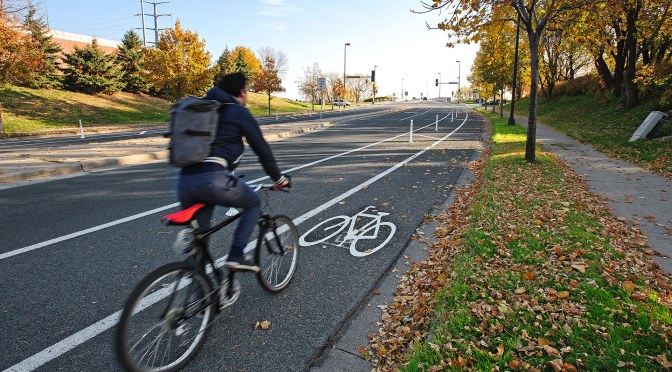
Using Mobile Device Data to Estimate Bicyclist and Pedestrian Traffic
MnDOT relies on estimates of annual average daily traffic volumes to plan and maintain safe, effective transportation network infrastructure for all travelers. Estimating traffic volumes for nonmotorized road users such as bicyclists and pedestrians has been challenging because monitors are limited compared to vehicle traffic counters. Data from mobile devices, routinely collected through a variety of platforms, offers a potential source of traveler routes. Using monitored nonmotorized traveler data to validate mobile datasets, researchers produced a data visualization tool to estimate bicyclist and pedestrian counts within the Twin Cities area.
Continue reading Using Mobile Device Data to Estimate Bicyclist and Pedestrian Traffic
New Project: Comparative Analysis of Grade-Separated Pedestrian Infrastructure and At-grade Treatments
Grade-separated intersection crossings allow pedestrians to cross over or under traffic lanes. Several factors determine whether a specific location is appropriate for a grade-separated crossing, such as volumes of vehicle and pedestrian traffic, number of lanes to cross, and vehicle speed and visibility.
Continue reading New Project: Comparative Analysis of Grade-Separated Pedestrian Infrastructure and At-grade Treatments
Understanding Factors That Influence Driver Yielding to Pedestrians
Vehicle speeds, type of pedestrian, road characteristics and other variables can impact whether drivers yield to pedestrians attempting to cross a road at an unsignalized intersection. An analysis of data collected from 18 intersections identified human and site attributes that correlate to higher rates of driver yielding. Knowledge of these potentially influential factors will help local engineers build safer crossings at intersections.
Continue reading Understanding Factors That Influence Driver Yielding to Pedestrians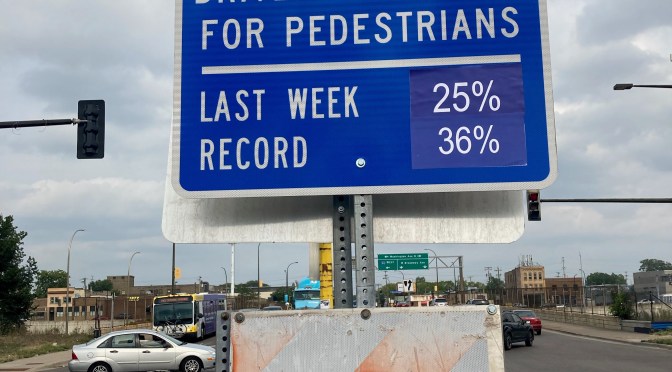
Improving Driver Yielding to Pedestrians at Intersections
Improving the rates of drivers yielding to pedestrians has been challenging despite crosswalk laws. Expanding on an earlier study, researchers further explored the effectiveness of engineering treatments at road crossings, giving agencies a deeper understanding of how to maximize pedestrian safety.
Continue reading Improving Driver Yielding to Pedestrians at Intersections
Designing Pedestrian Safety Features for Year-Round Maintenance
Pedestrian safety countermeasures near roadways require year-round maintenance to be effective. Clearing snow and ice has not generally been a design consideration for safety treatments, but new research has identified specific design criteria to help MnDOT and other agencies keep walkways clear without impeding maintenance efforts.
Continue reading Designing Pedestrian Safety Features for Year-Round Maintenance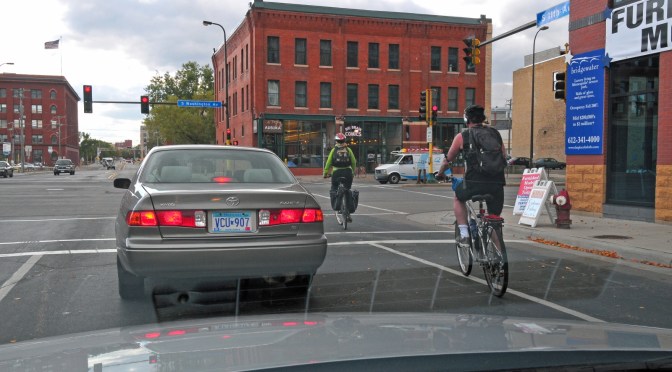
Short Films, Big Visions: Transportation-themed films spark conversation about community connections
April 4, 2023
Dozens of community members and transportation advocates tuned in to “Short Films, Big Visions: A Series on Transportation and Community” on February 23. Co-hosted by CTS and the Humphrey School of Public Affairs, the virtual event featured a screening of short films produced by the Redford Center for its “Community Power” series followed by an engaging panel discussion.
Continue reading Short Films, Big Visions: Transportation-themed films spark conversation about community connections
How Did COVID Impact Biking and Walking in Minnesota? Trail Data Holds Answers, Say U of M Researchers
This article was originally published in Catalyst, May 2022.
Photos and stories about people biking and walking on packed trails were common during the early stages of the COVID-19 pandemic. Transportation researchers also reported surges in bicycling and walking during this time of social restrictions and widespread closures, but little was known about how those surges related to longer-term trends.
Continue reading How Did COVID Impact Biking and Walking in Minnesota? Trail Data Holds Answers, Say U of M Researchers Crossroads