

In Minnesota, one challenge with installing safety countermeasures for people walking and ensuring year-round access to pedestrian infrastructure is winter maintenance.
Continue reading New Project: Designing and Implementing Maintainable Pedestrian Safety CountermeasuresCategory Archives: Multi-modal
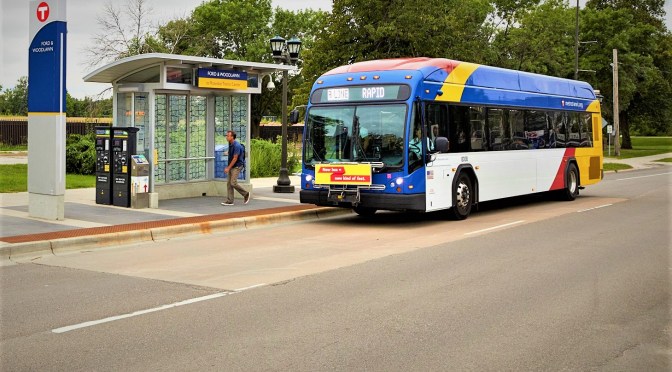
Property Values Remain Stable after Opening of Twin Cities Bus Rapid Transit Line
This article was originally published in Catalyst, January 2022.
Arterial bus rapid transit (BRT) has gained momentum in the Twin Cities as a less-expensive alternative to light-rail transit. However, this expansion of BRT has also raised concerns that the new lines will spur an increase in housing values and neighborhood gentrification, potentially displacing low-income residents. A new study eases these concerns: It found that the A Line BRT route encouraged ridership but had no effect on housing values.
Continue reading Property Values Remain Stable after Opening of Twin Cities Bus Rapid Transit Line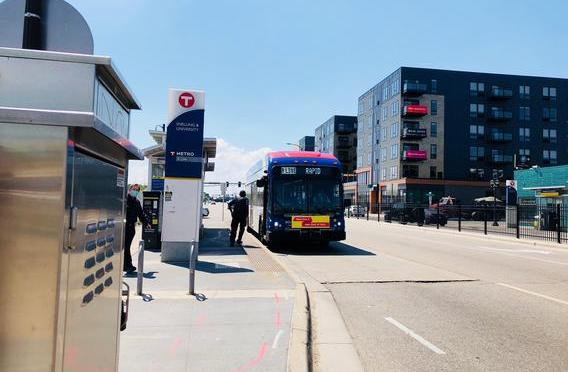
Researchers Study Impact of Transitways on Nearby Roads, Park-and-Ride Choices
This article was originally published in Catalyst, November 2021.
How does a transitway affect automobile traffic on nearby roadways? What factors influence which park-and-ride facilities people choose? These two questions were the focus of a recent two-part project by U of M researchers.
Continue reading Researchers Study Impact of Transitways on Nearby Roads, Park-and-Ride Choices
New Approach Helps Estimate COVID Exposure Risk for Trail Users
This article was originally published in Catalyst, November 2021.
As gyms and indoor health facilities closed during the beginning of the pandemic, people flocked to trails and parks, creating both opportunities and concerns for public health and land managers. The US Centers for Disease Control and Prevention (CDC) recommended a six-foot distance between people (even outdoors), but little was known about compliance with these recommendations.
Continue reading New Approach Helps Estimate COVID Exposure Risk for Trail Users
U Students Offer Ideas For Transit Changes in Carver County
This article was originally published in Catalyst, August 2021.
The transit needs of Carver County, Minnesota, are undergoing a shift driven by changes in population size and demographics. Student researchers from the U of M teamed up with county planners to identify and address these changing needs.
Continue reading U Students Offer Ideas For Transit Changes in Carver County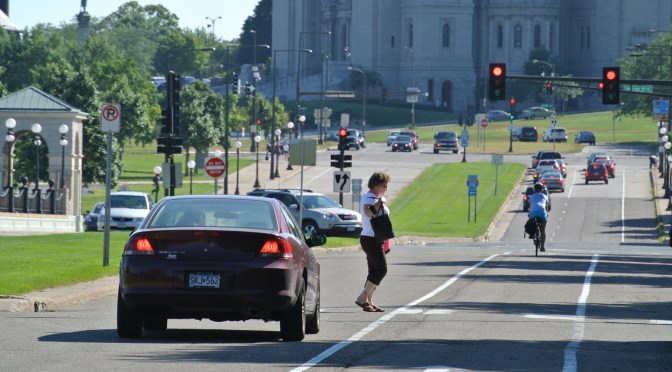
New Project: Mobile-Device Data, Non-Motorized Traffic Monitoring, and Estimation of Annual Average Daily Bicyclist and Pedestrian Flows
Understanding pedestrian and bicyclist flows is vital to distributing a limited construction budget to new infrastructure for improved safety on specific roads. Unfortunately, statewide data collection for active transportation flows is challenging.
MnDOT and local agencies historically have lacked estimates of bicycle and pedestrian traffic on Trunk Highways and County State Aid Highways.
Since about 2016, MnDOT has begun monitoring bicycle and pedestrian flow at more than 25 locations across the state, but, given the small number of counters and the variability of flows in response to variations in weather across Minnesota, these monitoring data are insufficient for estimation of Annual Average Daily Bicyclists and Annual Average Daily Pedestrians.
One option for obtaining travel data without expensive infrastructure is relying on mobile data collection.
Continue reading New Project: Mobile-Device Data, Non-Motorized Traffic Monitoring, and Estimation of Annual Average Daily Bicyclist and Pedestrian Flows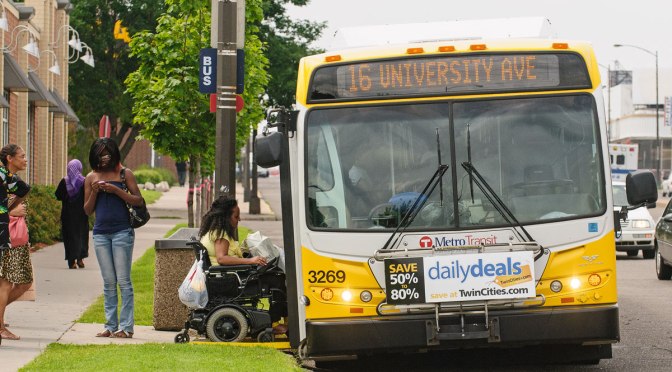
New Project: Understanding Post-COVID Safety Concerns, Perceptions and Preferences of Transit and Shared Mobility Users in Minnesota
Transit ridership dropped significantly last year in Minneapolis, Duluth and other cities during the COVID-19 pandemic.
Continue reading New Project: Understanding Post-COVID Safety Concerns, Perceptions and Preferences of Transit and Shared Mobility Users in Minnesota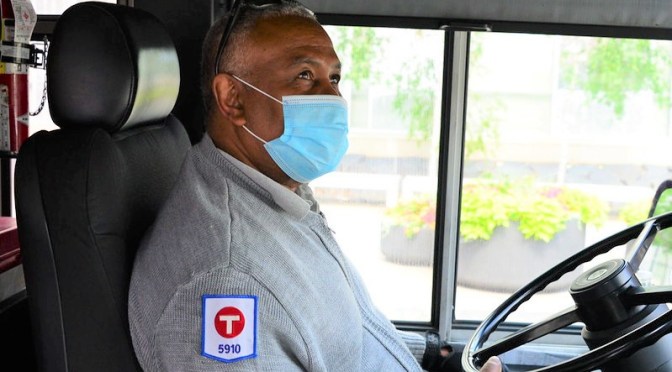
Researchers Develop Analytics Tool to Predict Gaps in Metro Transit Bus Driver Schedules
This article was originally published in Catalyst, February 2021.
Solving real-world problems sometimes requires a very boots-on-the-ground approach. When Metro Transit began experiencing a bus driver shortage, researchers from the University of Minnesota (U of M) decided to do some first-hand observations of bus dispatcher life in order to develop a tool that could make scheduling easier.
Continue reading Researchers Develop Analytics Tool to Predict Gaps in Metro Transit Bus Driver Schedules
Team Receives NSF Grant to Study ‘Smart e-Scooters’
This article was originally published in Catalyst, November 2020.
Electric scooters let riders move quickly between the roadway and the sidewalk, but these sometimes-unpredictable travel patterns can pose risk for riders and the people around them. Making scooters smarter is the goal of a new U of M research project funded by the National Science Foundation (NSF). Under the $1.2 million Cyber-Physical Systems grant, a cross-disciplinary team will study smart tracking systems on scooters for ensuring safe and smooth interaction with other vehicles and pedestrians.
Continue reading Team Receives NSF Grant to Study ‘Smart e-Scooters’
New Project: Pedestrian User Experience at Roundabouts
Roundabouts reduce the severity of crashes at intersections, but transportation agencies have received some feedback from pedestrians indicating that roundabouts, especially larger multi-lane roundabouts, can be difficult to navigate.
Continue reading New Project: Pedestrian User Experience at Roundabouts Crossroads