
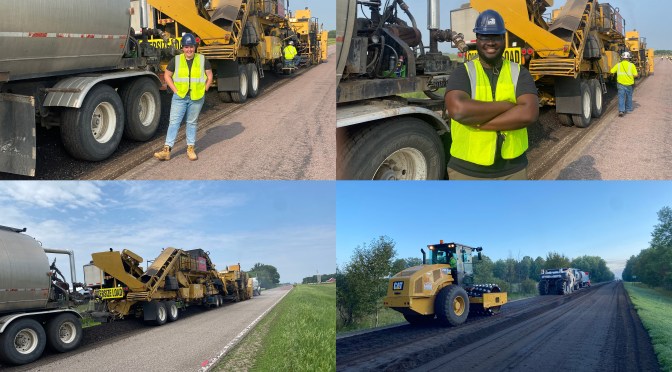
Cold recycling road pavement materials into new road construction is a cost-effective and sustainable practice. However, the properties of these materials must be characterized to adequately design pavement structures. This project developed a framework and tool for transportation agencies to estimate the key material properties of cold recycled materials incorporated into road designs.
Continue reading Assessing Recycled Pavement for Use in Road DesignCategory Archives: Materials and Construction
Limiting Pavement Damage from Detours
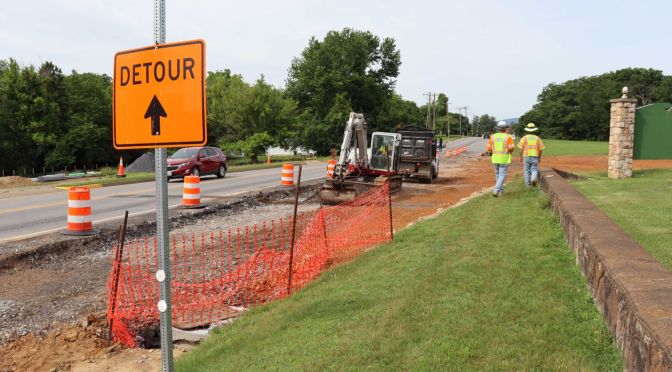
Detours for highway construction projects direct heavy freight vehicles onto local roads that were not designed to accommodate the frequency of heavy loads. Detours to these local roads often accelerate pavement deterioration that shortens their service life and requires additional repair. This project examined the structural and economic impacts of detours on local roads to develop a framework for optimizing detour routes that limit pavement damage while maintaining traffic mobility.
Continue reading Limiting Pavement Damage from Detours
Using Onboard Vehicle Data to Assess Pavement Quality
Many modern vehicles continuously track location and performance data such as speed and acceleration. Collecting large amounts of this data to use in machine learning models has many potential applications, including aggregating and evaluating road pavement conditions. This project investigated the feasibility of using large amounts of onboard data from electric vehicles to monitor and assess pavement conditions comprehensively and cost-effectively across a large network.
Continue reading Using Onboard Vehicle Data to Assess Pavement Quality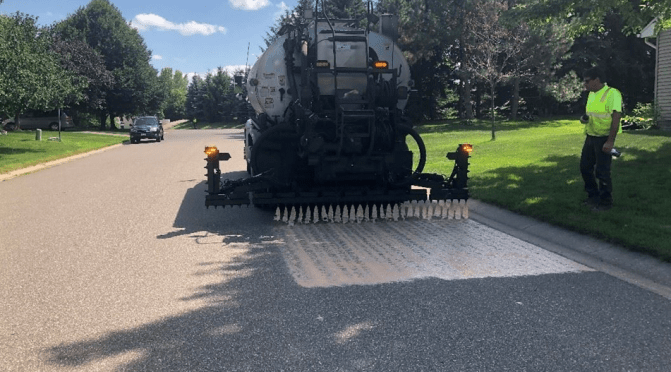
Assessing Rejuvenators That Extend Pavement Service Life
Over time, asphalt pavement becomes stiff and brittle due to oxidation, often leading to surface cracking and distress. To mitigate these damages and extend the service lives of roads, transportation agencies may apply a spray-on rejuvenator (SOR) to restore essential components of the asphalt. This project investigated the short- and long-term effectiveness of 12 SORs that state and local transportation agencies may consider for future use.
Continue reading Assessing Rejuvenators That Extend Pavement Service Life
Evaluating Taconite as a Lower Cost Friction Treatment
High friction surface treatments (HFSTs) on Minnesota roads are composed of imported, industry standard calcined bauxite aggregate. This material is expensive, and producing it is energy-intensive. Taconite aggregate, a by-product of the Minnesota mining industry, is a potential alternative to calcined bauxite that is less expensive. This research compared taconite and calcined bauxite in field skid resistance performance testing to determine the feasibility of using taconite in place of calcined bauxite in HFST applications.
Continue reading Evaluating Taconite as a Lower Cost Friction Treatment
Evaluating Road Designs That Use Lower Quality Aggregate
Aggregate materials used in the base and subbase layers of pavements provide structural support and drainability to Minnesota roads. But the supply of locally available high-quality aggregate material is becoming increasingly scarce. This project explored sustainable and cost-effective solutions for constructing durable flexible pavement roads with lower quality aggregate material.
Continue reading Evaluating Road Designs That Use Lower Quality Aggregate
Testing Recycled Plastics in Asphalt and Concrete Pavement Mixes
Addressing the increasing need for pavement materials coincides with an increasing supply of plastic waste. Incorporating recycled plastic into aggregate for transportation infrastructure is of growing interest. Testing plastic waste material in both asphalt and concrete pavement mixtures revealed promising results and the need to explore long-term performance and durability.
Continue reading Testing Recycled Plastics in Asphalt and Concrete Pavement Mixes
Strategies for Addressing Deteriorated Concrete Roads
Treating early deterioration in concrete pavement can extend a road’s service life and defer costly replacement. An assessment of different strategies years later demonstrated that over time, asphalt overlays made the roadways smoother for travelers.
Continue reading Strategies for Addressing Deteriorated Concrete Roads
Incorporating Sustainability into the Procurement Process
The production and use of construction materials for transportation projects have varying impacts on the environment based on factors such as production process, transportation and material inputs. To mitigate negative outcomes, MnDOT sought to incorporate environmental impacts into the procurement process for concrete mixtures and concrete pavement. This project provided a framework for considering environmental impacts and standardizing a reporting system to encourage the use of low-carbon construction materials in infrastructure projects.
Continue reading Incorporating Sustainability into the Procurement Process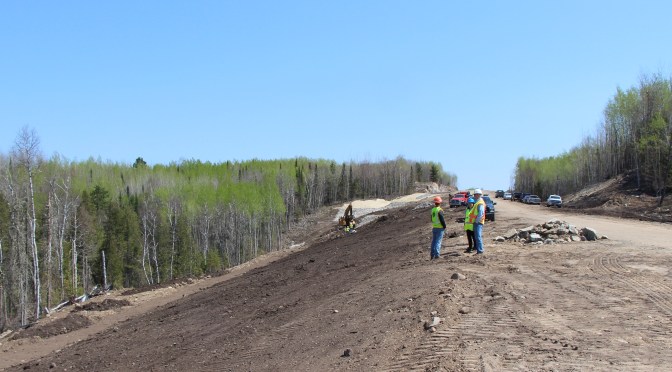
Industrial by-products prove sustainable options for managing roadside stormwater
Reprinted from CTS News, March 25, 2025
Roadside soil plays a crucial role in stormwater management. Naturally vegetated roadsides can filter and control runoff, helping to keep pollutants out of bodies of water and minimizing flooding to communities. However, soil left behind from road construction does not adequately support filtration and plant growth unless it’s amended with organic matter—and traditional mixtures for doing so, such as with sand and compost, can be costly and resource-intensive.

To find a more sustainable solution, U of M researchers partnered with MnDOT and the Minnesota Local Road Research Board. Building on previous research, a team led by CTS scholar David Saftner, principal investigator and associate professor in the UMD Department of Civil Engineering, tested sustainable roadside soil mixtures using locally available waste materials and by-products generated from forestry, agriculture, and industrial activities.
In this project, nine materials were selected for testing, including a peat/biochar mix; dredged river sediment; pine and ash sawdust; VersaLime (a by-product of sugar beet processing); lime mud, bottom ash, and degritter (from a pulp and paper mill); and recycled concrete aggregate (RCA). All nine materials proved efficient at removing pollutants, though some were more effective than others. After extensive laboratory testing, the five top-performing materials were selected and used to create three engineered soil blends:
- RCA (80%) and ash sawdust (20%)
- RCA (80%) and peat/biochar (20%)
- Dredge sediment (80%) and degritter (20%)
Field testing of these three engineered soil blends took place in outdoor plots. The team studied infiltration rate, pollutant removal, and plant growth from grass and flower seed. Through a life-cycle assessment, the researchers also evaluated material collection and transport, energy demand, human health and ecosystem impacts, climate change, and water use.
Their research revealed that all three engineered soil blends were effective at capturing and filtering the first inch of excess stormwater runoff, offering a viable alternative to traditional soil mixes. Other key findings:
- Of the engineered soil mixes, organic and coarser materials were better at allowing water to pass through.
- Greenhouse tests showed promising plant growth, while field plots experienced challenges—possibly due to seasonal dryness.
- The dredge sediment and degritter soil mix had substantially higher impacts than the other two soil mixes as well as the most CO2 emissions.
- The RCA and ash sawdust soil mix had the lowest impacts, with the RCA and peat/biochar soil mix producing similar results.
Based on their findings, a design guide was developed for road engineers outlining best practices for using local by-products and waste materials to create engineered soil mixes while still adhering to regulatory standards. These recommendations are designed to be standard, common, and repeatable.
“This was a great project and I’m especially happy with the design guide,” Saftner says. “Determining how to implement new procedures is tougher than using tried-and-true methods. Our hope is that the guide will simplify things for practicing engineers looking for more cost-effective, sustainable, and locally sourced solutions.”
The study results also highlighted many of the benefits of engineered soil mixtures including the reuse of waste materials, reduced spending on sand and compost, lower transportation costs, and fewer environmental impacts of transporting material.
Further research on the reuse of waste materials includes another multi-phased project incorporating biochar. The first phase of that project should be finished this summer, with the second phase kicking off in summer 2026.
—Krysta Rzeszutek, CTS digital editor
Related Resources
- Article: Waste materials go to work as pollutant filter
- Article: Treating stormwater with local by-products reduces road construction costs, minimizes waste
- Re-use of Minnesota Waste Material in Sustainably Design Soils. Part 2
- Reusing Local By-Products to Create Sustainable Roadside Soil
- Re-use of Regional Waste in Sustainably Designed Soils: Part 1
 Crossroads