Category Archives: Maintenance Operations

Researchers Dig Deeper into AVL/GPS Use in Winter Maintenance Operations

The Minnesota-led Clear Roads winter maintenance program has profiled six state agencies’ experience with automatic vehicle location (AVL) and GPS in winter maintenance fleets to share best practices with other cold weather states. Strong support by these agencies drives robust use of the technologies for location tracking, asset monitoring and planning for future storms.

AVL and GPS have been widely embraced in winter maintenance operations by transportation agencies around the country. But tracking vehicle locations for operational and safety reasons only scratches the surface of these systems’ potential uses. Many agencies also use AVL/GPS to collect extensive data for planning, operations, safety and inventory tracking to improve efficiency and response strategies.

Need for Research

AVL and GPS have been used in winter maintenance operations for several years. While most agencies use AVL/GPS for tracking vehicle location, the technologies offer operational, safety, inventory and planning applications, as outlined in a 2016 Clear Roads synthesis report. How agencies actually employ these automatic data collection technologies has remained less well-known.

Objectives and Methodology

The goal of this project was to explore agencies’ experiences and best practices in planning, implementing and using AVL/GPS technologies for winter maintenance activities. The investigation began with a survey of state and selected metropolitan transportation agencies about their level of commitment to AVL/GPS implementation and the data the agencies collect, use and share.

Investigators worked closely with Clear Roads to identify levels of usage of the technologies. Then they selected six agencies that represented various commitment levels, interviewed staff from each agency and gathered relevant documents about agency use of AVL/GPS. Using the information obtained during the interviews, researchers prepared case studies of each agency and recommendations for other agencies to further implement and utilize the technologies.

AVL/GPS hardware installed below and behind the seat in a snowplow
AVL/GPS hardware in this Sawyer County, Wisconsin, snowplow mounts below and behind the seat—a secure position that does not inconvenience the operator.

Results

Twenty-seven of the 38 agencies that responded to the survey reported using AVL/GPS to automatically collect winter maintenance data, while 36 of the 38 agencies indicated plans to add or expand use of the technologies in the future. Based on feedback from these agencies, researchers developed three levels of AVL/GPS use and categorized agencies according to the appropriate level.

Tier 1 agencies employ AVL/GPS for basic location tracking or monitoring. Utah DOT has mounted AVL/GPS behind the dashboard of every snowplow and incident maintenance truck (vehicles that assist stranded motorists on Utah’s roads and highways) in its fleet. The system connects with plow position sensors, tracks idling time and traveling speed, and reports plow locations on a publicly accessible website.

Tier 2 users add basic data collection, equipment integration and system reporting features to Tier 1 usage, often in concert with other technologies. Washington State DOT’s Tier 2 usage integrates AVL/GPS with spreader controllers, plow position sensors, and air and pavement temperature sensors in 80 percent of its fleet to track material use, road weather and operational analysis data. Michigan DOT integrates AVL/GPS with spreaders, plows and dashcams in 94 percent of its fleet to track vehicle location, vehicle diagnostics and material use, and to use for operational analysis and information sharing with the public.

Tier 3 agencies conduct complex data collection, integration and reporting activities with AVL/GPS as part of a suite of instruments and applications that collect and transmit data to users, the agency and, in some cases, the public. Colorado DOT (100 percent of its fleet), Nebraska DOT (33 percent) and Wisconsin DOT (53 percent) link AVL/GPS to data collectors, plows, spreader controllers, pavement and air temperature controllers, and other equipment. Each agency tracks vehicle location, material use, treatment recommendations, vehicle diagnostics and data for operational analysis, among other uses. Colorado and Wisconsin DOTs share data with a maintenance decision support system; Colorado DOT also shares information with the public.

Keys to success with AVL/GPS include obtaining full organizational and financial support from agency management, piloting the system with vendors and operators to identify objectives for use, providing operators with training that emphasizes the technologies’ operational and safety benefits, involving agency mechanics in installation, and using the system data for real-time adjustments to maintenance and resource-allocation strategies.

“The recommendations were very constructive— everything from planning and decision-making to how to best collect data and use it for performance measurement,” said Project Champion, Patti Caswell, Oregon Department of Transportation.

Benefits and Further Research

The final report offers information that will be useful to prospective and current adopters, describing best practices in AVL/GPS planning and implementation, procurement, installation, training, data collection and utilization, and operations and maintenance.

Future research may evaluate methods for integrating technologies from various manufacturers into a cohesive, operational system. Turnkey options remain limited, and integrating sensor, camera, data collection and GPS presents a number of technical challenges. Related study may evaluate communication terminology for uniform data
sharing between agencies. Follow-up research could also identify the costs and benefits of AVL/GPS to quantify the value of these technologies to users.

Connected vehicle technologies, which use roadside units to communicate with other roadside units and wirelessly with vehicles, offer potential applications for real-time data collection and sharing among plow operators and other stakeholders. The relative value and ability to implement such systems may warrant research and comparison to
AVL/GPS.

This post pertains to Strong Agency Support, Multiple Applications Drive AVL/GPS Use , published October 2018. The full report and presentation can be accessed at  Project 16-01, Utilization of AVL/GPS Technology: Case Studies.

New Training Tools Offer Clear Guidance for Liquid Roadway Treatments

The Minnesota-led Clear Roads winter maintenance research program has developed a set of training tools—two videos and two quick reference guides—to promote liquid roadway treatments and provide practical guidance for agencies implementing a liquid anti-icing/deicing program.

Many agencies use liquids such as salt brine as anti-icing treatments to prevent ice from forming on roadways. But the application of salt brine as a deicing treatment during or after a winter storm has been slower to catch on. When used in the right conditions, liquid deicing treatments are as effective as granular sodium chloride while using less salt, but liquid-only routes are used by only a minority of winter maintenance agencies. To get the word out about the benefits of using salt brine and other liquids as both anti-icing and deicing treatments, as well as provide practical information about liquid application procedures, Clear Roads initiated this project.

Need for Research

While there is a wide range of information available about the use of brine and other liquids for anti-icing and deicing, there was a need to offer clear, comprehensive guidance in a single resource and to provide training tools for implementation.

A 2010 Clear Roads project helped lay the groundwork for this effort by identifying the parameters for effective implementation of liquid-only plow routes. That project produced a quick reference guide that outlined the conditions when liquid deicing treatments are most effective and provided application rates and implementation recommendations. A follow-up study was needed to update this guidance and to develop tools to facilitate the implementation of liquid-only plow routes.

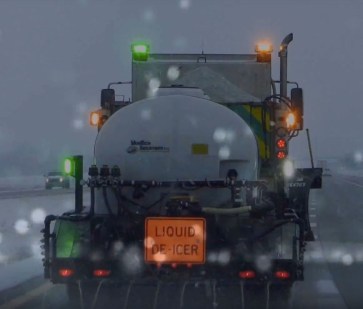
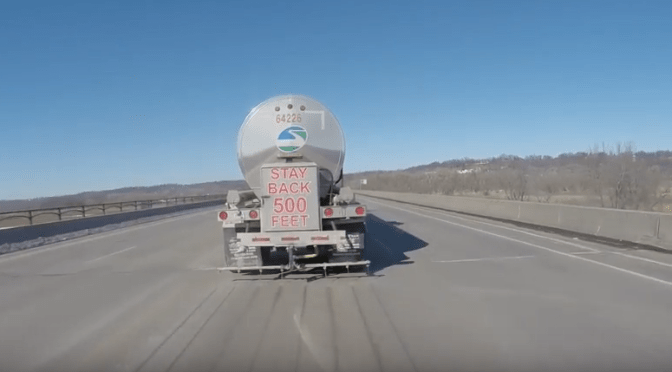
Maintenance truck applying liquid de-icer on highway

Objectives and Methodology

This project’s goal was to produce a set of training tools—two videos and two quick reference guides—explaining the benefits of liquid-only plow routes, outlining procedures for implementation, and addressing misinformation and misconceptions. The project had two objectives:

• Inform agency decision-makers and the general public about the benefits of liquid roadway treatments while dispelling common myths.
• Provide practical guidance for maintenance managers and plow operators, and for agencies looking to start a liquid-only program.

Researchers began by conducting a literature review of research and practices related to liquid-only plow routes. They then sent an online survey to agencies in 27 states to determine which agencies used liquid-only roadway treatments. The survey yielded 92 responses from state DOTs and county and municipal highway departments. Follow-up interviews with 14 survey respondents gathered information about types of roads where liquid-only routes are used, application rates and material usage, brine making and storage, cycle times and loading times, and public perception and environmental concerns.

Results

Of the 92 survey respondents, 30 indicated that their agency had a liquid-only route. In general, these respondents reported that liquids are more effective than solid deicers in
the right circumstances. Based on the information gathered in the survey, interviews
and literature review, researchers created two videos:

  • A shorter video for agency decision-makers and the general public that discusses the benefits of liquid-only treatments while addressing common misconceptions (particularly misinformation about corrosion and salts in the environment).
  • A full-length video for practitioners that includes information from the short video as well as tips for starting a liquid-only program, discussion of equipment types, and recommended usage parameters and application rates.

To complement the videos, researchers created two 2-page quick reference guides—a Start-Up Reference Guide to help agencies gain buy-in for a liquid-only program and a Technical Reference Guide with more detailed usage parameters, application rates and general tips.

“To effectively get the word out about liquid-only road treatments, there was a need to put the right message in front of the right audience in a compelling way and to dispel myths and misconceptions. These guides and videos do just that,” said Project Co-Champion, Scott Lucas, Ohio Department of Transportation.

The videos and quick reference guides communicate key information about liquid-only routes, including:

  • Appropriate use: Liquids are especially effective during light snowfalls and at milder temperatures. Agencies also use liquids to loosen packed snow for plowing; during high winds when granular salt may blow off the roadway; and as anti-icing treatments before freezing rain.
  • Benefits: Liquid deicing treatments use less salt, which leads to cost savings and reduced environmental impact. Liquids begin to work immediately, and they stay on the roadway (no bounce or scatter).
  • Misconceptions: Liquid applications of salt brine do not cause more corrosion damage to vehicles than granular salt. Granular salt must dissolve into brine on the roadway in order to melt snow and ice, so either approach exposes vehicles to salt brine. Corrosion inhibitors can help; some studies show they are more effective with liquids than solids.

Benefits and Further Research

The videos give transportation agencies modern communication tools to help target specific audiences: The shorter video is more appropriate for social media distribution and sharing, while the longer video is more useful for agency staff training and cross-agency communication. Both the quick reference guides and the videos will help agencies garner support for liquid-only programs and provide practical guidance for
implementing them.

This post pertains to Liquid Roadway Treatments: Informational and Training Videos, published November 2018. The full report, videos and final presentation can be accessed at 16-06: Training Video for the Implementation of Liquid-Only Plow Routes.

New system underway to determine road recovery time during snow events

Researchers at the University of Minnesota Duluth (UMD) have developed a system that can use highway loop detector traffic flow and weather data to determine when road conditions have recovered from a snow event. Currently, the Minnesota Department of Transportation (MnDOT) relies on snowplow drivers to estimate when roads are back to normal. The new system aims to relieve drivers of that burden and increase overall fleet efficiency.

In two previous MnDOT-funded projects, UMD researchers looked at using data from loop detectors along with weather station data to develop an automated system that determines normal condition regain time (NCRT) based on changes in traffic flow patterns. The goal is to improve the accuracy of road condition estimates and give dispatchers a big-picture view of traffic flow.

2018-01-p1-image
A line drawing showing a rectangular closed wire loop approximately 6 feet long and 4 feet wide on a road lane beneath the pavement surface. The loop is attached by a length of wire to data collection equipment on the roadside.

“This is a shift to different criteria,” says John Bieniek, Metro District maintenance operations engineer at MnDOT. “The bare lane regain time is now based on judgments from plow operators on the highways and phone calls to dispatchers. We could use the new system to quickly direct trucks to harder-hit areas within and between stations as they are needed.”

The latest project, led by UMD civil engineering professor Eil Kwon, transformed a previously developed computer model into a user-friendly, integrated computer system. The system includes a data management module, a module for target detector station identification and speed recovery function, an NCRT estimation module, and a map- based user interface that allows dispatchers to generate the estimated NCRT for a specified area. Dispatchers and supervisors can also use the interface to assess traffic flow variations, assign plows, and generate reports for past snow events.

The team tested the new integrated system on data gathered from I-494 and I-694 during two snow events in 2015 and 2016. Results show the system was able to successfully generate NCRTs that met or exceeded the accuracy of estimates by maintenance personnel.

“The system developed in this research can provide consistent and objective estimates of the NCRT by utilizing the traffic flow data that are currently available from the existing detection systems in the metro area,” Kwon says.

Another goal of the project was determining a data-derived definition of normal traffic flow for snow-cleared roadways. As part of this effort, researchers found that traffic resumed free-flow conditions after roads were cleared, but always at a slightly slower speed than on normal, dry roads. Researchers then developed a process to determine the “wet-normal” free-flow speed at each detector station based on the traffic flow pattern during a given snow event.

So far, the system has only been used with data from past snow events and has not generated results in real time. Going forward, MnDOT plans to fund additional work that will incorporate big data tools to allow the system to operate in real time—as storms happen—to improve roadway snow operations.

This article originally appeared in CTSs Catalyst Newsletter, May 2018 and pertains to Technical Summary 2018-01TS. The full report, “Development of a Road Condition Recovery Time Estimation System for Winter Snow Events” 2018-01, published January 2018, can be accessed at mndot.gov/research/reports/2018/201801.pdf.

New measure allows comparison between bridge and pavement conditions

Transportation planners lack a method to directly compare bridge and road conditions. In a new MnDOT-funded study, University of Minnesota researchers have proposed a Percent Remaining Service Interval (PRSI) measure that can uniformly assess the condition of bridges and pavements, enabling planners to make the most efficient use of preservation and improvement funding.

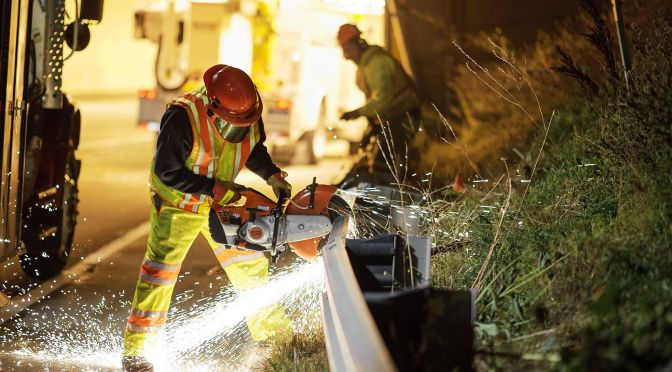
A nighttime view of workers and heavy equipment at a road construction site
Planners would like a condition measure similar to RSL that could be used to compare and prioritize needs for highway and bridge construction.

“Both the MnDOT Bridge Office and the Materials and Road Research Office have very good management systems in place,” says Mihai Marasteanu, a professor in the Department of Civil, Environmental, and Geo- Engineering (CEGE) and the study’s principal investigator. “There is a good potential to develop a new common metric that both offices could use.”

What Did We Do?

To begin developing this new measure, researchers conducted a literature review of current methods used in asset management and life-cycle cost analysis. The review of bridge research focused on performance measures and life expectancy assessment methods, while the study of pavement literature concentrated on performance measures as well as on the use of road service life measures.

Next, the research team, which included civil engineering bridge professor Arturo Schultz, surveyed both bridge management staff and pavement management staff from state transportation agencies. Team members then analyzed the asset management practices of MnDOT’s Office of Bridges and Structures and Office of Materials and Road Research to identify methods for assessing service lives and rehabilitation needs and to highlight the similarities and differences in approaches.

Based on the findings from the survey and analysis, researchers suggested the new method of PRSI that would serve both pavement and bridge needs and offered guidelines for the next steps in developing and implementing a unified PRSI procedure.

“Ultimately, funds for guardrail repairs are drawn from the same purse that pays to fill a pothole or repair a deck joint,” Marasteanu says. “With PRSI, planners could target average values across systems to optimize life-cycle costs and pursue an even distribution of PRSI values to make planning consistent from year to year.”

What’s Next?

In the next phase of the project, researchers will work with the pavement office to identify relevant data for calculating PRSI for pavements. “In addition, we plan to identify the time and costs required to reach the evenly distributed configuration of PRSIs necessary for planning consistency, assess how preservation activities impact funding efficiency, and calculate recommended metrics for asset sustainability,” Marasteanu says.

This article originally appeared in the Center for Transportation Studies’ Catalyst Newsletter, October 2018. The full report, published July 2018, can be accessed at “Remaining Service Life Asset Measure, Phase I,” .


Improved Specifications for Tightening Anchor Bolts on Signs, Luminaires and Traffic Signals

In recent years, MnDOT inspection crews have reported loose anchor bolts on many support structures for overhead signs, high-mast light towers, tall traffic signals, and other signs and luminaires. On newly installed structures, many nuts on anchor bolts may loosen in as little as three weeks; on older structures, they may loosen less than two years after retightening.

Federal standards mandate inspections at least once every five years, a requirement that already stretched MnDOT’s resources for managing light poles, traffic signals and 2,000-plus overhead signs. With an estimated 20 percent of loose anchor bolts in MnDOT’s highway system at any given time, crews would have to inspect structures every year to ensure public safety.

This issue is not unique to Minnesota. In a national survey, some states estimate as many as 60 percent of their anchor bolts may be loose. Minnesota, like other states, tightens anchor bolts according to American Association of State Highway and Transportation
Officials (AASHTO) standards. But the standards and procedures for tightening and retightening bolts were insufficient. To develop appropriate specifications, MnDOT needed to know why bolts loosen. The agency also needed improved standards and procedures to ensure that anchor bolts are tightened effectively

What Was Our Goal?

MnDOT decided to undertake a research project to determine why anchor bolts and nuts on sign and luminaire support structures loosen after installation or retightening, and to develop new standards and procedures that ensure proper and lasting tightening of these bolts.

Researchers from Iowa State University examined specifications and procedures for tightening anchor bolts on support structures in Minnesota. They also developed new specifications and instructions to help crews tighten bolts properly and ensure lasting safety of signs and lights in Minnesota’s highway system.

How Did We Do IT?

Researchers conducted a literature search on anchor bolt loosening. Then they surveyed MnDOT maintenance staff on bolt lubrication and tightening practices, and visited sites in Minnesota and Iowa to observe installation and retightening practices.

In the laboratory, investigators studied the relationship of torque, rotation and tension of various bolt diameters and material grades. They found that bolt stiffness, grip length (the distance between the nuts at each end of an anchor bolt in a two-nut bolt system), snug-tight standards, lubrication and verification after 48 hours played a role in effective tightening practices.

To determine the impact of environmental and structural strain on bolt tightness, researchers monitored sign structures in the field and in the lab. They attached strain gages to the bolts and post of an overhead sign near Minneapolis-St. Paul and installed a wind monitor, camera and data logging unit nearby to collect strain and environmental data for four months. In the lab, they instrumented a post and baseplate mounted in concrete to compare current and proposed tightening specifications and practices.

Base of an overhead sign that shows large bolts
Researchers attached strain gages to the bolts and the mast of a new overhead sign. Installers followed new procedures and specifications to tighten the bolts so that investigators could evaluate the effectiveness of the new standards.

Investigators developed specifications for each bolt size and grade, anchor baseplate dimension and pole size used by MnDOT based on lab and field results. They also created finite element models to analyze future anchor bolt configurations.

What Did We Learn?

Over- and under-tightening contribute to premature loosening of nuts on anchor bolts. While contractors may lack the experience and training to properly use turn-of-nut guidance, AASHTO recommendations poorly serve the bolt sizes and grades used by MnDOT.

AASHTO’s snug-tight guidance neglects certain characteristics of nuts and bolts, and its turn-of-nut direction is provided for only two bolt sizes and two bolt grades. In some cases, these standards may cause the heads of small bolts to break off and may lead to undertightening of large bolts. MnDOT can measure torque in the field but cannot determine tension, making AASHTO’s equation for verifying torque and tension impractical.

“We have revised our specs to follow the recommended procedures for anchor bolt tightening. The new tables of verification torque values will be fine for both two-nut and one-nut anchor bolt systems,” says Jihshya Lin, Bridge Evaluation and Fabrication Methods Engineer, MnDOT Bridge Office.

Researchers revised the specifications to require bolt lubrication, establish torque levels for snug-tight and specify turn-of-nut rotation after snug-tight for a range of MnDOT materials:

• Eight bolt sizes, ranging from ¾-inch diameter to 2.5-inch diameter.
• Five bolt grades.
• Nine baseplate thicknesses.
• 12 single- and double-mast pole types.

The new specifications provide torque levels in tables to verify the tightness for each bolt, plate and pole type, eliminating the need to run equations. To assist crews that are installing or retightening anchor bolts, researchers developed guidelines that include a compliance form with a checklist to direct crews through each step of the tightening process and ensure proper tension.

What’s Next?

The new specifications and procedures should improve public safety and reduce the traffic control, manpower and equipment expenditures required to respond to prematurely loosened nuts. Continued monitoring of bolts installed and retightened under these specifications over time would help evaluate the new procedures.

A new implementation project is underway that will demonstrate these findings in the field.  Researchers will also produce educational videos for training and demonstration to MnDOT personnel and contractors.  Video topics will include:

  • Basic Concepts of Bolt Tightening
  • New Specified Procedures
  • Signals and Lighting
  • Overhead Signs

Additionally, researchers will provide one or more training sessions with training materials.  Materials and videos will be posted on a website developed by the researchers.

This post pertains to Report 2018-27, “Re-Tightening the Large Anchor Bolts of Support Structures for Signs and Luminaires,” published August 2018.


New Project: Potassium Acetate As a Salt Alternative

This winter, MnDOT snowplow operators will test and document their experience using potassium acetate (KAc) during severely cold weather as a possible alternative to the commonly used deicing material sodium chloride.

MnDOT maintenance staff have used potassium acetate in the Duluth area as a deicing alternative in several locations (Bong Bridge, Blatnik Bridge, I-35 tunnels, and I-35 at Thompson Hill) with anecdotal success. Advantages of KAc include reducing chlorides runoff into water, a lower effective deicing temperature (approximately -20F) than salt or brine, and less corrosion to vehicles and public infrastructure.

KAc will be used on four plows at select locations in the MnDOT District 1 Duluth sub-area. Crews will document the effectiveness of KAc in removing snow and ice pack at temperatures of minus 15 to 20 degrees Fahrenheit and reducing the time it takes plows to achieve and maintain bare pavement during  severely cold temperatures.

In addition to evaluating potassium acetate as an alternative de-icing chemical, researchers will develop application guidelines and material handling requirements.

Project Scope

Researchers from CTC & Associates will review the 2018 Transportation Research Syntheses, Field Usage of Alternative Deicers for Snow and Ice Control, and identify any additional information that is publicly available regarding national and international use of KAc as a de-icing and anti-icing agent. The focus will be on successful uses of the material (material concentration and application rates, weather conditions, timing, etc.) by highway agencies or transferable practices by airports.

MnDOT District 1 personnel will conduct field tests of KAc on selected plow routes during the winter of 2018-2019 and document key data about the amount of material used, locations, equipment, storm characteristics, pavement conditions and other elements. Researchers will assist MnDOT with the design of the field study, the creation of a data gathering tools to be used by plow drivers, monitoring of data quality during the study, analysis of data gathered during the winter season, and writing a report presenting the study conclusions.

Watch for new developments on this project.  Other Minnesota transportation research can be found at MnDOT.gov/research.

New Project: Guide for Converting Severely Distressed Paved Roads to Unpaved Roads

Local agencies are increasingly looking at converting low-trafficked paved roads to gravel at the end of their life span to make budgets stretch. However, agencies have few resources to guide them in this process.

The Minnesota Local Road Research Board recently approved funding for a guidebook on effective practices for converting severely distressed paved roads to unpaved roads. The document will help engineers select roads for conversion, safely conduct conversions and communicate the rationale to the public. No such published document currently exists.

Montana State University researchers has been hired to develop the guidebook based on needs the research team previously identified in the National Cooperative Highway Research Program’s Synthesis 485, “Converting Paved Roads to Unpaved. The guidebook, anticipated to be published in late 2019, will include flowcharts that guide practitioners through decision-making processes. A companion webinar is also planned.

The guidebook will be divided into chapters, which will cover:

  • Methods to determine if a road is a candidate for conversion and determine the existing road materials and condition.
  • Methods to convert a road from paved to unpaved.
  • Methods to assess the life-cycles cost of construction and maintenance of the unpaved road.
  • Tools to effectively inform and communicate with the public
  • Safety implications of converting a severely distressed paved road to an unpaved road.

Background
While low- volume roads are typically identified as having an annual average daily traffic (AADT) of less than 400, roads that are appropriate candidates for conversion will typically have an AADT of less than 150.

These roads are often used by agricultural and extraction industries or to access homes and recreational areas. The type of road users, traffic patterns and vehicle types are all factors that need to be considered in the decision to unpave a road. Other factors include road condition, safety, agency maintenance and maintenance capabilities, as well as a life-cycle cost comparison of maintenance options (continued maintenance of the deteriorating road, rehabilitation of the paved road or conversion to an unpaved surface).

According to the research team, very limited information is available about converted roads, and what information is available often comes in the form of newspaper articles and anecdotal accounts of road conversions.

The document will serve as a formal and peer-reviewed information source. The use of the guide and acceptance of the practice of converting from paved to unpaved surfaces (unpaving) where warranted will provide a case for the acceptance of road conversions as another low-volume road management strategy.

Watch for new developments on this project.  Other Minnesota research can be found at lrrb.org and MnDOT.gov/research


Carver County Evaluates Pickle Brine for Ice Control

Like many snow- and ice-control professionals, Carver County Public Works maintenance operations staff are searching for new options to reduce the amount of chloride that reaches our waters from road salt operations. Using food production byproducts such as pickle brine are among the alternatives maintenance staff have been exploring.

Carver County regularly uses salt brine as part of their winter maintenance operations, which has become a widely accepted practice for controlling snow and ice. In the right situation, salt brine can be a more effective alternative to traditional road salt. An opportunity to obtain a free supply of sodium-rich pickle juice from a nearby canning facility seemed like a natural candidate worthy of consideration as a source of brine for county anti-icing and de-icing operations. In addition, recycling the pickle brine could reduce the amount of the waste byproduct.

The Carver County Public Works Department began testing samples of the pickle juice in 2016 with some encouraging results. But further testing showed the brine from the pickle cannery had variable salinity and pH levels that could damage maintenance equipment. Given the variables involved, staff determined it would be difficult to manually control the manufacture of the brine into a usable liquid. VariTech Industries recommended purchase of the Brine Boss, an automated brine blending system to manufacture the 23.3 percent brine solution needed for effective ice control operations. In addition, staff found adding potassium hydroxide to pickle brine neutralizes the pH level.

Carver County staff received a grant through the Local Road Research Board‘s Local Operational Research Assistance Program (OPERA) to help purchase the brine making system and support further research into the viability of using pickle brine in winter maintenance operations. Staff also restored an old VariTech 600 brine maker obtained from MnDOT for the project.

After extensive testing and analysis, VariTech engineers and Carver County staff concluded that pickle brine acquired from the cannery had to be exactly the same (salinity, vinegar content, and sugar content) for each and every batch or the system sensors would fail. But it turned out that the pickle brine supplier could not provide chemically consistent batches, and the VariTech system was unable to produce a consistent blend of 23.3 percent brine solution using pickle brine. As a result, Carver County staff determined they were unable to continue using pickle brine for snow and ice control.

Nevertheless, this project benefits other agencies considering the use of food production byproducts. The Carver County project demonstrates that there can be an alternative anti-icing product. As technology continues to advance, Carver County may revisit the use of pickle brine as a viable snow- and ice-control option.

For additional information about the project, check out these resources:

Reporting Driver Intrusions in Work Zones

Data from a new system for tracking work zone intrusions may be used to change work zone design and policies, reducing the risk of injury and death from intrusion crashes.

MnDOT and the Local Road Research Board engaged researchers to develop a user-friendly system that allows highway crews to quickly record instances of motorists’ intrusion into work zones, using a laptop, tablet or paper.

“This collaboration resulted in a fast, efficient and easy-to-use system because crews and supervisors let us know throughout the process exactly what they needed to consistently report work zone intrusions,” said Nichole Morris, Director, University of Minnesota HumanFIRST Laboratory.

What Was Our Goal?

The goal of this research project was to develop and test an efficient, comprehensive and user-friendly reporting system for intrusions into work zones. It was essential for the system to be accepted by highway workers. The information collected from the system, which was modeled after the existing MNCrash report, would then be used to examine risk factors to reduce intrusions and danger to workers. Safety data would be relayed back to workers and to MnDOT managers, providing an empirical basis for design changes to work zones, as well as future policy recommendations to the state government.

“To reduce work zone intrusions and make work zones safer, we need to track and analyze the intrusions. This reporting system will generate the data we need to make smart changes and possibly to influence legislative policy,” said Todd Haglin, Emergency Management and Safety Manager, MnDOT Office of Administration.

What Did We Do?

To design a usable system for reporting work zone intrusions, research designers had to:

  • Understand the characteristics of the typical system user (in this case, the work zone supervisors and crew).
  • Develop common or typical intrusion scenarios to realistically test the system.
  • Conduct iterative testing with typical users (supervisors and crew members) and incorporate revisions based on test results.

The research team interviewed work zone supervisors from rural and urban truck station locations across the state: in Baxter, St. Cloud and Duluth and at Cedar Avenue near Minneapolis-St. Paul. Researchers sought to learn what crews and supervisors considered an intrusion and what they thought should be reportable elements of the intrusion, such as the work zone layout, weather, location, time, visibility, road conditions and maneuvers of the intruding vehicle.

2018-09-p1-image
In a common type of close call, the dark car shown here fails to merge until it is too close to the work zone, forcing the silver car out of its lane.

Researchers used information gathered from the interviews to develop four typical intrusion scenarios—which were reviewed and revised by MnDOT supervisors—and used these scenarios to test the prototype reporting interface. Then they conducted usability tests with these scenarios and with actual intrusions that crews had experienced. Users suggested changes to the report format throughout the process.

Crews and supervisors collaborated with researchers during three rounds of testing, revising the reporting interface after each round. An online beta version had been supplemented with a paper version. Both versions were revised through this iterative design process.

What Did We Learn?

This design approach allowed the research team to produce a report interface incorporating the very specific needs of the work zone crews and supervisors:

  • The third major revision split the report decision flow into two options—a shorter report and a comprehensive report—based on whether the intrusion presented a risk to the crew. Without this revision, intrusions that workers considered minor were not likely to be reported.
  • Researchers surveyed users of the system with each revision. Supervisors liked the drop-down menus, the comprehensiveness of the system and its ease of use. They rated the final revision as good in terms of usability, ease of use and time to completion (five to six minutes on average).
  • The final design version was tested using a laptop, tablet and paper. Multiple reporting options made it more likely that workers and supervisors would quickly report data about a work zone intrusion before details were forgotten.

What’s Next?

Supervisors and workers involved in the design process gave high marks to the final version of the reporting system. The design is considered complete. Researchers had created the interface as a free-standing program, using the University of Minnesota’s digital resources to build and evaluate their design. For this reporting system to be made  vailable for use by MnDOT and other agency workers, MnDOT must engage MNIT, the state’s information technology professionals, to determine where the system will reside and to integrate it into the state’s existing computer platform.

This post pertains to Report 2018-09, “Work Zone Intrusion Report Interface Design,” published in February 2018. 

MnDOT is developing other initiatives to improve work zone safety,  including a personal warning sensor for construction workers. Search for “work zone” research projects here.

Salt Brine Study Shows Truck Traffic Drives Deicer Effectiveness

Truck traffic significantly improves deicer performance, deicers perform poorly below 10 degrees Fahrenheit, and brine is spread more by traffic spray and snowplow throw than by storm runoff.  This is the outcome of multi-year tests performed in the snow-covered parking lots of two Twin Cities entertainment destinations.

“There is notable airborne removal of deicers from road spray by vehicles and under high wind conditions. For the deicing materials MnDOT uses, little melt is observed below 10 degrees Fahrenheit,” said Tom Peters, Maintenance Research and Training Engineer, MnDOT Office of Maintenance.

MnDOT has conducted several research projects to better understand the performance of both deicing and anti-icing materials (applied to the roadway before a storm to prevent or mitigate ice buildup). Two previous studies evaluated solid materials and liquid brine. In Phase I researchers examined over 50 deicer and anti-icing compounds and blends. They determined that ice melt capacity correlates closely with application temperature, which is the principal factor in effectiveness. Rock salt offers greater ice melt capability, but liquid deicers adhere better to roadways and cause less corrosion and environmental damage to road and bridge environments.

In Phase II, researchers studied deicer performance in the field and considered how traffic levels, truck volumes, weather, pavement type and other factors affect performance. Research showed that deicers work better at warmer temperatures, with little effectiveness below about 10 degrees Fahrenheit. Truck traffic significantly improved deicer performance, contributing to wider and quicker melts. Chlorides were swept off bridge decks by snowplowing, and deicing effectiveness diminished as truck speed rose.

However, severe weather hampered research in Phase II; the winter of 2013-2014 was the coldest experienced in Minnesota in over 30 years. The severity of winter conditions impeded the temperature study of deicer performance and snowplow performance, leaving the research team and MnDOT interested in further study.

What Was Our Goal?

This study aimed to continue the work of Phase II in more representative winter conditions. Researchers evaluated deicer effectiveness, plowing effectiveness, anti-icer persistence in traffic and drains, and pavement shedding of deicers.

What Did We Do?

During the winters of 2015-2016 and 2016-2017, both of which were mild with below-average snow accumulations, the research team followed closely the methods used in Phase II.

Deicers were studied at two facilities in Shakopee, Minnesota. One facility included nine 900-foot lanes on which plow trucks spread deicers at highway speeds. The other facility featured four 500-foot lanes, where deicers were spread by hand in 100-foot segments. Investigators monitored weather and evaluated deicer performance with photography and infrared thermography.

Snowplowing by MnDOT Metro District plow operators was conducted at the two Shakopee facilities as well, at operating speeds of up to 30 mph. Researchers documented performance of various plow configurations in various truck combinations with on-site observation, handheld photography and time-lapse photography.

Anti-icing, in which deicer brines are applied to dry pavement to prevent ice formation, was conducted on an elevated section of U.S. Highway 169 near Mankato that experienced actual traffic. Investigators recorded application rate, time, temperature, precipitation and traffic, as well as deicer flow and concentration in storm drainage runoff over time.

A researcher mixes deicers in bags before spreading by hand at the test site.

Researchers studied pavement shedding of deicers in a lab in terms of storm runoff flow and anti-icer concentration in drainage from artificially induced precipitation. Deicers were applied in brine form, dried, chilled and held at temperatures below the freezing point of water and within the range of effective ice melt temperatures.

What Did We Learn?

Research confirmed that deicer performance varies with temperature, with little benefit from rock salt at 10 degrees Fahrenheit or colder unless the pavement is exposed to sunlight. Deicer accumulated in drains at substantially lower levels than roadway applications suggest regardless of traffic conditions, confirming observations that the majority of deicer loss occurs from displacement by traffic and snowplows.

Plow results were fairly uniform across all lanes and along lane lengths for a given plow type, suggesting truck, plow and driver combinations performed uniformly at each track. At higher speeds, snow rises higher in the curvature of the plow, and snow casts more broadly off plow ends and distributes to greater distances.

“Truck traffic makes a huge difference on deicer performance. If two or three dump trucks that aren’t spreading but have weight in them follow a salt truck, salt use might be cut by two-thirds,” said Stephen Druschel, Professor, Minnesota State University, Mankato, Department of Civil Engineering.

Deicers and anti-icers showed wider and quicker melting capability with traffic, especially by trucks, than without. Prewetting offered no significant observable benefit under most conditions, contrary to reports from snowplow drivers in field operations, unless snow was dry; then significant benefits were observed.

Asphalt and concrete pavements shed salinity at high levels initially and at declining levels at about 0.3 inch precipitation. The type of pavement involved had no apparent effect on deicer runoff.

What’s Next?

The impact of truck traffic on deicer performance is significant and needs to be widely communicated. Reports that prewetting improves deicer adhesion in windy conditions and speeds the initiation of ice melt may warrant further review. Evaluation of atmospheric and off-roadway drainage may help quantify traffic-induced brine spray and plow throw.

View Dr. Stephen Druscel’s YouTube presentation, Winter Plowing and Deicing: Saving Money, Salt and Labor by Distinguishing Best Practices.

This post pertains to Report 2017-45, “Salt Brine Blending to Optimize Deicing and Anti- cing Performance and Cost Effectiveness: Phase III.” The full report and appendices can be accessed at mndot.gov/research/reports/2017/201745.pdf and mndot.gov/research/reports/2017/201745B.pdf.