

MnDOT owns and maintains approximately 900 buildings across Minnesota, and the Building Services Section is responsible for planning repairs, renovations or expansions. Architects, engineers and other specialists involved in these activities require data regarding building and site conditions. Collecting this data is often a multidisciplinary and laborious effort that can be time-consuming and expensive. Alternative technologies, however, can gather and process large amounts of accurate information more comprehensively, safely and cost-effectively.
Continue reading Managing Building Assets With Scanning and Reality ModelingAll posts by mndotresearch

Improving Asphalt Performance and Durability With Superpave 5
Minnesota’s harsh climate requires dense, durable asphalt to avoid frequent maintenance and replacement. Asphalt mixes as designed in the laboratory, however, don’t always perform consistently in the field. A new Superpave mix shows promise for providing cost-effective, high-performing pavements for state roadways.
Continue reading Improving Asphalt Performance and Durability With Superpave 5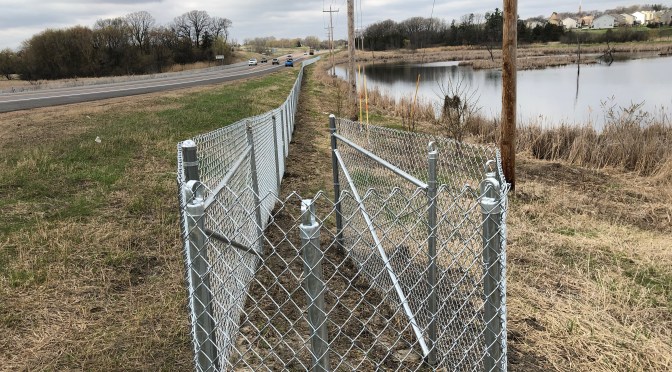
Improving Road Safety and Wildlife Conservation With Barrier Fencing
Small animals crossing roads put the animals at risk and present a significant safety hazard to road users. Motorists who suddenly stop or slow to avoid small animals crossing the road can cause significant safety concerns. Motorcyclists and bicyclists risk serious injury if they swerve or hit an animal, as do pedestrians in the road trying to assist the animals. A new, cost-effective fence design was tested and shown to be effective in preventing small animal crossings, benefiting both public safety and conservation.
Continue reading Improving Road Safety and Wildlife Conservation With Barrier Fencing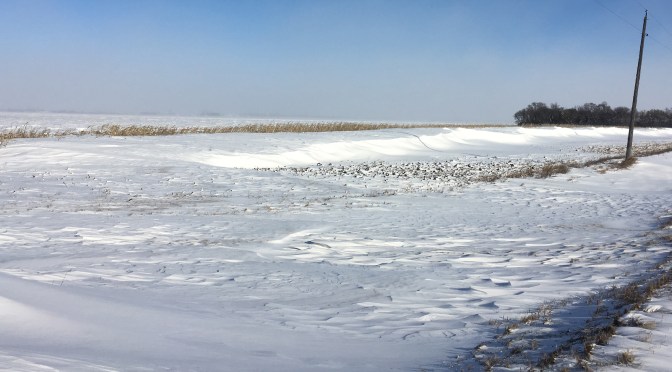
Expanding Alternative Snow Control Through Landowner Engagement
Some rural landowners maintain snow fences to prevent blowing snow from reaching highways, decreasing the resources MnDOT spends on winter maintenance. A recent project provided new information and updated tools to encourage more landowners to adopt this alternative snow control method.
Continue reading Expanding Alternative Snow Control Through Landowner Engagement
Pond Maintenance Strategies to Retain Phosphorus
Cities and counties depend on stormwater retention ponds to protect water quality in lakes and streams. New research sponsored by the Minnesota Local Road Research Board has identified cost-effective methods for ensuring pollutants remain in pond sediment and are not released into other bodies of water.
Continue reading Pond Maintenance Strategies to Retain Phosphorus
Increasing Cold In-Place Recycling Efficiency for Pavement Rehabilitation
New tools will help local road engineers reliably estimate the curing time of a cold in-place recycling (CIR) layer. Researchers identified factors that affect asphalt curing when a CIR method is used to know when pavement is sufficiently hardened, which will minimize delays in road construction and reopening.
Continue reading Increasing Cold In-Place Recycling Efficiency for Pavement Rehabilitation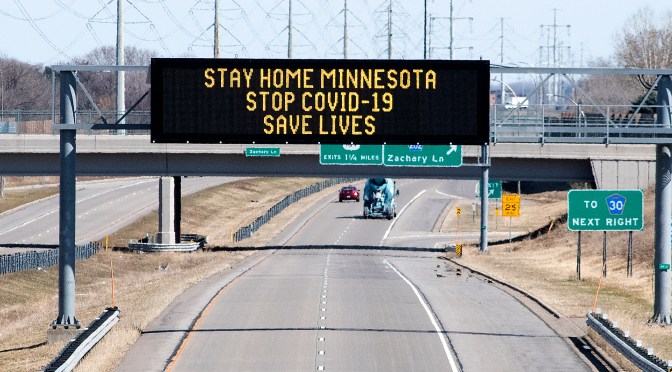
Understanding Telecommuting Trends for Traffic Management
Work-at-home orders during the COVID-19 pandemic resulted in drastic reductions in traffic congestion. To aid in highway planning and also inform state telework policies, MnDOT wanted to learn about telecommuting during the pandemic and future forecasts of remote work from both employers and employees of private and public organizations.
Continue reading Understanding Telecommuting Trends for Traffic Management
COVID-19 Travel Reductions: Lessons for Relieving Traffic Congestion
As the COVID-19 pandemic restrictions in 2020 kept people at home, reduced travel and, therefore, traffic congestion were to be expected. But how much of an impact did the restrictions have on traffic congestion? After analyzing changes in traffic levels due to the COVID-19 pandemic travel restrictions, researchers identified how incremental changes in vehicle miles traveled impact regional congestion. These results will inform efforts by MnDOT and its partners on the outcomes of reduced travel demand.
Continue reading COVID-19 Travel Reductions: Lessons for Relieving Traffic Congestion
Reusing Local Byproducts in Sustainably Designed Soils
After road construction, soil in revegetation areas must retain adequate stormwater and provide stable embankments along the road. Revegetation can be challenging due to thin topsoil, and it often requires importing healthy organic soil and exporting excess construction soil generally unsuitable for plant growth.
Continue reading Reusing Local Byproducts in Sustainably Designed Soils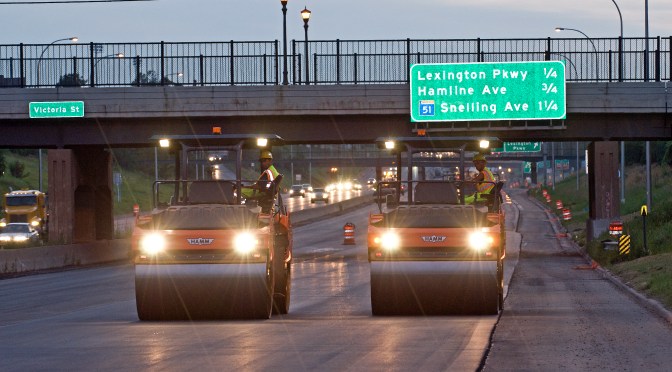
Optimizing Pavement Network Maintenance
Maintaining Minnesota’s 14,000 miles of pavement is challenging, especially with the growth in traffic volume resulting in system needs that exceed available funding. New ways to characterize pavement conditions and methodologies to determine the optimal maintenance schedule for individual road segments will allow planners to optimize resources while providing the highest possible ride quality across the pavement network.
Continue reading Optimizing Pavement Network Maintenance Crossroads