

Article reprinted from the Center for Transporation Studies, July 2023
Continue reading Cybersecurity for Automated VehiclesAll posts by Lea Burdette

Sensor and Drone Technologies Help Maintain Minnesota’s Aging Bridge Infrastructure
Reprinted from Catalyst, September 9, 2023
As bridge infrastructure in Minnesota and across the country ages, maintaining and preserving the existing bridge network becomes increasingly important—and increasingly challenging. In Minnesota alone, 25 percent of bridge-deck area is more than 50 years old, and the number of bridges rated in “fair” condition has recently overtaken the number rated in “good” condition.
Continue reading Sensor and Drone Technologies Help Maintain Minnesota’s Aging Bridge Infrastructure
Effect of Low and Moderate Recycled Concrete Aggregate Replacement Levels on Concrete Properties
As the demand for aggregate in construction increases, recycling concrete waste as aggregate has been recognized as an environmentally sustainable solution with potential cost savings. It would allow recycling of construction and demolition waste and reduce some of the need to quarry and haul virgin aggregate. However, the use of recycled concrete aggregate (RCA) has been limited by concerns over its quality and performance, and by lack of uniform specifications as to what kind and how much of the aggregate to use in pavement construction. Studies and on-the-ground experience have shown that high levels of RCA reduce the durability of pavements. The effects of lower replacement levels have not been well documented, however.
Continue reading Effect of Low and Moderate Recycled Concrete Aggregate Replacement Levels on Concrete Properties
On the Road to Somewhere
Measuring access to opportunities is the future math of mobility.
In December 2022, Twin Cities policymakers and planners celebrated the opening of the D Line, the latest bus rapid transit project by Metro Transit. The new line strengthened the spine of service running north-south through the urbanized core of the region: from Brooklyn Center, following Minneapolis’ long axis to the south, through the gridded suburbs of Richfield and Bloomington all the way to the Mall of America. Largely replacing Minnesota’s single busiest bus route (Route 5), the D Line features expanded high-frequency hours, higher-capacity vehicles, and improved trip speeds. The D Line represents the best of local transit service, an undoubtable improvement for the mobility of transit riders.
Continue reading On the Road to Somewhere
Connecting smart vehicles with traffic signals could reduce fuel use
Originally published in Catalyst, July 18, 2022.
Green means go and yellow means go faster—so goes a wry take on driver behavior at traffic signals. But it’s not just travel time that increases when you brake for a red: Fuel consumption does, too. Could transmitting signal data to connected vehicles (CVs) reduce stop-and-go cycles and fuel use? U of M researchers say yes.
Continue reading Connecting smart vehicles with traffic signals could reduce fuel use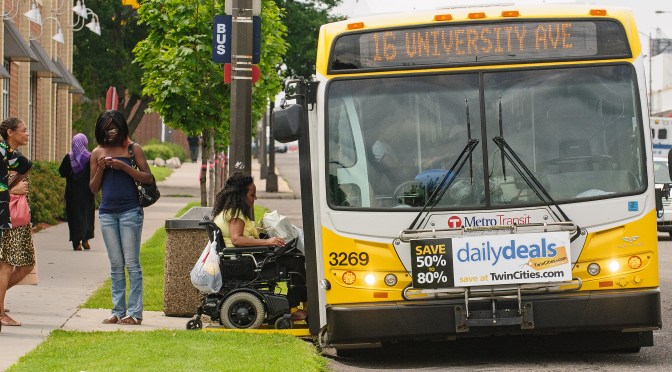
Personal Stories Illustrate Transportation Inequities in Minnesota
Transportation research is often about numbers. In a recent study, however, U of M researchers looked beyond the data to hear the transportation experiences of real people from underserved communities in Minnesota.
Continue reading Personal Stories Illustrate Transportation Inequities in MinnesotaPreparing for the Future of CAVs: Cybersecurity, Winter Weather Research
Connected and automated vehicles (CAVs) hold promise for improving transportation operations—but could also provide pathways for “malicious actors” to compromise vehicle security, said Rafael Stern, a U of M assistant professor, in a recent CTS webinar.
Continue reading Preparing for the Future of CAVs: Cybersecurity, Winter Weather ResearchFuture of Mobility: Urban air mobility
June 26, 2023
What’s next in transportation?
The Future of Mobility series collects the perspectives of top U researchers and other national experts. In 17 articles, the authors scan the horizon and reflect on critical transportation topics. Each article recommends action steps for public officials and policymakers.
CTS is highlighting the articles over the course of the year. This month, we explore two aviation-related articles: Safety and Urban Air Mobility by Demoz Gebre-Egziabher and Advanced Air Mobility by Susan Shaheen and Adam Cohen.

Autonomous aircraft and drones that can move people and goods in new ways are coming to our cities, writes Gebre-Egziabher. Often referred to as urban air mobility (UAM), these new transportation concepts are the flying equivalent of the autonomous car—and they raise just as many important questions about safety, use, and operations. Local communities and agencies are stakeholders that must have a say in safety and provide clear guidance to those developing technologies for UAM, he says.
Shaheen and Cohen write that aviation is undergoing rapid change around the world. A variety of technological advancements and industry investments in electrification, alternative fuels, automation, vertical take-off and landing aircraft, uncrewed aircraft systems, and air traffic management are enabling innovations in aircraft designs, services, and business models. They recommend driving the industry forward with an emphasis on social and environmental benefits, including humanitarian, aeromedical, and emergency response.

Monitoring Bumble Bee Populations in the Twin Cities Metro – Lessons Learned
In a project funded by MNDOT, entomologists developed an innovative method for surveying bumble bee populations alongside roadways. The researchers have recently published an article in Biological Conversations, Vol 283 focusing on the lessons learned about sampling when surveying these quick-moving bees.
Continue reading Monitoring Bumble Bee Populations in the Twin Cities Metro – Lessons Learned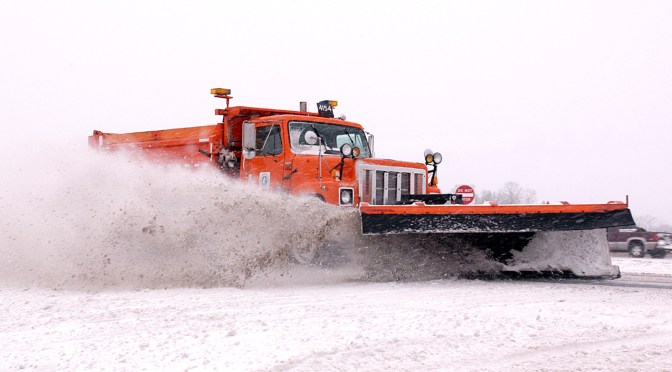
New Clear Roads Research: Evaluating high-performance plow blades
A variety of factors can affect a snowplow blade’s long-term performance, making it difficult for an agency to determine which blades are the most cost-effective overall. By developing a field test protocol and cost-benefit analysis methodology, the new research will make it easier for Clear Roads agencies to evaluate and compare blades in the future using the same standard procedures used in this project.
Continue reading New Clear Roads Research: Evaluating high-performance plow blades Crossroads