

A new book—Space, Structures, and Design in a Post-Pandemic World—explores the rebalancing of our physical and digital interactions and what it means for the built environment going forward.
Continue reading New book: Space, Structures, and Design in a Post-Pandemic WorldAll posts by Christine Anderson

How will the energy transition impact transportation?
This article was originally posted on Catalyst, January 2023.
The transition to sustainable energy is underway in Minnesota and across the country, propelled by both a growing need to reduce greenhouse emissions and the upcoming influx of funds from new federal legislation. On October 26, 2022, CTS hosted a seminar to explore two important aspects of the energy transition and their impacts on the transportation infrastructure: community solar and electric vehicle (EV) readiness.
Continue reading How will the energy transition impact transportation?
New revenues needed to fill transportation funding gap
What’s next in transportation?
The Future of Mobility series collects the perspectives of top U researchers and other national experts. In 17 articles, the authors scan the horizon and reflect on critical transportation topics. Each article recommends action steps for public officials and policymakers.
Continue reading New revenues needed to fill transportation funding gapRefocusing Transportation Decision Making
Monday, May 1, 2023
9:30 a.m.–11:30 a.m. Central
Center for Transportation Studies
AI Johnson Room
McNamara Alumni Center
Minneapolis, MN
COVID’s Effects on Public Transportation Use and Perceptions
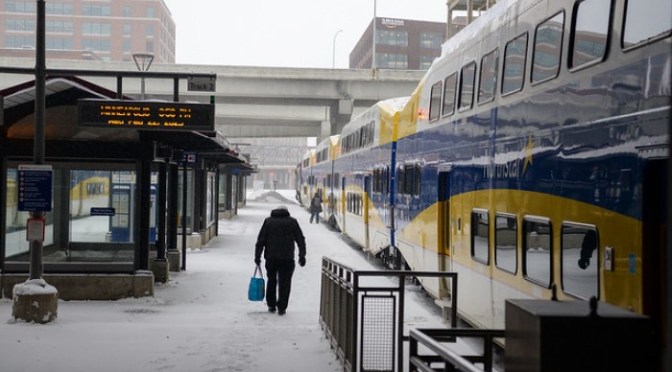
How has the pandemic affected downtown commuters’ travel behavior and perceptions of public transportation?
The COVID-19 pandemic has taken a major toll on public transit ridership—raising questions for the future. Will people associate public transportation with health and safety risks and avoid using it? Will they see public transportation as a less desirable transportation alternative?
Continue reading COVID’s Effects on Public Transportation Use and Perceptions
EV System Impacts
Model helps analyze EV system impacts, evaluate policies for subsidies and charging
Electric vehicles (EVs) are expected to capture a substantial portion of the future vehicle market. In the short term, however, technology and infrastructure limitations—such as driving range and charging availability—will prevent transition on a large scale. Because EVs will share the road network with gasoline vehicles (GVs), says Alireza Khani, “it’s crucial to understand how EVs and GVs will coexist.”
Continue reading EV System Impacts
Are we ready for CAVs?
Thousand-mile trek collects data on Minnesota’s readiness for automated vehicles
How ready is Minnesota for connected and automated vehicles (CAVs)? Last August, researchers took a four-day, 1,086-mile trip around the state to find out. A newly published report details the team’s findings for transportation professionals and agencies as they consider how to make improvements to our transportation infrastructure for automated vehicles and driving.
Continue reading Are we ready for CAVs?
CTS Symposium Speakers Offered Ideas for Building Supply Chain Resilience
Article originally published in Catalyst, February 6, 2023.
Supply chains aren’t normally at the top of the news, but pandemic-related disruptions and empty shelves have put them there. What does the future hold for freight and supply chain resilience? Speakers at the 25th Annual Freight and Logistics Symposium reviewed recent challenges and discussed how to make supply chains more cooperative, connected, and resilient.
Continue reading CTS Symposium Speakers Offered Ideas for Building Supply Chain Resilience
Study of Alcohol Overservice Finds Lack of Enforcement
Originally published as Study of alcohol overservice finds a lack of enforcement—and opportunities to improve in Catalyst, February 2023.
Overservice—the act of serving alcohol to an obviously intoxicated person—contributes to motor vehicle crashes and violence, and it’s illegal in 48 out of 50 states. Still, U of M researchers say overservice tends to be understudied and underenforced.
Continue reading Study of Alcohol Overservice Finds Lack of Enforcement
Findings Lay Groundwork for Shared Mobility Transit in Rural Minnesota
Originally published in Catalyst, February 13, 2023.
Public transit services are vital for community health and connectivity, yet the transit solutions found in urban areas—such as frequent bus service and light rail—don’t exist in rural areas. As a result, mobility may be limited in rural communities because of the high costs and low availability of affordable, reliable transportation options.
Continue reading Findings Lay Groundwork for Shared Mobility Transit in Rural Minnesota Crossroads