Tag Archives: cts

Human behavior insights are driving transportation safety forward

Reprinted from CTS News Catalyst, September 11, 2025

To better understand how roadway crashes can be prevented, it’s essential to explore the human behaviors that contribute to them. This objective is core to the work of the U of M’s Human Factors Safety Laboratory (HFSL). Research Associate Professor and CTS scholar Nichole Morris, who directs the lab, outlined its mission and impact in a recent Toward Zero Deaths (TZD) webinar highlighting Minnesota’s traffic safety research ecosystem. 

Minnesota TZD is the state’s cornerstone traffic safety program, employing an interdisciplinary approach to reducing traffic crashes, injuries, and deaths on the state’s roads. CTS partners with TZD to provide program administration, event coordination, and communications.

The HFSL brings together behavioral scientists and engineers dedicated to reducing roadway and occupational injuries and fatalities. They combine research on human behavior with the design and testing of user-centered systems to create solutions that work better for everyone.

“Human factors is the intersection between people and systems,” Morris explained. From in-vehicle technologies and roadway signage to partnerships with larger organizations such as law enforcement, transportation systems involve a wide range of human-system interactions.

Four research tracks shape the lab’s work:

  • Crash reporting. Although projects often intersect, crash reporting is foundational to the other research tracks. Morris refers to it as the lifeblood of transportation safety—without crash data, researchers don’t know what’s working and what isn’t. In one of its more consequential projects, the HFSL helped rebuild the front end of MNCrash—an application designed for law enforcement to document and report crashes. In close collaboration with the Minnesota Departments of Transportation and Public Safety as well as multiple law enforcement agencies, the HFSL team helped to streamline the user experience and improve data completeness and accuracy. Since deploying the updated version in 2016, MNCrash has been adopted by all law enforcement agencies across Minnesota. It’s featured in the sixth edition of the USDOT’s Model Minimum Uniform Crash Criteria and has become the national standard for crash reporting.
  • Maintenance and work-zone safety. In one project, leveraging the expertise and methods gained from MNCrash, the lab collaborated with MnDOT and maintenance workers on a streamlined app to make documenting work-zone intrusions easier. After its launch in 2022, the team continued work, using low-cost sensors and radar to help reduce select work-zone driving speeds in real time.
  • Pedestrian and non-motorist safety. The Stop for Me campaign, a collaboration with MnDOT, St. Paul, Ramsey County, and Western Michigan University, has been adopted in communities across Minnesota. The campaign—which combines enforcement and engineering treatments to improve yielding at crosswalks—has inspired similar efforts in more cities around the country. Other projects include studies on dedicated right-turn lanes and temporary and permanent pedestrian infrastructure to reduce conflicts between drivers and pedestrians.
  • Infrastructure and signage. The lab’s work on J-turns, which have proven effective at reducing fatal crashes, has helped to identify and address several navigational errors drivers may make when first encountering this type of intersection. The researchers have found that poor or confusing first experiences with J-turns can lead to negative community perceptions and result in pushback on J-turn implementation. The research has found specific pavement markings to help guide drivers and facilitate successful use of J-turns—leading to fewer crashes and better driver experiences.

Morris emphasized that investment in sound research methods and collaborations across partner institutions, organizations, and communities is what creates successful research outcomes. While studies may yield results in the moment, she says investing in methodology is what really carries the work forward. The HSFL’s work continues to inspire other states and agencies, Morris added.

—Krysta Rzeszutek, CTS digital editor

Related research from Nichole Morris

TZD Traffic Safety Hotdish: Research in Action—Perspectives from Minnesota’s Traffic Safety Research Ecosystem

July 16, 2025
1:00–2:15 p.m. Central
Virtual via Zoom

Join us as our very own “Roads” Scholars share more about their recent traffic safety research. Presenters from the University of Minnesota and Minnesota Department of Transportation (MnDOT) will share findings from recent projects and talk about the collaborations that drive traffic safety research throughout Minnesota.

Speakers

  • Jackie Jiran, PE—MnDOT
  • Max Moreland, PE, PTOE—MnDOT
  • Nichole Morris, PhD—University of Minnesota
  • Mark Wagner, PE—MnDOT
  • Kyle Shelton, PhD—University of Minnesota; Moderator

Registration

The webinar is free to attend, but registration is required. Once you have registered, you will receive an email confirmation with a Zoom link. The link should not be shared with others; it is unique to you.

Credit

Attendees are eligible for 1.25 Professional Development Hours (PDHs). Download the PDH credit form (PDF) for your records.

For complete information, go to TZD Traffic Safety Hotdish.

Industrial by-products prove sustainable options for managing roadside stormwater

Reprinted from CTS News, March 25, 2025

Roadside soil plays a crucial role in stormwater management. Naturally vegetated roadsides can filter and control runoff, helping to keep pollutants out of bodies of water and minimizing flooding to communities. However, soil left behind from road construction does not adequately support filtration and plant growth unless it’s amended with organic matter—and traditional mixtures for doing so, such as with sand and compost, can be costly and resource-intensive. 

sample plots
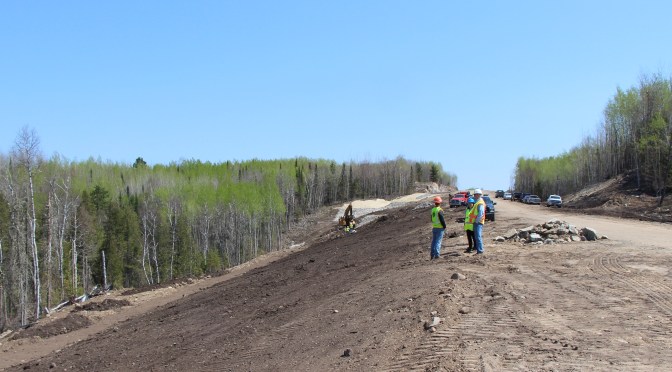
Field plots adjacent to the Natural Resources Research Institute parking lot were used to test the infiltration capacity, pollutant removal, and vegetative support capabilities of the soil mixtures.

To find a more sustainable solution, U of M researchers partnered with MnDOT and the Minnesota Local Road Research Board. Building on previous research, a team led by CTS scholar David Saftner, principal investigator and associate professor in the UMD Department of Civil Engineering, tested sustainable roadside soil mixtures using locally available waste materials and by-products generated from forestry, agriculture, and industrial activities.

In this project, nine materials were selected for testing, including a peat/biochar mix; dredged river sediment; pine and ash sawdust; VersaLime (a by-product of sugar beet processing); lime mud, bottom ash, and degritter (from a pulp and paper mill); and recycled concrete aggregate (RCA). All nine materials proved efficient at removing pollutants, though some were more effective than others. After extensive laboratory testing, the five top-performing materials were selected and used to create three engineered soil blends:

  • RCA (80%) and ash sawdust (20%)
  • RCA (80%) and peat/biochar (20%)
  • Dredge sediment (80%) and degritter (20%)

Field testing of these three engineered soil blends took place in outdoor plots. The team studied infiltration rate, pollutant removal, and plant growth from grass and flower seed. Through a life-cycle assessment, the researchers also evaluated material collection and transport, energy demand, human health and ecosystem impacts, climate change, and water use.

Their research revealed that all three engineered soil blends were effective at capturing and filtering the first inch of excess stormwater runoff, offering a viable alternative to traditional soil mixes. Other key findings: 

  • Of the engineered soil mixes, organic and coarser materials were better at allowing water to pass through.
  • Greenhouse tests showed promising plant growth, while field plots experienced challenges—possibly due to seasonal dryness.
  • The dredge sediment and degritter soil mix had substantially higher impacts than the other two soil mixes as well as the most CO2 emissions.
  • The RCA and ash sawdust soil mix had the lowest impacts, with the RCA and peat/biochar soil mix producing similar results.

Based on their findings, a design guide was developed for road engineers outlining best practices for using local by-products and waste materials to create engineered soil mixes while still adhering to regulatory standards. These recommendations are designed to be standard, common, and repeatable. 

“This was a great project and I’m especially happy with the design guide,” Saftner says. “Determining how to implement new procedures is tougher than using tried-and-true methods. Our hope is that the guide will simplify things for practicing engineers looking for more cost-effective, sustainable, and locally sourced solutions.”

The study results also highlighted many of the benefits of engineered soil mixtures including the reuse of waste materials, reduced spending on sand and compost, lower transportation costs, and fewer environmental impacts of transporting material. 

Further research on the reuse of waste materials includes another multi-phased project incorporating biochar. The first phase of that project should be finished this summer, with the second phase kicking off in summer 2026.

—Krysta Rzeszutek, CTS digital editor

Related Resources

Adding fibers to concrete may help create long-lasting roads

Originally published in CTS News, March 19, 2025

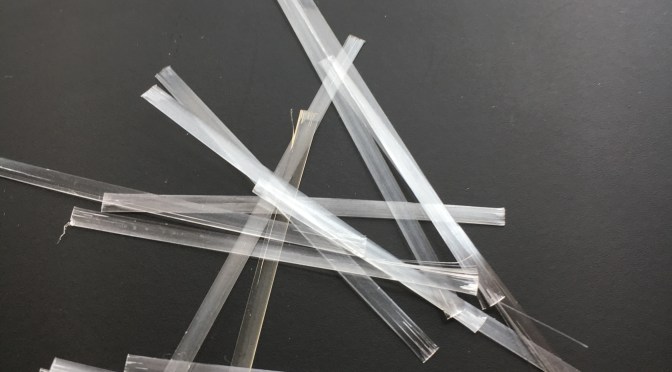
Thin pavements—in which new pavements are constructed over an existing base layer—can be an economical option for low- and moderate-volume roads. However, thinner concrete roads are prone to distress caused by weather and traffic loads. The solution, U of M researchers found, may be to add small synthetic fibers to the concrete.

Continue reading Adding fibers to concrete may help create long-lasting roads

Updated stormwater guide reflects new research, experience

Reprinted from Catalyst, December 16, 2024

Effective stormwater management is essential for maintaining healthy urban environments, but it requires consistent monitoring and maintenance to prevent costly failures—something that municipalities across the state have struggled with for years.

At a recent CTS webinarAndy Erickson, research manager at the University of Minnesota’s St. Anthony Falls Laboratory and CTS scholar, guided more than 160 attendees through recent changes made to the Minnesota Stormwater Inspection and Maintenance Resource Guide. The original guide, published in 2009, has been revised to incorporate more than a decade’s worth of field applications, research, and practical experience. The updated resource aims to improve the inspection, operation, and maintenance of stormwater management practices across the state, providing practitioners with essential tools to optimize stormwater management and increase cost-effectiveness.

Stormwater management is crucial for controlling urban runoff, and systems such as green infrastructure and low-impact development reduce pollution before stormwater is sent to lakes, rivers, and streams. However, these systems require regular upkeep to remain effective, and maintenance challenges arise from their passive nature and logistical issues in large urban areas. One key problem is the lack of on-site staff for monitoring and making the proactive inspections vital for preventing failures. Regular maintenance can reduce costs by avoiding the need for major repairs, but municipalities may still struggle to stay within their maintenance budgets, as funding for upkeep is often inadequate compared to the cost of new infrastructure.

“Since there are no operating staff on-site to see when these things fail or see what’s causing them to fail, we have to be proactive in our inspections,” Erickson said. That means inspectors must travel multiple times to locations spread out across the metro region—which significantly increases costs. “Depending on the size of the practice, your total maintenance cost might become more than your original construction cost within five years of the life of that practice,” he said. 

The 2024 update to the Minnesota Stormwater BMP Maintenance Resource Guide aims to address this issue by offering detailed instructions for inspecting and maintaining various stormwater systems. The updated guide includes inspection checklists in the form of fillable PDF documents. These checklists should streamline the inspection and documentation process and help inspectors assess site conditions, including vegetation health, erosion, and drainage performance. And the forms can be easily updated and reused, providing a practical tool for ongoing stormwater management. “The forms are not static, but rather are intended to serve as a resource that can be used and adapted to fit a jurisdiction’s particular needs,” Erickson explained.

Following items from the checklist, the guide provides specific maintenance recommendations based on inspection findings, including how to address issues such as erosion, vegetation dieback, and structural failures. 

“You can go through these to really home in on what maintenance is needed and when the maintenance is needed,” Erickson said.

The updated Minnesota Stormwater BMP Maintenance Resource Guide is now available online for download.

—Emma McIntyre, CTS communications intern

Related Resources

Crowdsourcing meets transportation planning with bike and pedestrian data counts

Increasing active transportation is an ongoing effort for transportation planners. Biking and walking can help decrease auto dependence, air pollution, and climate change and improve public health. Plus, it can help transportation agencies meet their strategic goals. The challenge? Making good decisions requires good data, and data for walking and biking trips can be hard to find.

Continue reading Crowdsourcing meets transportation planning with bike and pedestrian data counts

Treating Stormwater with Local By-Products Reduces Road Construction Costs, Minimizes Waste

This article was originally published in Catalyst, August 2022.

Ongoing research is looking into the possibility of using local industrial waste for roadside stormwater construction projects. This would help reduce material and transportation costs and put otherwise wasted materials to use.

Continue reading Treating Stormwater with Local By-Products Reduces Road Construction Costs, Minimizes Waste

Automated Vehicles Could Increase Accessibility for Twin Cities East Metro

This article was originally published in Catalyst, August 2022.

Connected and automated vehicle (CAV) technology is moving forward, with three pilot shuttle projects on tap in Minnesota this year alone. Rapid developments are leaving little time for planners and policymakers to prepare for the mainstreaming of technology and the evolution of the current transportation system—all while ensuring that transportation equity has a seat in the vehicle.

Continue reading Automated Vehicles Could Increase Accessibility for Twin Cities East Metro

Could remote drivers be the future of ride-hailing?

This article was originally published in Catalyst, August 2022.

A new technology combining nearly autonomous vehicles with remote “tele-operators” has the potential to overcome both the technological and societal hurdles posed by driverless vehicles. Ride-hailing providers will be an important application for remote-driving technology, and U of M researchers found it offers clear advantages for companies and their customers.

Continue reading Could remote drivers be the future of ride-hailing?

Portable weigh-in-motion system demonstration

Weigh-in-motion (WIM) systems consist of sensors placed in road pavements to measure the weight of vehicles passing over them, along with other data such as speed, axle load and spacing, and vehicle type. This data is used to enforce weight limits on trucks and is also useful in a wide range of other applications, such as pavement design and traffic analysis.

However, constructing and maintaining permanent roadside WIM stations is expensive, so these systems are installed primarily on roadways with heavy traffic, such as interstate and trunk highways, and rarely used for rural local roads. Meanwhile, heavy truck volumes on local roads are increasing, significantly shortening their lives. A less costly, portable WIM system is needed for such roads so that collected data can be used to better design these roads to accommodate heavy truck traffic.

One solution for bringing WIM technology to local roads is to implement a portable, reusable system similar to pneumatic tube counters used to conduct traffic counts. With funding and technical assistance from MnDOT and the Local Road Research Board, Professor Taek Kwon of the University of Minnesota—Duluth has developed a prototype system that has already proven to be nearly as accurate as the more expensive, permanent systems.  MnDOT Research Services staff drove up to MnROAD this week to observe a live demonstration of the technology, and made this short video.

The research being conducted here is part of an implementation project based on Kwon’s original study, the results of which can be found in this research report and its accompanying two-page technical summary from MnDOT Research Services.