

The Local Road Research Board published the Stormwater Best Management Practice (BMP) Maintenance Resource Guide in 2009, and best practices for stormwater management have since evolved. Much has been learned about the benefits and limitations and inspection and maintenance activities of stormwater ponds, bioretention facilities, underground treatment devices, underground detention, and infiltration. Regulatory requirements have also changed as indicated in the Minnesota Stormwater Manual.
Continue reading New Project: Update of Stormwater Management Best Practices Manual
New Project: Red Light Running Warning System
Red-light violations at traffic signals are a major contributor to crashes and fatalities. Right-angle type crashes typically account for the most serious of these collisions, and most of them are caused by vehicles running red lights. This research will explore technology that could be used to warn drivers when they are about to run a red light.
Continue reading New Project: Red Light Running Warning System
Scholars reflect on critical transportation topics in new Future of Mobility series
What’s next in transportation? CTS’s new Future of Mobility series collects the perspectives of top University of Minnesota researchers and other national experts.
In 17 articles, the authors scan the horizon and reflect on critical transportation topics ranging from rural transportation to automated vehicles to equity for users. The future of transportation will be a complex, interconnected set of practices and technologies, and this series brings bold thinking together in one place.
Continue reading Scholars reflect on critical transportation topics in new Future of Mobility series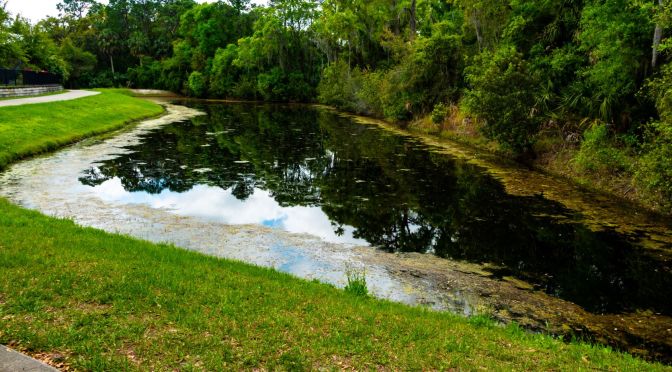
New Project: Sustainable Application of Tire Derived Aggregate in Stormwater Infiltration/Treatment
The reuse of old tires that often end up in landfills has a significant environmental benefit. Tire derived aggregate (TDA), a waste product from automobile tires, can be used in stormwater treatment systems and has shown to be effective at retaining phosphate. However, TDA does not prevent the leaching of metals including zinc and copper.
Developing media for stormwater infiltration/filtration that uses TDA in combination with materials that can capture metals has several advantages. It would prevent more pollutants from being released into Minnesota’s lakes and streams, save on landfill space and reduce stormwater management costs.
“The use of TDA has been proposed in the past for use in stormwater treatment. However, local agencies aren’t very familiar with the product being used for this application and have concerns about its potential to contaminate groundwater resources,” said Mark Hansen, city engineer, City of Coon Rapids. “Initial research is showing positive benefits for the use of TDA as a component of the stormwater treatment process, while minimizing its impacts to groundwater. Using TDA for this application provides a great opportunity to redirect old car tires from landfills and beneficially reuse them to assist in providing stormwater treatment.”
Objectives
- Select blend materials identified in literature review and mix them in different ratios with TDA.
- Measure the pollutant removal performance from runoff, leaching of zinc and copper from TDA, and infiltration capacity of each mix.
- Analyze the observed values to choose the suitable blend material/ratio.
- Perform lab batch tests to evaluate the potential leaching or removal of polyfluoroalkyl substances (PFAs) by TDA and the blends.
- Determine impact of biofilms on the leaching of zinc and copper from the mix (Biofilms will be grown on an already defined mix of TDA with blend material).
- Conduct outreach on project results and implications to management to key stakeholder groups.
Project Details
- Estimated Start Date: 06/03/2022
- Estimated Completion Date: 06/30/2025
- Funding: Local Road Research Board
- Principal Investigator: John Gulliver
- Co-Principal Investigator: Meijun Cai
- Technical Liaison: Mark Hansen
Details of the research study work plan and timeline are subject to change.
To receive email updates about this project, visit the Local Road Research Board website to subscribe.
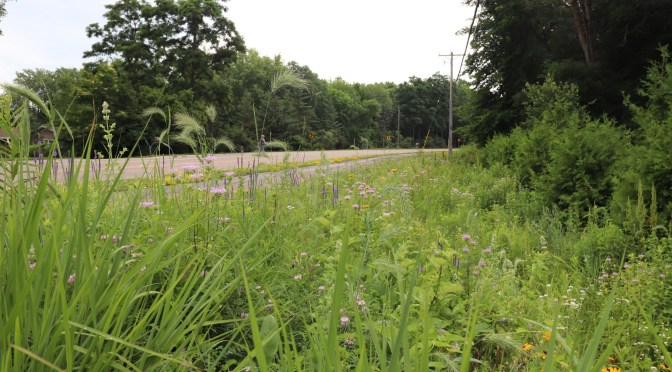
Improving Pollinator Habitat Through Cost-Effective Roadside Revegetation
Pollinating insect populations are declining worldwide. Revegetating roadsides after construction offers an opportunity to create pollinator-friendly habitat. Local agencies and MnDOT have new tools and strategies to cost-effectively derive multiple benefits from roadside revegetation efforts.
Continue reading Improving Pollinator Habitat Through Cost-Effective Roadside Revegetation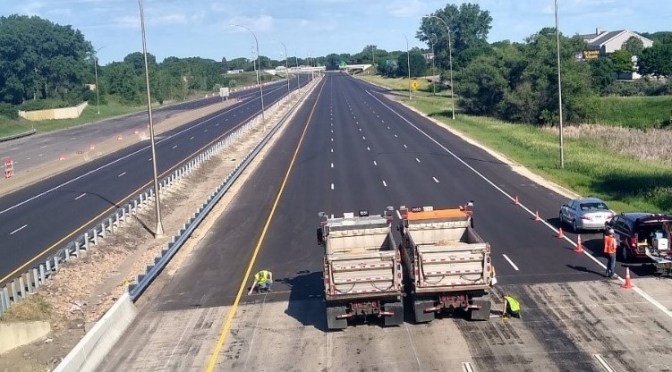
Updating Load Ratings for Shingle Creek Slab-Span Bridges
Detours around bridges in a critical freight transportation route create costs to the trucking industry, taxpayers and state economy. New load rating factors for the slab-span bridges across Shingle Creek will give MnDOT more flexibility in managing truck traffic and keeping freight moving efficiently.
Continue reading Updating Load Ratings for Shingle Creek Slab-Span Bridges
Estimating Corrosion of Embedded Steel Rebars in Bridge Structures
Corrosion of steel reinforcement in bridge structures creates uncertainty in the structural capacity. A new prediction tool will help estimate rebar section loss to accurately plan for appropriate bridge maintenance repairs.
Continue reading Estimating Corrosion of Embedded Steel Rebars in Bridge Structures
Economic Effects of Complete Streets Projects on Minnesota’s Main Streets
Complete Streets is a national initiative to encourage the design of safe, convenient transportation systems with access to users of all types, ages and abilities. MnDOT’s Complete Streets policy aims to provide a safe and functional transportation system for all users. Perceived and actual economic impacts of these road projects on small cities vary, but MnDOT has new strategies to work with local partners and evaluate economic benefits for smaller communities.
Continue reading Economic Effects of Complete Streets Projects on Minnesota’s Main Streets
Research, Updated Tools Help MnDOT Encourage Landowners to Join Snow Fence Program
This article was originally posted on Catalyst, November 2022.
Snow fences are a useful tool for controlling snow and ice on Minnesota’s roads. However, installing them relies on the cooperation of landowners. An ongoing collaboration between U of M researchers and the Minnesota Department of Transportation (MnDOT) aims to develop outreach tools that can be used to attract more landowners to the MnDOT snow fence program.
Continue reading Research, Updated Tools Help MnDOT Encourage Landowners to Join Snow Fence Program
Who’s in Most Danger of E-Scooter Injury Crashes? Women and Sidewalk Riders Top the List
This post was originally posted on Catalyst, November 2022.
Zippy electric scooters—often called e-scooters—have quickly become a common sight on sidewalks, bike paths, and roads in most US urban areas. Americans took 38.5 million e-scooter rides in 2018 and 88.5 million rides in 2019—a 130 percent increase in a single year. However, the rapid rise of the e-scooter has come at a cost, and e-scooter injuries and crashes have become a serious public health concern.
Continue reading Who’s in Most Danger of E-Scooter Injury Crashes? Women and Sidewalk Riders Top the List Crossroads