

Autonomous vehicles (AVs) have infrastructure requirements such as lane lines, centerlines and intersection signs to guide camera-enabled steering control functions. But many rural roads do not have lane markings or are unpaved, and intersections might be missing components to guide AVs.
Continue reading New Project: Use of MNCORS to Support AV Operations in Rural MinnesotaCategory Archives: Policy and Planning

Crowdsourcing meets transportation planning with bike and pedestrian data counts
Increasing active transportation is an ongoing effort for transportation planners. Biking and walking can help decrease auto dependence, air pollution, and climate change and improve public health. Plus, it can help transportation agencies meet their strategic goals. The challenge? Making good decisions requires good data, and data for walking and biking trips can be hard to find.
Continue reading Crowdsourcing meets transportation planning with bike and pedestrian data counts
Applying for Grants: Use Data to Tell Your Community’s Story to USDOT
Research done here at Minnesota and elsewhere has done much to define the problems of local communities with missing or declining infrastructure. USDOT offers federal assistance to build and improve that infrastructure, but the grants have to be won.
Continue reading Applying for Grants: Use Data to Tell Your Community’s Story to USDOT
Rural Needs, Statewide Answers Webinar: Living in the Middle of Everywhere
Wednesday, August 28, 2024
noon–1:00 p.m. CDT
About the Event
The notion that rural residents live “in the middle of nowhere” perpetuates a negative narrative that is not based on the reality of community life. Modern life is complex, as we live, work, shop, and play in a wide region. At the same time, most of our planning is done at a city or county level.
In this webinar, rural sociologist Ben Winchester will discuss this dynamic and its implications for tourism, marketing, transportation planning, resident recruitment, and housing. He will also review an asset-based community development exercise that can help us better understand this web of regional activity as it varies by age and interest.
The webinar is being held as part of CTS’s Rural Needs, Statewide Answers: Improving Transportation for All Communities thematic focus in 2024.
Speaker
Benjamin Winchester is a rural sociologist with the Department of Community Development at University of Minnesota Extension. Ben has been working both in and for small towns across the Midwest for over 25 years. He conducts applied research on economic, social, and demographic topics surrounding the theme of “rewriting the rural narrative.” He recently received the international Rural Renewal Research Prize in 2021 for this work. Ben lives in St. Cloud, Minnesota, with his wife and two children.
Registration
This webinar is free to attend, but registration is required. Once you have registered, you will receive an email confirmation with a Zoom link. The link should not be shared with others; it is unique to you.
Please let us know how we can ensure that this webinar is inclusive to you. What accommodations or access needs can we help facilitate? Contact Samantha Hahn-Douville at snhahn@umn.edu when you register to help us provide you with the best access.
If you’re unable to join us for the live broadcast, a recording will be available on the CTS website after the event.
Questions?
Please contact Samantha Hahn-Douville at snhahn@umn.edu.

Dedicated transit lanes help attract riders, reduce carbon emissions
Public transit systems are instrumental for reducing auto travel and related greenhouse gas (GHG) emissions. But how much of a reduction depends in part on how transit lines operate—on dedicated right-of-way (ROW), in mixed traffic, or some variation.
Continue reading Dedicated transit lanes help attract riders, reduce carbon emissions
Transportation challenges for aging rural populations
Reprinted from Catalyst, June 11, 2024
During the past century, a person’s average lifespan has increased dramatically. However, this significant “longevity bonus” has also led to challenges, including how to maintain mobility for an aging population.
Continue reading Transportation challenges for aging rural populations
Effectively Alerting the Public About Local Road Closures
Navigation apps can be valuable timesavers for drivers in Minnesota. To maximize their use, these apps need traffic information that is timely and accurate. While state highway closures are reported effectively, reporting road closures on local roads and highways is inconsistent. This project aimed to improve local road closure reporting by exploring the development of a streamlined reporting system and creating guidance for reporting local road closures to third-party navigation apps.
Continue reading Effectively Alerting the Public About Local Road Closures
Will Hydrogen Be a Carbon-Neutral Fuel Alternative for Freight?
Reprinted from CTS News, March 19, 2024
—Sophie Koch, contributing writer
Hydrogen is getting a lot of attention in recent years as a potential fuel source in the transportation sector. However, it is important to consider the pros, cons, and limitations of this molecule when deciding how to use it.
Continue reading Will Hydrogen Be a Carbon-Neutral Fuel Alternative for Freight?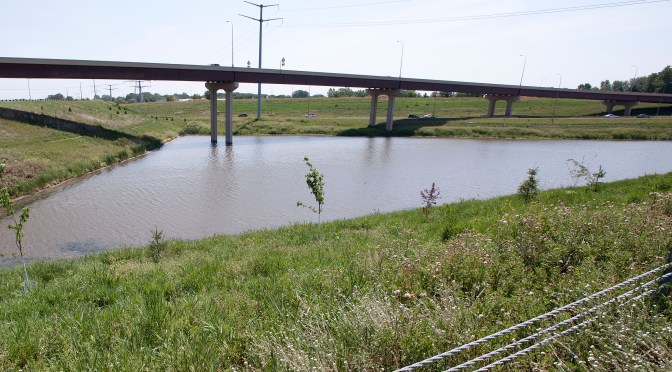
Managing Stormwater in a Changing Climate Will Require Updates to Minnesota’s Infrastructure
Reprinted from CTS News, March 21, 2024
—Sophie Koch, contributing writer
Changing precipitation patterns caused by the onset of climate change mean that Minnesota’s stormwater management systems—the ponds, pipes, and other structures meant to control runoff in the event of a heavy rainstorm—are going to need an upgrade.
Continue reading Managing Stormwater in a Changing Climate Will Require Updates to Minnesota’s Infrastructure
New Project: Utilizing Arts & Culture to Mitigate Construction Impacts
Can placemaking, temporary art, community or cultural events support quality of life and help offset the negative impacts of road construction?
Continue reading New Project: Utilizing Arts & Culture to Mitigate Construction Impacts Crossroads