
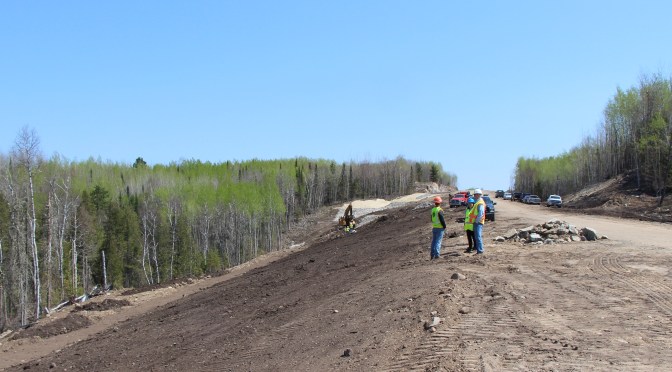
Vegetated roadsides in Minnesota help control stormwater quantity and pollutant levels before the water reaches lakes, streams and communities. Because leftover soil from road construction generally does not support filtration and plant growth, MnDOT and local engineers have continued research to identify organically rich, locally available industrial by-products to amend the soil. Engineered soil mixes with materials such as dredge sand, coarse street sweepings and ash sawdust show high potential for providing a sustainable, efficient solution.
Continue reading Reusing Local By-Products to Create Sustainable Roadside SoilCategory Archives: Environment

Updated stormwater guide reflects new research, experience
Reprinted from Catalyst, December 16, 2024
Effective stormwater management is essential for maintaining healthy urban environments, but it requires consistent monitoring and maintenance to prevent costly failures—something that municipalities across the state have struggled with for years.
At a recent CTS webinar, Andy Erickson, research manager at the University of Minnesota’s St. Anthony Falls Laboratory and CTS scholar, guided more than 160 attendees through recent changes made to the Minnesota Stormwater Inspection and Maintenance Resource Guide. The original guide, published in 2009, has been revised to incorporate more than a decade’s worth of field applications, research, and practical experience. The updated resource aims to improve the inspection, operation, and maintenance of stormwater management practices across the state, providing practitioners with essential tools to optimize stormwater management and increase cost-effectiveness.
Stormwater management is crucial for controlling urban runoff, and systems such as green infrastructure and low-impact development reduce pollution before stormwater is sent to lakes, rivers, and streams. However, these systems require regular upkeep to remain effective, and maintenance challenges arise from their passive nature and logistical issues in large urban areas. One key problem is the lack of on-site staff for monitoring and making the proactive inspections vital for preventing failures. Regular maintenance can reduce costs by avoiding the need for major repairs, but municipalities may still struggle to stay within their maintenance budgets, as funding for upkeep is often inadequate compared to the cost of new infrastructure.
“Since there are no operating staff on-site to see when these things fail or see what’s causing them to fail, we have to be proactive in our inspections,” Erickson said. That means inspectors must travel multiple times to locations spread out across the metro region—which significantly increases costs. “Depending on the size of the practice, your total maintenance cost might become more than your original construction cost within five years of the life of that practice,” he said.
The 2024 update to the Minnesota Stormwater BMP Maintenance Resource Guide aims to address this issue by offering detailed instructions for inspecting and maintaining various stormwater systems. The updated guide includes inspection checklists in the form of fillable PDF documents. These checklists should streamline the inspection and documentation process and help inspectors assess site conditions, including vegetation health, erosion, and drainage performance. And the forms can be easily updated and reused, providing a practical tool for ongoing stormwater management. “The forms are not static, but rather are intended to serve as a resource that can be used and adapted to fit a jurisdiction’s particular needs,” Erickson explained.
Following items from the checklist, the guide provides specific maintenance recommendations based on inspection findings, including how to address issues such as erosion, vegetation dieback, and structural failures.
“You can go through these to really home in on what maintenance is needed and when the maintenance is needed,” Erickson said.
The updated Minnesota Stormwater BMP Maintenance Resource Guide is now available online for download.
—Emma McIntyre, CTS communications intern
Related Resources

Creating a Leafy Boulevard: Best Practices for Tree Selection
Boulevards play an important role along a roadway. This open space located just behind the curb provides snow storage for roads and sidewalks, a place for rain and runoff to soak into the ground, and attractive green space in our city neighborhoods. In addition to their aesthetic appeal, trees planted in the boulevard along a roadway offer valuable environmental benefits. They save energy and lower temperatures, reduce greenhouse gases, and reduce stormwater runoff.
Continue reading Creating a Leafy Boulevard: Best Practices for Tree SelectionRevised Stormwater Maintenance Guide Updates Common Practices and Offers Innovative Options
Practices for managing stormwater runoff have evolved over the years. Changes to regulations, land use and weather patterns impact how transportation agencies integrate stormwater control options into road and waterway networks. Local agencies have used a stormwater maintenance guide produced by the Local Road Research Board (LRRB) in 2009. Over a decade of new research and the development of new tools for stormwater control necessitated revisions to the guidance document. The updated Stormwater BMP Inspection and Maintenance Resource Guide provides recommendations for enhancing traditional stormwater practices and presents new, innovative strategies and guidance on stormwater best management practices (BMPs).
Continue reading Revised Stormwater Maintenance Guide Updates Common Practices and Offers Innovative Options
New Project: Assessing Effectiveness of Pond Sediment Removal for Phosphorus Management in Stormwater Ponds
MnDOT manages rainwater runoff to keep pollutants like phosphorus from Minnesota’s lakes and streams. Stormwater retention ponds, an established management strategy, allow phosphorus to settle to the pond’s bottom but do require periodic cleanout.
Continue reading New Project: Assessing Effectiveness of Pond Sediment Removal for Phosphorus Management in Stormwater Ponds
New Project: Investigating Real Storms and the Impact of Potential Climate Change Adaptations
MnDOT designs stormwater management infrastructure based on historical rainfall data and traditional design assumptions, including rainfall intensity and distribution, rainfall event duration and existing moisture conditions. Stormwater management infrastructure designed using traditional design parameters determines the risk of flooding, property damage and human safety in communities.
Continue reading New Project: Investigating Real Storms and the Impact of Potential Climate Change Adaptations
Urban trees are litterbugs. Sweeping up after them could reduce stormwater pollution.
Reprinted from Catalyst, September 11, 2024
A U of M study determined that the leaves, flowers, and seeds dropped by trees in urban areas are a big polluter of stormwater. The project researchers recommend street sweeping as one way to address this issue—and they provide guidance on how to effectively time and target sweeping efforts.
Continue reading Urban trees are litterbugs. Sweeping up after them could reduce stormwater pollution.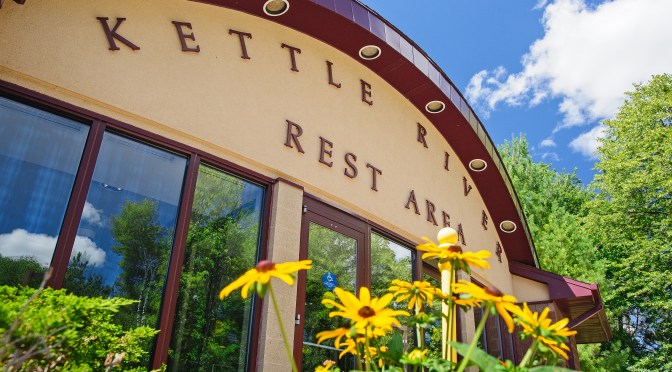
New Project: Cost Benefit Analysis for Sustainable Energy Building Upgrades at Safety Rest Areas and Travel Information Centers
MnDOT manages over 50 large safety rest areas (SRAs) with several amenities and travel information centers (TICs) with expanded customer service. Many of the SRA and TIC buildings were built before the significant advancements in energy efficiency and building technology made in the past few decades.
Continue reading New Project: Cost Benefit Analysis for Sustainable Energy Building Upgrades at Safety Rest Areas and Travel Information Centers
New Project: Species from Feces: A New Tool to Identify Bats in Culverts and on Bridges
Three bat species in Minnesota have been decimated due to white-nose syndrome. The northern long-eared bat is listed as endangered by the U.S. Fish and Wildlife Service, the tricolored bat listing is imminent, and the little brown bat listing is under consideration.
Continue reading New Project: Species from Feces: A New Tool to Identify Bats in Culverts and on Bridges
Ensuring Resilient Pavements in the Face of Increasing Heavy Rains
Warmer winters and more frequent severe rainfall events in Minnesota threaten the integrity and longevity of pavement foundations. Understanding the impacts of saturated pavement layers can help MnDOT design resilient roads. An exploration into the relationship between climate conditions over time and pavement foundation stiffness on test road sections led to the development of a pavement foundation saturation prediction model. The model supports the production of a preliminary geographic information systems (GIS) based pavement vulnerability framework that can guide road engineers in prioritizing maintenance in at-risk areas to ensure strong, durable pavements.
Continue reading Ensuring Resilient Pavements in the Face of Increasing Heavy Rains Crossroads