
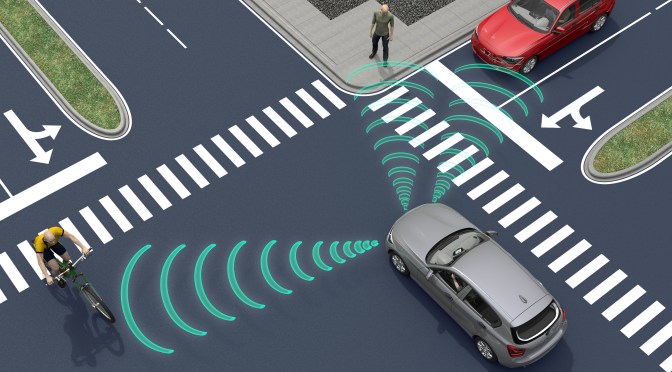
Autonomous vehicles (AVs) have infrastructure requirements such as lane lines, centerlines and intersection signs to guide camera-enabled steering control functions. But many rural roads do not have lane markings or are unpaved, and intersections might be missing components to guide AVs.
Continue reading New Project: Use of MNCORS to Support AV Operations in Rural MinnesotaAll posts by Malee Yang
Introducing a New Red-Light Running Warning System that Can Potentially Reduce Human Errors at Intersections
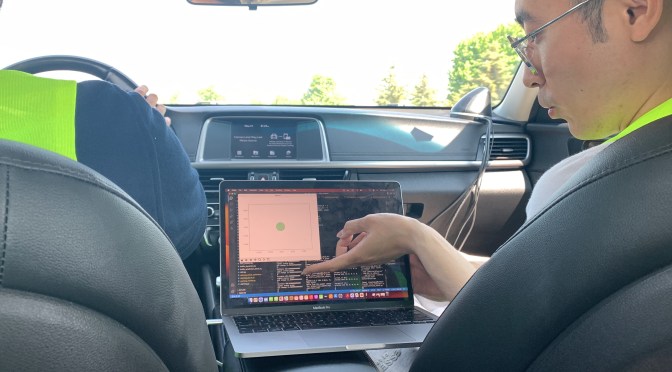
Red light violations remain a prominent issue and high contributor to serious crashes and casualties at signalized intersections. An ongoing research project, funded by the Local Road Research Board, and Federal Highway Administration (FHWA) State Transportation Innovation Council (STIC) Incentive program, is developing and testing a warning system that signals drivers as they approach a red light and prompts them to decelerate.
Continue reading Introducing a New Red-Light Running Warning System that Can Potentially Reduce Human Errors at Intersections
Using Alternative Technologies to Detect Vehicles at Signalized Intersections
In Minnesota and across the country, the most common traffic signals are those that are actuated by a device embedded in the road that detects the presence of a vehicle at the intersection. While these embedded devices can last for decades, they don’t always detect modern vehicles, such as electric cars, or vulnerable road users, such as bicycles or motorcycles. New research evaluated the performance of video- and radar-based detection systems, which are becoming more readily available, under a variety of Minnesota weather conditions.
Continue reading Using Alternative Technologies to Detect Vehicles at Signalized Intersections
New Project: Comparative Analysis of Grade-Separated Pedestrian Infrastructure and At-grade Treatments
Grade-separated intersection crossings allow pedestrians to cross over or under traffic lanes. Several factors determine whether a specific location is appropriate for a grade-separated crossing, such as volumes of vehicle and pedestrian traffic, number of lanes to cross, and vehicle speed and visibility.
Continue reading New Project: Comparative Analysis of Grade-Separated Pedestrian Infrastructure and At-grade Treatments
New Project: Long-Term Field Performance Evaluation of Chip Seals
Chip seals are an economical road surface treatment that MnDOT and counties use to enhance existing pavement performance and service life. A thin layer of asphalt emulsion sprayed on the pavement surface and mixed with aggregate chips can address minor pavement distresses and seal the pavement surface to reduce the impacts of further wear.
Continue reading New Project: Long-Term Field Performance Evaluation of Chip Seals
New Project: Species from Feces: A New Tool to Identify Bats in Culverts and on Bridges
Three bat species in Minnesota have been decimated due to white-nose syndrome. The northern long-eared bat is listed as endangered by the U.S. Fish and Wildlife Service, the tricolored bat listing is imminent, and the little brown bat listing is under consideration.
Continue reading New Project: Species from Feces: A New Tool to Identify Bats in Culverts and on Bridges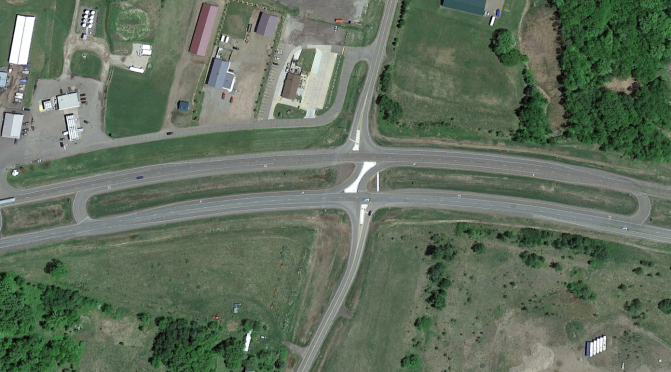
Evaluating the Traffic Safety Benefits of J-Turns in Minnesota
MnDOT traffic engineers are increasingly installing J-turn intersections on high-speed, multilane expressways to limit potential crash points. An analysis of crash data from intersections before and after the installation of J-turns demonstrated significant safety benefits from this alternative design. MnDOT researchers also explored crash history differences among J-turn intersections with varying characteristics. Consistent with the results from a previous study, this analysis found a clear decrease in fatal and other serious crashes after a J-turn was installed.
Continue reading Evaluating the Traffic Safety Benefits of J-Turns in Minnesota
Understanding Factors That Influence Driver Yielding to Pedestrians
Vehicle speeds, type of pedestrian, road characteristics and other variables can impact whether drivers yield to pedestrians attempting to cross a road at an unsignalized intersection. An analysis of data collected from 18 intersections identified human and site attributes that correlate to higher rates of driver yielding. Knowledge of these potentially influential factors will help local engineers build safer crossings at intersections.
Continue reading Understanding Factors That Influence Driver Yielding to Pedestrians
Enhancing Public Transit with Autonomous Mobility Service to Cover the “Last Mile”
The benefits of public transportation, including reducing individual vehicle use and traffic congestion, aren’t always optimized beyond densely populated urban settings. While transit may extend to more suburban or rural areas, land development patterns can make it challenging for people to reach their destinations by transit alone. Pairing transit with an autonomous mobility service is a potential solution. Researchers assessed transportation needs in a suburban shopping area and developed a system designed to deliver passengers from the end of a transit line to their ultimate destination. Simulations of the autonomous mobility service revealed its potential to increase transit efficiency and reduce individual vehicle use.
Continue reading Enhancing Public Transit with Autonomous Mobility Service to Cover the “Last Mile”
Effectively Alerting the Public About Local Road Closures
Navigation apps can be valuable timesavers for drivers in Minnesota. To maximize their use, these apps need traffic information that is timely and accurate. While state highway closures are reported effectively, reporting road closures on local roads and highways is inconsistent. This project aimed to improve local road closure reporting by exploring the development of a streamlined reporting system and creating guidance for reporting local road closures to third-party navigation apps.
Continue reading Effectively Alerting the Public About Local Road Closures Crossroads