
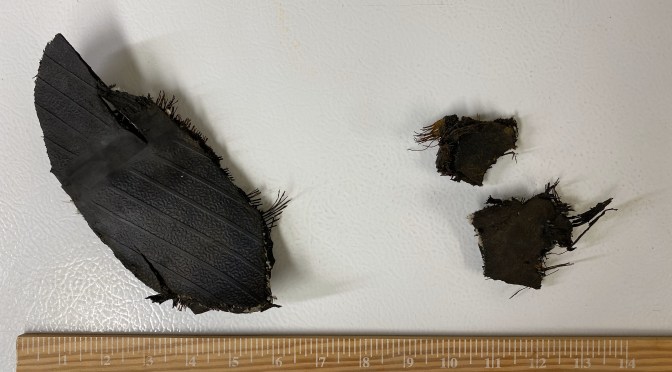
Repurposing old tires as tire-derived aggregate (TDA) is a stormwater management practice that could retain phosphate in underground treatment systems and prevent it from reaching the soil, surface waters and groundwater. However, chemicals from the TDA may leach into the soil and water sources. This project identifies the environmental impacts and cost-effectiveness of deploying TDA to manage stormwater in Minnesota cities and counties.
Continue reading Utilizing Recycled Tires to Treat StormwaterTag Archives: LRRB

Enhancing Safety for Pedestrians and Bicyclists at Roundabouts
Compared to traditional intersections, roundabouts have been proven to decrease serious crashes. However, because drivers yield rather than stop upon entering roundabouts and at crosswalks, public concerns about pedestrian and bicyclist safety remain. Research and field evaluations into driver yielding and speed behaviors generated insights to guide local transportation agencies and MnDOT to further enhance pedestrian safety at roundabouts.
Continue reading Enhancing Safety for Pedestrians and Bicyclists at Roundabouts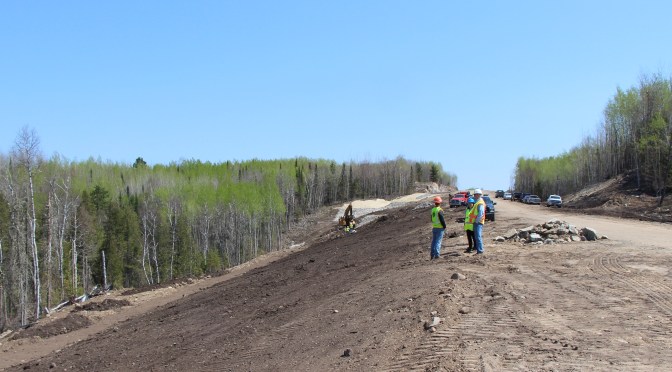
Industrial by-products prove sustainable options for managing roadside stormwater
Reprinted from CTS News, March 25, 2025
Roadside soil plays a crucial role in stormwater management. Naturally vegetated roadsides can filter and control runoff, helping to keep pollutants out of bodies of water and minimizing flooding to communities. However, soil left behind from road construction does not adequately support filtration and plant growth unless it’s amended with organic matter—and traditional mixtures for doing so, such as with sand and compost, can be costly and resource-intensive.

To find a more sustainable solution, U of M researchers partnered with MnDOT and the Minnesota Local Road Research Board. Building on previous research, a team led by CTS scholar David Saftner, principal investigator and associate professor in the UMD Department of Civil Engineering, tested sustainable roadside soil mixtures using locally available waste materials and by-products generated from forestry, agriculture, and industrial activities.
In this project, nine materials were selected for testing, including a peat/biochar mix; dredged river sediment; pine and ash sawdust; VersaLime (a by-product of sugar beet processing); lime mud, bottom ash, and degritter (from a pulp and paper mill); and recycled concrete aggregate (RCA). All nine materials proved efficient at removing pollutants, though some were more effective than others. After extensive laboratory testing, the five top-performing materials were selected and used to create three engineered soil blends:
- RCA (80%) and ash sawdust (20%)
- RCA (80%) and peat/biochar (20%)
- Dredge sediment (80%) and degritter (20%)
Field testing of these three engineered soil blends took place in outdoor plots. The team studied infiltration rate, pollutant removal, and plant growth from grass and flower seed. Through a life-cycle assessment, the researchers also evaluated material collection and transport, energy demand, human health and ecosystem impacts, climate change, and water use.
Their research revealed that all three engineered soil blends were effective at capturing and filtering the first inch of excess stormwater runoff, offering a viable alternative to traditional soil mixes. Other key findings:
- Of the engineered soil mixes, organic and coarser materials were better at allowing water to pass through.
- Greenhouse tests showed promising plant growth, while field plots experienced challenges—possibly due to seasonal dryness.
- The dredge sediment and degritter soil mix had substantially higher impacts than the other two soil mixes as well as the most CO2 emissions.
- The RCA and ash sawdust soil mix had the lowest impacts, with the RCA and peat/biochar soil mix producing similar results.
Based on their findings, a design guide was developed for road engineers outlining best practices for using local by-products and waste materials to create engineered soil mixes while still adhering to regulatory standards. These recommendations are designed to be standard, common, and repeatable.
“This was a great project and I’m especially happy with the design guide,” Saftner says. “Determining how to implement new procedures is tougher than using tried-and-true methods. Our hope is that the guide will simplify things for practicing engineers looking for more cost-effective, sustainable, and locally sourced solutions.”
The study results also highlighted many of the benefits of engineered soil mixtures including the reuse of waste materials, reduced spending on sand and compost, lower transportation costs, and fewer environmental impacts of transporting material.
Further research on the reuse of waste materials includes another multi-phased project incorporating biochar. The first phase of that project should be finished this summer, with the second phase kicking off in summer 2026.
—Krysta Rzeszutek, CTS digital editor
Related Resources
- Article: Waste materials go to work as pollutant filter
- Article: Treating stormwater with local by-products reduces road construction costs, minimizes waste
- Re-use of Minnesota Waste Material in Sustainably Design Soils. Part 2
- Reusing Local By-Products to Create Sustainable Roadside Soil
- Re-use of Regional Waste in Sustainably Designed Soils: Part 1

Refining Max-Pressure Traffic Signal Control to Improve Traffic Flow
Effective traffic signal control technologies facilitate optimal traffic flow and travel time. Building on previous research, this project made significant progress toward field implementation of a novel adaptive signal control technology. This research phase demonstrated the max-pressure traffic signal algorithm can successfully integrate into Hennepin County traffic signal hardware and respond to changing traffic conditions in real time, providing confidence to move to the next step and test the system in the field.
Continue reading Refining Max-Pressure Traffic Signal Control to Improve Traffic Flow
Understanding the Performance of Road Base Stabilization Additives
Full-depth reclamation (FDR)—an effective and efficient pavement reconstruction method—can be made even more sustainable by strengthening the road base. Laboratory and field testing of proprietary stabilizers used to amend FDR material illustrated improvements in pavement stiffness and economic benefits over time. New pavement design standards for base stabilizers can guide road engineers in choosing the optimal products for sustainable roads.
Continue reading Understanding the Performance of Road Base Stabilization Additives
New Project: Roundabouts, J-Turns, etc. – Understanding Their Economic Impacts
Roundabouts and J-turns have consistently shown significant improvements in safety and traffic flow in Minnesota and across the U.S. Still, some community residents and businesses oppose replacing traditional intersections with alternative intersections like roundabouts or J-turns.
Continue reading New Project: Roundabouts, J-Turns, etc. – Understanding Their Economic Impacts
New Project: Best Practice for Oversized/Overweight Vehicles
As hauling practices change for waste collection, mining and other industries, local transportation agencies are receiving more permit requests for oversize or overweight trucks. These larger vehicles can have significantly greater impacts on pavements than passenger vehicles.
Continue reading New Project: Best Practice for Oversized/Overweight Vehicles
New Project: User Understanding of Pedestrian Hybrid Beacon Operation
Pedestrian hybrid beacons (PHBs) are one tool to help pedestrians safely cross roads. PHBs provide red-signal control for vehicular traffic when needed at lower installation costs and reduced traffic delays than full traffic signals.
Continue reading New Project: User Understanding of Pedestrian Hybrid Beacon Operation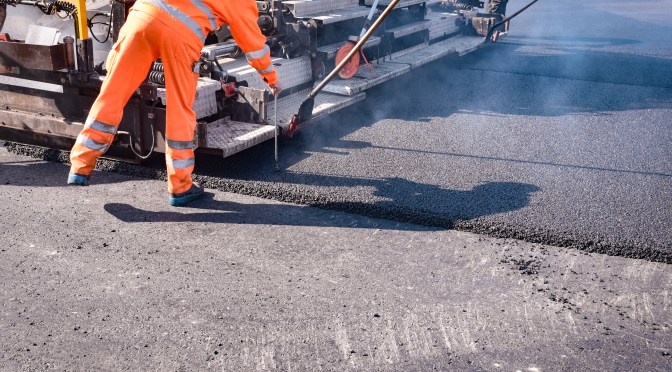
New Project: Impact of Asphalt Lift Thickness on Pavement Density and Durability
Pavement durability depends on its density. Achieving adequate density depends on the size of the aggregate in the mixture and the asphalt lift thickness—the height of the asphalt layer that is applied by the paver and compacted.
Continue reading New Project: Impact of Asphalt Lift Thickness on Pavement Density and Durability
MnDOT and the Local Road Research Board Fund New Research Projects to Address Critical Transportation Issues
MnDOT and the Local Road Research Board have funded 27 new research projects out of 82 proposals submitted this year. Every MnDOT and LRRB project is guided by a Technical Advisory Panel, with each member serving an important role in the success of the project. MnDOT and LRRB are actively seeking volunteers to serve as Technical Advisory Panel members. TAP members will help with guiding research and reviewing final project deliverables.
To receive updates on any of the funded projects, select “subscribe” on the project webpage.
Bridges and Structures
Environmental
- Quantifying the Influence of Driver Behavior on Greenhouse Gas Emissions and Air Quality
- Incorporation of Soil Health Engineered Measures on MnDOT Construction Projects and Resilient Stormwater Management
- Innovative Stormwater Solutions for Linear Projects
- Feasibility of LED Solar Street Lighting
- Development of Biochar Specification Criteria as Soil Amendment for Slopes, Conveyances and Stormwater Treatment Systems, Phase 2
Maintenance Operations
Materials and Construction
- Tools to Improve the Durability of Asphalt Pavements
- Feasibility of InSAR for Continuous Monitoring of Ground Deformation and Performance Tracking of Geotechnical Assets
- Evaluating and Implementing Ground Penetrating Radar (GPR) for Continuous and Rapid Monitoring of Moisture Fluctuations in In-service Roads
- Are Current Rigid Pavement Roundabout Designs Working in Minnesota?
- Holistic Design and Selection Criteria for Unbound Geomaterials Used in Pavement Systems
- Design Guidance and Best Practices for the Use of Light Fill
Multimodal
- Navigating Healthier Community Outcomes with Transportation Corridor Rankings
- Operational Characteristics of Conventional and Electric-Assisted Bicycles and Their Riders
Policy and Planning
- Leveraging Transportation Investments for Economic Development and Wealth Building
- Refining the Understanding of Parking Space Requirements and Its Impact on Vehicle Miles Travelled
- Speed Impacts on Complete Streets Elements, Phase 2
- Freeway Corridor Economic Impact
Traffic and Safety
- High Tension Cable Median Guardrail Expected Lifespan
- Use of Colors in Dynamic Message Signs for Both Travel Times and Static Sign Simulation
- Evaluation of Driver Speeds After Implementation of Speed Limit Reduction on Urban Streets
- Estimating Likely Mode Shift and Vehicle Miles Travelled Reduction Potential Using TBI Data and AI Algorithms
- Bike Infrastructure Planning Based on Mobile-Sourced Data and Anticipated Route Shifts
- Exploring Completeness and Accuracy of Driver Crash Reporting of Property Damage Only Crashes
- Leveraging C-V2X and Advanced Communications/Sensing for Rural Road Safety
- A Novel Red Light Running Warning System Using Connected v2i Technology, Phase 2: Driver Testing on Public Roads
 Crossroads