This article was originally published in Catalyst, November 2021.
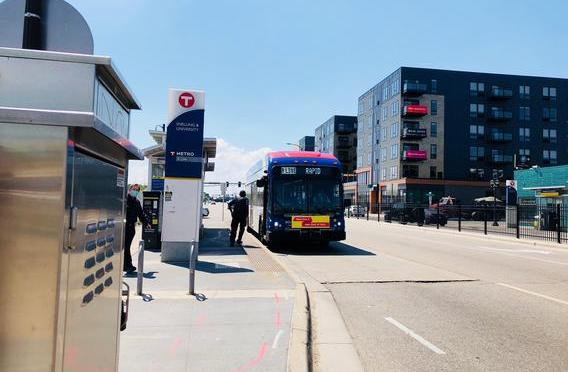
How does a transitway affect automobile traffic on nearby roadways? What factors influence which park-and-ride facilities people choose? These two questions were the focus of a recent two-part project by U of M researchers.
This article was originally published in Catalyst, November 2021.
As gyms and indoor health facilities closed during the beginning of the pandemic, people flocked to trails and parks, creating both opportunities and concerns for public health and land managers. The US Centers for Disease Control and Prevention (CDC) recommended a six-foot distance between people (even outdoors), but little was known about compliance with these recommendations.
During the past decade, MnDOT has been developing solar projects and actively pursuing cost-effective energy-efficiency measures. Among the potentially effective innovations the agency has considered is adding solar panels to noise barriers and snow fences, transforming these single-function installations to multifunction installations. The electricity generated from this practice could offset installation costs and eventually generate revenue for other purposes.
Finding resources that address manhole and catch basin issues occurring in Minnesota can be challenging. In a recent project, researchers surveyed 83 municipalities and interviewed other engineers and product representatives to gather data about manhole and catch basin installation and maintenance practices. The resulting report provides current information for municipal engineers about these essential installations.
Researchers tested ultrasonic bat deterrence devices at two MnDOT bridges, tracking bat activity with acoustic echolocation recorders and field inspections. Deterrence devices used in short- and long-term trials dramatically reduced bat activity at bridge site. Analysis showed that bats return promptly when devices are turned off.
In the early 1990s, Minnesota became the first state in the nation to prohibit discrimination based on a person’s sexual orientation and gender identity. Yet the state continues to use male-female categories when investigating the role of gender in transportation issues such as travel behavior and transportation accessibility. Since a person’s identity can have a significant influence on their own and others’ behavior and experiences, excluding gender diversity in this type of transportation research could result in an incomplete understanding of the issues and perceptions about quality of life.
Historically, federal regulations have required that MnDOT use pipes made with all-new materials in various applications, such as redirecting stormwater under roadways. However, recent changes to these regulations have made it possible for the agency to also consider pipes made with recycled materials, which could provide MnDOT with more options when choosing products for future projects.
Transportation agencies throughout the United States are focused on repairing the damage that highway construction has caused in communities.
MnDOT seeks partnerships with communities, businesses, and government entities to better utilize state highway lands and airspace.
These partnerships aim to enhance economic wellbeing and quality of life. Projects like highway caps and development of spaces underneath highways can increase equity, reduce disparities, and limit environmental impacts.
Managed lanes, like Minnesota’s E-ZPass express lanes, are designed to improve mobility and travel time reliability for transit users, carpoolers and other motorists during peak travel hours. The lanes provide many societal benefits such as increased transit ridership, higher vehicle occupancies, more reliable travel options, and reduced traffic congestion and pollution.
However, because the lanes use pricing to deliver these benefits, they must be designed, constructed and operated equitably. The key is striking a balance that’s fair for everyone.






 Crossroads