

Boulevards play an important role along a roadway. This open space located just behind the curb provides snow storage for roads and sidewalks, a place for rain and runoff to soak into the ground, and attractive green space in our city neighborhoods. In addition to their aesthetic appeal, trees planted in the boulevard along a roadway offer valuable environmental benefits. They save energy and lower temperatures, reduce greenhouse gases, and reduce stormwater runoff.
Continue reading Creating a Leafy Boulevard: Best Practices for Tree SelectionTag Archives: environment
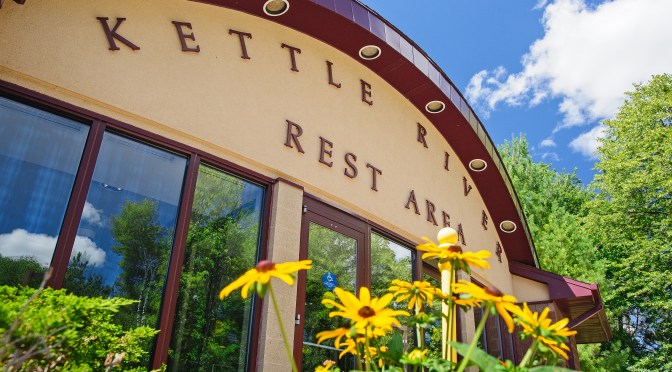
New Project: Cost Benefit Analysis for Sustainable Energy Building Upgrades at Safety Rest Areas and Travel Information Centers
MnDOT manages over 50 large safety rest areas (SRAs) with several amenities and travel information centers (TICs) with expanded customer service. Many of the SRA and TIC buildings were built before the significant advancements in energy efficiency and building technology made in the past few decades.
Continue reading New Project: Cost Benefit Analysis for Sustainable Energy Building Upgrades at Safety Rest Areas and Travel Information Centers
New Project: Species from Feces: A New Tool to Identify Bats in Culverts and on Bridges
Three bat species in Minnesota have been decimated due to white-nose syndrome. The northern long-eared bat is listed as endangered by the U.S. Fish and Wildlife Service, the tricolored bat listing is imminent, and the little brown bat listing is under consideration.
Continue reading New Project: Species from Feces: A New Tool to Identify Bats in Culverts and on Bridges
PFAS “Forever Chemicals” Can be Reduced in Highway Construction and Maintenance Projects
Taken from TRB Weekly – June 25, 2024
Per- and polyfluoroalkyl substances (PFAS) are a class of more than 6,000 contaminants of emerging concern that can harm both ecosystems and human health. These anthropogenic compounds contain carbon–fluorine bonds that make them stable and persistent in the environment, earning them the nickname “forever chemicals.”
Continue reading PFAS “Forever Chemicals” Can be Reduced in Highway Construction and Maintenance Projects
Drainage 101: Understanding and Managing Drainage Issues
Increased regulation and rising levels of precipitation have made stormwater management a more routine and time-consuming issue than in previous decades. A new resource provides guidance and best practices that will help city and county engineers, local officials and private property owners navigate the complex, often public-facing issues related to recurring drainage problems and stormwater management.
Continue reading Drainage 101: Understanding and Managing Drainage Issues
Assessing Stormwater Ponds for Phosphorus Retention
Stormwater ponds and wetlands reduce flood risk and keep pollutants from entering other bodies of water. As ponds age and change, however, they may not perform as designed. Local agencies now have tools to assess whether a pond is likely to retain phosphorus, which can help guide stormwater management efforts.
Continue reading Assessing Stormwater Ponds for Phosphorus Retention
Exploring Region-Specific Roadside Turfgrass Varieties
Local agencies need cost-effective and durable turfgrass seed mixes to ensure grass coverage remains optimal along roadsides. In a recent study, researchers analyzed the performance of grass seed mixtures and planting costs, recommended region-specific mixes and developed a cost estimation tool for local agencies to be confident in their roadside vegetation choices.
Continue reading Exploring Region-Specific Roadside Turfgrass Varieties
New Project: Update of Stormwater Management Best Practices Manual
The Local Road Research Board published the Stormwater Best Management Practice (BMP) Maintenance Resource Guide in 2009, and best practices for stormwater management have since evolved. Much has been learned about the benefits and limitations and inspection and maintenance activities of stormwater ponds, bioretention facilities, underground treatment devices, underground detention, and infiltration. Regulatory requirements have also changed as indicated in the Minnesota Stormwater Manual.
Continue reading New Project: Update of Stormwater Management Best Practices Manual
New Project: Sustainable Application of Tire Derived Aggregate in Stormwater Infiltration/Treatment
The reuse of old tires that often end up in landfills has a significant environmental benefit. Tire derived aggregate (TDA), a waste product from automobile tires, can be used in stormwater treatment systems and has shown to be effective at retaining phosphate. However, TDA does not prevent the leaching of metals including zinc and copper.
Developing media for stormwater infiltration/filtration that uses TDA in combination with materials that can capture metals has several advantages. It would prevent more pollutants from being released into Minnesota’s lakes and streams, save on landfill space and reduce stormwater management costs.
“The use of TDA has been proposed in the past for use in stormwater treatment. However, local agencies aren’t very familiar with the product being used for this application and have concerns about its potential to contaminate groundwater resources,” said Mark Hansen, city engineer, City of Coon Rapids. “Initial research is showing positive benefits for the use of TDA as a component of the stormwater treatment process, while minimizing its impacts to groundwater. Using TDA for this application provides a great opportunity to redirect old car tires from landfills and beneficially reuse them to assist in providing stormwater treatment.”
Objectives
- Select blend materials identified in literature review and mix them in different ratios with TDA.
- Measure the pollutant removal performance from runoff, leaching of zinc and copper from TDA, and infiltration capacity of each mix.
- Analyze the observed values to choose the suitable blend material/ratio.
- Perform lab batch tests to evaluate the potential leaching or removal of polyfluoroalkyl substances (PFAs) by TDA and the blends.
- Determine impact of biofilms on the leaching of zinc and copper from the mix (Biofilms will be grown on an already defined mix of TDA with blend material).
- Conduct outreach on project results and implications to management to key stakeholder groups.
Project Details
- Estimated Start Date: 06/03/2022
- Estimated Completion Date: 06/30/2025
- Funding: Local Road Research Board
- Principal Investigator: John Gulliver
- Co-Principal Investigator: Meijun Cai
- Technical Liaison: Mark Hansen
Details of the research study work plan and timeline are subject to change.
To receive email updates about this project, visit the Local Road Research Board website to subscribe.

Roadside Safe Spaces for Butterflies and Bees
Pollinators such as rusty-patched bumble bees and monarch butterflies, critical to our eco-system, are at risk due to the loss of native habitat. A University of Minnesota research team, with support of MnDOT and the Local Road Research Board, studied whether restored roadsides could provide safe habitats for declining pollinator populations.
Continue reading Roadside Safe Spaces for Butterflies and Bees Crossroads