Tag Archives: cts

The winding road to an electric fleet

Reprinted from CTS News, November 24, 2025

Even for cities, counties, and organizations with zero-carbon emissions goals, most fleet managers are skeptical about going fully electric. Calculating the return on investment for a single vehicle is straightforward—but for a fleet, it’s complex. 

Continue reading The winding road to an electric fleet

CTS Webinar: Preparing Transportation Professionals for AI Integration

Monday, December 15, 2025, 12:00–1:30 pm (Virtual)

About the Event

Artificial intelligence (AI) is rapidly reshaping how we design, plan, and manage infrastructure systems. In this webinar, CTS scholars Qizhi He and Seongjin Choi from the University of Minnesota’s Department of Civil, Environmental, and Geo- Engineering will discuss how AI tools are beginning to influence teaching, research, and professional practice in civil engineering. Their conversation will consider how the field can adapt curriculum and training to prepare future engineers for an AI-integrated profession. They will also explore questions around quality management, professional ethics, and community-centered design in an AI-driven context.

Offering a practitioner’s perspective, Melissa Barnes will share insights from MnDOT’s ongoing AI pilot identification project. She will discuss how state agencies are evaluating opportunities and risks associated with AI implementation—and engaging and educating their staff about AI.

This webinar will highlight opportunities for collaboration between academia and practice as the transportation industry navigates the evolving impacts of AI on engineering education, quality assurance, and workforce development. 

Speakers

Qizhi He is an assistant professor in the Department of Civil, Environmental, and Geo- Engineering at the University of Minnesota (UMN) and a CTS scholar. Before joining the UMN, he was a postdoctoral researcher in the Scientific Machine Learning Group at Pacific Northwest National Laboratory. His research focuses on developing hybrid physics–AI/ML computational methods for predictive modeling and the simulation of complex mechanical behavior in civil and geomaterials under extreme and multiphysics conditions. His work aims to advance next-generation, high-performance computing and digital-twin technologies that enhance infrastructure resilience and support natural hazard mitigation. 

Seongjin Choi is an assistant professor in the Department of Civil, Environmental, and Geo- Engineering at the University of Minnesota and a CTS scholar. Choi was previously a postdoctoral researcher at McGill University in Canada and Korea Advanced Institute of Science and Technology in South Korea. His research focuses on developing machine learning and (generative) artificial intelligence models for transportation and mobility data, with the goal of enhancing both individual-level travel experiences and system-level performance.

Melissa Barnes is the Operations Division artificial intelligence program manager (mobility) at MnDOT and a licensed civil engineer with more than 21 years of experience in transportation. She has worked at MnDOT for more than 12 years, including positions in Central Office and the Metro District. Her expertise spans program delivery, traffic engineering, planning, safety, operations, project management, policy, and cross-functional leadership, and she is known for her commitment to equity and collaboration. 

Registration

This webinar is free, but registration is required. Once you have registered, you will receive an email confirmation with a Zoom link. The link should not be shared with others; it is unique to you.

More information

Visit the CTS website or contact Samantha Hahn-Douville at snhahn@umn.edu

If you’re unable to join us for the live broadcast, a recording will be available here after the event.

CTS Webinar: The Coffee Supply Chain—What Goes into Delivering Your Favorite Coffee to the Store Shelf

About the Event

This webinar may not be related to MnDOT research, but we thought you might find it interesting if you drink coffee.

Join CTS and Patrick Hessini, CTS Executive Committee member and head of supply chain at Cameron’s Coffee, for an in-depth look at the challenges and logistics of today’s supply chain. Grab a cup of coffee and bring your lunch as we learn about where and how we get our coffee from trees to mugs.

Registration

This webinar is free, but registration is required. Once you have registered, you will receive an email confirmation with a Zoom link. The link should not be shared with others; it is unique to you.

More Information

Visit the CTS website or contact James De Sota at jadesota@umn.edu.

CTS Webinar: Innovations for Energy-Efficient Transportation

Thursday, November 13, 2025, 12:00–1:30 pm Virtual

About the Event

Transportation is one of the largest sources of greenhouse gas emissions in the U.S., and reducing those emissions is key to tackling the climate crisis. New technologies—from eco-friendly navigation apps to connected and automated vehicles—offer exciting opportunities to make our transportation system cleaner and more energy efficient. But these tools can also create unexpected challenges, such as increased traffic congestion or higher overall emissions, if not carefully designed.

In this webinar, researchers will share new approaches to smarter routing and vehicle technology that can lower energy use and reduce emissions. Join us to learn how innovations in navigation, automation, and vehicle control could help shape a more sustainable future.

Speakers

Zongxuan Sun is a professor in the Department of Mechanical Engineering at the University of Minnesota. He is an expert on dynamic systems and control with applications in automotive propulsion systems. He worked at the General Motors Research Center for seven years prior to joining the University in 2007. His research work includes system modeling, control theory, building unique instruments, and testbeds for experiments.

Michael Levin is an associate professor in the Department of Civil, Environmental, and Geo- Engineering at the University of Minnesota and a CTS scholar. His research focuses on modeling connected and automated vehicles and intelligent transportation systems to predict and optimize how these technologies will affect travel demand and traffic flow. Levin is specifically interested in using traffic flow, transportation network analysis, and operations research methods to study these new technologies and their effects on cities.

Registration

This webinar is free, but registration is required. Once you have registered, you will receive an email confirmation with a Zoom link. The link should not be shared with others; it is unique to you.

Credit

Attendees are eligible for Professional Development Hours (PDHs) and American Institute of Certified Planners (AICP) certification maintenance credits.

More information

For more information or to request support, go to complete announcement on the Center for Transportation Studies website.

Related MnDOT Research Projects

Minnesotans geared up for e-bike rebates. Now data reveals more about them

Republished from CTS News (Catalyst) for October 14, 2025

More than 14,600 Minnesota residents applied for a rebate through the state’s e-bike rebate program when it launched in 2024. Established by the Minnesota Legislature to help reduce the cost of buying a new e-bike, the program was so popular that within minutes of opening in June 2024, the number of applicants overwhelmed the system and crashed the website. The state was forced to fix the technology challenges and reopen the application about a month later.

The scenario drove researchers at the University of Minnesota to dig deeper into the data about who applied for the rebate in the first year. Their project aims to shed light on who benefitted from the program, get feedback on the application process, and learn more about rebate use.

E-bikes, which operate like a bicycle but have an electric battery and motor for pedaling assistance, have increased in popularity in recent years, and supporters are promoting their potential as a sustainable transportation option. The state legislature allocated $2 million in both 2024 and 2025 for the rebate program.

“Minnesotans seem to have an appetite to get an e-bike, whether that’s because of the state’s incentive or for other reasons—including that Minnesota has some of the best bike infrastructure around,” says Kaitlyn Denten, a researcher with the Humphrey School’s Institute for Urban and Regional Infrastructure Finance (IURIF) and project co-lead.

For the first part of this project, researchers analyzed rebate applicant data, which included demographic information, income level, tax filing status, and ZIP code but no personal identifiers. Data also included a person’s rebate application status, the rebate amount, and whether the applicant used the rebate to purchase a new e-bike.

In the program’s first year, the maximum rebate was $1,500; individual amounts depended on an applicant’s income level and tax filing status. People who applied for and received a rebate certificate could purchase their e-bike and eligible bike accessories from a participating retailer. Of the total applicants, 1,519 people received a rebate and 1,327 used one to purchase an e-bike. According to the data, half of the rebates went to households earning less than $75,000 a year.

The Twin Cities seven-county metro area had strong representation, with 66 percent of applicants, 67 percent of recipients, and 66 percent of rebate users coming from the metro area. The average age of applicants was 49 years old.

For the project’s second part, researchers used an online survey to collect feedback on the application process and information about how people who received a rebate were using their e-bike, among other data. The survey, which was available between March 17, 2025, and April 5, 2025, received nearly 4,500 responses.  

Of the survey respondents, 3,920 individuals applied for a rebate, 496 received a rebate, and 455 used the rebate to purchase an e-bike. For those who received a rebate but didn’t use it, among the reasons cited were that the rebate didn’t cover enough of the e-bike’s cost and the rebate certificate expired before they were able to use it. 

One surprising finding: Some people bought an e-bike even if they didn’t receive a rebate, says CTS scholar Camila Fonseca-Sarmiento, IURIF director of fiscal research and project co-lead. “Or, if a couple received a rebate, they ended up buying two e-bikes. This could be spurring the use of e-bikes instead of personal vehicles.”

Many survey respondents expressed frustration with the initial application process, referring to the technical glitches, long wait times, and unclear instructions. Several respondents did note, however, that the second application round ran more smoothly.

Some respondents also raised concerns about the fairness of the program’s rollout, pointing to barriers faced by people with limited internet access and electronic devices, people with disabilities, and people with inflexible work schedules (the application period opened on a weekday).

Future research should focus on the effects of 2025 program changes, including income eligibility, application processes, and rebate amount, the researchers say. In addition, researchers noted that a statewide travel study could help assess how rebates might influence a shift from personal vehicle use to an e-bike, a question left unanswered because of limited e-bike use among current rebate recipients.

This research project was sponsored by the Applied Research in Transportation (ART) Program, which addresses time-sensitive research questions in a 6 to 12 month timeframe. CTS and the Minnesota Department of Transportation contributed initial funding to launch this pilot program in 2024, with the Metropolitan Council joining in 2025. To reinforce the applied nature of the program, ART projects must directly address a current process, document, or policy need with an initial focus on sustainability in transportation and climate change impacts.

—Peter Raeker, contributing writer  

Related Research from MnDOT

Operational Characteristics of Conventional and Electric-Assisted Bicycles and Their Riders (ongoing)

Assessing the Economic Impact and Health Benefits of Bicycling in Minnesota

Human behavior insights are driving transportation safety forward

Reprinted from CTS News Catalyst, September 11, 2025

To better understand how roadway crashes can be prevented, it’s essential to explore the human behaviors that contribute to them. This objective is core to the work of the U of M’s Human Factors Safety Laboratory (HFSL). Research Associate Professor and CTS scholar Nichole Morris, who directs the lab, outlined its mission and impact in a recent Toward Zero Deaths (TZD) webinar highlighting Minnesota’s traffic safety research ecosystem. 

Minnesota TZD is the state’s cornerstone traffic safety program, employing an interdisciplinary approach to reducing traffic crashes, injuries, and deaths on the state’s roads. CTS partners with TZD to provide program administration, event coordination, and communications.

The HFSL brings together behavioral scientists and engineers dedicated to reducing roadway and occupational injuries and fatalities. They combine research on human behavior with the design and testing of user-centered systems to create solutions that work better for everyone.

“Human factors is the intersection between people and systems,” Morris explained. From in-vehicle technologies and roadway signage to partnerships with larger organizations such as law enforcement, transportation systems involve a wide range of human-system interactions.

Four research tracks shape the lab’s work:

  • Crash reporting. Although projects often intersect, crash reporting is foundational to the other research tracks. Morris refers to it as the lifeblood of transportation safety—without crash data, researchers don’t know what’s working and what isn’t. In one of its more consequential projects, the HFSL helped rebuild the front end of MNCrash—an application designed for law enforcement to document and report crashes. In close collaboration with the Minnesota Departments of Transportation and Public Safety as well as multiple law enforcement agencies, the HFSL team helped to streamline the user experience and improve data completeness and accuracy. Since deploying the updated version in 2016, MNCrash has been adopted by all law enforcement agencies across Minnesota. It’s featured in the sixth edition of the USDOT’s Model Minimum Uniform Crash Criteria and has become the national standard for crash reporting.
  • Maintenance and work-zone safety. In one project, leveraging the expertise and methods gained from MNCrash, the lab collaborated with MnDOT and maintenance workers on a streamlined app to make documenting work-zone intrusions easier. After its launch in 2022, the team continued work, using low-cost sensors and radar to help reduce select work-zone driving speeds in real time.
  • Pedestrian and non-motorist safety. The Stop for Me campaign, a collaboration with MnDOT, St. Paul, Ramsey County, and Western Michigan University, has been adopted in communities across Minnesota. The campaign—which combines enforcement and engineering treatments to improve yielding at crosswalks—has inspired similar efforts in more cities around the country. Other projects include studies on dedicated right-turn lanes and temporary and permanent pedestrian infrastructure to reduce conflicts between drivers and pedestrians.
  • Infrastructure and signage. The lab’s work on J-turns, which have proven effective at reducing fatal crashes, has helped to identify and address several navigational errors drivers may make when first encountering this type of intersection. The researchers have found that poor or confusing first experiences with J-turns can lead to negative community perceptions and result in pushback on J-turn implementation. The research has found specific pavement markings to help guide drivers and facilitate successful use of J-turns—leading to fewer crashes and better driver experiences.

Morris emphasized that investment in sound research methods and collaborations across partner institutions, organizations, and communities is what creates successful research outcomes. While studies may yield results in the moment, she says investing in methodology is what really carries the work forward. The HSFL’s work continues to inspire other states and agencies, Morris added.

—Krysta Rzeszutek, CTS digital editor

Related research from Nichole Morris

TZD Traffic Safety Hotdish: Research in Action—Perspectives from Minnesota’s Traffic Safety Research Ecosystem

July 16, 2025
1:00–2:15 p.m. Central
Virtual via Zoom

Join us as our very own “Roads” Scholars share more about their recent traffic safety research. Presenters from the University of Minnesota and Minnesota Department of Transportation (MnDOT) will share findings from recent projects and talk about the collaborations that drive traffic safety research throughout Minnesota.

Speakers

  • Jackie Jiran, PE—MnDOT
  • Max Moreland, PE, PTOE—MnDOT
  • Nichole Morris, PhD—University of Minnesota
  • Mark Wagner, PE—MnDOT
  • Kyle Shelton, PhD—University of Minnesota; Moderator

Registration

The webinar is free to attend, but registration is required. Once you have registered, you will receive an email confirmation with a Zoom link. The link should not be shared with others; it is unique to you.

Credit

Attendees are eligible for 1.25 Professional Development Hours (PDHs). Download the PDH credit form (PDF) for your records.

For complete information, go to TZD Traffic Safety Hotdish.

Industrial by-products prove sustainable options for managing roadside stormwater

Reprinted from CTS News, March 25, 2025

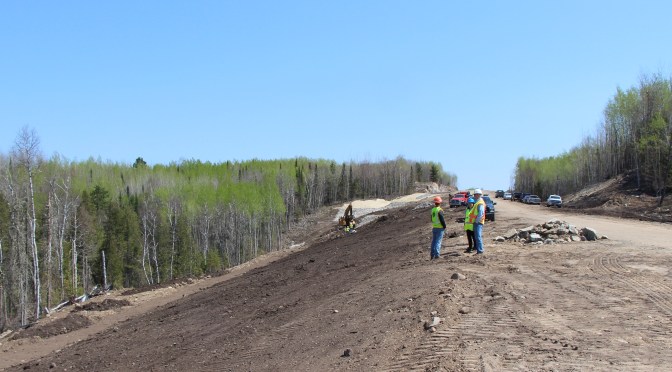
Roadside soil plays a crucial role in stormwater management. Naturally vegetated roadsides can filter and control runoff, helping to keep pollutants out of bodies of water and minimizing flooding to communities. However, soil left behind from road construction does not adequately support filtration and plant growth unless it’s amended with organic matter—and traditional mixtures for doing so, such as with sand and compost, can be costly and resource-intensive. 

sample plots
Field plots adjacent to the Natural Resources Research Institute parking lot were used to test the infiltration capacity, pollutant removal, and vegetative support capabilities of the soil mixtures.

To find a more sustainable solution, U of M researchers partnered with MnDOT and the Minnesota Local Road Research Board. Building on previous research, a team led by CTS scholar David Saftner, principal investigator and associate professor in the UMD Department of Civil Engineering, tested sustainable roadside soil mixtures using locally available waste materials and by-products generated from forestry, agriculture, and industrial activities.

In this project, nine materials were selected for testing, including a peat/biochar mix; dredged river sediment; pine and ash sawdust; VersaLime (a by-product of sugar beet processing); lime mud, bottom ash, and degritter (from a pulp and paper mill); and recycled concrete aggregate (RCA). All nine materials proved efficient at removing pollutants, though some were more effective than others. After extensive laboratory testing, the five top-performing materials were selected and used to create three engineered soil blends:

  • RCA (80%) and ash sawdust (20%)
  • RCA (80%) and peat/biochar (20%)
  • Dredge sediment (80%) and degritter (20%)

Field testing of these three engineered soil blends took place in outdoor plots. The team studied infiltration rate, pollutant removal, and plant growth from grass and flower seed. Through a life-cycle assessment, the researchers also evaluated material collection and transport, energy demand, human health and ecosystem impacts, climate change, and water use.

Their research revealed that all three engineered soil blends were effective at capturing and filtering the first inch of excess stormwater runoff, offering a viable alternative to traditional soil mixes. Other key findings: 

  • Of the engineered soil mixes, organic and coarser materials were better at allowing water to pass through.
  • Greenhouse tests showed promising plant growth, while field plots experienced challenges—possibly due to seasonal dryness.
  • The dredge sediment and degritter soil mix had substantially higher impacts than the other two soil mixes as well as the most CO2 emissions.
  • The RCA and ash sawdust soil mix had the lowest impacts, with the RCA and peat/biochar soil mix producing similar results.

Based on their findings, a design guide was developed for road engineers outlining best practices for using local by-products and waste materials to create engineered soil mixes while still adhering to regulatory standards. These recommendations are designed to be standard, common, and repeatable. 

“This was a great project and I’m especially happy with the design guide,” Saftner says. “Determining how to implement new procedures is tougher than using tried-and-true methods. Our hope is that the guide will simplify things for practicing engineers looking for more cost-effective, sustainable, and locally sourced solutions.”

The study results also highlighted many of the benefits of engineered soil mixtures including the reuse of waste materials, reduced spending on sand and compost, lower transportation costs, and fewer environmental impacts of transporting material. 

Further research on the reuse of waste materials includes another multi-phased project incorporating biochar. The first phase of that project should be finished this summer, with the second phase kicking off in summer 2026.

—Krysta Rzeszutek, CTS digital editor

Related Resources

Adding fibers to concrete may help create long-lasting roads

Originally published in CTS News, March 19, 2025

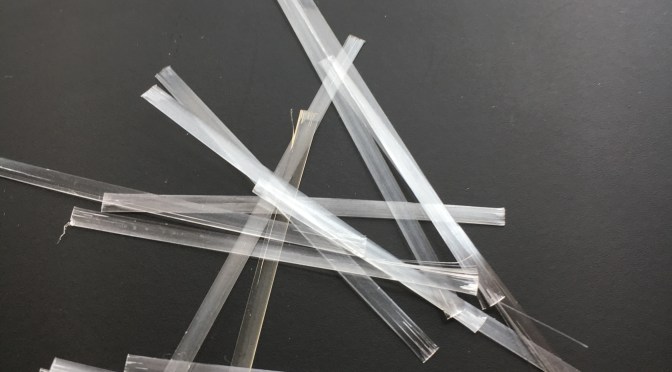
Thin pavements—in which new pavements are constructed over an existing base layer—can be an economical option for low- and moderate-volume roads. However, thinner concrete roads are prone to distress caused by weather and traffic loads. The solution, U of M researchers found, may be to add small synthetic fibers to the concrete.

Continue reading Adding fibers to concrete may help create long-lasting roads

Updated stormwater guide reflects new research, experience

Reprinted from Catalyst, December 16, 2024

Effective stormwater management is essential for maintaining healthy urban environments, but it requires consistent monitoring and maintenance to prevent costly failures—something that municipalities across the state have struggled with for years.

At a recent CTS webinarAndy Erickson, research manager at the University of Minnesota’s St. Anthony Falls Laboratory and CTS scholar, guided more than 160 attendees through recent changes made to the Minnesota Stormwater Inspection and Maintenance Resource Guide. The original guide, published in 2009, has been revised to incorporate more than a decade’s worth of field applications, research, and practical experience. The updated resource aims to improve the inspection, operation, and maintenance of stormwater management practices across the state, providing practitioners with essential tools to optimize stormwater management and increase cost-effectiveness.

Stormwater management is crucial for controlling urban runoff, and systems such as green infrastructure and low-impact development reduce pollution before stormwater is sent to lakes, rivers, and streams. However, these systems require regular upkeep to remain effective, and maintenance challenges arise from their passive nature and logistical issues in large urban areas. One key problem is the lack of on-site staff for monitoring and making the proactive inspections vital for preventing failures. Regular maintenance can reduce costs by avoiding the need for major repairs, but municipalities may still struggle to stay within their maintenance budgets, as funding for upkeep is often inadequate compared to the cost of new infrastructure.

“Since there are no operating staff on-site to see when these things fail or see what’s causing them to fail, we have to be proactive in our inspections,” Erickson said. That means inspectors must travel multiple times to locations spread out across the metro region—which significantly increases costs. “Depending on the size of the practice, your total maintenance cost might become more than your original construction cost within five years of the life of that practice,” he said. 

The 2024 update to the Minnesota Stormwater BMP Maintenance Resource Guide aims to address this issue by offering detailed instructions for inspecting and maintaining various stormwater systems. The updated guide includes inspection checklists in the form of fillable PDF documents. These checklists should streamline the inspection and documentation process and help inspectors assess site conditions, including vegetation health, erosion, and drainage performance. And the forms can be easily updated and reused, providing a practical tool for ongoing stormwater management. “The forms are not static, but rather are intended to serve as a resource that can be used and adapted to fit a jurisdiction’s particular needs,” Erickson explained.

Following items from the checklist, the guide provides specific maintenance recommendations based on inspection findings, including how to address issues such as erosion, vegetation dieback, and structural failures. 

“You can go through these to really home in on what maintenance is needed and when the maintenance is needed,” Erickson said.

The updated Minnesota Stormwater BMP Maintenance Resource Guide is now available online for download.

—Emma McIntyre, CTS communications intern

Related Resources