
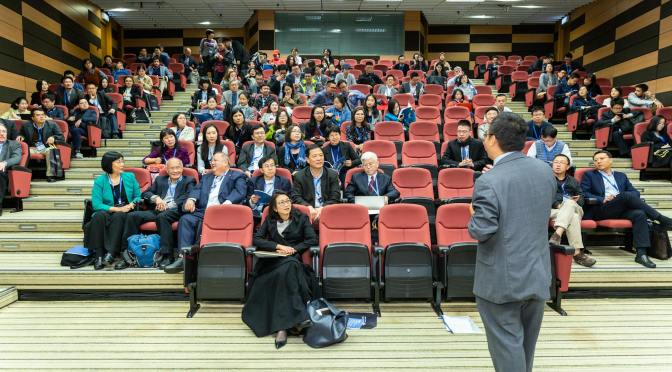
The Center for Transportation Studies at the University of Minnesota has called for speakers. If you have recently completed or participated in an innovative transportation-related research, implementation, or engagement activity, consider sharing your work in a presentation at the 2026 CTS Transportation Research Conference!
Continue reading Call for Presentations: 2026 CTS Transportation Research ConferenceTag Archives: center for transportation studies

CTS Webinar: A New System to Report School Bus Stop-Arm Violations
Wednesday, December 10, 2025
11:30 a.m.–1:00 p.m. CST
Zoom Virtual
About the Event
School bus stop-arm violations by motorists pose a serious risk to children. A new University of Minnesota study investigated the existing violation reporting ecosystem, finding issues like underreporting, underenforcing, and significant workflow inefficiencies and barriers across all stakeholder groups.
To address these systemic barriers, study researchers concluded that a centralized statewide online portal is needed to streamline communication, simplify data access, and standardize reporting. They also provided near-term recommendations until this comprehensive solution can be developed.
Join this webinar to learn about the research findings and proposed short- and long-term recommendations for improving the reporting system, with the goal of making bus stops safer for children across Minnesota and beyond
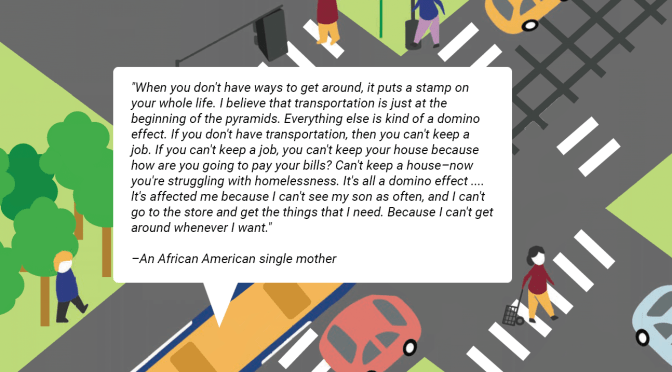
Beyond traffic: Transportation as a social construct
Reprinted from CTS News, September 8, 2025
Urban transportation is more than roads and bridges: it’s a powerful social force that shapes our lives and influences our opportunities, well-being, and even power dynamics. Consider the everyday experience of commuting to work—the route you take, the cost of the ride, and the people you encounter are all shaped by social forces. By looking at transportation through this social lens, University of Minnesota researchers are moving beyond physical infrastructure to understand its deeper impact on society.
Continue reading Beyond traffic: Transportation as a social construct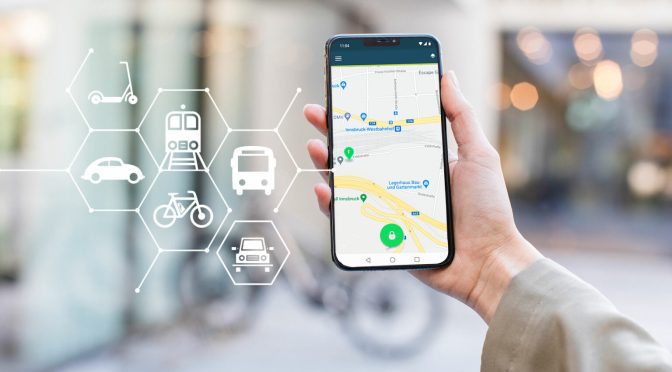
In rural Minnesota, transit planning apps could boost ridership
Reprinted from CTS News, February 11, 2025
Mobility-as-a-Service (MaaS) transit planning apps provide a simple, convenient way for transit users to plan trips, make payments, and book on-demand rides—enhancing the user experience and encouraging more transit use. While prevalent in urban areas, these apps are uncommon in rural settings.
Continue reading In rural Minnesota, transit planning apps could boost ridership
Mobile lockers, equitable freight planning, and cargo e-bikes will play roles in urban freight
Reprinted from CTS News, January 14, 2025
Freight transportation is evolving rapidly, and its future success will require managing increased residential demand, planning for equity, and incorporating micro-delivery options such as cargo e-bikes. At the 2024 CTS Transportation Research Conference, three experts shared their knowledge of these trending topics in a session focused on the future of urban freight.
In response to the increasing demand for residential package delivery spurred by the shift towards online shopping, U of M Department of Industrial and Systems Engineering PhD student Can Yin shared her research on mobile parcel locker scheduling. Yin explained that in the growing ecommerce market, last-mile delivery is the most expensive and time consuming. While door delivery is commonly used, it can be unsecure and inconvenient for customers.
“Parcel lockers are an alternative, but they come with the disadvantages of limited locations, expensive fixed cost, and the inability to adapt to varying demand,” Yin said.
A newer, more flexible alternative is the use of mobile, vehicle-based parcel lockers, which offer greater flexibility, higher accessibility, and lower fixed costs—particularly if autonomous vehicles eliminate the need for driver salaries. However, mobile parcel lockers also create challenges for e-commerce businesses such as estimating demand and customer choices.
To address these challenges, Yin’s research team developed a mobile parcel locker demand-estimation model. Additionally, the researchers found that compared with stationary lockers, mobile lockers offer a better value and demand fulfillment.
Another challenge surrounding the rapid growth of e-commerce and urban freight is racial equity in urban freight planning. In his presentation, University of Washington Urban Freight Lab researcher Travis Fried explained how his research is seeking to better understand these inequities and create a framework for mitigating them.
The past and present systems that perpetuate the segregation of people and neighborhoods have been well documented. However, Fried said there is little research exploring how these patterns play out in freight planning and their impacts on air quality, health, and road safety for people of color. Fried’s research looked at high-volume traffic exposure and found that low-income populations of color were disproportionately exposed to e-commerce traffic.
“By our most conservative estimate, BIPOC [Black, Indigenous, and people of color] populations were exposed to 35 percent more traffic related to last-mile home delivery on average, despite ordering less than half as many packages as white populations,” Fried said. That’s because delivery facilities and highways are disproportionately located near historically marginalized neighborhoods, he explained.
In light of this finding, Fried emphasized the importance of including equity considerations when prioritizing urban freight strategies. “Solutions focused on the upper end of the distribution chain have outsized benefits for marginalized communities, so we need to consider that in our cost-benefit evaluations and engagement strategies,” he added.
Using cargo e-bikes for last-mile freight delivery was the topic of the session’s final presentation from Marc Liu of Civilized Cycles. Liu explained how his company’s innovative semi-trike—which has as much cargo capacity as a small delivery van—can be used to move a significant amount of cargo over short distances, particularly within campus environments such as universities, hospitals, residential developments, and military bases.
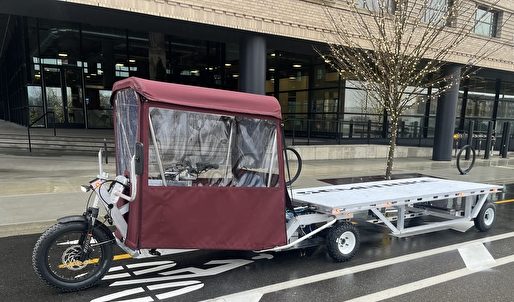
“Regardless of what these campuses are moving, they have the same core challenge of moving as much cargo as possible while keeping operating costs as low as possible,” Liu said. “On top of that, emissions and safety are key concerns because most of this happens in pedestrian-heavy areas.”
Liu explained that the first customers for the cargo e-bikes are micro-mobility fleet operators at the forefront of sustainable transportation including Lime, Net Zero Logistics, and Amazon. Moving forward, the company is targeting campus environments for expansion. Liu said that “economics drives adoption” and believes the key to adoption is offering an affordable, American-made product that reduces vehicle fleet costs, increases safety, improves efficiency, and reduces greenhouse gas emissions.
—Megan Tsai, contributing writer
Related Resources

Tribal Pedestrian Safety
A new video developed by the Center for Transportation Studies highlights a multiyear study of pedestrian safety at reservations that was undertaken by U of M researchers and partners from seven Anishinaabe tribes. The work was sponsored by the Minnesota Department of Transportation (MnDOT).
Continue reading Tribal Pedestrian Safety
Rural Needs, Statewide Answers Webinar: Living in the Middle of Everywhere
Wednesday, August 28, 2024
noon–1:00 p.m. CDT
About the Event
The notion that rural residents live “in the middle of nowhere” perpetuates a negative narrative that is not based on the reality of community life. Modern life is complex, as we live, work, shop, and play in a wide region. At the same time, most of our planning is done at a city or county level.
In this webinar, rural sociologist Ben Winchester will discuss this dynamic and its implications for tourism, marketing, transportation planning, resident recruitment, and housing. He will also review an asset-based community development exercise that can help us better understand this web of regional activity as it varies by age and interest.
The webinar is being held as part of CTS’s Rural Needs, Statewide Answers: Improving Transportation for All Communities thematic focus in 2024.
Speaker
Benjamin Winchester is a rural sociologist with the Department of Community Development at University of Minnesota Extension. Ben has been working both in and for small towns across the Midwest for over 25 years. He conducts applied research on economic, social, and demographic topics surrounding the theme of “rewriting the rural narrative.” He recently received the international Rural Renewal Research Prize in 2021 for this work. Ben lives in St. Cloud, Minnesota, with his wife and two children.
Registration
This webinar is free to attend, but registration is required. Once you have registered, you will receive an email confirmation with a Zoom link. The link should not be shared with others; it is unique to you.
Please let us know how we can ensure that this webinar is inclusive to you. What accommodations or access needs can we help facilitate? Contact Samantha Hahn-Douville at snhahn@umn.edu when you register to help us provide you with the best access.
If you’re unable to join us for the live broadcast, a recording will be available on the CTS website after the event.
Questions?
Please contact Samantha Hahn-Douville at snhahn@umn.edu.
Transportation challenges for aging rural populations
Reprinted from Catalyst, June 11, 2024
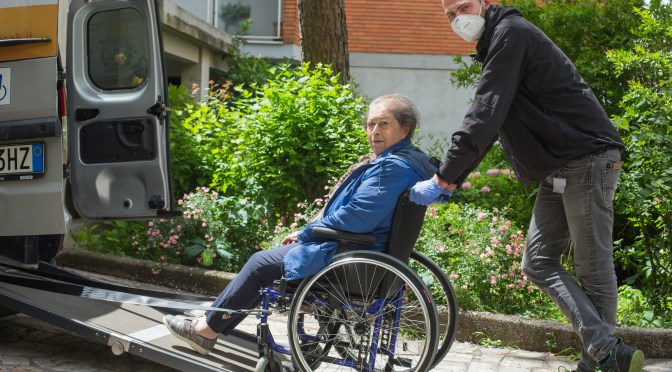
During the past century, a person’s average lifespan has increased dramatically. However, this significant “longevity bonus” has also led to challenges, including how to maintain mobility for an aging population.
Continue reading Transportation challenges for aging rural populations
TZD Traffic Safety Hotdish: A Roadmap for Traffic Safety Culture Research and the Road Ahead
Wednesday, July 17, 2024
10:00 – 11:15 a.m. CDT
About the Event
This free virtual event will highlight the Traffic Safety Culture Research Roadmap, recently released by the National Academies of Sciences, Engineering, and Medicine.
Wes Kumfer, who led the creation of the roadmap, will review its development and contents. Jay Otto will share example projects and show how they fit into research on traffic safety culture. Join us to learn how you can identify traffic safety culture research needs and get insights to take back to your own organizational cultures!
Speakers
Dr. Wes Kumfer is an engineering research associate at the UNC Highway Safety Research Center (HSRC) with a focus on crash analysis and workforce development. His primary research interest is traffic safety management through a systems-oriented approach. While at HSRC, Kumfer has worked on pedestrian crash modeling, Safe System implementation, and engineering evaluation. He uses this experience as a member of the Road to Zero Coalition steering group and as an instructor for HSRC’s Road Safety Academy.
Jay Otto is a researcher and co-director for the Center for Health and Safety Culture at Montana State University. He received a bachelor’s and master’s degree in engineering and is fascinated by human behavior, how mindsets and systems influence behavior, and ways of growing cultures within communities and organizations that foster improved health and safety.
Registration
The webinar is free to attend, but registration is required. Once you have registered, you will receive an email confirmation with a Zoom link. The link should not be shared with others; it is unique to you.
Credit
Attendees are eligible for 1.25 Professional Development Hours (PDHs). Download the PDH credit form (PDF) for your records.
More Information
Contact Linda Dolan at ldolan@umn.edu.
Sponsors
This event is offered by the Minnesota Toward Zero Deaths Program and the Minnesota Departments of Health, Public Safety, and Transportation, with funding from the National Highway Traffic Safety Administration. It is hosted by the University of Minnesota’s Center for Transportation Studies.
Managing Stormwater in a Changing Climate Will Require Updates to Minnesota’s Infrastructure
Reprinted from CTS News, March 21, 2024
—Sophie Koch, contributing writer
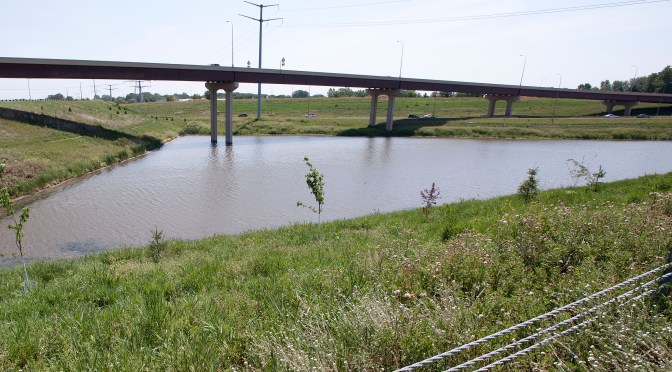
Changing precipitation patterns caused by the onset of climate change mean that Minnesota’s stormwater management systems—the ponds, pipes, and other structures meant to control runoff in the event of a heavy rainstorm—are going to need an upgrade.
Continue reading Managing Stormwater in a Changing Climate Will Require Updates to Minnesota’s Infrastructure Crossroads