

Vehicle speeds, type of pedestrian, road characteristics and other variables can impact whether drivers yield to pedestrians attempting to cross a road at an unsignalized intersection. An analysis of data collected from 18 intersections identified human and site attributes that correlate to higher rates of driver yielding. Knowledge of these potentially influential factors will help local engineers build safer crossings at intersections.
Continue reading Understanding Factors That Influence Driver Yielding to Pedestrians
Enhancing Public Transit with Autonomous Mobility Service to Cover the “Last Mile”
The benefits of public transportation, including reducing individual vehicle use and traffic congestion, aren’t always optimized beyond densely populated urban settings. While transit may extend to more suburban or rural areas, land development patterns can make it challenging for people to reach their destinations by transit alone. Pairing transit with an autonomous mobility service is a potential solution. Researchers assessed transportation needs in a suburban shopping area and developed a system designed to deliver passengers from the end of a transit line to their ultimate destination. Simulations of the autonomous mobility service revealed its potential to increase transit efficiency and reduce individual vehicle use.
Continue reading Enhancing Public Transit with Autonomous Mobility Service to Cover the “Last Mile”
Finding High-Performing Aggregate Bases for Long-Lasting Pavement
Two county roads provided a testing ground for three combinations of aggregate bases and asphalt binders. Results from more than two decades of research and monitoring of pavement test sections validated previous conclusions. A larger gradation aggregate base showed superior performance over the pavement life cycle when compared with the standard aggregate base. Additionally, sections constructed without transverse joints to allow natural thermal cracking outperformed sections with sawn and sealed joints.
Continue reading Finding High-Performing Aggregate Bases for Long-Lasting Pavement
Effectively Alerting the Public About Local Road Closures
Navigation apps can be valuable timesavers for drivers in Minnesota. To maximize their use, these apps need traffic information that is timely and accurate. While state highway closures are reported effectively, reporting road closures on local roads and highways is inconsistent. This project aimed to improve local road closure reporting by exploring the development of a streamlined reporting system and creating guidance for reporting local road closures to third-party navigation apps.
Continue reading Effectively Alerting the Public About Local Road Closures
Webinar: Autonomous Technology in Transportation Maintenance Operations
Wednesday, May 8, 2024, 12:00–1:30 pm, Virtual
About the Event
This webinar will explore the use of autonomous technology to support worker safety in transportation maintenance operations. Presentations will highlight:
Continue reading Webinar: Autonomous Technology in Transportation Maintenance Operations
Will Hydrogen Be a Carbon-Neutral Fuel Alternative for Freight?
Reprinted from CTS News, March 19, 2024
—Sophie Koch, contributing writer
Hydrogen is getting a lot of attention in recent years as a potential fuel source in the transportation sector. However, it is important to consider the pros, cons, and limitations of this molecule when deciding how to use it.
Continue reading Will Hydrogen Be a Carbon-Neutral Fuel Alternative for Freight?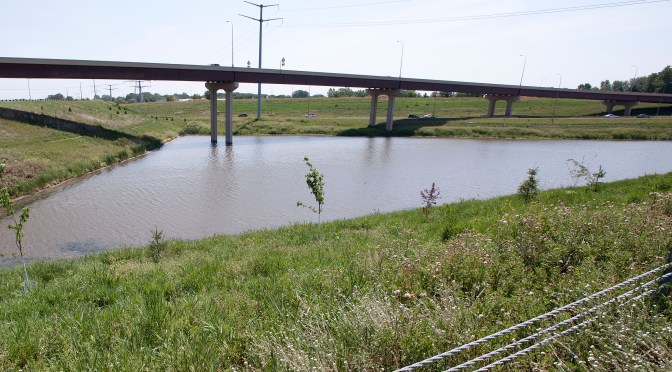
Managing Stormwater in a Changing Climate Will Require Updates to Minnesota’s Infrastructure
Reprinted from CTS News, March 21, 2024
—Sophie Koch, contributing writer
Changing precipitation patterns caused by the onset of climate change mean that Minnesota’s stormwater management systems—the ponds, pipes, and other structures meant to control runoff in the event of a heavy rainstorm—are going to need an upgrade.
Continue reading Managing Stormwater in a Changing Climate Will Require Updates to Minnesota’s Infrastructure
New Project: Utilizing Arts & Culture to Mitigate Construction Impacts
Can placemaking, temporary art, community or cultural events support quality of life and help offset the negative impacts of road construction?
Continue reading New Project: Utilizing Arts & Culture to Mitigate Construction Impacts
New Project: Improving and Developing Pavement Design Inputs and Performance Functions for Cold Recycled Pavement Layers
Local agencies in Minnesota use cold recycling technologies for flexible pavement rehabilitation because of their economic and environmental benefits. The three main methods are cold in-place recycling (CIR), cold central plant recycling (CCPR), and stabilized full-depth reclamation (SFDR).
Continue reading New Project: Improving and Developing Pavement Design Inputs and Performance Functions for Cold Recycled Pavement Layers
Rural Needs, Statewide Answers: Demographics, Health Care Access, and Community Engagement
Monday, May 13, 2024, 9:00–11:30 am, In Person
Join CTS for their annual all councils meeting to explore topics related to CTS’s 2024 theme of Rural Needs, Statewide Answers: Improving Transportation for All Communities.
The event is free to attend, but registration is required. Please register by Friday, April 26.
Continue reading Rural Needs, Statewide Answers: Demographics, Health Care Access, and Community Engagement Crossroads