

Wednesday, May 31, 2023
10:00 a.m.–11:30 a.m. Central
Category Archives: Policy and Planning
Future of Mobility: Decarbonized transportation
April 26, 2023
The Future of Mobility series collects the perspectives of top U researchers and other national experts. In 17 articles, the authors scan the horizon and reflect on critical transportation topics. Each article recommends action steps for public officials and policymakers.
Continue reading Future of Mobility: Decarbonized transportation
Short Films, Big Visions: Transportation-themed films spark conversation about community connections
April 4, 2023
Dozens of community members and transportation advocates tuned in to “Short Films, Big Visions: A Series on Transportation and Community” on February 23. Co-hosted by CTS and the Humphrey School of Public Affairs, the virtual event featured a screening of short films produced by the Redford Center for its “Community Power” series followed by an engaging panel discussion.
Continue reading Short Films, Big Visions: Transportation-themed films spark conversation about community connections
New book: Space, Structures, and Design in a Post-Pandemic World
A new book—Space, Structures, and Design in a Post-Pandemic World—explores the rebalancing of our physical and digital interactions and what it means for the built environment going forward.
Continue reading New book: Space, Structures, and Design in a Post-Pandemic WorldNew revenues needed to fill transportation funding gap
What’s next in transportation?
The Future of Mobility series collects the perspectives of top U researchers and other national experts. In 17 articles, the authors scan the horizon and reflect on critical transportation topics. Each article recommends action steps for public officials and policymakers.
Continue reading New revenues needed to fill transportation funding gapRefocusing Transportation Decision Making
Monday, May 1, 2023
9:30 a.m.–11:30 a.m. Central
Center for Transportation Studies
AI Johnson Room
McNamara Alumni Center
Minneapolis, MN
COVID’s Effects on Public Transportation Use and Perceptions
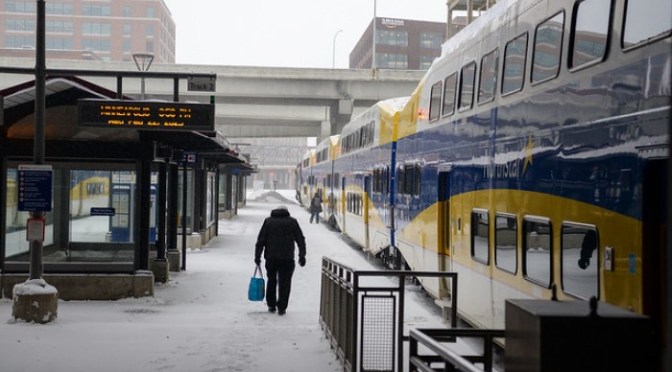
How has the pandemic affected downtown commuters’ travel behavior and perceptions of public transportation?
The COVID-19 pandemic has taken a major toll on public transit ridership—raising questions for the future. Will people associate public transportation with health and safety risks and avoid using it? Will they see public transportation as a less desirable transportation alternative?
Continue reading COVID’s Effects on Public Transportation Use and PerceptionsGuidance to Help Local Agencies Address Deferred Maintenance
Local government budgets are continually inadequate to meet increasing transportation maintenance needs. In a recent study, researchers analyzed maintenance investment decision-making in local governments across Minnesota, identifying the fiscal conditions that impact road repair spending, recommending steps to close maintenance funding gaps and providing context to inform communications with decision-makers.
Continue reading Guidance to Help Local Agencies Address Deferred Maintenance
EV System Impacts
Model helps analyze EV system impacts, evaluate policies for subsidies and charging
Electric vehicles (EVs) are expected to capture a substantial portion of the future vehicle market. In the short term, however, technology and infrastructure limitations—such as driving range and charging availability—will prevent transition on a large scale. Because EVs will share the road network with gasoline vehicles (GVs), says Alireza Khani, “it’s crucial to understand how EVs and GVs will coexist.”
Continue reading EV System Impacts
Are we ready for CAVs?
Thousand-mile trek collects data on Minnesota’s readiness for automated vehicles
How ready is Minnesota for connected and automated vehicles (CAVs)? Last August, researchers took a four-day, 1,086-mile trip around the state to find out. A newly published report details the team’s findings for transportation professionals and agencies as they consider how to make improvements to our transportation infrastructure for automated vehicles and driving.
Continue reading Are we ready for CAVs?
