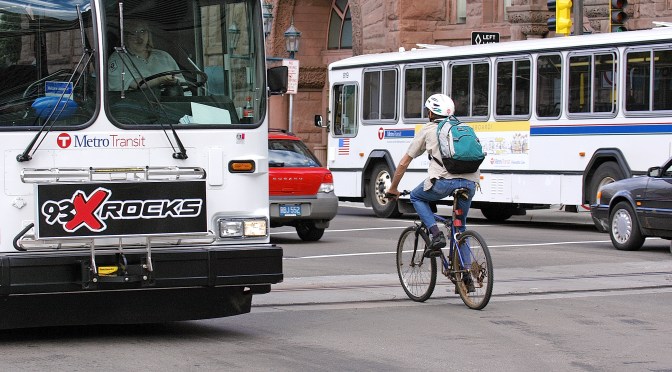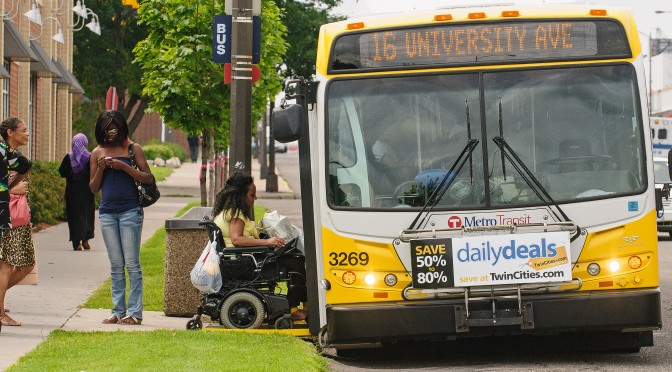
Historically, equity has not been a primary objective in the transportation infrastructure investment planning process. By effectively incorporating equity into the process, underserved communities and Native nations can realize increased benefits from transportation improvements. This research explored effective strategies for incorporating equity in transportation capital investment planning and provides guidance to transportation agencies, planning organizations and Native nations.
Continue reading Increasing Equity in Transportation InvestmentsCategory Archives: Policy and Planning
The winding road to an electric fleet
Reprinted from CTS News, November 24, 2025
Even for cities, counties, and organizations with zero-carbon emissions goals, most fleet managers are skeptical about going fully electric. Calculating the return on investment for a single vehicle is straightforward—but for a fleet, it’s complex.
Continue reading The winding road to an electric fleetCTS Webinar: Preparing Transportation Professionals for AI Integration
Monday, December 15, 2025, 12:00–1:30 pm (Virtual)
About the Event
Artificial intelligence (AI) is rapidly reshaping how we design, plan, and manage infrastructure systems. In this webinar, CTS scholars Qizhi He and Seongjin Choi from the University of Minnesota’s Department of Civil, Environmental, and Geo- Engineering will discuss how AI tools are beginning to influence teaching, research, and professional practice in civil engineering. Their conversation will consider how the field can adapt curriculum and training to prepare future engineers for an AI-integrated profession. They will also explore questions around quality management, professional ethics, and community-centered design in an AI-driven context.
Offering a practitioner’s perspective, Melissa Barnes will share insights from MnDOT’s ongoing AI pilot identification project. She will discuss how state agencies are evaluating opportunities and risks associated with AI implementation—and engaging and educating their staff about AI.
This webinar will highlight opportunities for collaboration between academia and practice as the transportation industry navigates the evolving impacts of AI on engineering education, quality assurance, and workforce development.
Speakers
Qizhi He is an assistant professor in the Department of Civil, Environmental, and Geo- Engineering at the University of Minnesota (UMN) and a CTS scholar. Before joining the UMN, he was a postdoctoral researcher in the Scientific Machine Learning Group at Pacific Northwest National Laboratory. His research focuses on developing hybrid physics–AI/ML computational methods for predictive modeling and the simulation of complex mechanical behavior in civil and geomaterials under extreme and multiphysics conditions. His work aims to advance next-generation, high-performance computing and digital-twin technologies that enhance infrastructure resilience and support natural hazard mitigation.
Seongjin Choi is an assistant professor in the Department of Civil, Environmental, and Geo- Engineering at the University of Minnesota and a CTS scholar. Choi was previously a postdoctoral researcher at McGill University in Canada and Korea Advanced Institute of Science and Technology in South Korea. His research focuses on developing machine learning and (generative) artificial intelligence models for transportation and mobility data, with the goal of enhancing both individual-level travel experiences and system-level performance.
Melissa Barnes is the Operations Division artificial intelligence program manager (mobility) at MnDOT and a licensed civil engineer with more than 21 years of experience in transportation. She has worked at MnDOT for more than 12 years, including positions in Central Office and the Metro District. Her expertise spans program delivery, traffic engineering, planning, safety, operations, project management, policy, and cross-functional leadership, and she is known for her commitment to equity and collaboration.
Registration
This webinar is free, but registration is required. Once you have registered, you will receive an email confirmation with a Zoom link. The link should not be shared with others; it is unique to you.
More information
Visit the CTS website or contact Samantha Hahn-Douville at snhahn@umn.edu.
If you’re unable to join us for the live broadcast, a recording will be available here after the event.
TRB Webinar: Connected Mobility Futures—Integrating Transit and Technology
Dec 16, 2025, 12 PM – 1:30 PM CST (1:00PM – 2:30PM ET)
Pre-registration is required.
Public transit agencies are reimagining mobility through innovation, integration, and technology to create seamless travel experiences and improve access for all users. TRB will host a webinar on Tuesday, December 16, 2025 from 1:00 PM to 2:30 PM Eastern that will highlight strategies and technologies transforming the future of connected mobility. This session will explore how public agencies and technology partners are addressing fragmented systems through open platforms, integrated trip planning, and seamless fare payment, drawing on lessons from the Federal Transit Administration’s Integrated Mobility Innovation (IMI) and Accelerating Innovative Mobility (AIM) programs. Attendees will also gain insights into how Mobility-as-a-Service (MaaS) and Autonomous Mobility-on-Demand (AMoD) can expand access, improve service efficiency, and rebuild ridership. Presenters will share real-world examples, research, and lessons learned to help agencies advance scalable, user-centered transportation systems.
Continue reading TRB Webinar: Connected Mobility Futures—Integrating Transit and TechnologyMitigating the Negative Effects of Spaghetti Junctions
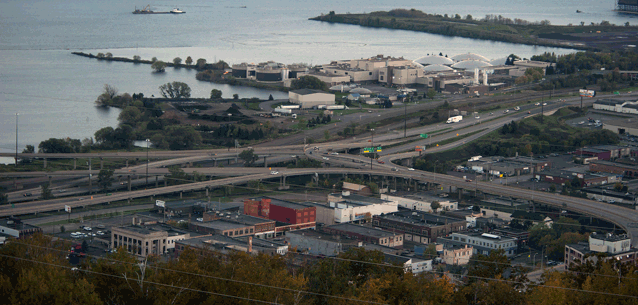
Complex highway interchanges in large metropolitan areas, also referred to as spaghetti junctions, have contributed greatly to enhancing vehicular connectivity and spurring economic growth. But the benefits of this built infrastructure are not evenly distributed, and neighborhoods near these highways are often negatively impacted. This project explored strategies used by other states to mitigate the consequences of spaghetti junctions that MnDOT could implement to improve conditions and livability for similar neighborhoods in Minnesota.
Continue reading Mitigating the Negative Effects of Spaghetti JunctionsCTS Webinar: Innovations for Energy-Efficient Transportation
Thursday, November 13, 2025, 12:00–1:30 pm Virtual
About the Event
Transportation is one of the largest sources of greenhouse gas emissions in the U.S., and reducing those emissions is key to tackling the climate crisis. New technologies—from eco-friendly navigation apps to connected and automated vehicles—offer exciting opportunities to make our transportation system cleaner and more energy efficient. But these tools can also create unexpected challenges, such as increased traffic congestion or higher overall emissions, if not carefully designed.
In this webinar, researchers will share new approaches to smarter routing and vehicle technology that can lower energy use and reduce emissions. Join us to learn how innovations in navigation, automation, and vehicle control could help shape a more sustainable future.
Speakers
Zongxuan Sun is a professor in the Department of Mechanical Engineering at the University of Minnesota. He is an expert on dynamic systems and control with applications in automotive propulsion systems. He worked at the General Motors Research Center for seven years prior to joining the University in 2007. His research work includes system modeling, control theory, building unique instruments, and testbeds for experiments.
Michael Levin is an associate professor in the Department of Civil, Environmental, and Geo- Engineering at the University of Minnesota and a CTS scholar. His research focuses on modeling connected and automated vehicles and intelligent transportation systems to predict and optimize how these technologies will affect travel demand and traffic flow. Levin is specifically interested in using traffic flow, transportation network analysis, and operations research methods to study these new technologies and their effects on cities.
Registration
This webinar is free, but registration is required. Once you have registered, you will receive an email confirmation with a Zoom link. The link should not be shared with others; it is unique to you.
Credit
Attendees are eligible for Professional Development Hours (PDHs) and American Institute of Certified Planners (AICP) certification maintenance credits.
More information
For more information or to request support, go to complete announcement on the Center for Transportation Studies website.
Related MnDOT Research Projects
- Influence of Autonomous and Partially Autonomous Vehicles on Minnesota Roads
- Generating Traffic Information from Connected Vehicle V2V Basic Safety Messages
- Cost/Benefit Analysis of Fuel Efficient Speed Control Using Signal Phasing and Timing (SPaT) Data: Evaluation for Future Connected Corridor Deployment
- Towards Implementation of Max-Pressure Signal Timing on Minnesota Roads
- School Times Impact on Students Walking or Biking to School: Safe Routes to School
- Development and Demonstration of a Novel Red Light Running Warning System Using Connected v2i Technology
- A Novel Red Light Running Warning System Using Connected v2i Technology, Phase 2: Driver Testing on Public Roads (ongoing)
- Impacts of Shared Mobility on Infrastructure usage, Greenhouse Gas Emissions, and Accessibility (ongoing)
- Comparative Analysis of Grade-Separated Pedestrian Infrastructure and At-grade Treatments (ongoing)
- Bike infrastructure planning based on mobile-sourced data and anticipated route shifts (ongoing)
Minnesotans geared up for e-bike rebates. Now data reveals more about them
Republished from CTS News (Catalyst) for October 14, 2025
More than 14,600 Minnesota residents applied for a rebate through the state’s e-bike rebate program when it launched in 2024. Established by the Minnesota Legislature to help reduce the cost of buying a new e-bike, the program was so popular that within minutes of opening in June 2024, the number of applicants overwhelmed the system and crashed the website. The state was forced to fix the technology challenges and reopen the application about a month later.
The scenario drove researchers at the University of Minnesota to dig deeper into the data about who applied for the rebate in the first year. Their project aims to shed light on who benefitted from the program, get feedback on the application process, and learn more about rebate use.
E-bikes, which operate like a bicycle but have an electric battery and motor for pedaling assistance, have increased in popularity in recent years, and supporters are promoting their potential as a sustainable transportation option. The state legislature allocated $2 million in both 2024 and 2025 for the rebate program.
“Minnesotans seem to have an appetite to get an e-bike, whether that’s because of the state’s incentive or for other reasons—including that Minnesota has some of the best bike infrastructure around,” says Kaitlyn Denten, a researcher with the Humphrey School’s Institute for Urban and Regional Infrastructure Finance (IURIF) and project co-lead.
For the first part of this project, researchers analyzed rebate applicant data, which included demographic information, income level, tax filing status, and ZIP code but no personal identifiers. Data also included a person’s rebate application status, the rebate amount, and whether the applicant used the rebate to purchase a new e-bike.
In the program’s first year, the maximum rebate was $1,500; individual amounts depended on an applicant’s income level and tax filing status. People who applied for and received a rebate certificate could purchase their e-bike and eligible bike accessories from a participating retailer. Of the total applicants, 1,519 people received a rebate and 1,327 used one to purchase an e-bike. According to the data, half of the rebates went to households earning less than $75,000 a year.
The Twin Cities seven-county metro area had strong representation, with 66 percent of applicants, 67 percent of recipients, and 66 percent of rebate users coming from the metro area. The average age of applicants was 49 years old.
For the project’s second part, researchers used an online survey to collect feedback on the application process and information about how people who received a rebate were using their e-bike, among other data. The survey, which was available between March 17, 2025, and April 5, 2025, received nearly 4,500 responses.
Of the survey respondents, 3,920 individuals applied for a rebate, 496 received a rebate, and 455 used the rebate to purchase an e-bike. For those who received a rebate but didn’t use it, among the reasons cited were that the rebate didn’t cover enough of the e-bike’s cost and the rebate certificate expired before they were able to use it.
One surprising finding: Some people bought an e-bike even if they didn’t receive a rebate, says CTS scholar Camila Fonseca-Sarmiento, IURIF director of fiscal research and project co-lead. “Or, if a couple received a rebate, they ended up buying two e-bikes. This could be spurring the use of e-bikes instead of personal vehicles.”
Many survey respondents expressed frustration with the initial application process, referring to the technical glitches, long wait times, and unclear instructions. Several respondents did note, however, that the second application round ran more smoothly.
Some respondents also raised concerns about the fairness of the program’s rollout, pointing to barriers faced by people with limited internet access and electronic devices, people with disabilities, and people with inflexible work schedules (the application period opened on a weekday).
Future research should focus on the effects of 2025 program changes, including income eligibility, application processes, and rebate amount, the researchers say. In addition, researchers noted that a statewide travel study could help assess how rebates might influence a shift from personal vehicle use to an e-bike, a question left unanswered because of limited e-bike use among current rebate recipients.
This research project was sponsored by the Applied Research in Transportation (ART) Program, which addresses time-sensitive research questions in a 6 to 12 month timeframe. CTS and the Minnesota Department of Transportation contributed initial funding to launch this pilot program in 2024, with the Metropolitan Council joining in 2025. To reinforce the applied nature of the program, ART projects must directly address a current process, document, or policy need with an initial focus on sustainability in transportation and climate change impacts.
—Peter Raeker, contributing writer
Related Research from MnDOT
Operational Characteristics of Conventional and Electric-Assisted Bicycles and Their Riders (ongoing)
Assessing the Economic Impact and Health Benefits of Bicycling in Minnesota
Increasing Service Reliability by Adding a Dedicated Right of Way for Buses
In dense urban areas, public transit is a primary mode of transportation for people to commute to work, complete errands and connect with their community. If transit is not reliable, riders may choose other forms of transportation that could negatively affect riders, transportation agencies and communities. To improve service reliability, MnDOT investigated the use of dedicated rights of way (ROWs) for transit service across route segments within the system.
Continue reading Increasing Service Reliability by Adding a Dedicated Right of Way for BusesRefining Max-Pressure Traffic Signal Control to Improve Traffic Flow
Effective traffic signal control technologies facilitate optimal traffic flow and travel time. Building on previous research, this project made significant progress toward field implementation of a novel adaptive signal control technology. This research phase demonstrated the max-pressure traffic signal algorithm can successfully integrate into Hennepin County traffic signal hardware and respond to changing traffic conditions in real time, providing confidence to move to the next step and test the system in the field.
Continue reading Refining Max-Pressure Traffic Signal Control to Improve Traffic FlowExamining off-peak transit behaviors to improve transit equity
Originally published in Catalyst, February 19, 2025
Transit service planning has traditionally focused on peak trips and the needs of “rush hour” commuters rather than off-peak travel. Often, off-peak trips are taken by shift-based essential workers and those who cannot or do not drive. The COVID-19 pandemic further underscored the need for a closer examination of these trips to improve social equity.
Continue reading Examining off-peak transit behaviors to improve transit equity