Category Archives: Multi-modal

‘Transportation Insecurity’: A New Metric to Evaluate Programs and Guide Decision Making

Reprinted from CTS News, December 7, 2023
—Sophie Koch, contributing writer

Reliable transportation has a huge impact on quality of life. Many Americans, however, are unable to travel where and when they need to go, and policymakers lack tools to measure the extent of the problem. 

Continue reading ‘Transportation Insecurity’: A New Metric to Evaluate Programs and Guide Decision Making

Improving Driver Yielding to Pedestrians at Intersections

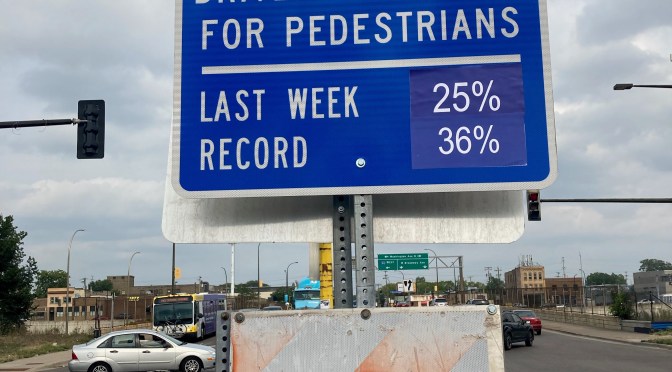
Improving the rates of drivers yielding to pedestrians has been challenging despite crosswalk laws. Expanding on an earlier study, researchers further explored the effectiveness of engineering treatments at road crossings, giving agencies a deeper understanding of how to maximize pedestrian safety.

Continue reading Improving Driver Yielding to Pedestrians at Intersections

COVID-19 pandemic substantially changed commuting patterns, job access

Reprinted from CTS News, October 9, 2023

Patterns of movement in cities, especially office job commutes, were substantially altered in 2021 by telework, economic change, and other responses to COVID-19, according to new research from the Accessibility Observatory at the University of Minnesota. While the immediate effects of these behavioral changes, such as reduced congestion and lower transit ridership, have been well documented, new data reveals deeper impacts that differ by the three modes studied: auto, transit, and biking.

Continue reading COVID-19 pandemic substantially changed commuting patterns, job access

Designing Pedestrian Safety Features for Year-Round Maintenance

Pedestrian safety countermeasures near roadways require year-round maintenance to be effective. Clearing snow and ice has not generally been a design consideration for safety treatments, but new research has identified specific design criteria to help MnDOT and other agencies keep walkways clear without impeding maintenance efforts.

Continue reading Designing Pedestrian Safety Features for Year-Round Maintenance

On the Road to Somewhere

Measuring access to opportunities is the future math of mobility.

In December 2022, Twin Cities policymakers and planners celebrated the opening of the D Line, the latest bus rapid transit project by Metro Transit. The new line strengthened the spine of service running north-south through the urbanized core of the region: from Brooklyn Center, following Minneapolis’ long axis to the south, through the gridded suburbs of Richfield and Bloomington all the way to the Mall of America. Largely replacing Minnesota’s single busiest bus route (Route 5), the D Line features expanded high-frequency hours, higher-capacity vehicles, and improved trip speeds. The D Line represents the best of local transit service, an undoubtable improvement for the mobility of transit riders. 

Continue reading On the Road to Somewhere

Strengthening Communities with Innovative Right of Way Projects

When urban highway projects were built several decades ago, many thriving communities were physically divided and negatively impacted, experiencing social, economic and environmental hardships from highway development. A national review of innovative projects in the transportation right of way (ROW) has identified strategies for repairing and revitalizing these communities and illustrates the potential for significant benefits within communities and the transportation network.

Continue reading Strengthening Communities with Innovative Right of Way Projects

Researchers Identify Freight Data Sources, Create Guidance to Aid Infrastructure Planning

The goods that continuously move through Minnesota by road, rail, air, water, and pipelines drive the state’s economy, making efficient freight transit—and excellent freight infrastructure—a high priority for the Minnesota Department of Transportation (MnDOT).

Continue reading Researchers Identify Freight Data Sources, Create Guidance to Aid Infrastructure Planning

Model Helps Identify Strategic Sites for Truck Charging Stations

An influx of electric trucks is expected on our highways, but where will they charge? Few public stations today can serve large freight vehicles. The challenge? Fast chargers are expensive, and new ones need to be placed strategically to keep pace with growing demand.

Continue reading Model Helps Identify Strategic Sites for Truck Charging Stations