

Pavement markings contain glass media to provide retroreflectivity. These markings are slipperier than surrounding pavement. The sudden difference in friction between pavement and pavement markings can create a safety hazard for pedestrians (including those with disabilities), bicyclists and motorcyclists, especially during wet conditions.
Continue reading New Project: Pavement Marking/Colored Pavement Friction Differential and Product DurabilityTag Archives: new project

New Project: Benefits of Preventive Concrete Pavement Maintenance
Early preventive maintenance of concrete pavement—maintenance performed in the first five to seven years of pavement life—is a low-cost way to increase pavement service life. But no quantitative evaluations of service life extension have been conducted that compare early intervention to late or no intervention.
Without these comparisons, meaningful determinations of pavement life extension operations cannot be made. Federal Highway Administration (FHWA) research has found that agency projects focused on the end-of-service life may redirect funds from rehabilitation projects that could improve overall system quality.
Continue reading New Project: Benefits of Preventive Concrete Pavement Maintenance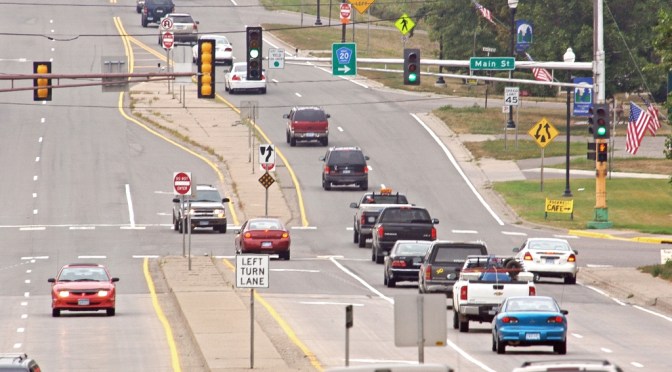
New Project: Performance Evaluation of Detection Technologies for Signalized Intersections in Minnesota
Intersections can be controlled through pretimed systems or vehicle-actuated systems, which detect the presence of a vehicle. Good vehicle detection is the foundation of actuated systems. While loop detectors have been effective workhorses of vehicle detection for MnDOT, changes in vehicle fleets—for example, the use of nonferrous materials—and an increased need to detect vulnerable road users has resulted in an increased use of nonintrusive detection technologies (NIT).
Continue reading New Project: Performance Evaluation of Detection Technologies for Signalized Intersections in Minnesota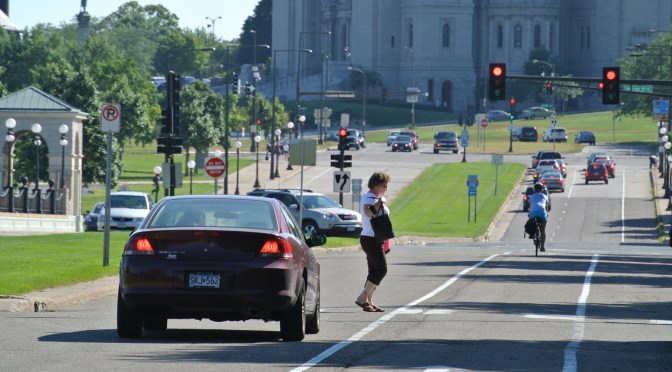
New Project: Mobile-Device Data, Non-Motorized Traffic Monitoring, and Estimation of Annual Average Daily Bicyclist and Pedestrian Flows
Understanding pedestrian and bicyclist flows is vital to distributing a limited construction budget to new infrastructure for improved safety on specific roads. Unfortunately, statewide data collection for active transportation flows is challenging.
MnDOT and local agencies historically have lacked estimates of bicycle and pedestrian traffic on Trunk Highways and County State Aid Highways.
Since about 2016, MnDOT has begun monitoring bicycle and pedestrian flow at more than 25 locations across the state, but, given the small number of counters and the variability of flows in response to variations in weather across Minnesota, these monitoring data are insufficient for estimation of Annual Average Daily Bicyclists and Annual Average Daily Pedestrians.
One option for obtaining travel data without expensive infrastructure is relying on mobile data collection.
Continue reading New Project: Mobile-Device Data, Non-Motorized Traffic Monitoring, and Estimation of Annual Average Daily Bicyclist and Pedestrian Flows
New Project: Influence of Autonomous and Partially Autonomous Vehicles on Minnesota Roads
As autonomous vehicles (AVs) become increasingly more numerous on roadways, they have the potential to substantially alter traffic flow. New vehicles today have many driver-assisting (or SAE Level 1) features—such as adaptive cruise control, parking assistance, collision avoidance, emergency braking and lane-keeping assistance—which still require a hands-on driver. However, as technology advances toward eventual SAE Level 4 automation, vehicles will be able to function without drivers, which will likely change the shape of traffic flow.
Continue reading New Project: Influence of Autonomous and Partially Autonomous Vehicles on Minnesota Roads
New Project: Identifying and Optimizing Electric Vehicle Corridor Charging Infrastructure for Medium- and Heavy-Duty Trucks
Transportation is the number one emitter of greenhouse gas emissions in Minnesota and medium to heavy duty trucks contribute to about 40% of transportation carbon pollution.
While electric cars and buses are becoming more common, medium and heavy duty electric trucks are still in their infancy, and the nationwide infrastructure needs to support them still has to be determined.
In a new study, MnDOT will identify the electric charging infrastructure needed along Minnesota highway corridors to support clean freight transportation.
Continue reading New Project: Identifying and Optimizing Electric Vehicle Corridor Charging Infrastructure for Medium- and Heavy-Duty Trucks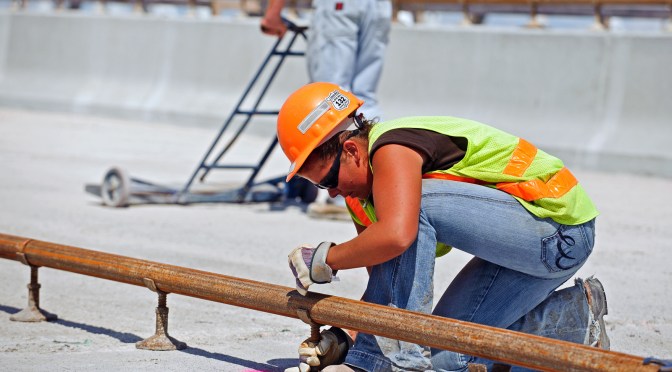
New Project: Understanding How the Disparate Effects of COVID-19 are Affecting MnDOT’s Efforts at Equitable Contracting
MnDOT’s Disadvantaged Business Enterprise (DBE) Program was established by the federal government to ensure women-owned and minority-owned businesses have the opportunity to participate in MnDOT contracts.
Several contracting barriers exist for DBEs, which may have been exacerbated by COVID-19, such as access to capital, a shortage of PPE materials and staffing shortfalls due to workplace risks and caregiving responsibilities.
Continue reading New Project: Understanding How the Disparate Effects of COVID-19 are Affecting MnDOT’s Efforts at Equitable Contracting
New Project: Telecommuting During COVID-19: How Does It Shape the Future Workplace and Workforce?
In response to the COVID-19 pandemic, many employees in both the public and private sectors have begun telecommuting. The resulting reduction in commuting hours and miles traveled on state highways has been staggering.
Continue reading New Project: Telecommuting During COVID-19: How Does It Shape the Future Workplace and Workforce?
New Project: COVID-19 Impacts on Speed and Safety for Rural Roads and Work Zones
Although Minnesotans drove significantly less in 2020 due to the COVID-19 pandemic, there was a substantial increase in fatal motor vehicle crashes. MnDOT Traffic Safety Engineer Derek Leuer and his colleagues want to know why, particularly in rural areas where fatalities and injury rates were higher.
Continue reading New Project: COVID-19 Impacts on Speed and Safety for Rural Roads and Work Zones
New Project: What COVID Travel Reductions Tells Us About Effective Congestion Relief
As Minnesota worked to slow the transmission of COVID-19 in 2020, travel on MnDOT roadways dropped sharply and carried with it a corresponding drop in congestion.
Continue reading New Project: What COVID Travel Reductions Tells Us About Effective Congestion Relief Crossroads