
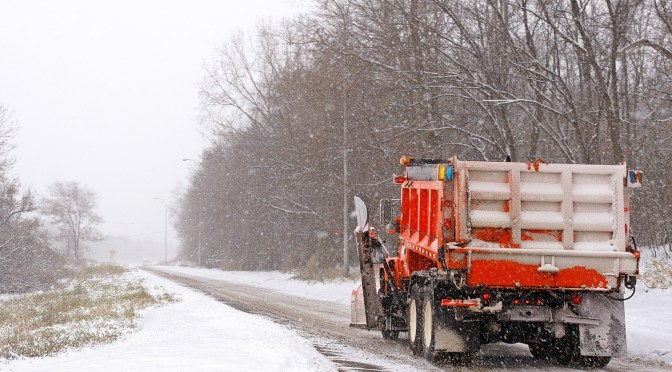
MnDOT uses alternative deicer brines containing potassium chloride, magnesium chloride and calcium chloride for winter road maintenance. The alternatives are more effective in melting roadway ice than sodium chloride alone when temperatures are below 15 degrees Fahrenheit.
Continue reading New Project: Alternative Deicer Performance Characterization: Know Before the SnowTag Archives: new project

New Project: Quantify the Benefits of Using Geotextiles and Geogrids to Improve the Performance of Unbound Pavement Layers
MnDOT uses geosynthetic materials to stabilize or reinforce road pavements. Various types of geosynthetics help maintain separation between pavement layers, improve drainage and prevent erosion.
Continue reading New Project: Quantify the Benefits of Using Geotextiles and Geogrids to Improve the Performance of Unbound Pavement Layers
New Project: Assessing Effectiveness of Pond Sediment Removal for Phosphorus Management in Stormwater Ponds
MnDOT manages rainwater runoff to keep pollutants like phosphorus from Minnesota’s lakes and streams. Stormwater retention ponds, an established management strategy, allow phosphorus to settle to the pond’s bottom but do require periodic cleanout.
Continue reading New Project: Assessing Effectiveness of Pond Sediment Removal for Phosphorus Management in Stormwater Ponds
New Project: Transitioning to EV Fleets: Best Practices and a Decision Tool
Minnesota agencies are evaluating how to meet the U.S. electric vehicle (EV) target of at least 50% by 2030. Numerous technical, social and coordination considerations are inherent in a transition to electric fleets.
Continue reading New Project: Transitioning to EV Fleets: Best Practices and a Decision Tool
New Project: Investigating Real Storms and the Impact of Potential Climate Change Adaptations
MnDOT designs stormwater management infrastructure based on historical rainfall data and traditional design assumptions, including rainfall intensity and distribution, rainfall event duration and existing moisture conditions. Stormwater management infrastructure designed using traditional design parameters determines the risk of flooding, property damage and human safety in communities.
Continue reading New Project: Investigating Real Storms and the Impact of Potential Climate Change Adaptations
New Project: Roadside Feature Placement and Pedestrian Safety on Low and Intermediate Speed Roads
Guidelines for designing and placing roadside features have traditionally focused on automobile safety on higher-speed roads. Research has also shown feature placement can have safety benefits for pedestrians and bicyclists on lower-speed roads.
Continue reading New Project: Roadside Feature Placement and Pedestrian Safety on Low and Intermediate Speed Roads
Testing High Friction Aggregates using SCRIM Technology at MnROAD
High Friction Surface Treatments (HFST) are pavement treatments that involve applying a high-quality aggregate and binder to pavement surfaces to help maintain friction. The treatment has significantly reduced crashes and injuries in wet and dry road conditions in high crash areas. However, HFST can be a costly treatment. Researchers, funded by MnDOT and the Local Road Research Board, are evaluating if taconite, a readily available Minnesota byproduct, can be an effective alternative treatment in low volume areas.
Continue reading Testing High Friction Aggregates using SCRIM Technology at MnROAD
New Project: Cost Benefit Analysis for Sustainable Energy Building Upgrades at Safety Rest Areas and Travel Information Centers
MnDOT manages over 50 large safety rest areas (SRAs) with several amenities and travel information centers (TICs) with expanded customer service. Many of the SRA and TIC buildings were built before the significant advancements in energy efficiency and building technology made in the past few decades.
Continue reading New Project: Cost Benefit Analysis for Sustainable Energy Building Upgrades at Safety Rest Areas and Travel Information Centers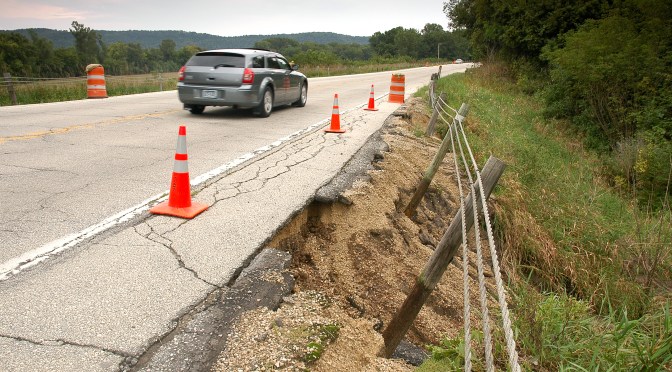
New Project: Vulnerability Assessments of Critical Slope Areas Using Advanced Monitoring Techniques
MnDOT continues working on systematically and proactively assessing stability of slopes along its highway system. Efforts are aimed at minimizing the potential for slope failures that could result in threats to public safety and costly repairs.
Continue reading New Project: Vulnerability Assessments of Critical Slope Areas Using Advanced Monitoring Techniques
New Project: Use of MNCORS to Support AV Operations in Rural Minnesota
Autonomous vehicles (AVs) have infrastructure requirements such as lane lines, centerlines and intersection signs to guide camera-enabled steering control functions. But many rural roads do not have lane markings or are unpaved, and intersections might be missing components to guide AVs.
Continue reading New Project: Use of MNCORS to Support AV Operations in Rural Minnesota Crossroads