

Guidelines for designing and placing roadside features have traditionally focused on automobile safety on higher-speed roads. Research has also shown feature placement can have safety benefits for pedestrians and bicyclists on lower-speed roads.
Continue reading New Project: Roadside Feature Placement and Pedestrian Safety on Low and Intermediate Speed RoadsTag Archives: LRRB
Using Mobile Device Data to Estimate Bicyclist and Pedestrian Traffic
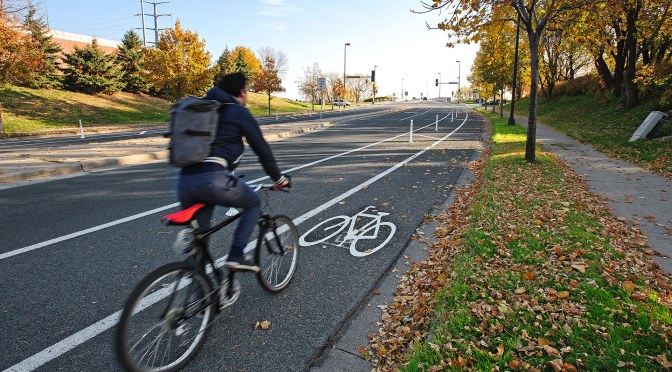
MnDOT relies on estimates of annual average daily traffic volumes to plan and maintain safe, effective transportation network infrastructure for all travelers. Estimating traffic volumes for nonmotorized road users such as bicyclists and pedestrians has been challenging because monitors are limited compared to vehicle traffic counters. Data from mobile devices, routinely collected through a variety of platforms, offers a potential source of traveler routes. Using monitored nonmotorized traveler data to validate mobile datasets, researchers produced a data visualization tool to estimate bicyclist and pedestrian counts within the Twin Cities area.
Continue reading Using Mobile Device Data to Estimate Bicyclist and Pedestrian Traffic
Lower speed limits signal a commitment to safety in St. Louis Park.
Reprinted from Catalyst, September 5, 2024
What’s the right speed limit for local roads? Legislation passed in 2019 makes it possible for Minnesota cities to set speed limits below 25 mph without special approval. As a result, it’s a question many local transportation officials have been considering.
Continue reading Lower speed limits signal a commitment to safety in St. Louis Park.
Testing High Friction Aggregates using SCRIM Technology at MnROAD
High Friction Surface Treatments (HFST) are pavement treatments that involve applying a high-quality aggregate and binder to pavement surfaces to help maintain friction. The treatment has significantly reduced crashes and injuries in wet and dry road conditions in high crash areas. However, HFST can be a costly treatment. Researchers, funded by MnDOT and the Local Road Research Board, are evaluating if taconite, a readily available Minnesota byproduct, can be an effective alternative treatment in low volume areas.
Continue reading Testing High Friction Aggregates using SCRIM Technology at MnROAD
Measuring the Effects of Road Features on Driving Speeds
The Complete Streets approach to roadway design uses site characteristics to create a safer, more accessible environment for all road users. New research demonstrates that roadway design features have a measurable impact on driving speeds. The development of speed reduction factors (SRFs) that estimate the impact of road features on speed reduction provides a data-driven approach to highway design.
Continue reading Measuring the Effects of Road Features on Driving Speeds
Using AVL/GPS Telematics to Optimize Snowplowing
Republished from MnLTAP News, February 2, 2022.
Automatic vehicle location (AVL) systems using GPS are creating opportunities for local agencies to improve their operations even in real time. A five-page guide and a video from the LRRB highlight the features and benefits of such systems for snowplowing.
Continue reading Using AVL/GPS Telematics to Optimize Snowplowing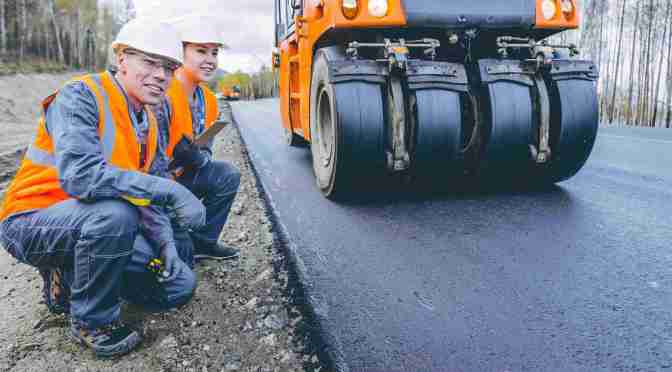
Staffing up: Resources to Grow Your Roadway Maintenance Workforce
Local transportation agencies in Minnesota continue to face worker shortages as many struggle to hire and retain employees. Recognizing this challenge, the Minnesota Local Road Research Board partnered with Minnesota LTAP to develop marketing resources for local transportation agencies to use to recruit and retain roadway maintenance workers.
Continue reading Staffing up: Resources to Grow Your Roadway Maintenance Workforce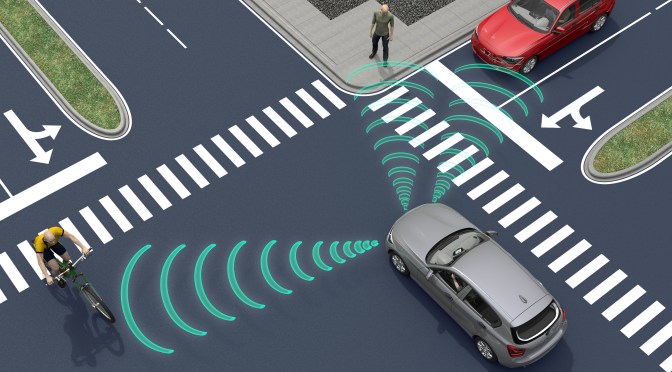
New Project: Use of MNCORS to Support AV Operations in Rural Minnesota
Autonomous vehicles (AVs) have infrastructure requirements such as lane lines, centerlines and intersection signs to guide camera-enabled steering control functions. But many rural roads do not have lane markings or are unpaved, and intersections might be missing components to guide AVs.
Continue reading New Project: Use of MNCORS to Support AV Operations in Rural Minnesota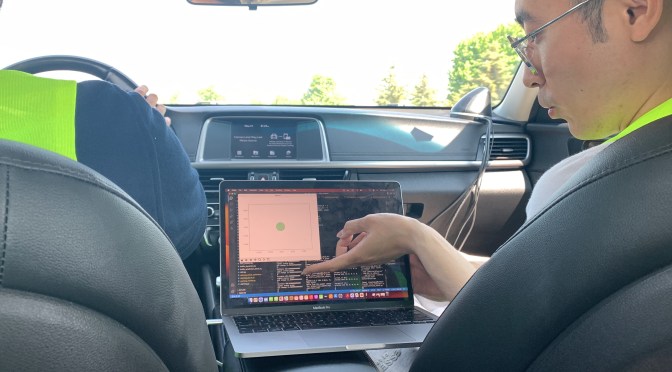
Introducing a New Red-Light Running Warning System that Can Potentially Reduce Human Errors at Intersections
Red light violations remain a prominent issue and high contributor to serious crashes and casualties at signalized intersections. An ongoing research project, funded by the Local Road Research Board, and Federal Highway Administration (FHWA) State Transportation Innovation Council (STIC) Incentive program, is developing and testing a warning system that signals drivers as they approach a red light and prompts them to decelerate.
Continue reading Introducing a New Red-Light Running Warning System that Can Potentially Reduce Human Errors at Intersections
Using Alternative Technologies to Detect Vehicles at Signalized Intersections
In Minnesota and across the country, the most common traffic signals are those that are actuated by a device embedded in the road that detects the presence of a vehicle at the intersection. While these embedded devices can last for decades, they don’t always detect modern vehicles, such as electric cars, or vulnerable road users, such as bicycles or motorcycles. New research evaluated the performance of video- and radar-based detection systems, which are becoming more readily available, under a variety of Minnesota weather conditions.
Continue reading Using Alternative Technologies to Detect Vehicles at Signalized Intersections Crossroads