Tag Archives: connected vehicles

TRB Webinar: Connected Mobility Futures—Integrating Transit and Technology

Pre-registration is required.

Public transit agencies are reimagining mobility through innovation, integration, and technology to create seamless travel experiences and improve access for all users. TRB will host a webinar on Tuesday, December 16, 2025 from 1:00 PM to 2:30 PM Eastern that will highlight strategies and technologies transforming the future of connected mobility. This session will explore how public agencies and technology partners are addressing fragmented systems through open platforms, integrated trip planning, and seamless fare payment, drawing on lessons from the Federal Transit Administration’s Integrated Mobility Innovation (IMI) and Accelerating Innovative Mobility (AIM) programs. Attendees will also gain insights into how Mobility-as-a-Service (MaaS) and Autonomous Mobility-on-Demand (AMoD) can expand access, improve service efficiency, and rebuild ridership. Presenters will share real-world examples, research, and lessons learned to help agencies advance scalable, user-centered transportation systems.

Continue reading TRB Webinar: Connected Mobility Futures—Integrating Transit and Technology
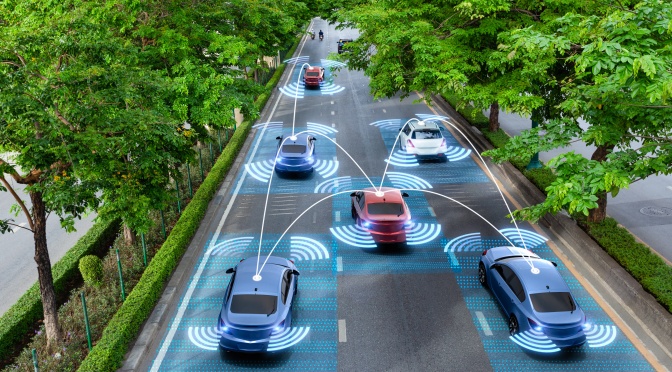
Connecting smart vehicles with traffic signals could reduce fuel use

Originally published in Catalyst, July 18, 2022.

Green means go and yellow means go faster—so goes a wry take on driver behavior at traffic signals. But it’s not just travel time that increases when you brake for a red: Fuel consumption does, too. Could transmitting signal data to connected vehicles (CVs) reduce stop-and-go cycles and fuel use? U of M researchers say yes.

Continue reading Connecting smart vehicles with traffic signals could reduce fuel use

New Project: Autonomous Vehicles – What Should Local Agencies Expect?

Connected Automated Vehicles (CAV) are part of tomorrow’s transportation future happening today. The evolution of vehicle technology is shifting how drivers interact with the infrastructure around them. Local agencies are beginning to respond and anticipate these changes, while CAV manufacturers request to test their vehicles on local roadways further pushing the urgency on local agencies.

Continue reading New Project: Autonomous Vehicles – What Should Local Agencies Expect?

Resources Help Local Agencies Plan for CAV Roadway Needs

In a recently completed project, funded by the Local Road Research Board, researchers developed a reference tool and compiled a literature review that local agencies could use to anticipate the infrastructure needs of connected and automated vehicles. Agencies can use these resources to plan for infrastructure upgrades and maintenance activities.

Continue reading Resources Help Local Agencies Plan for CAV Roadway Needs

Newly funded studies tackle big transportation questions

Can Twin Cities roadsides be used to grow habitat for endangered bumble bees? Are unseen factors affecting safety at rural intersectionsHow should Minnesota transportation agencies be preparing for connected vehicle technology?

Minnesota’s next round of transportation research projects will attempt to solve these and other questions facing the state’s transportation community. The Transportation Research and Investment Group, which governs MnDOT’s research program, and the Minnesota Local Road Research Board, which represents cities and counties, recently met and selected 21 transportation research projects for funding in fiscal year 2018.

A couple of MnDOT’s most interesting projects will evaluate the reuse of wastewater at safety rest areas and truck stations and develop a system to optimize the location of 80 truck stations due for replacement in the next 20 years. MnDOT will also partner with the Local Road Research Board to evaluate the use of personal warning sensors for road construction workers.

In addition to the problem of stripping underneath sealcoats on some city streets, other top research projects for local governments involve pedestrian safety enforcement and investigating whether rural, low-volume roads should be treated differently than urban roads for stormwater runoff. Current regulations govern runoff the same, regardless of daily vehicle count or surrounding land use.

“The selected research studies, which typically take one to three years to complete, will address some of the most major policy, environmental and maintenance dilemmas facing transportation practitioners,” said Linda Taylor, director of MnDOT Research Services & Library.

Below is a list of the selected projects, with links to associated need statements. Final project scopes will become available once contracts are approved. For further information, go here.

Bridges & Structures

Materials & Construction

Environmental

Planning

Maintenance Operations

Traffic & Safety