Category Archives: Multi-modal

CTS Webinar: The Coffee Supply Chain—What Goes into Delivering Your Favorite Coffee to the Store Shelf

About the Event

This webinar may not be related to MnDOT research, but we thought you might find it interesting if you drink coffee.

Join CTS and Patrick Hessini, CTS Executive Committee member and head of supply chain at Cameron’s Coffee, for an in-depth look at the challenges and logistics of today’s supply chain. Grab a cup of coffee and bring your lunch as we learn about where and how we get our coffee from trees to mugs.

Registration

This webinar is free, but registration is required. Once you have registered, you will receive an email confirmation with a Zoom link. The link should not be shared with others; it is unique to you.

More Information

Visit the CTS website or contact James De Sota at jadesota@umn.edu.

CTS Webinar: Innovations for Energy-Efficient Transportation

Thursday, November 13, 2025, 12:00–1:30 pm Virtual

About the Event

Transportation is one of the largest sources of greenhouse gas emissions in the U.S., and reducing those emissions is key to tackling the climate crisis. New technologies—from eco-friendly navigation apps to connected and automated vehicles—offer exciting opportunities to make our transportation system cleaner and more energy efficient. But these tools can also create unexpected challenges, such as increased traffic congestion or higher overall emissions, if not carefully designed.

In this webinar, researchers will share new approaches to smarter routing and vehicle technology that can lower energy use and reduce emissions. Join us to learn how innovations in navigation, automation, and vehicle control could help shape a more sustainable future.

Speakers

Zongxuan Sun is a professor in the Department of Mechanical Engineering at the University of Minnesota. He is an expert on dynamic systems and control with applications in automotive propulsion systems. He worked at the General Motors Research Center for seven years prior to joining the University in 2007. His research work includes system modeling, control theory, building unique instruments, and testbeds for experiments.

Michael Levin is an associate professor in the Department of Civil, Environmental, and Geo- Engineering at the University of Minnesota and a CTS scholar. His research focuses on modeling connected and automated vehicles and intelligent transportation systems to predict and optimize how these technologies will affect travel demand and traffic flow. Levin is specifically interested in using traffic flow, transportation network analysis, and operations research methods to study these new technologies and their effects on cities.

Registration

This webinar is free, but registration is required. Once you have registered, you will receive an email confirmation with a Zoom link. The link should not be shared with others; it is unique to you.

Credit

Attendees are eligible for Professional Development Hours (PDHs) and American Institute of Certified Planners (AICP) certification maintenance credits.

More information

For more information or to request support, go to complete announcement on the Center for Transportation Studies website.

Related MnDOT Research Projects

Minnesotans geared up for e-bike rebates. Now data reveals more about them

Republished from CTS News (Catalyst) for October 14, 2025

More than 14,600 Minnesota residents applied for a rebate through the state’s e-bike rebate program when it launched in 2024. Established by the Minnesota Legislature to help reduce the cost of buying a new e-bike, the program was so popular that within minutes of opening in June 2024, the number of applicants overwhelmed the system and crashed the website. The state was forced to fix the technology challenges and reopen the application about a month later.

The scenario drove researchers at the University of Minnesota to dig deeper into the data about who applied for the rebate in the first year. Their project aims to shed light on who benefitted from the program, get feedback on the application process, and learn more about rebate use.

E-bikes, which operate like a bicycle but have an electric battery and motor for pedaling assistance, have increased in popularity in recent years, and supporters are promoting their potential as a sustainable transportation option. The state legislature allocated $2 million in both 2024 and 2025 for the rebate program.

“Minnesotans seem to have an appetite to get an e-bike, whether that’s because of the state’s incentive or for other reasons—including that Minnesota has some of the best bike infrastructure around,” says Kaitlyn Denten, a researcher with the Humphrey School’s Institute for Urban and Regional Infrastructure Finance (IURIF) and project co-lead.

For the first part of this project, researchers analyzed rebate applicant data, which included demographic information, income level, tax filing status, and ZIP code but no personal identifiers. Data also included a person’s rebate application status, the rebate amount, and whether the applicant used the rebate to purchase a new e-bike.

In the program’s first year, the maximum rebate was $1,500; individual amounts depended on an applicant’s income level and tax filing status. People who applied for and received a rebate certificate could purchase their e-bike and eligible bike accessories from a participating retailer. Of the total applicants, 1,519 people received a rebate and 1,327 used one to purchase an e-bike. According to the data, half of the rebates went to households earning less than $75,000 a year.

The Twin Cities seven-county metro area had strong representation, with 66 percent of applicants, 67 percent of recipients, and 66 percent of rebate users coming from the metro area. The average age of applicants was 49 years old.

For the project’s second part, researchers used an online survey to collect feedback on the application process and information about how people who received a rebate were using their e-bike, among other data. The survey, which was available between March 17, 2025, and April 5, 2025, received nearly 4,500 responses.  

Of the survey respondents, 3,920 individuals applied for a rebate, 496 received a rebate, and 455 used the rebate to purchase an e-bike. For those who received a rebate but didn’t use it, among the reasons cited were that the rebate didn’t cover enough of the e-bike’s cost and the rebate certificate expired before they were able to use it. 

One surprising finding: Some people bought an e-bike even if they didn’t receive a rebate, says CTS scholar Camila Fonseca-Sarmiento, IURIF director of fiscal research and project co-lead. “Or, if a couple received a rebate, they ended up buying two e-bikes. This could be spurring the use of e-bikes instead of personal vehicles.”

Many survey respondents expressed frustration with the initial application process, referring to the technical glitches, long wait times, and unclear instructions. Several respondents did note, however, that the second application round ran more smoothly.

Some respondents also raised concerns about the fairness of the program’s rollout, pointing to barriers faced by people with limited internet access and electronic devices, people with disabilities, and people with inflexible work schedules (the application period opened on a weekday).

Future research should focus on the effects of 2025 program changes, including income eligibility, application processes, and rebate amount, the researchers say. In addition, researchers noted that a statewide travel study could help assess how rebates might influence a shift from personal vehicle use to an e-bike, a question left unanswered because of limited e-bike use among current rebate recipients.

This research project was sponsored by the Applied Research in Transportation (ART) Program, which addresses time-sensitive research questions in a 6 to 12 month timeframe. CTS and the Minnesota Department of Transportation contributed initial funding to launch this pilot program in 2024, with the Metropolitan Council joining in 2025. To reinforce the applied nature of the program, ART projects must directly address a current process, document, or policy need with an initial focus on sustainability in transportation and climate change impacts.

—Peter Raeker, contributing writer  

Related Research from MnDOT

Operational Characteristics of Conventional and Electric-Assisted Bicycles and Their Riders (ongoing)

Assessing the Economic Impact and Health Benefits of Bicycling in Minnesota

Impact of Start Time on Students Walking and Biking to School

To increase the number of students who walk or bike to school, policymakers first need to understand the primary factors that prevent students, parents and caregivers from choosing these travel modes. A look at the factors that influence this decision provided information to address barriers to walking and biking for children and families in Minnesota communities.

Continue reading Impact of Start Time on Students Walking and Biking to School

Examining off-peak transit behaviors to improve transit equity

Originally published in Catalyst, February 19, 2025

Transit service planning has traditionally focused on peak trips and the needs of “rush hour” commuters rather than off-peak travel. Often, off-peak trips are taken by shift-based essential workers and those who cannot or do not drive. The COVID-19 pandemic further underscored the need for a closer examination of these trips to improve social equity.

Continue reading Examining off-peak transit behaviors to improve transit equity

In rural Minnesota, transit planning apps could boost ridership

Reprinted from CTS News, February 11, 2025

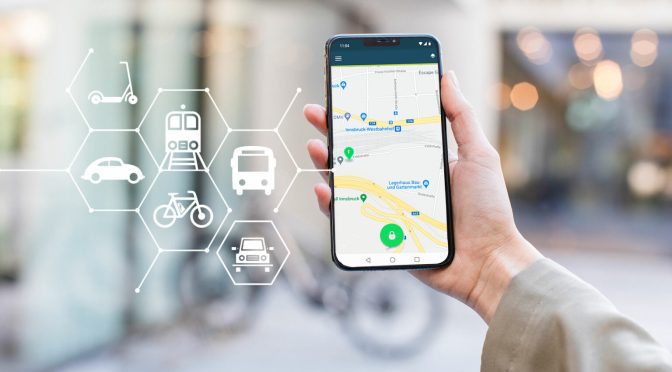
Mobility-as-a-Service (MaaS) transit planning apps provide a simple, convenient way for transit users to plan trips, make payments, and book on-demand rides—enhancing the user experience and encouraging more transit use. While prevalent in urban areas, these apps are uncommon in rural settings.

Continue reading In rural Minnesota, transit planning apps could boost ridership

Improving Pedestrian Safety on Reservations in Minnesota

MnDOT has identified Native Americans as one of six priority populations in the state that experience disproportionate risks as pedestrians. To access everyday services such as grocery stores, workplaces and schools, pedestrians may have to cross a state or county roadway at unmarked crossings. Installing traffic safety countermeasures at these crossings is intended to reduce the risk faced by pedestrians. This project analyzed pedestrian safety at 23 locations within seven reservations and the effectiveness of countermeasures implemented at six locations.

Continue reading Improving Pedestrian Safety on Reservations in Minnesota

Mobile lockers, equitable freight planning, and cargo e-bikes will play roles in urban freight

Reprinted from CTS News, January 14, 2025

Freight transportation is evolving rapidly, and its future success will require managing increased residential demand, planning for equity, and incorporating micro-delivery options such as cargo e-bikes. At the 2024 CTS Transportation Research Conference, three experts shared their knowledge of these trending topics in a session focused on the future of urban freight.

In response to the increasing demand for residential package delivery spurred by the shift towards online shopping, U of M Department of Industrial and Systems Engineering PhD student Can Yin shared her research on mobile parcel locker scheduling. Yin explained that in the growing ecommerce market, last-mile delivery is the most expensive and time consuming. While door delivery is commonly used, it can be unsecure and inconvenient for customers.

“Parcel lockers are an alternative, but they come with the disadvantages of limited locations, expensive fixed cost, and the inability to adapt to varying demand,” Yin said.

A newer, more flexible alternative is the use of mobile, vehicle-based parcel lockers, which offer greater flexibility, higher accessibility, and lower fixed costs—particularly if autonomous vehicles eliminate the need for driver salaries. However, mobile parcel lockers also create challenges for e-commerce businesses such as estimating demand and customer choices.

To address these challenges, Yin’s research team developed a mobile parcel locker demand-estimation model. Additionally, the researchers found that compared with stationary lockers, mobile lockers offer a better value and demand fulfillment.

Another challenge surrounding the rapid growth of e-commerce and urban freight is racial equity in urban freight planning. In his presentation, University of Washington Urban Freight Lab researcher Travis Fried explained how his research is seeking to better understand these inequities and create a framework for mitigating them.

The past and present systems that perpetuate the segregation of people and neighborhoods have been well documented. However, Fried said there is little research exploring how these patterns play out in freight planning and their impacts on air quality, health, and road safety for people of color. Fried’s research looked at high-volume traffic exposure and found that low-income populations of color were disproportionately exposed to e-commerce traffic.

“By our most conservative estimate, BIPOC [Black, Indigenous, and people of color] populations were exposed to 35 percent more traffic related to last-mile home delivery on average, despite ordering less than half as many packages as white populations,” Fried said. That’s because delivery facilities and highways are disproportionately located near historically marginalized neighborhoods, he explained.

In light of this finding, Fried emphasized the importance of including equity considerations when prioritizing urban freight strategies. “Solutions focused on the upper end of the distribution chain have outsized benefits for marginalized communities, so we need to consider that in our cost-benefit evaluations and engagement strategies,” he added.

Using cargo e-bikes for last-mile freight delivery was the topic of the session’s final presentation from Marc Liu of Civilized Cycles. Liu explained how his company’s innovative semi-trike—which has as much cargo capacity as a small delivery van—can be used to move a significant amount of cargo over short distances, particularly within campus environments such as universities, hospitals, residential developments, and military bases.

cargo bike
Semi e-trike from Civilized Cycles

“Regardless of what these campuses are moving, they have the same core challenge of moving as much cargo as possible while keeping operating costs as low as possible,” Liu said. “On top of that, emissions and safety are key concerns because most of this happens in pedestrian-heavy areas.”

Liu explained that the first customers for the cargo e-bikes are micro-mobility fleet operators at the forefront of sustainable transportation including Lime, Net Zero Logistics, and Amazon. Moving forward, the company is targeting campus environments for expansion. Liu said that “economics drives adoption” and believes the key to adoption is offering an affordable, American-made product that reduces vehicle fleet costs, increases safety, improves efficiency, and reduces greenhouse gas emissions.

—Megan Tsai, contributing writer

Related Resources

Research assesses roles and impacts of Minnesota’s local airports

Reprinted from Catalyst, January 22, 2025

To better understand how Minnesota’s small public airports affect their local economies, researchers from the Transportation Policy and Economic Competitiveness Program (TPEC) at the University of Minnesota’s Humphrey School of Public Affairs chose three to profile from across the state. They shared their findings at the 2024 CTS Transportation Research Conference in a presentation highlighting the complex roles and community impacts of local airports.

The profile study built on a 2018 TPEC project that explored the value of airfreight networks for Minnesota’s medical supply chain. In addition, the researchers aimed to update information from a 2019 Minnesota Department of Transportation (MnDOT) study that examined the economic impact of 126 of the state’s 133 public airports.

“We were prompted by questions from several stakeholders, including TPEC advisory board members, to see if there were any travel changes or other impacts from the COVID-19 pandemic or high levels of inflation that had happened since those other studies were completed,” said Frank Douma, director of state and local policy and outreach at the Humphrey School’s Institute for Urban and Regional Infrastructure Finance (IURIF) and the project lead. The research team also included Barbara Rohde, IURIF researcher and licensed pilot, and Audrey Clark, an urban/regional planning graduate student.

Data for the three airport profiles was gathered through interviews with airport and city officials in February and May of 2024.

Granite Falls Municipal Airport

Plane mounted at entrance to Granite Falls Airport

Unique among the three airports studied, the Granite Falls Municipal Airport in west central Minnesota receives no federal funding and attributes its ongoing success to the support of MnDOT and the local business community. A primary user for this 152-acre, one-runway airport is one of the biggest energy and ethanol firms in the Midwest—Fagen, Inc. The company hosts visitors from all parts of the US who travel to Granite Falls in corporate jets for meetings and tours.

The airport is also an active UPS hub—vital for supporting local resident and business needs—and draws tourists with a local bi-annual airshow held in association with the Fagen Fighters WWII Museum that showcases a collection of working aircraft from the era.  

Mankato Regional Airport

“It may be a surprise to some, but the Mankato Regional Airport is the second busiest in the state, following Minneapolis-St. Paul International,” Douma said of the airport located in south-central Minnesota. 

Most of the operations on the airport’s two runways support and serve student pilots; North Star Aviation, a major US flight school, trains 700 aviation students who log more than 40,000 flight hours annually.  “As a person who has taken many flight school lessons, I was so impressed,” said Rohde. “These kids fly until 11 at night to get their time in.” The school provides a direct recruitment pipeline to Minneapolis-based Sun Country Airlines.

The airport also serves the area’s retail, agriculture, and health care industries, which include:

  • A 450,000-square-foot Walmart Distribution Center that opened in 2015 and is undergoing a major expansion.
  • Veterinarians who board planes every morning to travel the country for swine testing.
  • Mayo Clinic helicopters, based here to take advantage of the central location.

Roseau Municipal Airport

Ten miles south of the Canadian border, Roseau Municipal Airport mostly serves the Polaris company’s 1,500-employee manufacturing facility, ferrying executives and researchers across the US from the airport’s single paved runway. Additionally, the airport focuses on supporting community development and health care access with medevac transportation.

Conclusions and next steps

Local airports contribute significantly to the economic competitiveness, community pride, and identity of the Minnesota cities that host them, the researchers found. However, the nature of those contributions is different for each airport, encompassing transportation links, business facilitation, tourism, and emergency services.

A subgroup of TPEC advisory board members recently formed to further expand this research and seek national, state, and institutional partnerships.

—Jacqueline Bass, CTS program editor

Related resources

In rural Minnesota, the GoMARTI self-driving shuttle demo is paving the way for autonomous transit

Originally published August 6, 2024 in Catalyst

Continue reading In rural Minnesota, the GoMARTI self-driving shuttle demo is paving the way for autonomous transit