All posts by Lea Burdette

Publishing and Technology Coordinator | MnDOT Office of Research & Innovation

Clear Roads: Training Module Development for Evaluation of Storm Severity Index and Winter Severity Index Variables

Clear Roads project 18-03, Evaluation of SSI and WSI Variables, produced a step-by-step guide and flowchart tool to help agencies identify or develop severity index methods to fit their needs and available data sources.

As estimating the impact of weather on roadway maintenance resources is becoming an increasingly important issue for agencies across the country, a recently completed Clear Roads project, 21-04, Training Module Development for Evaluation of Storm Severity Index and Winter Severity Index Variables, produced additional training modules geared toward three key audiences: division directors, snow and ice managers, and supervisors.

Incorporating audiovisual materials, discussion topics, and interactive exercises, the training modules will help practitioners design and develop indexes to suit their agency’s particular needs.

Download the final report and two-page briefCR 21-04 – Training Module Development for Evaluation of Storm Severity Index and Winter Severity Index Variables, July 2024.

Resources

In rural Minnesota, the GoMARTI self-driving shuttle demo is paving the way for autonomous transit

Originally published August 6, 2024 in Catalyst

Continue reading In rural Minnesota, the GoMARTI self-driving shuttle demo is paving the way for autonomous transit

Improving Traffic Signal Visibility

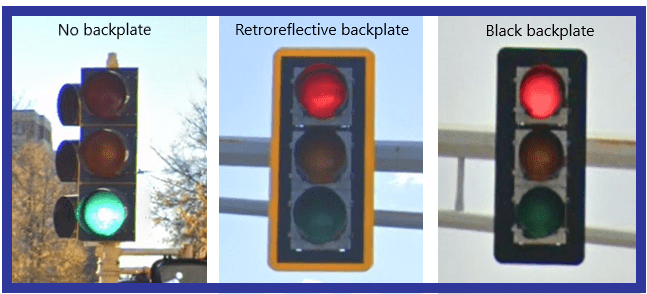
Inconspicuous traffic signals are often cited as contributing to collisions at intersections. If that is true, making traffic signals more conspicuous should lead to fewer crashes.  A study published at the TRB conference in 2005 suggested that yellow retroreflective backplates were most effective, reducing accidents by 15% at intersections, and the FHWA later adopted this as a Proven Safety Countermeasure.

Continue reading Improving Traffic Signal Visibility

Best Practices for Protecting Equipment from Chemical Deicer Corrosion

Reprinted from Clear Roads News, October 2, 2024

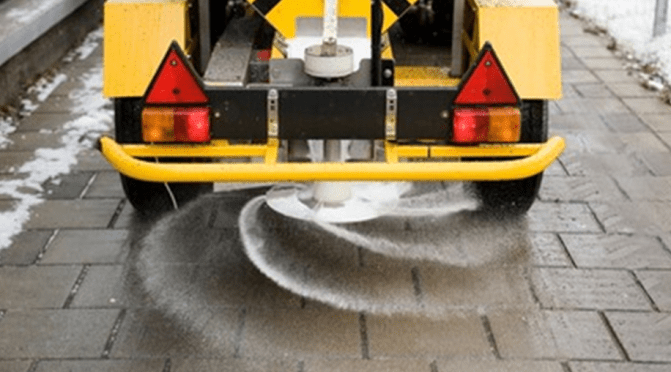
In 2015, Clear Roads project 13-04 published a Manual of Best Practices to compile the various products agencies use as well as guidance for preventing corrosion on highway maintenance equipment.

Continue reading Best Practices for Protecting Equipment from Chemical Deicer Corrosion

Identifying Risk Factors for Deer-Vehicle Collisions

Deer-vehicle collisions are a significant safety hazard on Minnesota roads. While MnDOT strives to employ safety measures on roads at high risk for these collisions, identifying these areas can be challenging. Numerous variables impact where deer are more likely to be present near roads, and many collisions go unreported. A new tool estimates the risk levels—based on road type, geographical features, deer population and other characteristics—for each road segment in the state. In addition, a new method of estimating reporting rates will help MnDOT understand the extent of deer-vehicle collisions in a specific area.

Continue reading Identifying Risk Factors for Deer-Vehicle Collisions

Clear Roads Featured at National Briefing

September 4, 2024
Reprinted from Clear Roads News

Last month, AASHTO’s Winter Weather Management Technical Services Program, Maintenance Committee and Maintenance Operations Technical Working Group jointly held its 5th National Briefing on Winter Maintenance and Road Weather to showcase the activities of the various organizations dedicated to winter and year-round transportation maintenance.

Continue reading Clear Roads Featured at National Briefing

Crowdsourcing meets transportation planning with bike and pedestrian data counts

Increasing active transportation is an ongoing effort for transportation planners. Biking and walking can help decrease auto dependence, air pollution, and climate change and improve public health. Plus, it can help transportation agencies meet their strategic goals. The challenge? Making good decisions requires good data, and data for walking and biking trips can be hard to find.

Continue reading Crowdsourcing meets transportation planning with bike and pedestrian data counts

Applying for Grants: Use Data to Tell Your Community’s Story to USDOT

Research done here at Minnesota and elsewhere has done much to define the problems of local communities with missing or declining infrastructure. USDOT offers federal assistance to build and improve that infrastructure, but the grants have to be won.

Continue reading Applying for Grants: Use Data to Tell Your Community’s Story to USDOT

TZD Traffic Safety Hotdish: A Roadmap for Traffic Safety Culture Research and the Road Ahead

Wednesday, July 17, 2024  
10:00 – 11:15 a.m. CDT

As states and localities adopt a vision of zero traffic fatalities, greater attention must be given to communication, collaboration, leveraging resources, and applying a systemic approach to traffic safety which requires a change in culture among road users and traffic safety agencies. This change in culture is tied to education, engineering, enforcement, and emergency services.

This free virtual event will highlight the Traffic Safety Culture Research Roadmap, recently released by the National Academies of Sciences, Engineering, and Medicine. The roadmap (Research Report 1091) presents a path forward to promote traffic safety culture among state departments of transportation and other transportation safety agencies.

Dr. Wes Kumfer, who led the creation of the roadmap, will review its development and contents. Jay Otto will share example projects and show how they fit into research on traffic safety culture. Join us to learn how you can identify traffic safety culture research needs and get insights to take back to your own organizational cultures!

The webinar is free to attend, but registration is required. Once you have registered, you will receive an email confirmation with a Zoom link. The link should not be shared with others; it is unique to you.