
The Center for Transportation Studies at the University of Minnesota has called for speakers. If you have recently completed or participated in an innovative transportation-related research, implementation, or engagement activity, consider sharing your work in a presentation at the 2026 CTS Transportation Research Conference!
Continue reading Call for Presentations: 2026 CTS Transportation Research ConferenceAll posts by Christine Anderson

CTS Webinar: Industry and International Perspectives on AI Integration
Wednesday, April 1, 2026, 9:00–10:30 am CST, Virtual
Artificial intelligence (AI) is increasingly influencing how transportation and infrastructure projects are planned, delivered, and communicated. This Education and Engagement Council webinar builds on CTS’s earlier AI discussion by highlighting how AI is being used in practice, both nationally and internationally.
Speakers from outside Minnesota will share real-world examples of AI integration in infrastructure and construction contexts. Nicole Moon, Strategic Communications Highways and Roads Market Sector Lead at HDR, will discuss how AI is supporting transportation agencies and project teams through applied industry use.
Mr. Tomi Kotala, Project Director, City of Helsinki Public Works Department, and Mr. Pieti Marjavaara, Chief Innovation Officer, Construction Management, AINS Group, will discuss the Infrastructure Programme Helsinki, Finland. This strategic urban development initiative focused on designing and constructing a sustainable future for the city, including a massive expansion of the Light Rail Transit (LRT) network. They will demonstrate how their approach to Integrated Project Delivery (IPD) and alliance models optimizes infrastructure lifecycles through fair partnership. Efficiency is driven by Knowledge Management and industrial construction via data-driven, repeatable processes. The Project-AI concept evolves situational awareness into active AI-driven support for all project members, ensuring smarter, more predictable, and value-driven outcomes.
This webinar is designed to foster shared learning and discussion around how AI is being adopted today, why organizations are investing in these tools, and what lessons transportation professionals can take from industry and international experience. It is intended for practitioners, researchers, students, and others interested in the evolving role of AI in transportation and infrastructure.
Continue reading CTS Webinar: Industry and International Perspectives on AI Integration
Household-based travel measures may help agencies cut emissions
Reprinted from Catalyst, December 15, 2025
Across the country, transportation agencies, including the Minnesota Department of Transportation (MnDOT), are working to meet ambitious targets for reducing vehicle miles traveled (VMT) and climate emissions. To succeed, they need to understand what actually encourages households to drive less.
A recent University of Minnesota (UMN) research study aimed to answer this question. Led by Eric Lind, director of the UMN’s Accessibility Observatory, the study examined how accessibility—the opportunities reachable by different travel modes such as driving, public transit, or biking—influences a household’s VMT.
“We wanted to go beyond the typical approach of using roadway volume counts and instead examine households, because that is where VMT comes from,” Lind says. “This helps us better understand the influence of transportation and land-use systems on the travel decisions people make in their daily lives.”
Lind and his research team used Twin Cities travel behavior survey records to match households with access to opportunities on three different levels: local access (biking to jobs within 20 minutes), transit access (walking or rolling to transit to reach jobs within 10 to 40 minutes), and regional access (driving to jobs within 20 to 60 minutes). The models also accounted for important demographic factors including household income, vehicle availability, and number of workers.
The findings point to a challenging road ahead for transportation agencies working to reduce VMT and greenhouse gas emissions. The good news is that higher local and transit access does lead to lower expected VMT. However, the impact is modest: doubling local or transit access to jobs results in a VMT decrease of about 3 percent.
Conversely, higher regional auto access is the most influential factor and positively predicts higher VMT. According to the model, a modest 10 percent increase in regional auto access to jobs resulted in a VMT increase of roughly 4 percent.
“The challenge is that MnDOT is required to balance increasing roadway capacity with strategies that reduce VMT to the same extent,” Lind explains. “Increasing what is easily reachable by bike or transit does lead people to drive less, but these are nudges compared with the main effects of roadway expansions that have a much larger, counteracting effect on VMT.”
To meet VMT goals, the research team recommends a two-pronged approach. First, agencies must continue to invest in and increase local and transit and nonmotorized access. Second, they must critically assess any planning that increases regional auto access, as its VMT-boosting impact requires non-auto mitigation to balance it out.
These findings will provide MnDOT and other transportation agencies with a clearer understanding of the levers available to them, offering the estimates needed to calculate the true VMT impact of future infrastructure changes.
This study was sponsored by the Applied Research in Transportation (ART) Program, which addresses time-sensitive research questions in a 6- to 12-month timeframe. CTS and MnDOT contributed initial funding to launch this pilot program in 2024, with the Metropolitan Council joining in 2025. To reinforce the applied nature of the program, ART projects must directly address a current process, document, or policy need with an initial focus on sustainability in transportation and climate change impacts.
Related topics
For an overview of travel behavior in the U.S. generally, see Ten years of measurement reveals evolution of destination access across America.
To see how the transportation system is performing in Minnesota, see MnDOT performance measures.
CTS Webinar: Reaching Opportunities Through Transportation—New Results from the National Accessibility Evaluation
Wednesday, January 7, 2026
noon–1:00 p.m. CST, VIRTUAL
About the Event
Accessibility is the ease of reaching valued destinations. It can be measured for various transportation modes (auto, transit, bicycling, walking), to different types of destinations (home, work, school, shopping), at different times of day. Accessibility measures can be used to answer questions such as: How many jobs can I reach within a 30-minute transit trip from my home in Evanston, Illinois?
Continue reading CTS Webinar: Reaching Opportunities Through Transportation—New Results from the National Accessibility Evaluation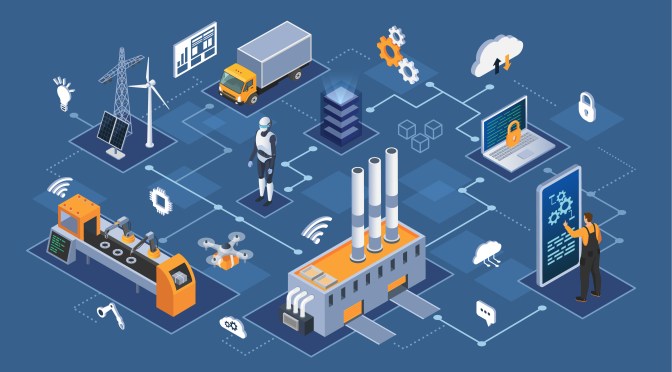
CTS Webinar: Preparing Transportation Professionals for AI Integration
Monday, December 15, 2025, 12:00–1:30 pm (Virtual)
About the Event
Artificial intelligence (AI) is rapidly reshaping how we design, plan, and manage infrastructure systems. In this webinar, CTS scholars Qizhi He and Seongjin Choi from the University of Minnesota’s Department of Civil, Environmental, and Geo- Engineering will discuss how AI tools are beginning to influence teaching, research, and professional practice in civil engineering. Their conversation will consider how the field can adapt curriculum and training to prepare future engineers for an AI-integrated profession. They will also explore questions around quality management, professional ethics, and community-centered design in an AI-driven context.
Offering a practitioner’s perspective, Melissa Barnes will share insights from MnDOT’s ongoing AI pilot identification project. She will discuss how state agencies are evaluating opportunities and risks associated with AI implementation—and engaging and educating their staff about AI.
This webinar will highlight opportunities for collaboration between academia and practice as the transportation industry navigates the evolving impacts of AI on engineering education, quality assurance, and workforce development.
Speakers
Qizhi He is an assistant professor in the Department of Civil, Environmental, and Geo- Engineering at the University of Minnesota (UMN) and a CTS scholar. Before joining the UMN, he was a postdoctoral researcher in the Scientific Machine Learning Group at Pacific Northwest National Laboratory. His research focuses on developing hybrid physics–AI/ML computational methods for predictive modeling and the simulation of complex mechanical behavior in civil and geomaterials under extreme and multiphysics conditions. His work aims to advance next-generation, high-performance computing and digital-twin technologies that enhance infrastructure resilience and support natural hazard mitigation.
Seongjin Choi is an assistant professor in the Department of Civil, Environmental, and Geo- Engineering at the University of Minnesota and a CTS scholar. Choi was previously a postdoctoral researcher at McGill University in Canada and Korea Advanced Institute of Science and Technology in South Korea. His research focuses on developing machine learning and (generative) artificial intelligence models for transportation and mobility data, with the goal of enhancing both individual-level travel experiences and system-level performance.
Melissa Barnes is the Operations Division artificial intelligence program manager (mobility) at MnDOT and a licensed civil engineer with more than 21 years of experience in transportation. She has worked at MnDOT for more than 12 years, including positions in Central Office and the Metro District. Her expertise spans program delivery, traffic engineering, planning, safety, operations, project management, policy, and cross-functional leadership, and she is known for her commitment to equity and collaboration.
Registration
This webinar is free, but registration is required. Once you have registered, you will receive an email confirmation with a Zoom link. The link should not be shared with others; it is unique to you.
More information
Visit the CTS website or contact Samantha Hahn-Douville at snhahn@umn.edu.
If you’re unable to join us for the live broadcast, a recording will be available here after the event.

CTS Webinar: A New System to Report School Bus Stop-Arm Violations
Wednesday, December 10, 2025
11:30 a.m.–1:00 p.m. CST
Zoom Virtual
About the Event
School bus stop-arm violations by motorists pose a serious risk to children. A new University of Minnesota study investigated the existing violation reporting ecosystem, finding issues like underreporting, underenforcing, and significant workflow inefficiencies and barriers across all stakeholder groups.
To address these systemic barriers, study researchers concluded that a centralized statewide online portal is needed to streamline communication, simplify data access, and standardize reporting. They also provided near-term recommendations until this comprehensive solution can be developed.
Join this webinar to learn about the research findings and proposed short- and long-term recommendations for improving the reporting system, with the goal of making bus stops safer for children across Minnesota and beyond

Beyond the border: Canadian studies consider permeable pavement, climate change impacts on deicing operations
Reprinted from MnLTAP News, November 17, 2025
The 2025 Salt Symposium highlighted two studies from Canada, one comparing salt applications on permeable and asphalt surfaces and another considering the impact of climate change on municipal operations. Hosted by Bolton & Menk, the August 5 Salt Symposium brought together professionals from throughout the world to share research, projects, and approaches for chloride management.
Continue reading Beyond the border: Canadian studies consider permeable pavement, climate change impacts on deicing operations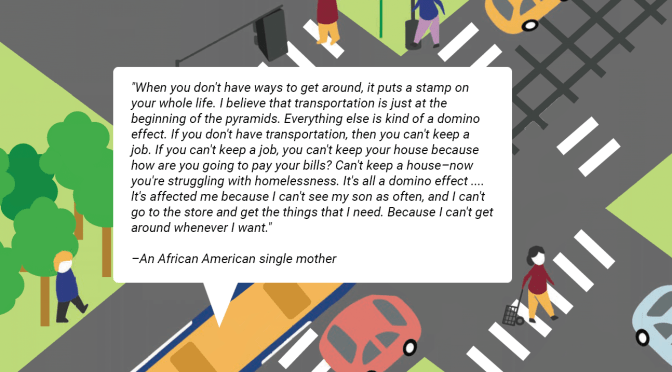
Beyond traffic: Transportation as a social construct
Reprinted from CTS News, September 8, 2025
Urban transportation is more than roads and bridges: it’s a powerful social force that shapes our lives and influences our opportunities, well-being, and even power dynamics. Consider the everyday experience of commuting to work—the route you take, the cost of the ride, and the people you encounter are all shaped by social forces. By looking at transportation through this social lens, University of Minnesota researchers are moving beyond physical infrastructure to understand its deeper impact on society.
Continue reading Beyond traffic: Transportation as a social construct
CTS Webinar: Innovations for Energy-Efficient Transportation
Thursday, November 13, 2025, 12:00–1:30 pm Virtual
About the Event
Transportation is one of the largest sources of greenhouse gas emissions in the U.S., and reducing those emissions is key to tackling the climate crisis. New technologies—from eco-friendly navigation apps to connected and automated vehicles—offer exciting opportunities to make our transportation system cleaner and more energy efficient. But these tools can also create unexpected challenges, such as increased traffic congestion or higher overall emissions, if not carefully designed.
In this webinar, researchers will share new approaches to smarter routing and vehicle technology that can lower energy use and reduce emissions. Join us to learn how innovations in navigation, automation, and vehicle control could help shape a more sustainable future.
Speakers
Zongxuan Sun is a professor in the Department of Mechanical Engineering at the University of Minnesota. He is an expert on dynamic systems and control with applications in automotive propulsion systems. He worked at the General Motors Research Center for seven years prior to joining the University in 2007. His research work includes system modeling, control theory, building unique instruments, and testbeds for experiments.
Michael Levin is an associate professor in the Department of Civil, Environmental, and Geo- Engineering at the University of Minnesota and a CTS scholar. His research focuses on modeling connected and automated vehicles and intelligent transportation systems to predict and optimize how these technologies will affect travel demand and traffic flow. Levin is specifically interested in using traffic flow, transportation network analysis, and operations research methods to study these new technologies and their effects on cities.
Registration
This webinar is free, but registration is required. Once you have registered, you will receive an email confirmation with a Zoom link. The link should not be shared with others; it is unique to you.
Credit
Attendees are eligible for Professional Development Hours (PDHs) and American Institute of Certified Planners (AICP) certification maintenance credits.
More information
For more information or to request support, go to complete announcement on the Center for Transportation Studies website.
Related MnDOT Research Projects
- Influence of Autonomous and Partially Autonomous Vehicles on Minnesota Roads
- Generating Traffic Information from Connected Vehicle V2V Basic Safety Messages
- Cost/Benefit Analysis of Fuel Efficient Speed Control Using Signal Phasing and Timing (SPaT) Data: Evaluation for Future Connected Corridor Deployment
- Towards Implementation of Max-Pressure Signal Timing on Minnesota Roads
- School Times Impact on Students Walking or Biking to School: Safe Routes to School
- Development and Demonstration of a Novel Red Light Running Warning System Using Connected v2i Technology
- A Novel Red Light Running Warning System Using Connected v2i Technology, Phase 2: Driver Testing on Public Roads (ongoing)
- Impacts of Shared Mobility on Infrastructure usage, Greenhouse Gas Emissions, and Accessibility (ongoing)
- Comparative Analysis of Grade-Separated Pedestrian Infrastructure and At-grade Treatments (ongoing)
- Bike infrastructure planning based on mobile-sourced data and anticipated route shifts (ongoing)

Human behavior insights are driving transportation safety forward
Reprinted from CTS News Catalyst, September 11, 2025
To better understand how roadway crashes can be prevented, it’s essential to explore the human behaviors that contribute to them. This objective is core to the work of the U of M’s Human Factors Safety Laboratory (HFSL). Research Associate Professor and CTS scholar Nichole Morris, who directs the lab, outlined its mission and impact in a recent Toward Zero Deaths (TZD) webinar highlighting Minnesota’s traffic safety research ecosystem.
Minnesota TZD is the state’s cornerstone traffic safety program, employing an interdisciplinary approach to reducing traffic crashes, injuries, and deaths on the state’s roads. CTS partners with TZD to provide program administration, event coordination, and communications.
The HFSL brings together behavioral scientists and engineers dedicated to reducing roadway and occupational injuries and fatalities. They combine research on human behavior with the design and testing of user-centered systems to create solutions that work better for everyone.
“Human factors is the intersection between people and systems,” Morris explained. From in-vehicle technologies and roadway signage to partnerships with larger organizations such as law enforcement, transportation systems involve a wide range of human-system interactions.
Four research tracks shape the lab’s work:
- Crash reporting. Although projects often intersect, crash reporting is foundational to the other research tracks. Morris refers to it as the lifeblood of transportation safety—without crash data, researchers don’t know what’s working and what isn’t. In one of its more consequential projects, the HFSL helped rebuild the front end of MNCrash—an application designed for law enforcement to document and report crashes. In close collaboration with the Minnesota Departments of Transportation and Public Safety as well as multiple law enforcement agencies, the HFSL team helped to streamline the user experience and improve data completeness and accuracy. Since deploying the updated version in 2016, MNCrash has been adopted by all law enforcement agencies across Minnesota. It’s featured in the sixth edition of the USDOT’s Model Minimum Uniform Crash Criteria and has become the national standard for crash reporting.
- Maintenance and work-zone safety. In one project, leveraging the expertise and methods gained from MNCrash, the lab collaborated with MnDOT and maintenance workers on a streamlined app to make documenting work-zone intrusions easier. After its launch in 2022, the team continued work, using low-cost sensors and radar to help reduce select work-zone driving speeds in real time.
- Pedestrian and non-motorist safety. The Stop for Me campaign, a collaboration with MnDOT, St. Paul, Ramsey County, and Western Michigan University, has been adopted in communities across Minnesota. The campaign—which combines enforcement and engineering treatments to improve yielding at crosswalks—has inspired similar efforts in more cities around the country. Other projects include studies on dedicated right-turn lanes and temporary and permanent pedestrian infrastructure to reduce conflicts between drivers and pedestrians.
- Infrastructure and signage. The lab’s work on J-turns, which have proven effective at reducing fatal crashes, has helped to identify and address several navigational errors drivers may make when first encountering this type of intersection. The researchers have found that poor or confusing first experiences with J-turns can lead to negative community perceptions and result in pushback on J-turn implementation. The research has found specific pavement markings to help guide drivers and facilitate successful use of J-turns—leading to fewer crashes and better driver experiences.
Morris emphasized that investment in sound research methods and collaborations across partner institutions, organizations, and communities is what creates successful research outcomes. While studies may yield results in the moment, she says investing in methodology is what really carries the work forward. The HSFL’s work continues to inspire other states and agencies, Morris added.
—Krysta Rzeszutek, CTS digital editor
Related research from Nichole Morris
- Work Zone Intrusion Report Interface Design
- In-Vehicle Work Zone Messages
- In-Vehicle Sign Systems May Improve Safety When Supplementing Road Signs
- Examining Optimal Sight Distances at Rural Intersections
- User-Centered Smart Traffic Sign Development Study
- Pedestrian Engineering and Enforcement at Signalized Intersections
- Assessment of Pedestrian Safety and Driver Behavior Near Automated Vehicles
- Identification and Assessment of Preventative Methods to Mitigate Cognitive and Physical Declines Which Influence Driving Performance of Older Drivers
- Human-Centered Testing of Rear-Facing Display to Reduce Vehicle Collisions with Snowplows
- Rural Intersection Enhancement and Driver Behavior Study
- School Zone Research
- Exploring Completeness and Accuracy of Driver Crash Reporting of Property Damage Only Crashes
- Human Factors: Optimizing Crosswalks and Aesthetic Surface Treatments (a.k.a. Pavement Art) for Pedestrians with Disabilities
 Crossroads